Senso-ji
Asakusa Kannon · 浅草寺 · Sensoji Temple
Researched and translated with AI assistance. Every claim is linked to its source, but errors get through, so check the official site for opening times, fees and closures.About
In short
Tokyo's oldest temple, in Asakusa, built around a statue of Kannon that two fishermen brothers are said to have pulled from the river in 628, and visited today for prayers about money and protection.
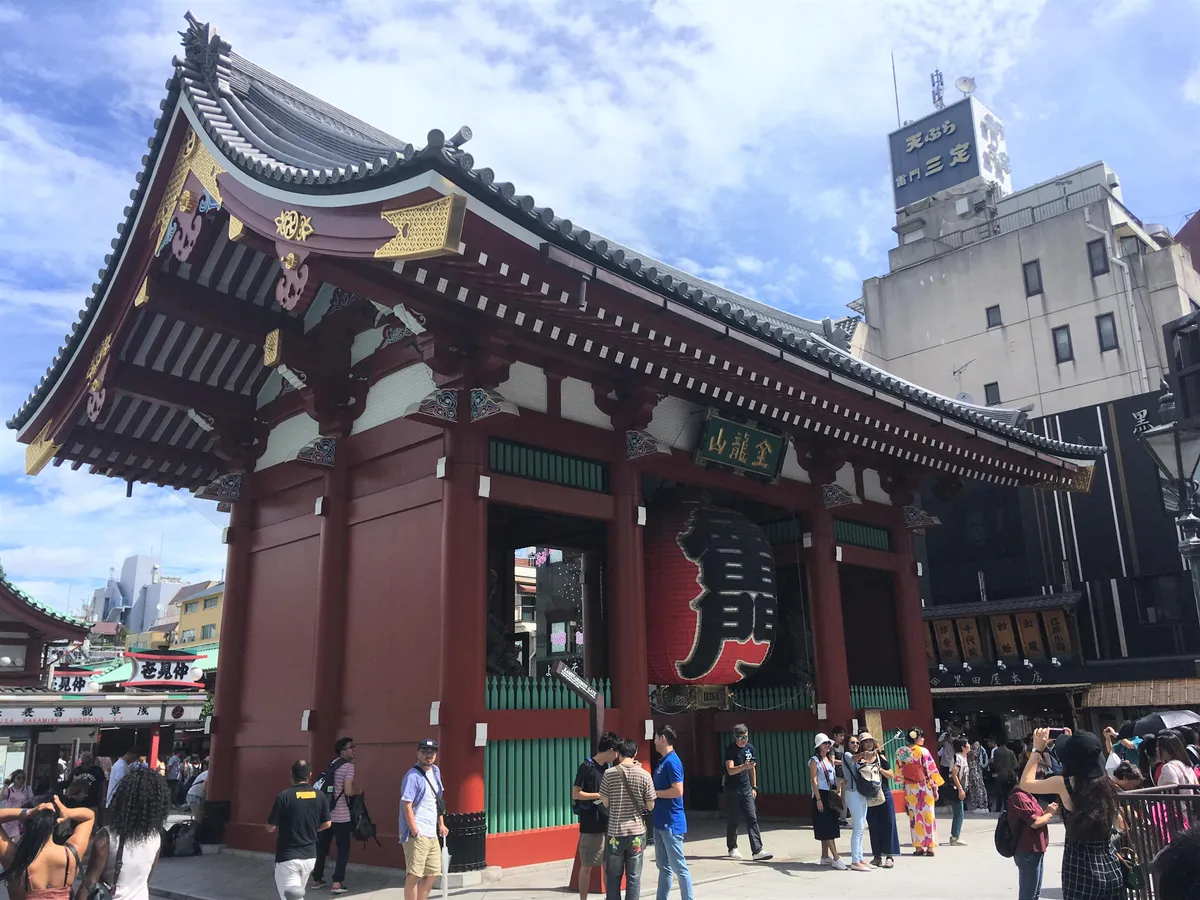
Quick facts
- Address
- 2-3-1 Asakusa, Taito-ku, Tokyo 111-0032
- Access
- Asakusa Station is about five minutes on foot from the Kaminarimon, and four separate lines serve it: the Tobu Skytree Line, the Tokyo Metro Ginza Line, the Tsukuba Express, and the Toei Asakusa Line, whose exit A4 is the nearest. The temple has no parking of its own and points visitors to the ward-run garage under Kaminarimon and nearby commercial lots.
- Hours
- Main hall 6:00–17:00 (from 6:30 October–March). The grounds, Kaminarimon and the Nakamise approach are open street and never close, so the temple can be walked at any hour — only the hall itself has times.
- Fee
- The temple publishes no admission information. Entry to the grounds and the main hall is free — unofficial, but no fee is charged or advertised anywhere.
- Best time
- Early morning, when the hall opens at 6:00 and the Nakamise shops are still shuttered. The most distinctive date is 18 March, the rite marking the day the Kannon image is said to have been found, with the Golden Dragon Dance; the dance is repeated on 18 October. The ground-cherry market falls on 9–10 July and the battledore market on 17–19 December.
- Spiritual entities
- Kannon (観音菩薩, Avalokiteśvara)
- Official site
- www.senso-ji.jp
About this place
Senso-ji stands at the end of Nakamise, a shopping street that runs from the Kaminarimon gate to the main hall. The temple dates its founding to 628 and describes itself as the oldest in Tokyo; by its own account it draws around thirty million worshippers a year. Almost everything a visitor sees is post-war: the hall that stood here was destroyed in the air raid of 10 March 1945 and rebuilt in 1958, and the Kaminarimon had been gone for 95 years before a company president paid to put it back in 1960.
Origin and history
The temple's own account places its beginning on an early morning in 628, when two brothers, Hinokuma no Hamanari and Takenari, were fishing in what is now the Sumida River and found a small statue in their net. A third man, Haji no Nakatomo, is said to have turned his house over to it as a temple. This is temple tradition rather than documented record, and the temple presents it as such. The image is a hidden one: it has not been shown since 645, and the temple states that it is locked in nested cases as an absolute secret image which even the head priest refrains from viewing. What visitors face in the hall is a substitute figure attributed to the monk Ennin.
The visible temple is modern. The main hall was a National Treasure and had survived the 1923 earthquake, but it burned in the Tokyo air raid of 10 March 1945 and the present hall was rebuilt in 1958; its outer ceiling carries a dragon by Kawabata Ryushi and two panels by Domoto Insho, each about 6.4 by 4.9 metres. The Kaminarimon burned in 1642, 1767 and 1865, and after the last fire it stood missing for 95 years until Matsushita Konosuke, president of what is now Panasonic, funded its rebuilding in 1960.
What it is locally associated with
A statue in a fishing net, 628
Two brothers fishing the river are said to have pulled up a small figure of Kannon; a neighbour gave his house to shelter it. The temple tells this as tradition, not record.
folk traditionKaminarimon and its 700 kg lantern
Properly the Wind and Thunder God Gate. The temple says the two gods govern wind and rain and were enshrined to ward off storm and flood damage and to guard the temple buildings.
documented historyChanting Namu Kanzeon Bosatsu
The temple gives a specific instruction for the main hall: put your palms together and chant the name of Kannon. No clapping. This is a temple, not a shrine.
local custom
What Senso-ji is petitioned for is readable from what it actually offers. Its published lineup includes a money-luck charm and prayer tablets for business prosperity, alongside charms for warding off misfortune, a substitute charm meant to take harm in the bearer's place, and tablets for household safety. That is the basis for the money and protection tags here: the temple's own goods, not its reputation. Worth knowing: the temple declines to explain them online, directing anyone who asks what a given item is for to the counter, so there is no official gloss on individual charms and none is invented here. Behind all of it is Kannon, whom the temple describes as hearing the voices of the living, removing suffering, and extending help to anyone who comes, without distinction of where they came from.
Several parts of the grounds carry their own associations. The Kaminarimon is the obvious one: its formal name is the Wind and Thunder God Gate, and the temple explains that the two gods, who govern wind and rain, were enshrined there to ward off storm and flood damage and to protect the temple buildings. The lantern beneath them is 3.9 metres tall and weighs about 700 kilograms. Beyond it the Hozomon gate and the five-storey pagoda close the approach, and on the west side the Eikodo hall issues the temple's seals. Senso-ji is also the thirteenth station of the Bando Kannon pilgrimage and the first of the Edo Kannon pilgrimage, so a share of visitors arrive working through a route rather than stopping here alone. Asakusa Shrine stands immediately east, inside the same grounds. It honours the two brothers and the man who housed the statue, and it is a separate place with its own page rather than part of this one.
One practice here belongs to this temple and not to temples in general: the instruction for the main hall is to put the palms together and chant Namu Kanzeon Bosatsu, the name of the enshrined Kannon. The temple publishes it in Japanese and English both.
Claims and evidence levels 8
- Temple tradition holds that the Kannon image was found in a fishing net in the river in 628 by the brothers Hinokuma no Hamanari and Takenari. folk tradition
- The image is a hidden one, unshown since 645; the temple states that even its head priest refrains from viewing it, and the figure visitors face is a substitute attributed to the monk Ennin. documented history
- The former main hall, a National Treasure, was destroyed in the Tokyo air raid of 10 March 1945, and the present hall was rebuilt in 1958. documented history
- The Kaminarimon burned in 1642, 1767 and 1865 and was left unbuilt for 95 years until Matsushita Konosuke funded its reconstruction in 1960. documented history
- The gate is formally the Wind and Thunder God Gate: the temple says the two gods govern wind and rain and were enshrined to ward off storm and flood damage and guard the temple buildings. documented history
- The temple offers charms for money luck and business prosperity and for warding off misfortune and household safety, but publishes no explanation of individual items, asking visitors to enquire at the counter. local custom
- The temple instructs worshippers at the main hall to put their palms together and chant "Namu Kanzeon Bosatsu". local custom
- Senso-ji is the thirteenth station of the Bando Kannon pilgrimage and the first of the Edo Kannon pilgrimage. documented history
Visiting tips
The general form (how to use the water basin, and hands together rather than clapping because this is a temple) is covered in the visiting guide below. What follows is specific to Senso-ji.
The omikuji (おみくじ) here have a reputation for bad luck that the temple does not endorse. Asked about it, Senso-ji says only that its lots follow the old proportions unchanged, and that someone who draws a bad one should not be afraid: bearing it patiently and living honestly is what turns it good. There is no official figure for how often bad lots come up, so treat any percentage you read elsewhere as invented.
Seals are issued at the Eikodo on the west side of the main hall, from 8:00 to 16:30, with different hours at New Year and during the July market. Two are offered, one for Kannon and one for Daikokuten.
Prices are not published for anything (charms, prayer tablets or seals), and the temple asks that you enquire in person rather than by telephone. Expect to ask at the counter.
One practical note: the hall closes at 17:00, hours before Asakusa does. Arriving in the evening gets you the gate, the street and the lit-up buildings, but not the hall. There is no visitor parking at all.
Related guides
- How to visit a shrine or temple in JapanThe country-wide basics: purifying at the water basin, the two-bows-two-claps-one-bow form at shrines, and what temples do instead.
- What a "power spot" actually isA modern Japanese coinage, not a traditional religious category. Where the word came from, what it does and does not claim, and why this site uses it anyway.
- Shrine or temple?A shrine is Shinto and a temple is Buddhist, and you can usually tell at the gate. Why the line is cleaner on paper than on the ground, and what a government order in 1868 has to do with it.
- Omamori, ema, omikuji and goshuinThe four things you are most likely to receive, write, draw or be given at a shrine or temple, what each is actually for, and the one of them people most often get wrong.
Sources
- History of Senso-ji (浅草寺の歴史) — Senso-ji (accessed 2026-08-01)
- Senso-ji's principal image (浅草寺のご本尊) — Senso-ji (accessed 2026-08-01)
- Kaminarimon (雷門) — Senso-ji (accessed 2026-08-03)
- The main hall (本堂) — Senso-ji (accessed 2026-08-01)
- Asakusa Shrine within the grounds (浅草神社) — Senso-ji (accessed 2026-08-01)
Show 7 more sources
- Charms and talismans (授物) — Senso-ji (accessed 2026-08-01)
- Frequently asked questions (よくあるご質問) — Senso-ji (accessed 2026-08-01)
- Temple seals (御朱印) — Senso-ji (accessed 2026-08-01)
- Annual events (年中行事) — Senso-ji (accessed 2026-08-01)
- Access (交通案内) — Senso-ji (accessed 2026-08-01)
- Senso-ji (English) — Senso-ji (accessed 2026-08-01)
- Sensō-ji (Q615183) — coordinate location — Wikidata (accessed 2026-08-01)
Last updated:
Similar places
8 places
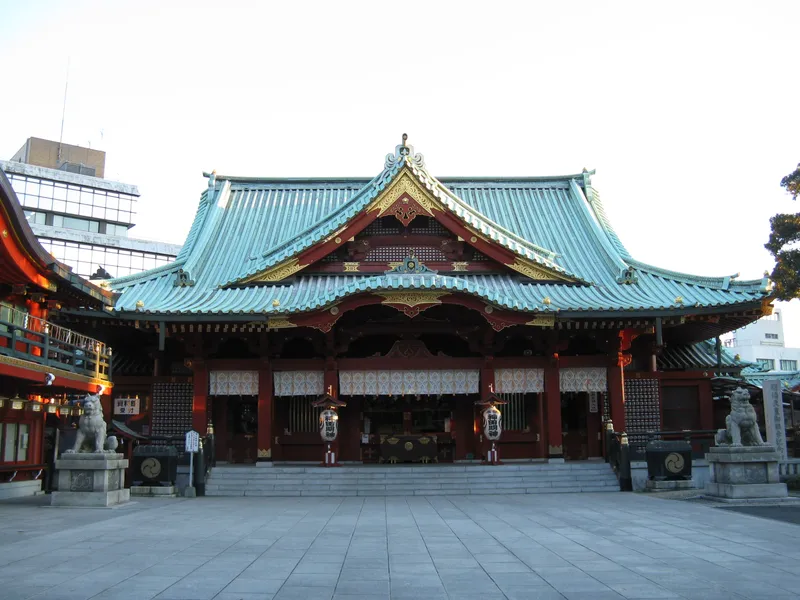 Shrine
Kanda Myojin
- Career & Work
- Family & Home
- Money & Prosperity
A Chiyoda shrine that served as the guardian shrine of all Edo, enshrining three deities between them associated with business prosperity, good matches and warding off misfortune, and these days selling a charm for information security.
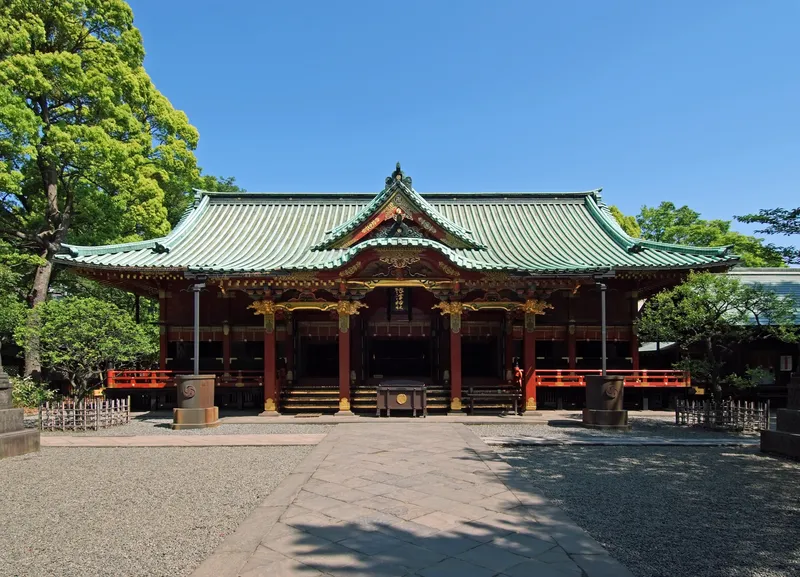 Shrine
Nezu Shrine
- Career & Work
- Exams & Study
- Family & Home
A Bunkyo shrine whose entire 1706 complex survives intact as an Important Cultural Property, rare in Tokyo, with an azalea hill and a tunnel of small red torii (鳥居).
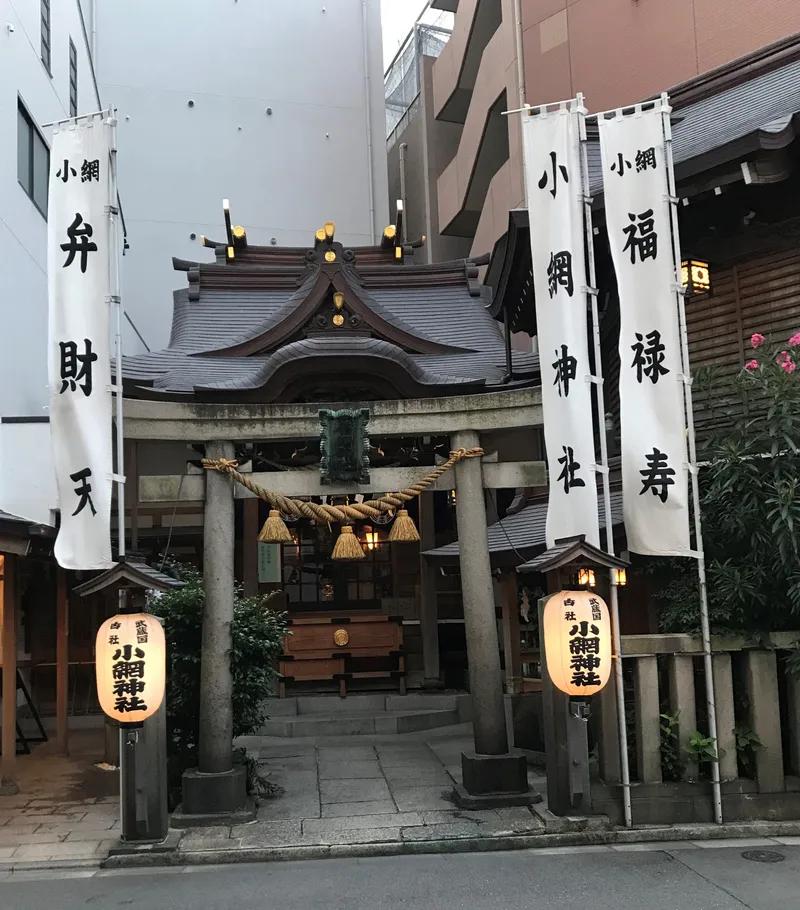 Shrine
Koami Shrine
- Money & Prosperity
- Protection & Safety
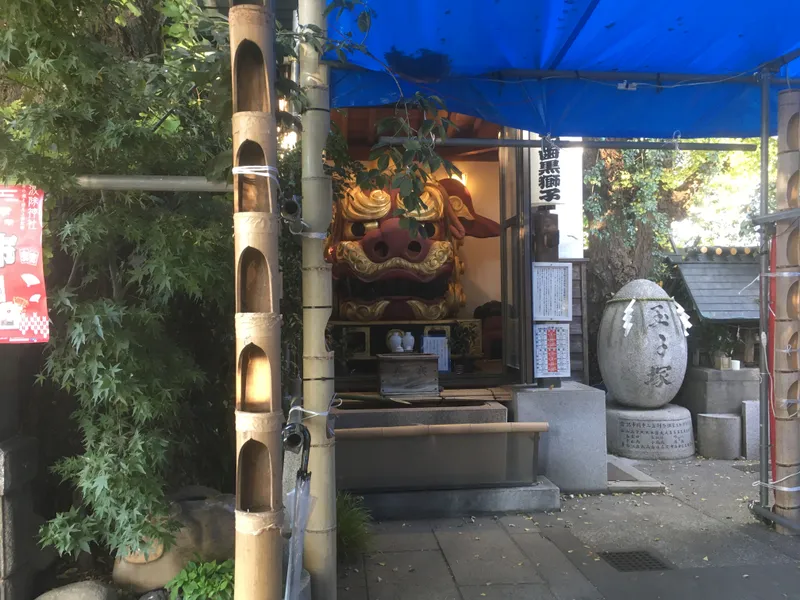
A small Nihonbashi shrine known as a deity of strong luck and warding off misfortune, with a well where visitors wash money and the only pre-war wooden shrine building left in the district.
 Shrine
Namiyoke Shrine
- Money & Prosperity
- Protection & Safety
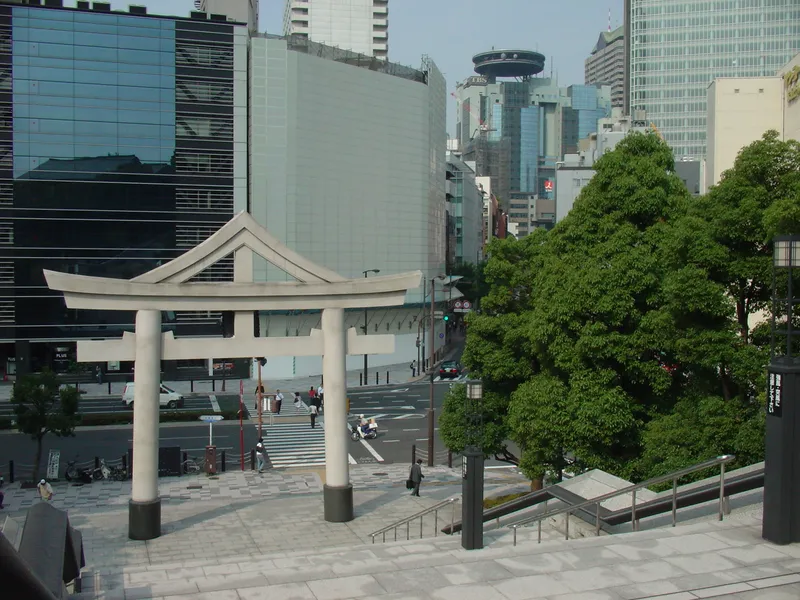
A Tsukiji shrine whose name means wave-averting, founded in 1659 after an Inari image found floating in the sea was credited with calming the water enough to finish the reclamation.
 Shrine
Hie Shrine
- Career & Work
- Fertility & Children
- Money & Prosperity
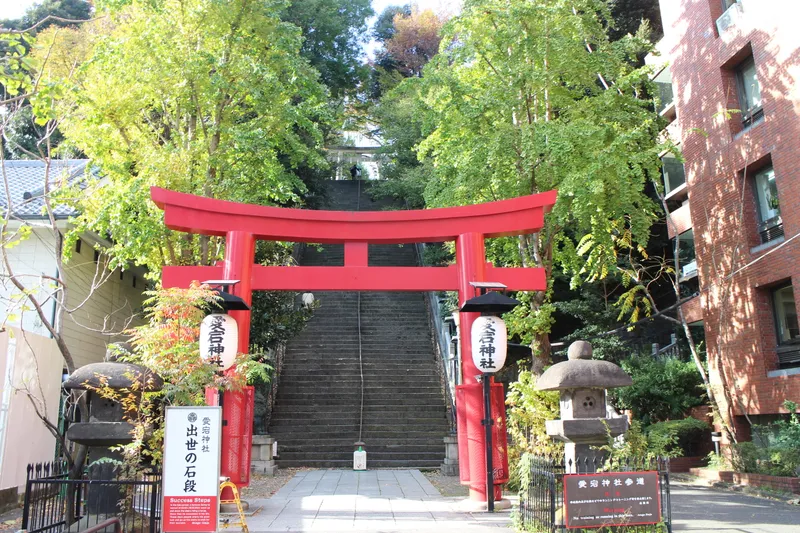
A shrine on a wooded rise in Nagatacho, once the guardian of Edo Castle, whose messenger is the monkey, a pun the shrine explains itself, connecting it to warding off evil, to winning, and to the tying of bonds.
 Shrine
Atago Shrine
- Career & Work
- Love & Romance
- Money & Prosperity
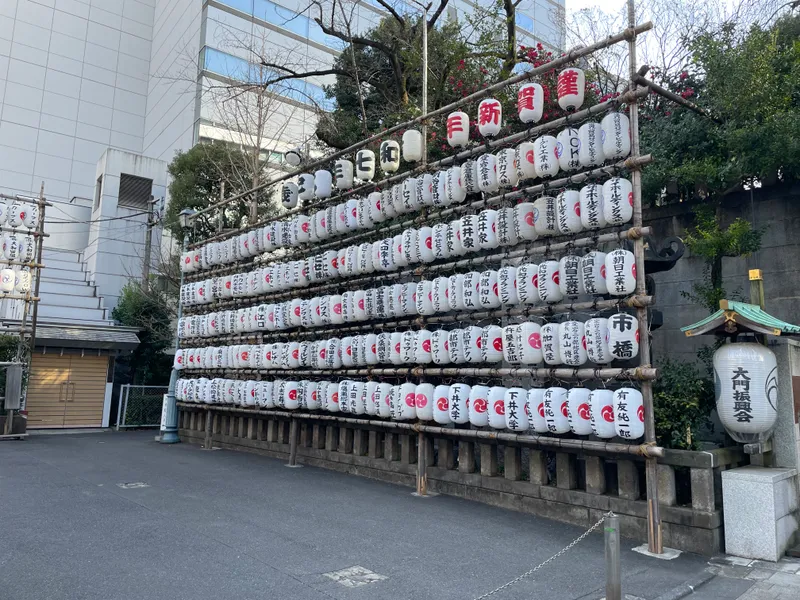
A shrine on a steep hill in Minato, founded in 1603 on Tokugawa Ieyasu's order as a deity against fire, and known for the stone staircase named after a rider who is said to have galloped up it.
 Shrine
Shiba Daijingu
- Love & Romance
- Money & Prosperity
- Protection & Safety
A Minato shrine founded in 1005 that enshrines the two deities of Ise, known in the Edo period as the Ise of the Kanto and today for a box charm sold nowhere else.
 Shrine
Akasaka Hikawa Shrine
- Family & Home
- Love & Romance
- Money & Prosperity
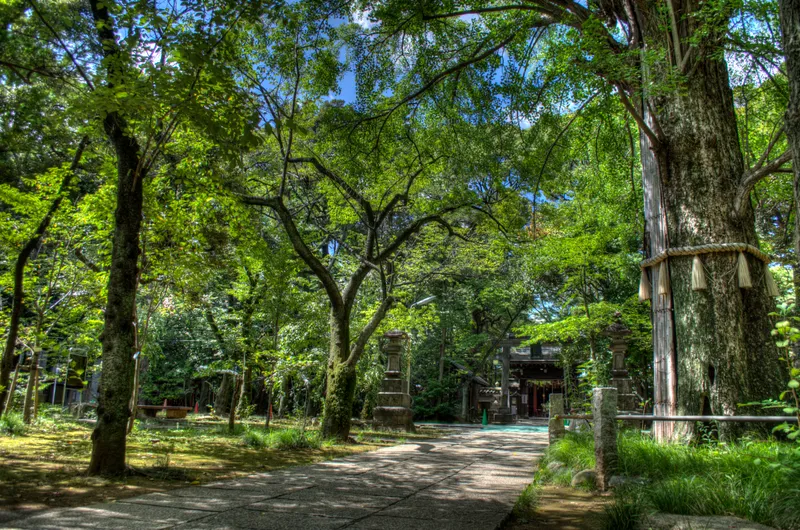
A Minato shrine founded in 951 whose Edo-period buildings survived both the earthquake and the war, known for warding off misfortune and for the tying of bonds, and the shrine explains why it is known for each.
No places match your filters