Shrine or temple?
A shrine is Shinto and a temple is Buddhist, and you can usually tell at the gate. Why the line is cleaner on paper than on the ground, and what a government order in 1868 has to do with it.
Researched and translated with AI assistance. Every claim is linked to its source, but errors get through, so check the official site for opening times, fees and closures.About
The short version
A shrine is Shinto. A temple is Buddhist. The names usually tell you: a shrine ends in jinja, jingu, gu or taisha, and a temple ends in ji, in or dera.
At the entrance, a shrine has a torii (鳥居), the two-post gate you walk under. A temple has a roofed gate with figures standing inside it, and usually a large incense burner in front of the main hall.
That much is reliable. Everything after it is less tidy, because for more than a thousand years the two were not separate institutions at all. They were pulled apart by government order in 1868, and the seam still shows in a great many places, including several on this site.
What a shrine is
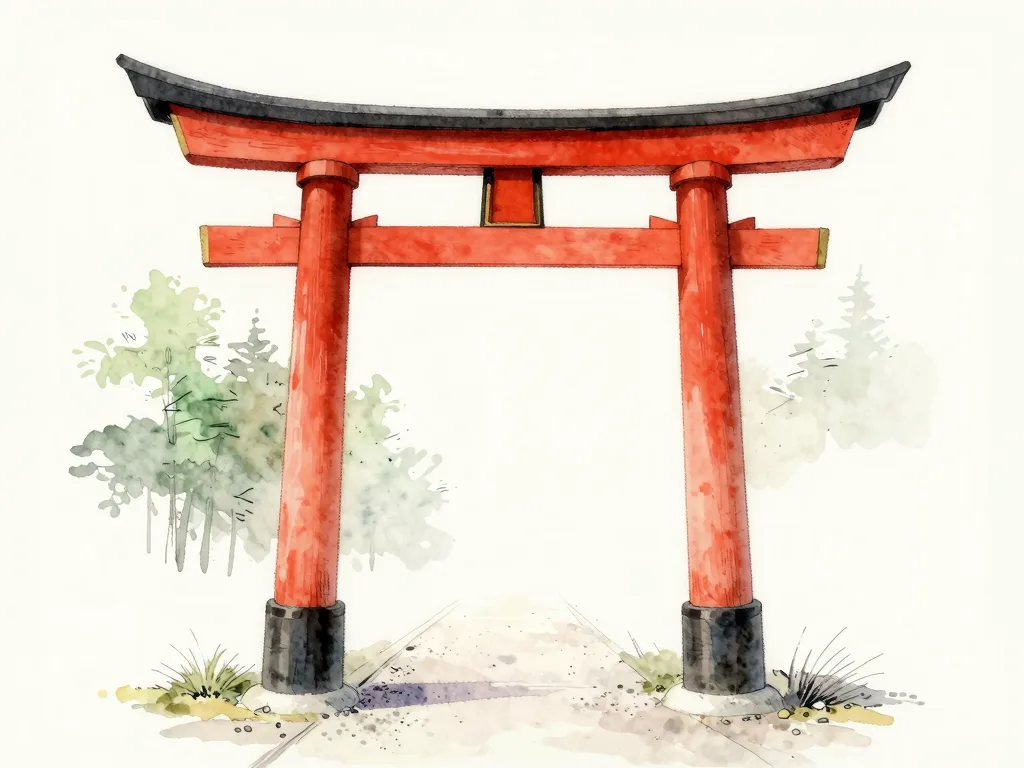
The Association of Shinto Shrines, the body most shrines in Japan belong to, defines a shrine as a sacred place where kami are enshrined.
The kami are not a fixed pantheon. The association describes them as the countless deities known as the eight million: those found in nature, in rock and tree, mountain and sea, fire and water, wind and earth, and those who appear in the myths. The spirits of ancestors, watching over their descendants, were also enshrined as kami. Where a kami was worshipped a building came to be raised, and that building is what the word shrine names.
For most people the relationship is local before it is anything else. The association describes the ujigami (氏神), the shrine of the district you live in, as watching over a child from birth through growing up, over the peace of the neighbourhood, and over ordinary daily life.
Shinto itself is described by the association as a faith that grew out of the way Japanese people lived, among ancestors who read the workings of deities in natural events and held that kami dwelt in natural things. It names no founder and no scripture. The association makes one point about the word that is worth carrying into the rest of this page: the term Shinto only became necessary in the sixth century, when Buddhism arrived and the practice already here needed a name to distinguish it from the new thing.
What a temple is
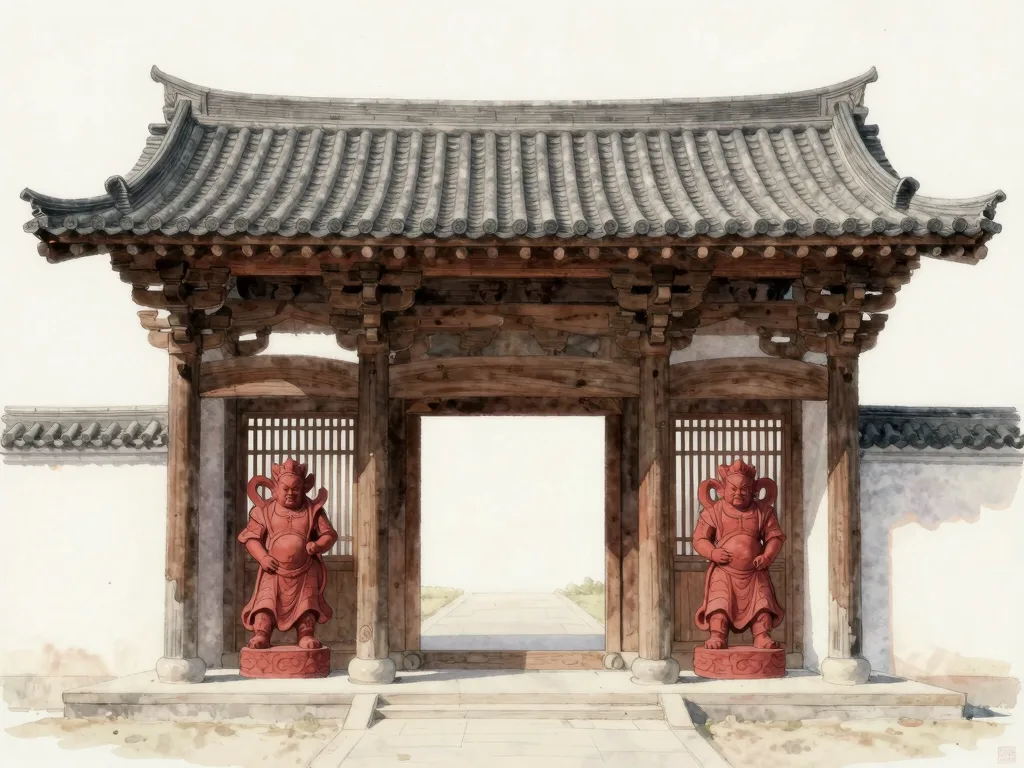
A temple is a Buddhist institution, and the thing at its centre is the honzon, the principal object of devotion. The Tendai school describes the hall that holds it as the place where people put their hands together to give thanks for the day's safety and to ask for tomorrow's, and where the spirits of ancestors are honoured alongside the buddha.
Which honzon depends on the school. Tendai takes an unusually open view of it, saying that buddhas, bodhisattvas, wisdom kings and heavenly deities differ in form and nature but lead people equally toward the buddha world, so all of them may be called honzon. Other schools are more specific. It is the reason two temples that look alike from the street can have quite different figures inside.
The scale of that world is worth knowing. The Japan Buddhist Federation, the single umbrella organisation for traditional Japanese Buddhism, has 105 member bodies: 59 major schools, 37 prefectural Buddhist associations and 9 other organisations. It puts the number of traditional Buddhist temples, churches and preaching stations in Japan at roughly 75,000, most of which belong to one school or another.
They were one system until 1868
This is the part that explains why the distinction keeps failing in practice.
After Buddhism arrived the two traditions did not sit side by side. They merged, and the theory that held the merger together is honji suijaku (本地垂迹). Kokugakuin University's Encyclopedia of Shinto sets it out plainly: the buddhas are the honji, the original ground, and the kami are their suijaku, literally the traces they leave when they appear to save people. The vocabulary came out of Tendai Buddhism, and by the end of the Heian period individual shrines had been assigned their buddhist counterparts. The original ground of Ise was said to be Dainichi Nyorai; the original ground of Hakusan was thought to be the eleven-headed Kannon.
Institutionally that meant temples inside shrine precincts, called jingu-ji, and Buddhist clergy running shrines. For most of Japanese history that was simply what religion looked like.
In 1868 the new Meiji government took it apart. The Encyclopedia describes the edicts unfolding in stages: on the seventeenth day of the third month the government ordered the Buddhist administrators and shrine monks defrocked; Buddhist terminology was then banned from being applied to kami; and Buddhist statues could no longer serve as the sacred object of a shrine.
Some read the orders as a licence to destroy Buddhism outright. That reading has a name, haibutsu kishaku (廃仏毀釈), abandon the buddhas and throw out Shakyamuni, and it cost many temples and a great deal of Buddhist art before the central authorities made clear that what they intended was separation and not elimination.
You can still put a hand on the consequences. The Hozomon at Senso-ji holds a Yuan-dynasty printing of the Buddhist canon, an Important Cultural Property. Senso-ji's own account of it is that the set used to be kept at Tsurugaoka Hachimangu in Kamakura, and was given to Senso-ji at the time of the Meiji separation of kami and buddhas. A shrine had a Buddhist canon, the law said it could not, and the books moved.
So the clean line between shrine and temple is about a hundred and sixty years old, and it was drawn by an administration rather than by a doctrine.
Where the seam still shows
Once you know what to look for, the merged system is visible on this site.
The clearest tell is the word gongen (権現), which is honji suijaku vocabulary turned into a title: a provisional manifestation. Takaosan Yakuo-in is a Buddhist temple whose principal object of devotion is Izuna Daigongen, and Ueno Toshogu is a shrine to Tokugawa Ieyasu, enshrined as Tosho Daigongen. Neither name would parse if the two systems had always been apart.
Inari halls turn up inside temple grounds without anyone finding it odd. Fukagawa Fudo-do keeps one, and so does Zoshigaya Kishimojin, whose own deity comes out of the Lotus Sutra and whose precinct began in a place called the Inari wood.
Jindai-ji enshrines Ganzan Daishi, a tenth-century Tendai abbot whose demon-quelling portrait is pasted on doors all over Japan, as its principal image. Meguro Fudoson, a different temple of the same school, opens its own image of him once a year on 3 January.
None of these is an anomaly. They are what is left of the older arrangement, showing through a separation that was administrative rather than complete.
Reading a precinct
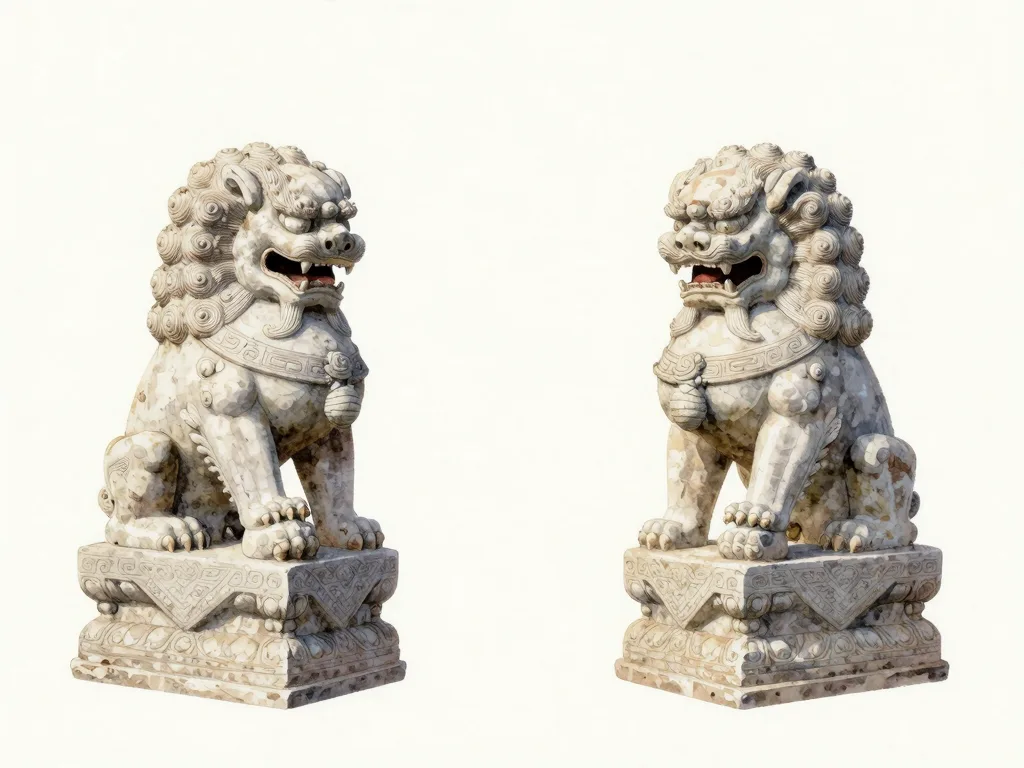
The Association of Shinto Shrines names the parts of a shrine precinct, and knowing them makes the layout legible.
The torii stands on the boundary between inside and outside, and what is inside is the sacred domain where the kami rests. The association notes it matters most where the object of worship is a natural thing, since then the torii is what shows that a deity is present at all. There are said to be some sixty forms of it: the shinmei type with a straight lintel, the myojin type whose lintel turns up at both ends, and distinctive local kinds including the vermilion Inari torii you will recognise from Fushimi.
Past the torii the sando runs to the halls. Its centre is the seichu (正中), understood as the way the kami travels, which is why people keep to one side and dip their head when crossing it.
The temizuya is where hands and mouth are rinsed before worship, a shortened form of full ritual ablution. The komainu (狛犬), the paired lion-form figures along the approach or at the worship hall, are there to drive off malign influence and guard what is in front of the deity. The honden (本殿) is where the kami rests and is the most sacred part of the shrine; the haiden (拝殿) in front of it is where prayers are made. The trees around all of it are the chinju no mori, kept as sacred ground.
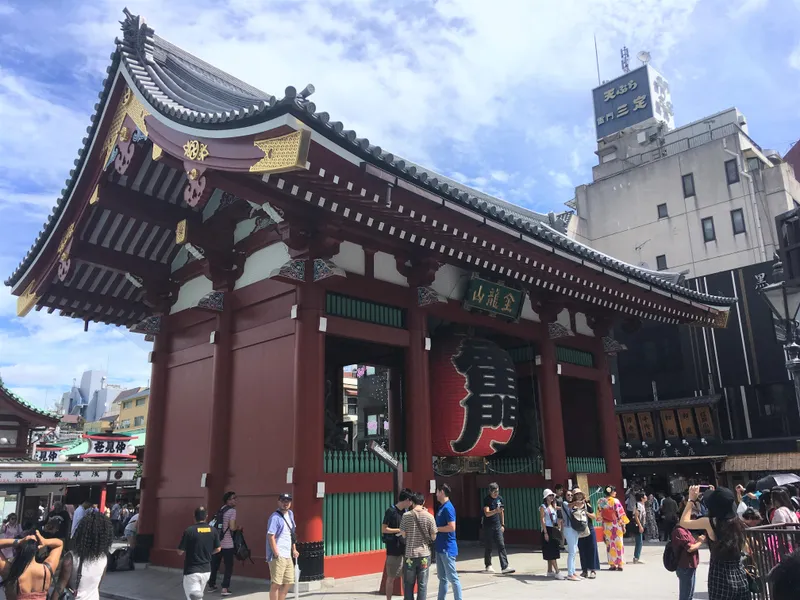
A temple gate is a different object doing a different job. At Senso-ji the outer gate, properly the Furaijinmon, carries the gods of wind and thunder on its left and right, and dragon deities of water on its back as protectors of the temple. The inner Hozomon holds a pair of Nio, the guardian kings, one at each end, in Kiso cypress and about five metres tall. That is the pattern to expect: figures standing in the gate itself, rather than a pair of animals on the path.
After the gate, the giveaways are the standing incense burner in front of the hall, the candles and the sutras. On the shrine side, a thick rope with a bell or rattle above the offering box. And what you do differs, which is the most reliable test of all: two bows, two claps and a bow at a shrine, palms together and no clapping at a temple. The visiting guide on this site has the form.
The numbers, and why they do not divide people
The Agency for Cultural Affairs has counted religious corporations every year since 1949. In the survey published in December 2025, covering the position at the end of 2024, there were 84,014 individual Shinto corporations and 76,493 Buddhist ones, out of 178,150 in all.
Those are corporations rather than buildings, so small shrines without legal personality are not in the figure, and one corporation can hold more than one site. It is a floor, not a census.
The adherent figures in the same survey are where it gets interesting. They report about 86.4 million people on the Shinto side and about 80.5 million on the Buddhist side, 175 million in total. That is a good deal more people than live in Japan.
The survey explains itself in a footnote. Every religious body defines an adherent its own way and counts by its own method, and the published figures are what those bodies report. A person counted as a parishioner of their local shrine may equally be counted by the temple that holds the family graves.
Which is the practical answer to the question this page is named after. Shrine and temple are two kinds of institution with different buildings, different clergy and different rites, and most people in Japan do not experience them as a choice between two options. A wedding at one, a funeral at the other, and New Year at whichever is nearest, is an ordinary pattern rather than a contradiction.
Related places
 Temple
Senso-ji
- Money & Prosperity
- Protection & Safety
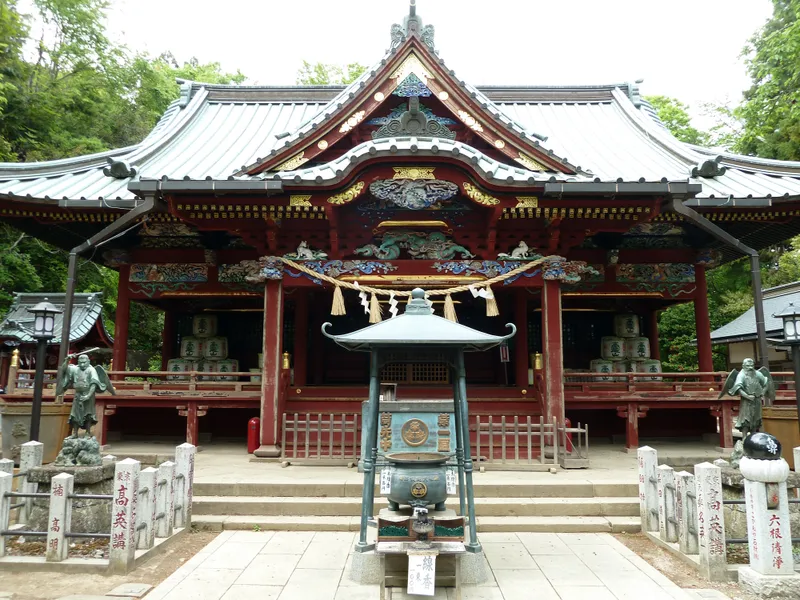
Tokyo's oldest temple, in Asakusa, built around a statue of Kannon that two fishermen brothers are said to have pulled from the river in 628, and visited today for prayers about money and protection.
 Temple
Takaosan Yakuo-in
- Protection & Safety
- Purification
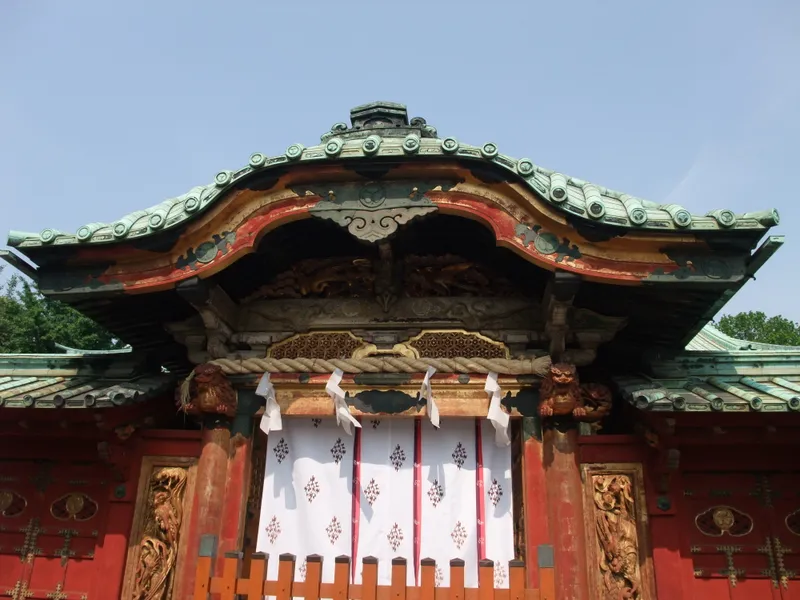
A mountain temple founded in 744 on Mount Takao, west of Tokyo, whose principal image is Izuna Daigongen and whose tengu are held to ward off calamity, still an active centre of Shugendo mountain asceticism.
 Shrine
Ueno Toshogu
- Career & Work
- Health & Healing
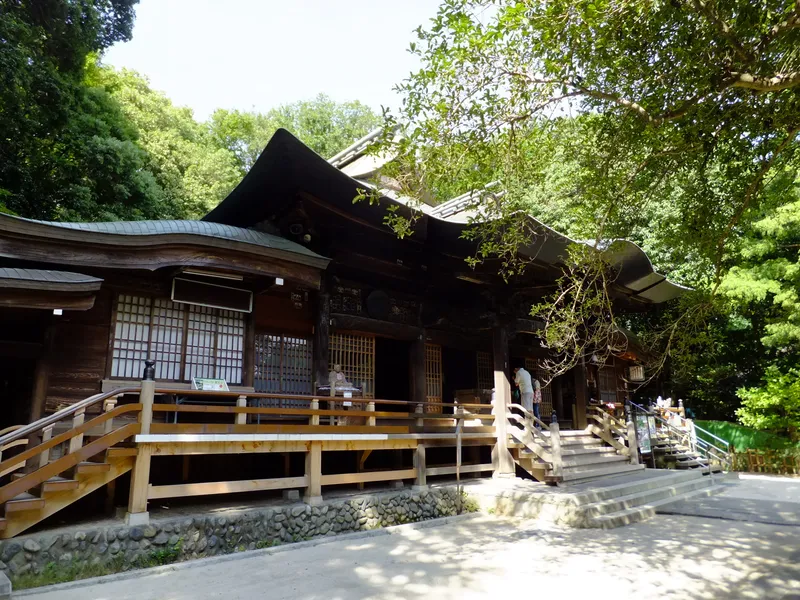
A shrine in Ueno Park founded in 1627 to Tokugawa Ieyasu, whose gilded 1651 hall survived the Ueno war, the earthquake and the air raids intact.
 Temple
Jindai-ji
- Protection & Safety
A Tendai temple in Chofu founded in 733, named after a water deity said to remove epidemics, and known for a hidden image of the monk credited with inventing omikuji (おみくじ).
Sources
- About shrines (神社について) — Jinja Honcho, the Association of Shinto Shrines (accessed 2026-08-03)
- What Shinto is (神道とは) — Jinja Honcho, the Association of Shinto Shrines (accessed 2026-08-03)
- About the torii (鳥居について) — Jinja Honcho, the Association of Shinto Shrines (accessed 2026-08-03)
- About the precinct (境内について) — Jinja Honcho, the Association of Shinto Shrines (accessed 2026-08-03)
- Q&A: the honzon and the household altar — Tendai school of Japanese Buddhism (accessed 2026-08-03)
- About the Japan Buddhist Federation (組織概要) — Japan Buddhist Federation (accessed 2026-08-03)
- Kaminarimon (雷門) — Senso-ji (accessed 2026-08-03)
- The Hozomon (宝蔵門) — Senso-ji (accessed 2026-08-03)
- Honjisuijakusetsu (Encyclopedia of Shinto), by Satō Masato — Kokugakuin University Digital Museum (accessed 2026-08-03)
- Shinbutsu Bunri (Encyclopedia of Shinto), by Sakamoto Koremaru — Kokugakuin University Digital Museum (accessed 2026-08-03)
- Main results of the religious statistics survey, 2025 edition (position as at 31 December 2024) — Agency for Cultural Affairs, Government of Japan (accessed 2026-08-03)
- Religious statistics survey (宗教統計調査), conducted annually since 1949 — Agency for Cultural Affairs, Government of Japan (accessed 2026-08-03)