Omamori, ema, omikuji and goshuin
The four things you are most likely to receive, write, draw or be given at a shrine or temple, what each is actually for, and the one of them people most often get wrong.
Researched and translated with AI assistance. Every claim is linked to its source, but errors get through, so check the official site for opening times, fees and closures.About
Four things, four different jobs
They get lumped together as souvenirs, and they are not the same kind of thing at all.
An ofuda (お神札) or an omamori (お守り) is something you receive and keep, one for the house and one for the person.
An ema (絵馬) is something you write on and leave behind.
An omikuji (おみくじ) is something you draw and read, and the reading is the point rather than the grade.
A goshuin (御朱印) is a record, made by hand, that you came and worshipped. It is the one that most often goes wrong.
Note the verb used throughout. The Association of Shinto Shrines writes about receiving an amulet, not buying one, and that is the register the whole category sits in.
Ofuda and omamori
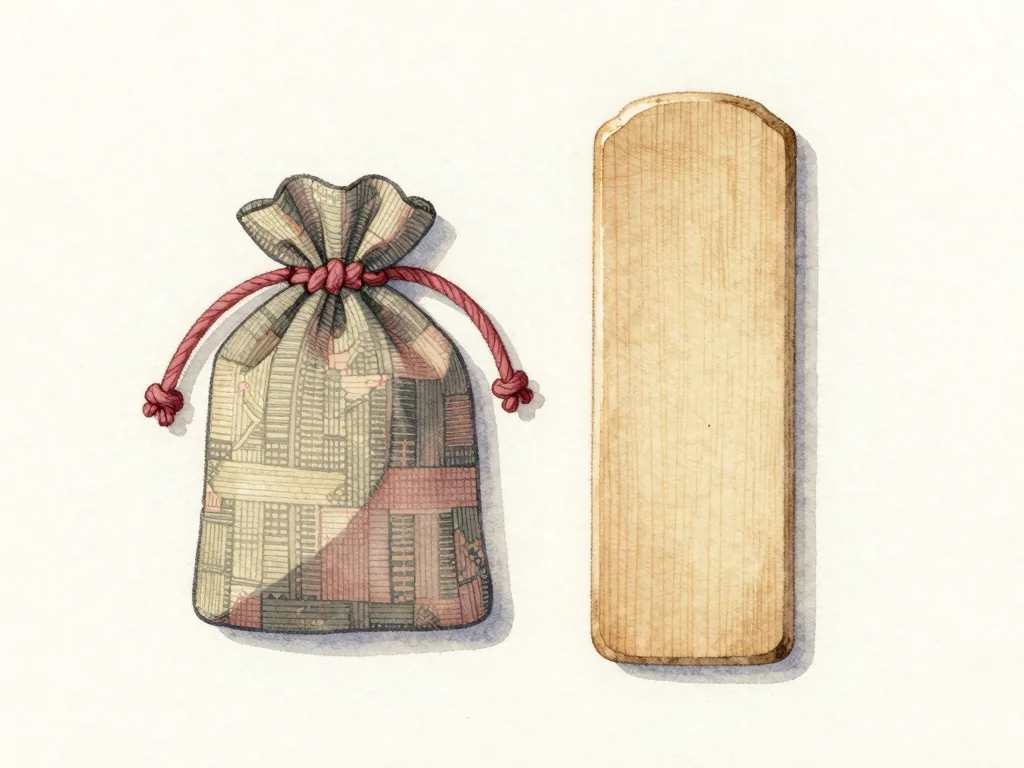
The Association of Shinto Shrines separates the two by where they go.
An ofuda protects the house. There is the Jingu Taima (神宮大麻) from Ise, which carries the name of Amaterasu with Ise's own seal on it and reaches households through the local ujigami (氏神) shrine, and there are the ofuda issued by individual shrines. It is enshrined on the household altar, and it guards the home from there.
An omamori is carried. You keep it on you, and through it you receive the protection of the kami.
Both are renewed. The association's guidance is that an ofuda kept through the year is returned to the shrine at the end of it and burnt in the ritual fire, and a new one received to go into the new year. The same is said of the omamori, with an exception worth knowing: you may keep an omamori until the wish it was received for has been granted.
People worry about holding several at once, and the association addresses that directly. It is not a problem. The many kami each have their own virtue and work together to protect you.
Two practical notes from places on this site. Return an amulet to where it came from: Meguro Fudoson accepts back only its own amulets and tablets, and says plainly that it will not take dolls, memorial tablets, daruma or the amulets of other institutions. And a few amulets carry real conditions. Ana Hachimangu in Waseda gives out its Ichiyo Raifuku amulet only between the winter solstice and Setsubun (節分), and specifies which night it goes up, at what hour, which direction it faces and that it must be stuck straight onto the wall with no backing. That is unusual, and it is the shrine's own instruction rather than folklore, which is why the page carries it.
Ema
An ema is a small wooden tablet. You write what you are asking for on it and hang it up, and the origin of the object explains the shape of the word.
The Association of Shinto Shrines traces it to the offering of real horses. The Hitachi no Kuni Fudoki and the Shoku Nihongi record live horses being presented to the kami to ask for rain, to ask for rain to stop, and for other petitions, and a horse offered that way was called a shinme (神馬), a sacred horse. Over time a horse image stood in for the animal, and then a simplified painted board stood in for the image. Ema means picture horse, and it is a literal description of what replaced what.
Originally the picture on it was a horse. The association notes that the content changed along with the times and with what people were asking for, and that shrines now show all sorts.
This site has two good examples of that drift. At Koenji Hikawa the tablets belonging to the weather shrine in its grounds are cut in the shape of a geta, the clog you toss to see whether tomorrow will be fine. At Hatonomori Hachiman in Sendagaya people hang tablets at the Shogi Hall asking to get stronger at the game.
They are hung in public and left there. Whatever you write is readable by everyone who comes after you, which is worth a moment's thought before you write it.
Omikuji
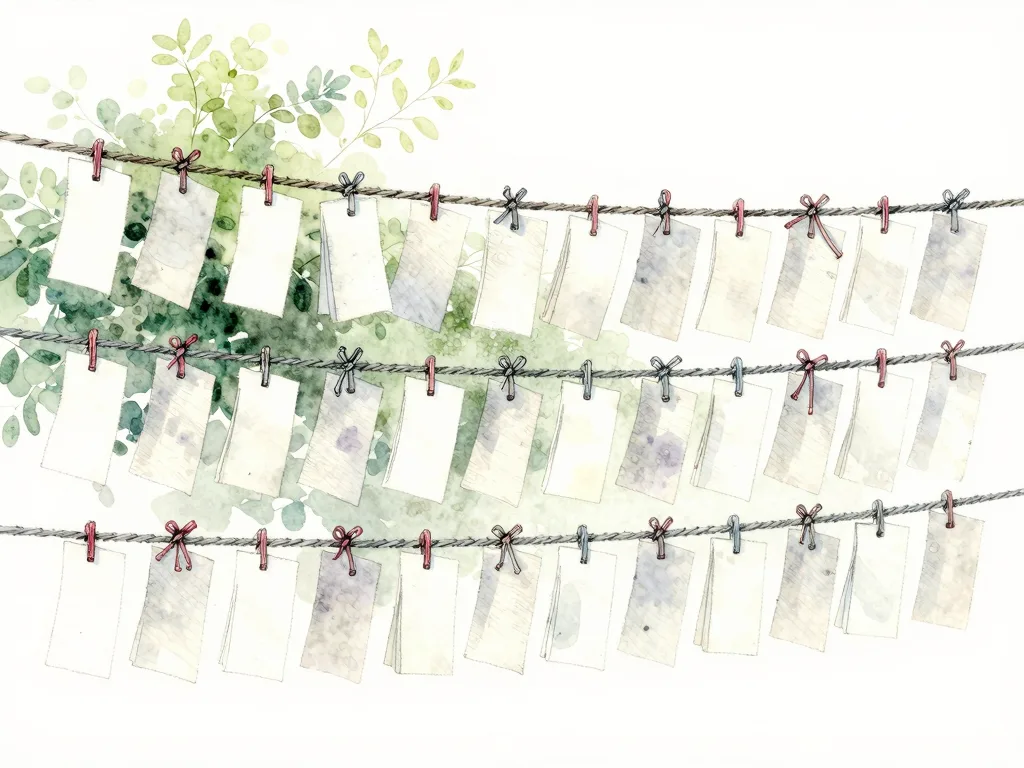
An omikuji is a paper slip drawn to read your fortune, and the Association of Shinto Shrines is clear that the grade on it is the least important thing on the paper.
The grades run roughly daikichi, kichi, chukichi, shokichi, suekichi, kyo, from great blessing down to misfortune, and the order varies between shrines. Underneath the grade the slip carries guidance across ordinary life: money, love, a lost thing, travel, the person you are waiting for, health. Many carry a waka poem meant as a line to steer by.
The association places the practice in a longer tradition of divination, which it describes as an expression of faith rather than fortune-telling: asking the mind of the kami at the outset of an undertaking, and then setting about it wholeheartedly on that basis. The personal-fortune form most people know appeared in the Edo period.
On the question everyone asks, the association gives a plain answer. There is a custom of tying the slip to the rack in the precinct before you leave, and there is no problem at all with taking it home instead.
What matters, it says, is not to draw one simply to find out whether the answer is good or bad, but to take what is written as guidance for how you live from here. Which makes taking it home the more sensible of the two options, if you actually intend to read it again.
Goshuin, and how to not get it wrong
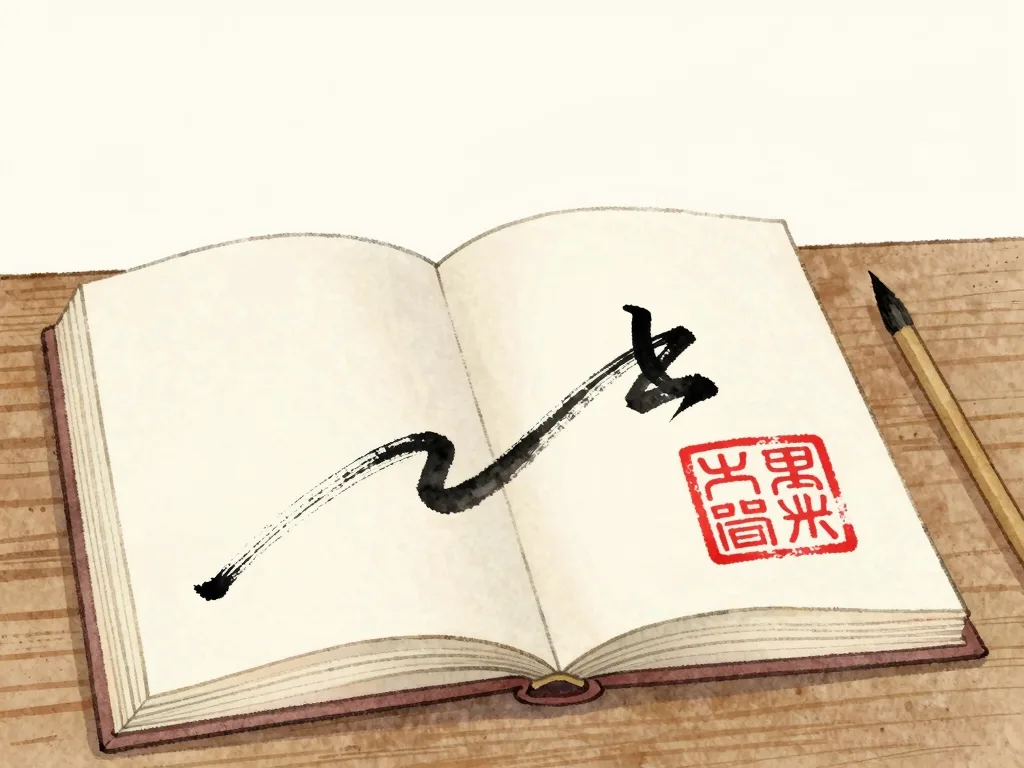
A goshuin is a proof of worship, written by hand in ink and stamped in red, usually in a book kept for the purpose.
The Miyagi prefectural shrine agency traces the practice to the receipt given for a copied sutra offered at a temple. By the Edo period it had settled into a proof of worship; the modern form with the red seal in the centre spread in the Meiji period; the name goshuin came into use in the Showa period, and collecting them as a memory of travel grew with the railways. Seals have long been treated as sacred things in Japan, and the red seal is held to carry the power of kami and buddhas.
That history is the reason for the etiquette, which the agency sets out in seven points.
Worship first. The goshuin comes after, because worship is what the visit is for.
It is not a stamp rally. The agency uses those words. The seal means something because you worshipped, and collecting is not the purpose.
Open the book yourself to the page you want, and hand it over open. Say anything unusual you need to say before the writing starts, and have small change ready.
Be quiet while it is being written, and do not photograph the person writing it.
Check before you travel. Hours and availability differ, and not every place writes one every day.
Stay within reason. Do not turn up outside the stated hours, do not hurry the writer, and do not collect them to resell.
Look after the book. Keep it somewhere clean, and putting your name in it is a sensible precaution.
Two examples from this site. Meguro Fudoson normally hands over a sheet written in advance, and writes into your own book only on days with an eight in them and on Sundays and public holidays, from 9:00 to 16:30. Koenji Hikawa keeps its seal desk roughly 9:00 to 16:00 but closes irregularly, so it makes no promise for any given day. Neither is being difficult. Writing one properly takes a trained hand and several minutes, and there is often one person doing it.
What none of these are
None of them is a purchase in the ordinary sense, and the language used around them reflects that. You receive an amulet; you offer a tablet; you are given a seal.
None of them is a guarantee. Nothing on this site claims that any object produces an outcome, and none of the sources cited here makes that claim either.
And none of them is sold by us. This site has no affiliation with any of the places it describes, sells nothing, and takes no commission. Where a page mentions an amulet or a tablet it is describing what the institution itself publishes, and the place's own site is always the thing to check before travelling for something specific.
The temple side of all this is thinner here on purpose. The Association of Shinto Shrines speaks for shrines, and there is no equivalent single body speaking for what temples give out, so what this page says about temples comes from the practice of individual temples rather than from a rule that holds everywhere. Where a temple's own instruction differs from anything above, the temple is right.
Related places
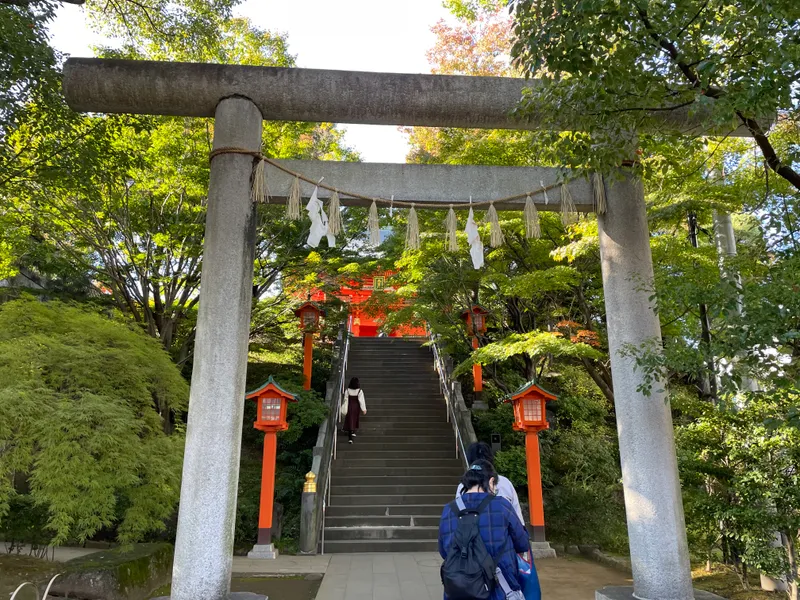 Shrine
Ana Hachimangu
- Fertility & Children
- Money & Prosperity
- Skill & Mastery
A Waseda shrine named for a cave found in its hillside in 1641, which gives out an amulet for the circulation of money for six weeks each winter and nothing the rest of the year.
 Shrine
Koenji Hikawa Shrine
- Miscellaneous
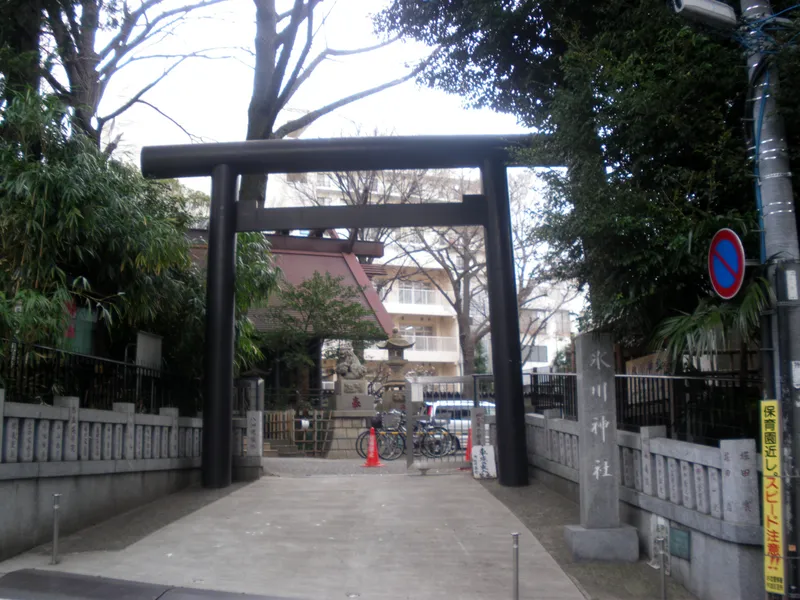
A Suginami shrine whose grounds hold a shrine to the weather, built inside an army meteorological unit in 1944 and left standing after the war by an oversight.
 Temple
Meguro Fudoson (Ryusen-ji)
- Protection & Safety
- Purification
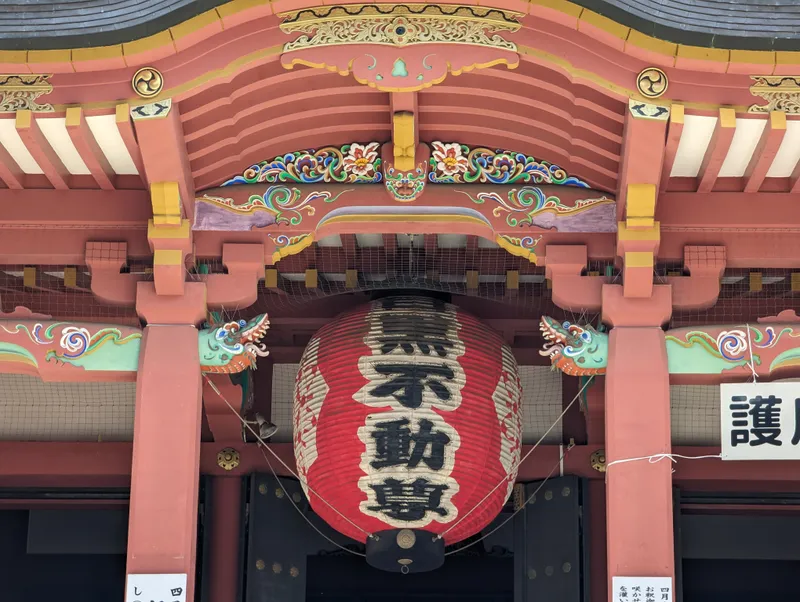
The oldest Fudo site in the Kanto, founded in 808 after a fifteen-year-old monk dreamed of a blue-black figure with a sword and a rope, and one of the Five-Colour Fudo that guarded Edo.
 Shrine
Kameido Tenjin Shrine
- Exams & Study
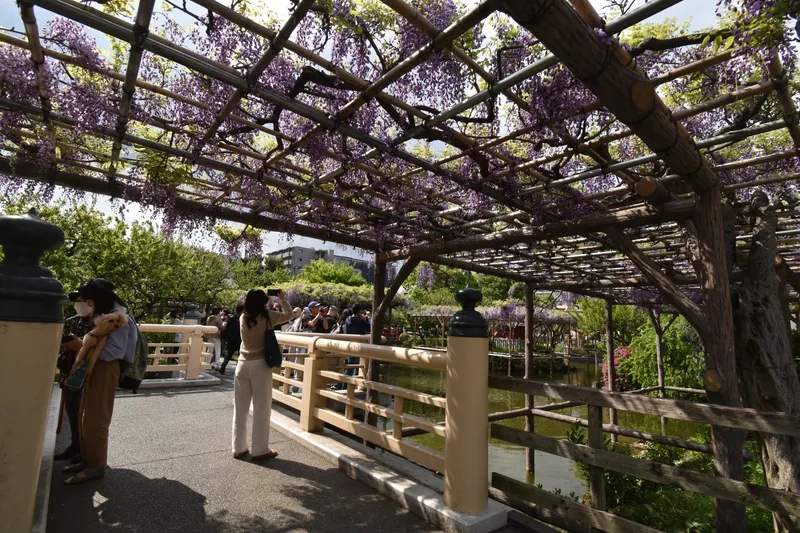
A Koto shrine laid out in 1662 on the model of Dazaifu Tenmangu, head of Tenjin devotion in eastern Japan, and the best place in Tokyo to see wisteria.
Sources
- Ofuda and omamori (お神札、お守り) — Jinja Honcho, the Association of Shinto Shrines (accessed 2026-08-03)
- Omikuji (おみくじ) — Jinja Honcho, the Association of Shinto Shrines (accessed 2026-08-03)
- Ema (絵馬) — Jinja Honcho, the Association of Shinto Shrines (accessed 2026-08-03)
- Goshuin etiquette (御朱印マナー) — Miyagi Prefectural Shrine Agency (accessed 2026-08-03)
- The Ichiyo Raifuku amulet (一陽来復御守) — Ana Hachimangu (accessed 2026-08-02)
- Frequently asked questions — Meguro Fudoson Ryusen-ji (accessed 2026-08-02)
- Frequently asked questions (よくあるご質問) — Koenji Hikawa Shrine (accessed 2026-08-02)
- The Shogi Hall (将棋堂) — Hatonomori Hachiman Shrine (accessed 2026-08-02)