Imado Shrine
今戸神社 · Imado Jinja · Imado Hachiman
Researched and translated with AI assistance. Every claim is linked to its source, but errors get through, so check the official site for opening times, fees and closures.About
In short
An Asakusa shrine founded in 1063 that calls itself a shrine of bond-tying, and which has run its own matchmaking gatherings since 2008.
Quick facts
- Address
- 1-5-22 Imado, Taito-ku, Tokyo 111-0024
- Access
- About fifteen minutes on foot from Asakusa station on any of its lines, north along the river. The Toei bus to Asakusa 7-chome leaves a five-minute walk, and the stop at the Riverside Sports Centre, served both by Toei buses and by the Taito ward Kita-Megurin bus, is a minute away.
- Hours
- The shrine office is open every day of the year from 9:00 to 16:00. There is no parking and no public toilet.
- Best time
- The main festival falls on the first Saturday and Sunday of June. The first week of January is when the Asakusa Seven Lucky Gods and the Shitamachi Eight Shrines circuits are walked, and this shrine is a station on both.
- Spiritual entities
- Fukurokuju (福禄寿) · Hachiman (八幡神) · Izanagi (伊邪那岐命) · Izanami (伊邪那美命)
- Official site
- imadojinja1063.crayonsite.net
About this place
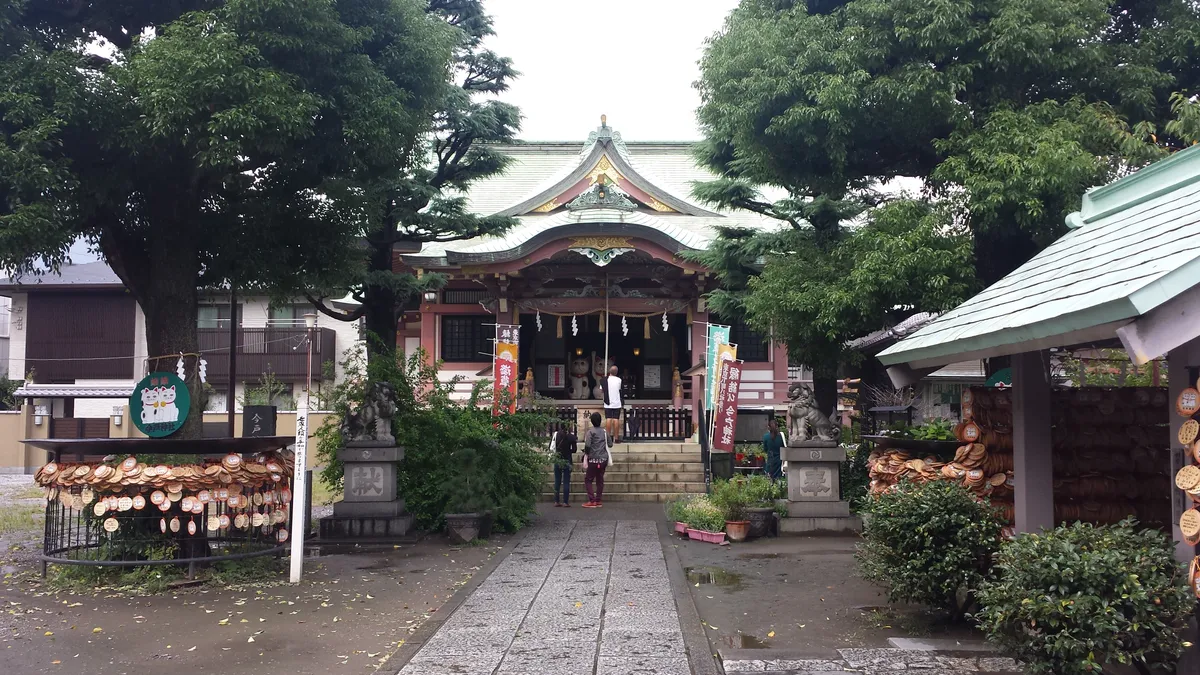
Imado Shrine stands north of Asakusa, away from the crowds around Senso-ji, and describes itself plainly as a bond-tying shrine. It enshrines Emperor Ōjin alongside Izanagi and Izanami, the pair who in the myths made the land, and it gives that pairing as the reason for what it is known for. Since 2008 it has also run its own matchmaking gatherings, which it says makes it the shrine where that practice began.
Origin and history
The shrine dates its founding to 1063. Minamoto no Yoriyoshi and his son Yoshiie, sent by imperial command against Abe no Sadatō and Muneto in the north, prayed here and enshrined the Iwashimizu Hachiman of Kyoto at two places: Tsurugaoka in Kamakura, and Imanotsu in Asakusa, which is now Imado. The second of those is this shrine, then called Imado Hachiman.
In 1081 Yoshiie passed through again on his way against Kiyohara Takehira and Iehira, prayed for victory, won, and repaired the hall in return.
It burned and was rebuilt repeatedly through the wars that followed. The third shogun, Tokugawa Iemitsu, granted official timber for its reconstruction, which was completed in 1636. The Great Kanto Earthquake of 1923 reduced it to ash again; it was rebuilt, and then destroyed once more in the Tokyo air raid of March 1945. The present hall dates from November 1971 and was paid for by the parish.
In July 1937 the shrine merged with the neighbouring Hakusan Shrine and took its current name.
What it is locally associated with
Why it is a bond-tying shrine
Izanagi and Izanami made the land and bore the deities. The shrine says they have long been revered as deities of musubi, who tie bonds and firm the foundation of production.
documented historyThe matchmaking gathering, since 2008
The shrine runs its own meetings, beginning with a prayer for a good match. It says the first was held on 26 October 2008 and that this is where the practice started.
documented historyFounded on the way to a northern campaign, 1063
Minamoto no Yoriyoshi and Yoshiie enshrined the Iwashimizu Hachiman here and at Tsurugaoka in Kamakura, on their way against the Abe in the north.
documented history
This shrine says what it is in its own words, twice: it is a bond-tying shrine, and it is the bond-tying deity among the eight of the Shitamachi circuit. What is unusual is that it also gives a reason, and the reason is the pair of deities it enshrines alongside Emperor Ōjin. Izanagi and Izanami received the command of the heavenly deities, made the land of Japan, bore the deities and brought forth the mountains, seas and growing things. The shrine says they have long been looked to as deities of musubi, worshipped as those who tie bonds and firm the foundation of production. That is a mechanism rather than a reputation, and it is why this page carries the love and relationship tags.
The shrine also runs matchmaking gatherings itself, which is not a common thing for a shrine to do. It records the first as 26 October 2008 and describes itself as where the practice began. Participants receive a prayer for a good match before anything else happens, and the shrine is careful to frame the whole thing as a religious activity rather than an introduction agency: it says explicitly that it provides only the meeting and takes no other responsibility, that it is not a marriage bureau, and that it does not ask registrants about previous marriages or children.
On Emperor Ōjin, the shrine makes a point worth repeating. Hachiman devotion is generally taken to be about fortune in war, but it says the underlying vow is something else: the great love of a mother holding and raising her child. It notes that Ōjin and his mother Jingū are remembered for bringing continental culture in, and reads the pair as evidence that a faith in the bond between mother and child existed in ancient Japan.
The fourth enshrined figure is Fukurokuju, and the shrine is one of the Asakusa Seven Lucky Gods. It explains that the Asakusa circuit has nine shrines and temples rather than seven, on an old reading in which nine is the utmost of numbers.
One thing this page does not say. Imado is often named as a birthplace of the beckoning cat, and photographs of cat figures here circulate widely. The shrine's own site does not mention the beckoning cat at all: not in its history, not among its deities, not in its list of prayers. The claim is also contested with Gotoku-ji in Setagaya. Since neither institution states it to us, this site does not assert it.
Claims and evidence levels 7
- The shrine dates its founding to 1063, when Minamoto no Yoriyoshi and Yoshiie, sent against Abe no Sadatō and Muneto in the north, enshrined the Iwashimizu Hachiman of Kyoto both at Tsurugaoka in Kamakura and at Imanotsu in Asakusa, the latter becoming Imado Hachiman. documented history
- Minamoto no Yoshiie prayed for victory here in 1081 on his way against Kiyohara Takehira and Iehira, and repaired the hall after winning. documented history
- Tokugawa Iemitsu granted official timber for the shrine's reconstruction, completed in 1636; the buildings were destroyed in the Great Kanto Earthquake of 1923 and again in the Tokyo air raid of March 1945, and the present hall was built by the parish in November 1971. documented history
- The shrine merged with the neighbouring Hakusan Shrine in July 1937 and took the name Imado Shrine. documented history
- The shrine enshrines Emperor Ōjin, Izanagi, Izanami and Fukurokuju, and describes Izanagi and Izanami as long revered as deities of musubi, worshipped as those who tie bonds and firm the foundation of production. documented history
- The shrine states that Hachiman devotion is generally taken to concern fortune in war, but that its underlying vow is the great love of a mother holding and raising her child. documented history
- The shrine has held its own matchmaking gatherings since the first on 26 October 2008, describes itself as the shrine where the practice began, and begins each gathering with a prayer for a good match; it states that it provides only the occasion, is not a marriage bureau, and takes no further responsibility. documented history
Visiting tips
The general form is in the visiting guide below. Specific to Imado Shrine:
Prayers are by reservation, arranged in advance in person or by telephone, so this is not a place to arrive and ask.
The matchmaking gathering is not something a visitor can join on the day, and the shrine's conditions are strict and worth knowing before making plans around it. Registration is in person only, with photo identity, and is limited to people who worship here; applications are accepted solely by return postcard, and participation is by ballot with first-time applicants given priority. The age range is 25 to 59.
There is no parking and no public toilet in the grounds. The office is open every day from 9:00 to 16:00.
Related guides
- How to visit a shrine or temple in JapanThe country-wide basics: purifying at the water basin, the two-bows-two-claps-one-bow form at shrines, and what temples do instead.
- What a "power spot" actually isA modern Japanese coinage, not a traditional religious category. Where the word came from, what it does and does not claim, and why this site uses it anyway.
- Shrine or temple?A shrine is Shinto and a temple is Buddhist, and you can usually tell at the gate. Why the line is cleaner on paper than on the ground, and what a government order in 1868 has to do with it.
- Omamori, ema, omikuji and goshuinThe four things you are most likely to receive, write, draw or be given at a shrine or temple, what each is actually for, and the one of them people most often get wrong.
Sources
- Deities, history and prayers (御祭神・御由緒・ご祈祷) — Imado Shrine (accessed 2026-08-02)
- The matchmaking gathering (縁結び会) — Imado Shrine (accessed 2026-08-02)
- Imado Shrine (Q11376985) coordinate location — Wikidata (accessed 2026-08-02)
Last updated:
Similar places
8 places
 Shrine
Tokyo Daijingu
- Family & Home
- Love & Romance
- Money & Prosperity
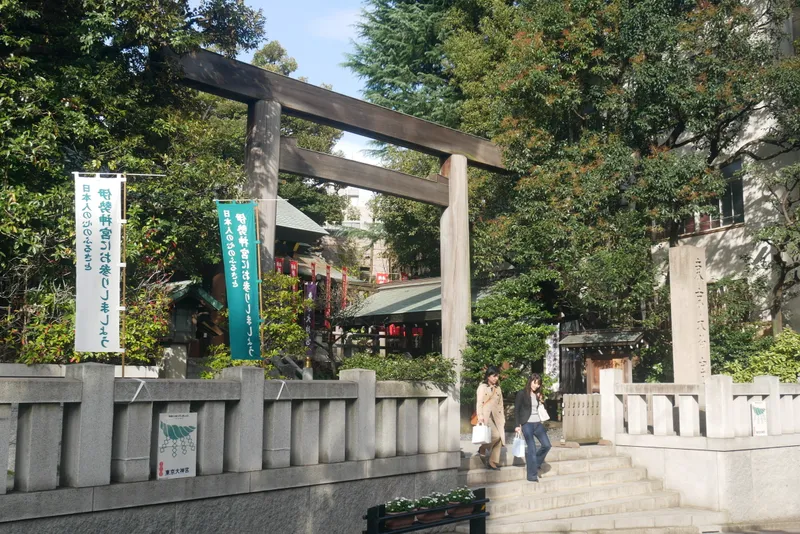
A Chiyoda shrine founded in 1880 as a Tokyo branch of Ise, known as "Tokyo's O-Ise-sama" and visited above all for prayers about relationships, an association the shrine itself explains through the three deities of creation enshrined here.
 Shrine
Atago Shrine
- Career & Work
- Love & Romance
- Money & Prosperity
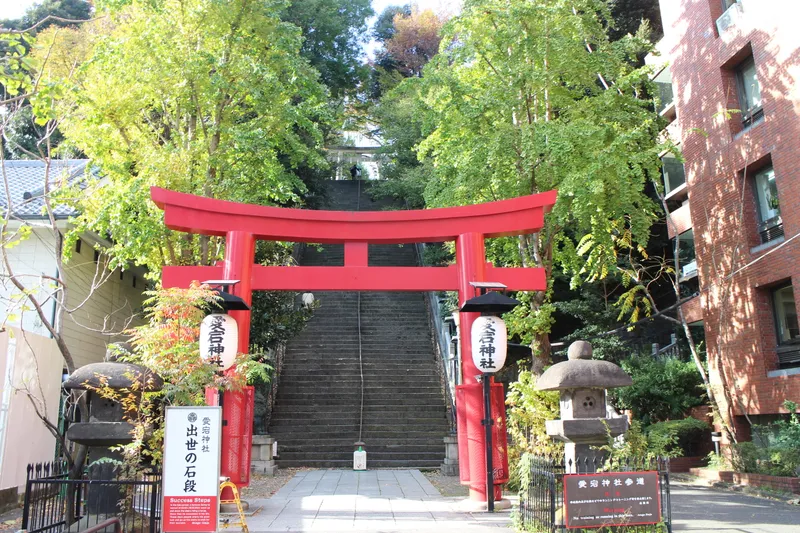
A shrine on a steep hill in Minato, founded in 1603 on Tokugawa Ieyasu's order as a deity against fire, and known for the stone staircase named after a rider who is said to have galloped up it.
 Shrine
Shiba Daijingu
- Love & Romance
- Money & Prosperity
- Protection & Safety
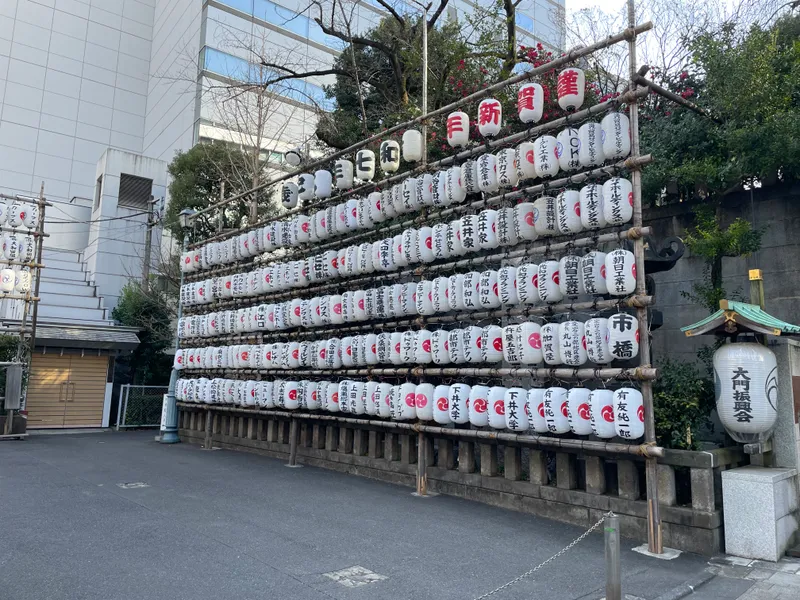
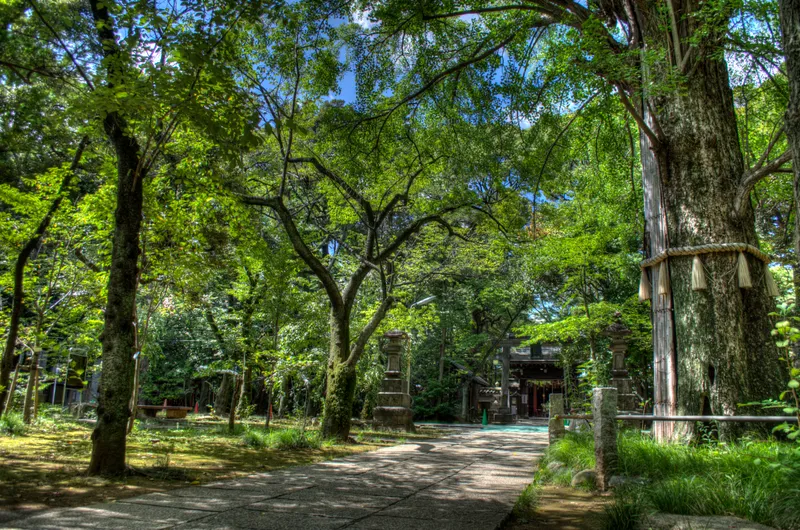
A Minato shrine founded in 1005 that enshrines the two deities of Ise, known in the Edo period as the Ise of the Kanto and today for a box charm sold nowhere else.
 Shrine
Akasaka Hikawa Shrine
- Family & Home
- Love & Romance
- Money & Prosperity
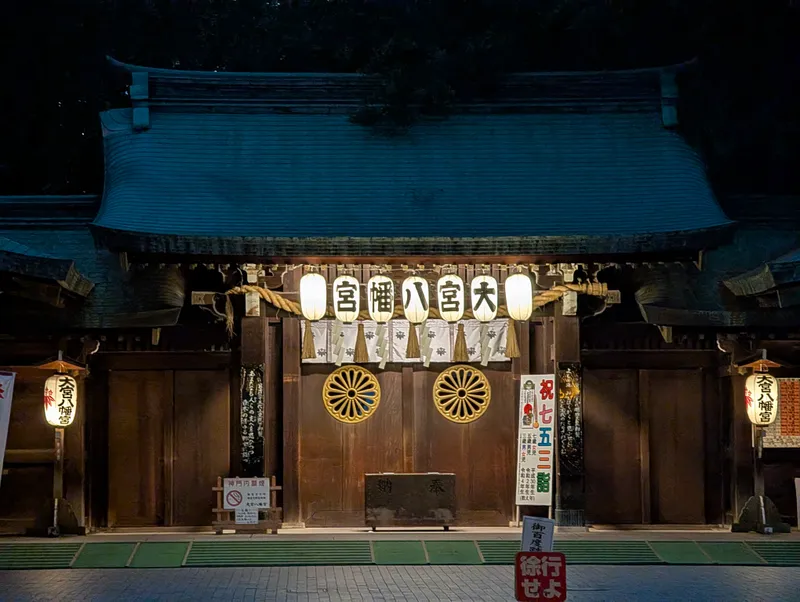
A Minato shrine founded in 951 whose Edo-period buildings survived both the earthquake and the war, known for warding off misfortune and for the tying of bonds, and the shrine explains why it is known for each.
 Shrine
Omiya Hachimangu
- Fertility & Children
- Protection & Safety
- Bonds & Matchmaking
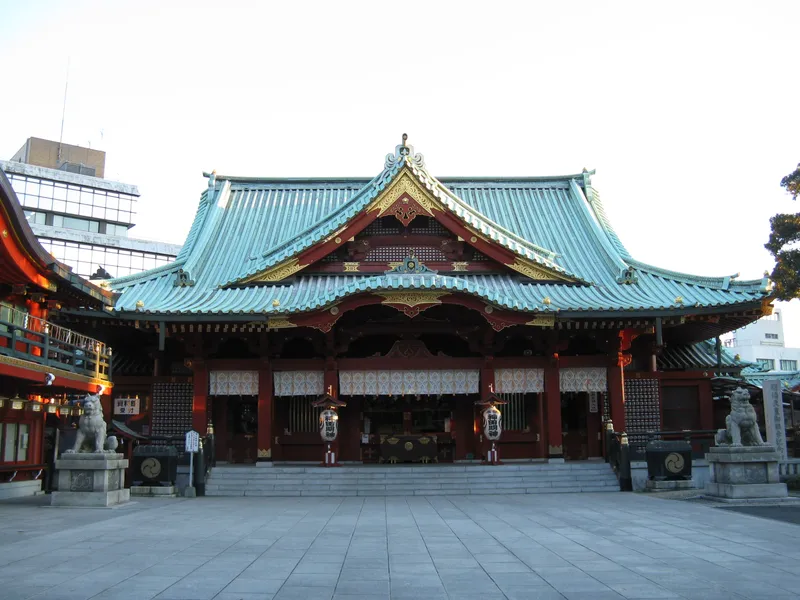
A large wooded shrine in Suginami, founded in 1063 by Minamoto no Yoriyoshi after he read a bank of white cloud as the banners of his own clan, and known for child-rearing and warding.
 Shrine
Kanda Myojin
- Career & Work
- Family & Home
- Money & Prosperity
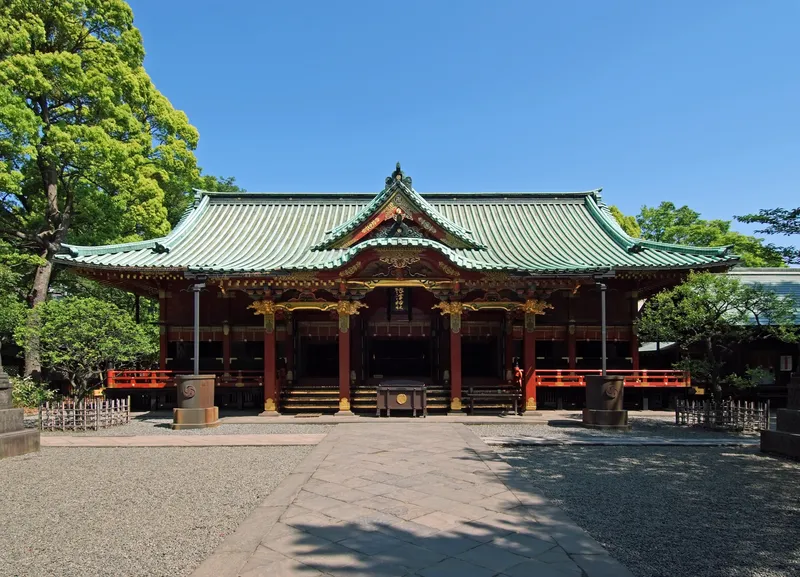
A Chiyoda shrine that served as the guardian shrine of all Edo, enshrining three deities between them associated with business prosperity, good matches and warding off misfortune, and these days selling a charm for information security.
 Shrine
Nezu Shrine
- Career & Work
- Exams & Study
- Family & Home
A Bunkyo shrine whose entire 1706 complex survives intact as an Important Cultural Property, rare in Tokyo, with an azalea hill and a tunnel of small red torii (鳥居).
 Shrine
Koami Shrine
- Money & Prosperity
- Protection & Safety
A small Nihonbashi shrine known as a deity of strong luck and warding off misfortune, with a well where visitors wash money and the only pre-war wooden shrine building left in the district.
No places match your filters