Nezu Shrine
根津神社 · Nezu Jinja
- Career & Work
- Exams & Study
- Family & Home
- Fertility & Children
- Health & Healing
- Money & Prosperity
- Protection & Safety
- Bonds & Matchmaking
Researched and translated with AI assistance. Every claim is linked to its source, but errors get through, so check the official site for opening times, fees and closures.About
In short
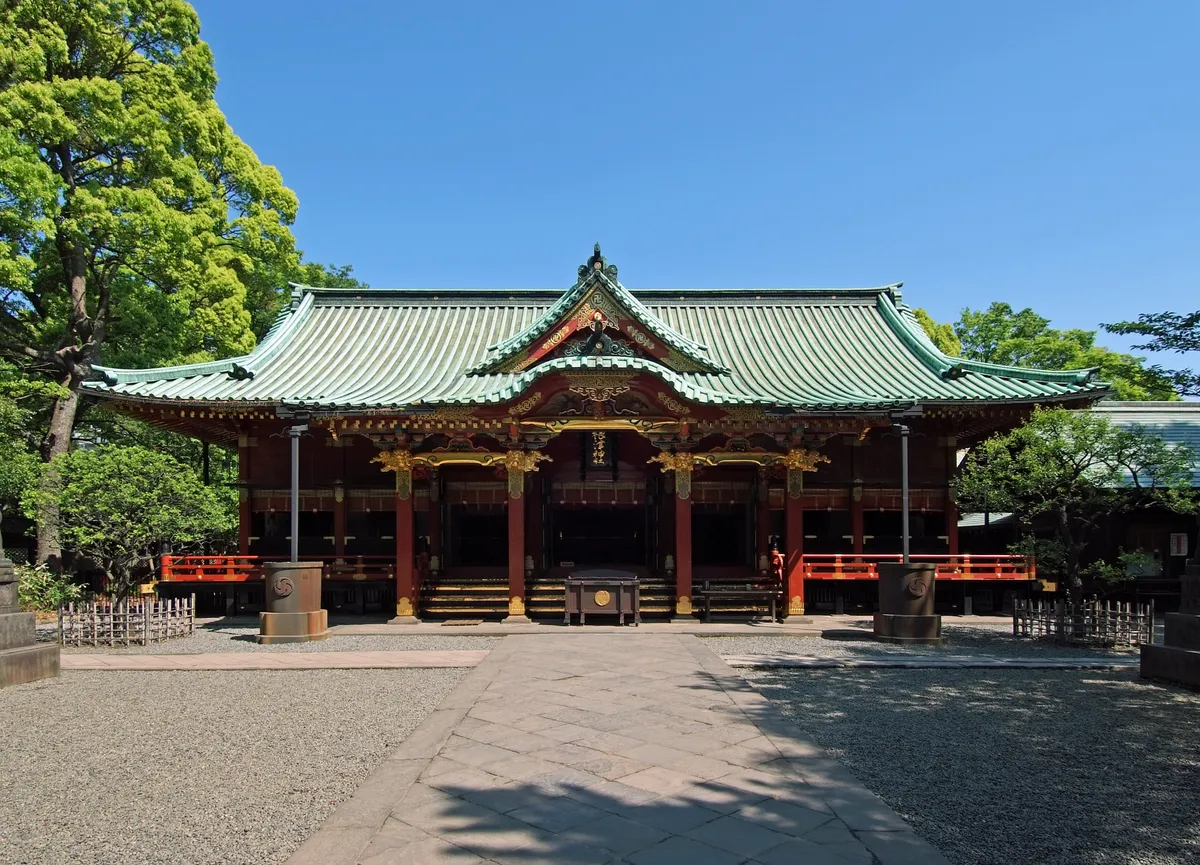
A Bunkyo shrine whose entire 1706 complex survives intact as an Important Cultural Property, rare in Tokyo, with an azalea hill and a tunnel of small red torii (鳥居).
Quick facts
- Address
- 1-28-9 Nezu, Bunkyo-ku, Tokyo 113-0031
- Access
- Nezu and Sendagi stations on the Chiyoda line are both five minutes on foot, as is Todaimae on the Namboku line. Hakusan on the Toei Mita line is ten minutes. There is paid parking on the north approach and free parking inside the grounds for worshippers.
- Hours
- The Karamon gate follows the season: 6:00–17:00 in January, 6:00–17:30 in February, and 18:00 closing from March to September, opening as early as 5:00 in midsummer. October is 5:30–17:30 and November–December 6:00–17:00. The amulet office runs 9:30 to between 16:30 and 17:30 depending on the month, opening at 9:00 on Sundays and holidays. On 1 January the gate is open from midnight to 19:00.
- Best time
- The Bunkyo Azalea Festival in April, when the azalea hill is in flower — around 3,000 plants across some 100 varieties. The festival has run every year since 1970.
- Spiritual entities
- Inari (稲荷大神) · Susanoo no Mikoto (素盞嗚尊)
- Official site
- nedujinja.or.jp
About this place
Nezu Shrine is the most architecturally complete old shrine in Tokyo. Its main hall, offering hall, worship hall, Chinese gate, latticed fence and tower gate all date from 1706 and are all designated Important Cultural Properties, which is close to unheard-of in a city that burned and was bombed as often as this one. It is also known for its azaleas and for the Otome Inari sub-shrine, whose small red torii run in a tunnel up the slope.
Origin and history
The shrine's own account holds that it was founded some 1,900 years ago by Yamato Takeru, which is tradition rather than record. What is documented is more recent and more unusual: in the Edo period Tokugawa Tsunayoshi donated the grounds of a residence, and in 1706 the shrine was moved here from its earlier site in Sendagi. The buildings put up then are the buildings standing now.
That is the point worth pausing on. The main hall, offering hall, worship hall, Chinese gate, latticed fence and tower gate are all of that date and all designated Important Cultural Properties. Tokyo lost most of its equivalent architecture to fire, earthquake and war; this complex did not.
Also enshrined are Susanoo, Ōyamakui and Homuwake, with Ōkuninushi and Sugawara no Michizane. The Otome Inari sub-shrine in the grounds enshrines Uka no Mitama.
What it is locally associated with
An intact 1706 complex
Main hall, worship hall, Chinese gate, fence and tower gate all date from 1706 and are all Important Cultural Properties, a survival almost unique in Tokyo.
documented historyOtome Inari and its torii tunnel
A sub-shrine to Uka no Mitama on the slope, approached through a close-set run of small red torii.
documented historyThe azalea hill
Around 3,000 azalea plants of some 100 varieties. The Bunkyo festival around them has run every year since 1970.
documented historyThe wish-hanging kaya tree
The shrine's white-snake messenger is said to have lived in this tree, and wishes made at it to have come true in ways people could not account for.
folk traditionThe last tower gate in Edo
The romon is the only surviving shrine tower gate in Edo. All seven Important Cultural Properties here are finished in true lacquer, and the 200-metre fence is founded eight metres deep.
documented history
Nezu Shrine covers unusually broad ground, and it says so itself. Its list of what it will pray for runs to twenty intentions, each with a line of explanation: warding off the misfortunes of a critical year, turning aside calamity and drawing in good fortune, the safety of a household, a wish held privately, success in study, passing an examination, victory in sport or in any contest, the prosperity of a trade, recovery from illness, being blessed with good bonds between people, being granted a child, a safe delivery. Those sentences are where every purpose on this page comes from, not from the shrine's reputation, and not from the deities, since it publishes no account of what each of them is petitioned for individually.
The grounds carry more than the main hall. A kaya tree in the precinct is known as the wish-hanging kaya: the shrine's messenger, a white snake, is said to have lived in it, and wishes made there were said to come true in ways people could not explain. The Otome Inari sub-shrine sits on a stage-built platform overlooking the pond, its small shrine set inside a hollow (older records call it the hole Inari), and the path to it runs through a close-set tunnel of donated torii. A second Inari, Komagome Inari, was the guardian of this land when it was the Tokugawa residence that stood here before the shrine, and still carries the hollyhock crest on its roof. The azalea hill holds around 3,000 plants of about 100 varieties, and the Bunkyo festival built around it has run every year since 1970.
The grounds also hold a good deal of ordinary history: a stone where Natsume Sōseki and Mori Ōgai, both parishioners, used to sit; a monument Ōgai made from the mounting of a Russian shell after the Russo-Japanese War; and the buried afterbirth of Tokugawa Ienobu, the sixth shogun, who was born on this site. Nezu is also one of the Tokyo Ten Shrines, the circuit drawn in 1975 from the twelve shrines the Meiji emperor designated in 1868 to guard the new capital.
Claims and evidence levels 11
- The shrine holds that it was founded some 1,900 years ago by Yamato Takeru. folk tradition
- Tokugawa Tsunayoshi donated the grounds, and the shrine was moved here from Sendagi in 1706. documented history
- The main hall, offering hall, worship hall, Chinese gate, latticed fence and tower gate all date from 1706 and are designated Important Cultural Properties. documented history
- Susanoo, Ōyamakui and Homuwake are enshrined, together with Ōkuninushi and Sugawara no Michizane; the Otome Inari sub-shrine enshrines Uka no Mitama. documented history
- The azalea hill holds around 3,000 plants of about 100 varieties, and the Bunkyo Azalea Festival has been held annually since 1970. documented history
- Among the shrine's charms is a zodiac substitute charm, taken in one's own birth-year sign so that it stands in the bearer's place. local custom
- The shrine performs prayers for twenty listed intentions, including warding off misfortune, household safety, success in study and examinations, victory in contests, prosperity in trade, recovery from illness, good bonds between people, being granted a child, and safe delivery. local custom
- A kaya tree in the grounds is known as the wish-hanging kaya: the shrine's messenger, a white snake, is said to have lived in it, and wishes made there to have been granted. folk tradition
- The tower gate is the only surviving shrine tower gate in Edo; all seven Important Cultural Property structures are finished in true lacquer, and the 200-metre latticed fence has stood without distortion for three centuries on foundations eight metres deep. documented history
- The grounds stand on the former Tokugawa residence where Ienobu, the sixth shogun, was born, and hold the mound where his afterbirth was buried; Natsume Sōseki and Mori Ōgai were both parishioners. documented history
- Nezu Shrine is one of the Tokyo Ten Shrines, a circuit drawn in 1975 from the twelve shrines designated in 1868 to guard the new capital. documented history
Visiting tips
The general form is in the visiting guide below. Nezu Shrine publishes the most detailed set of visitor rules of any place on this site, and they are worth reading before you arrive.
Photography on the stone paving of the approach in front of the hall is prohibited outright, as is photography inside the hall. Corporate shoots, paid photo sessions and location scouting are not permitted, nor is photographing for stock sale. Revealing costumes and shrine-maiden or priest cosplay are specifically named as not permitted, and neither is bridal location photography or playing music while shooting. Ordinary personal snapshots are fine, as are hired photographers for a first shrine visit or a coming-of-age celebration. Commercial publication, television and advertising need permission, and during the April azalea festival only festival publicity is allowed.
One rule is worth stating on its own, because it is unusual and it is explicit: taking photographs without praying or paying your respects at all is listed among the prohibited acts. This is a place of worship first, and it says so.
Beyond cameras: keep your voice down, and especially so near the main hall inside the latticed fence. Do not smoke anywhere: the buildings are Important Cultural Properties and there is a strict no-fire rule. Do not lean or sit on the buildings or fences. Dogs may be walked in the grounds but may not go inside the latticed fence, and you must clean up after them. The free car park is for worshippers, prayer bookings and weddings only. There is a dress expectation too: the shrine asks visitors to refrain from clothing that leaves much of the skin exposed, and from visiting barefoot.
If you want a formal prayer, the ordinary kind needs no booking: apply at the amulet office to the right of the hall, from ¥5,000 for most intentions or ¥10,000 for a first shrine visit, Shichi-Go-San or a thirteenth-year blessing, taking about twenty minutes. A private one-party prayer must be booked three days ahead, from ¥20,000, and is not available at all in January, April, or from mid-October to the end of November. Note also that there is no waiting room, changing room or nursing room.
One practical note: the amulet office closes before the gate does, but if you arrive after it shuts while the gate is still open, the shrine asks you to press the intercom rather than assume it is closed.
Related guides
- How to visit a shrine or temple in JapanThe country-wide basics: purifying at the water basin, the two-bows-two-claps-one-bow form at shrines, and what temples do instead.
- What a "power spot" actually isA modern Japanese coinage, not a traditional religious category. Where the word came from, what it does and does not claim, and why this site uses it anyway.
- Shrine or temple?A shrine is Shinto and a temple is Buddhist, and you can usually tell at the gate. Why the line is cleaner on paper than on the ground, and what a government order in 1868 has to do with it.
- Omamori, ema, omikuji and goshuinThe four things you are most likely to receive, write, draw or be given at a shrine or temple, what each is actually for, and the one of them people most often get wrong.
Sources
- About Nezu Shrine (根津神社について) — Nezu Shrine (accessed 2026-08-02)
- Gate and amulet office hours (唐門開閉時間・授与所受付時間) — Nezu Shrine (accessed 2026-08-02)
- Requests to visitors (ご参拝時のお願い) — Nezu Shrine (accessed 2026-08-02)
- Photography in the grounds (境内での撮影について) — Nezu Shrine (accessed 2026-08-02)
- Amulets and talismans (授与品) — Nezu Shrine (accessed 2026-08-02)
Show 5 more sources
- Personal prayers — intentions, fees and rules (個人祈祷) — Nezu Shrine (accessed 2026-08-02)
- Guide to the grounds (境内案内) — Nezu Shrine (accessed 2026-08-02)
- The Tokyo Ten Shrines (東京十社) — Nezu Shrine (accessed 2026-08-02)
- Access (アクセス) — Nezu Shrine (accessed 2026-08-02)
- Nezu Shrine (Q335612) — coordinate location — Wikidata (accessed 2026-08-02)
Last updated:
Similar places
8 places
 Shrine
Kanda Myojin
- Career & Work
- Family & Home
- Money & Prosperity
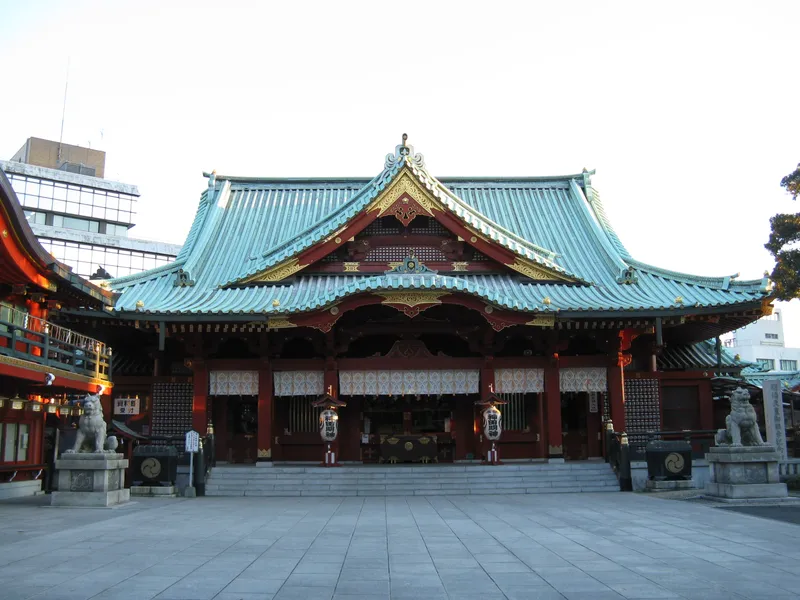
A Chiyoda shrine that served as the guardian shrine of all Edo, enshrining three deities between them associated with business prosperity, good matches and warding off misfortune, and these days selling a charm for information security.
 Shrine
Hie Shrine
- Career & Work
- Fertility & Children
- Money & Prosperity
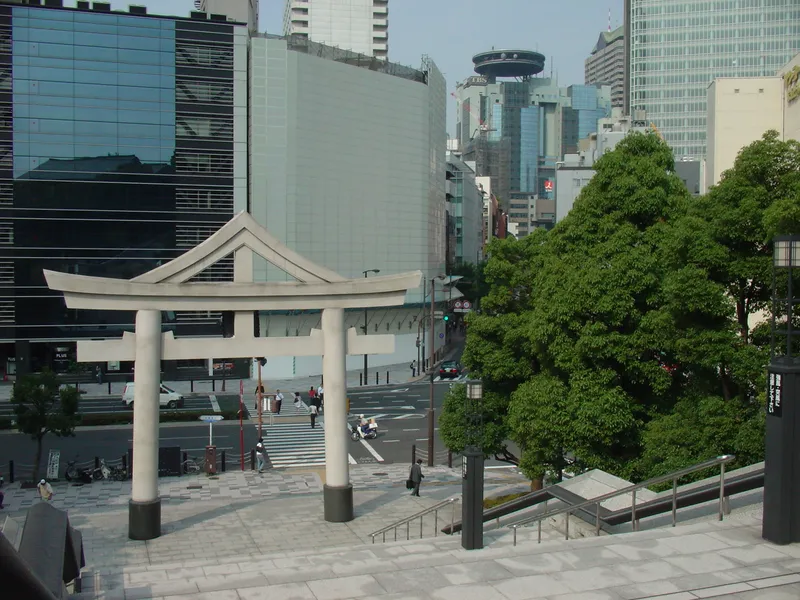
A shrine on a wooded rise in Nagatacho, once the guardian of Edo Castle, whose messenger is the monkey, a pun the shrine explains itself, connecting it to warding off evil, to winning, and to the tying of bonds.
 Shrine
Akasaka Hikawa Shrine
- Family & Home
- Love & Romance
- Money & Prosperity
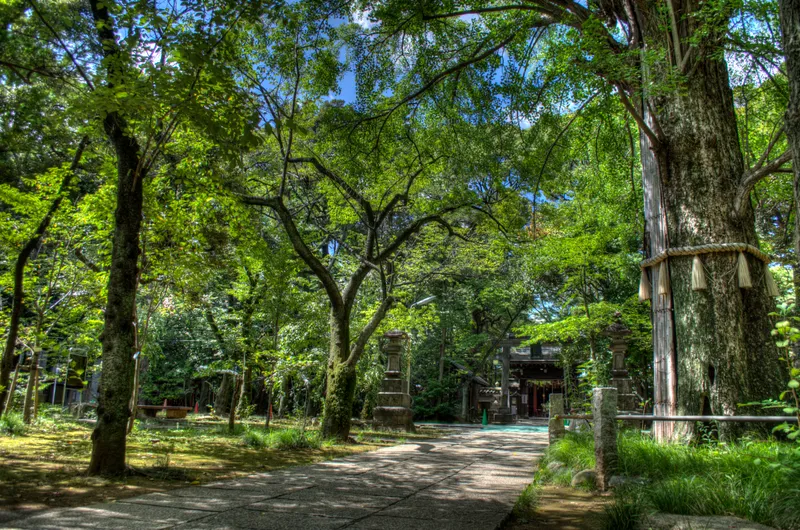
A Minato shrine founded in 951 whose Edo-period buildings survived both the earthquake and the war, known for warding off misfortune and for the tying of bonds, and the shrine explains why it is known for each.
 Shrine
Atago Shrine
- Career & Work
- Love & Romance
- Money & Prosperity
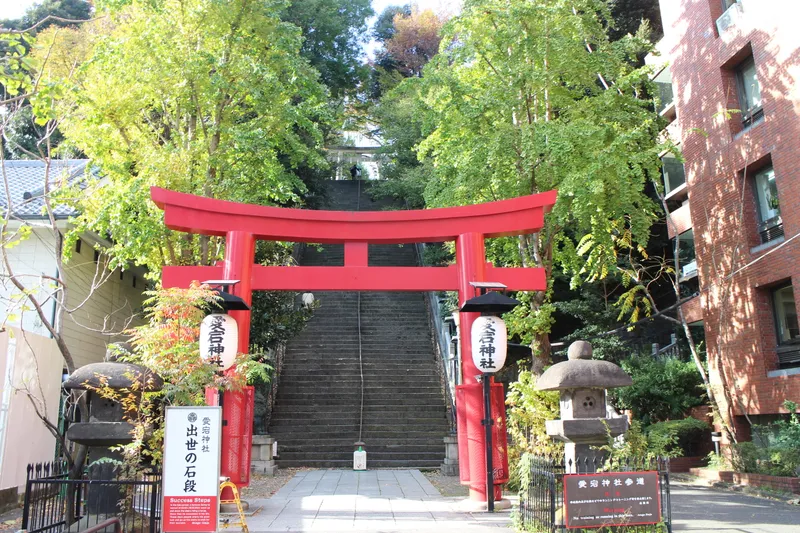
A shrine on a steep hill in Minato, founded in 1603 on Tokugawa Ieyasu's order as a deity against fire, and known for the stone staircase named after a rider who is said to have galloped up it.
 Temple
Zojo-ji
- Career & Work
- Family & Home
- Money & Prosperity
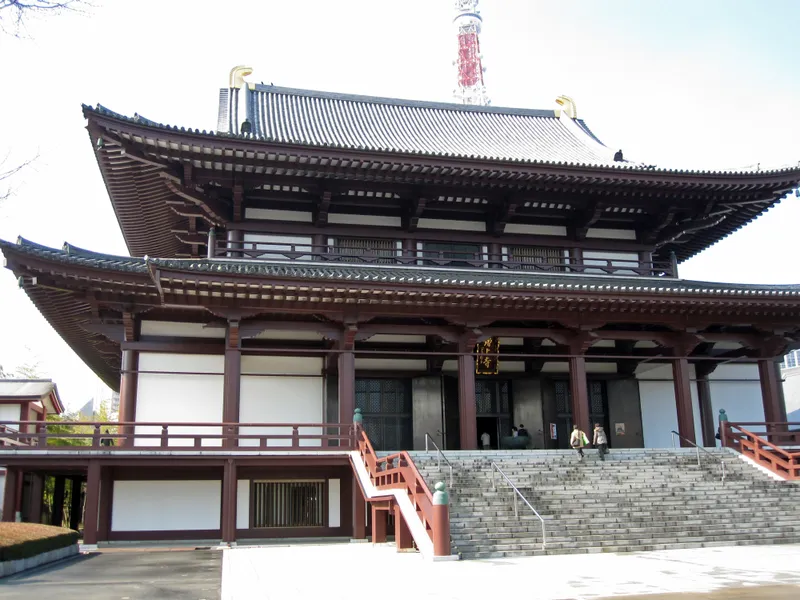
A Pure Land temple in Shiba, founded in 1393 and chosen by the Tokugawa as their family temple, whose hidden principal image is known as the Black Honzon of victory.
 Shrine
Shinagawa Shrine
- Money & Prosperity
- Protection & Safety
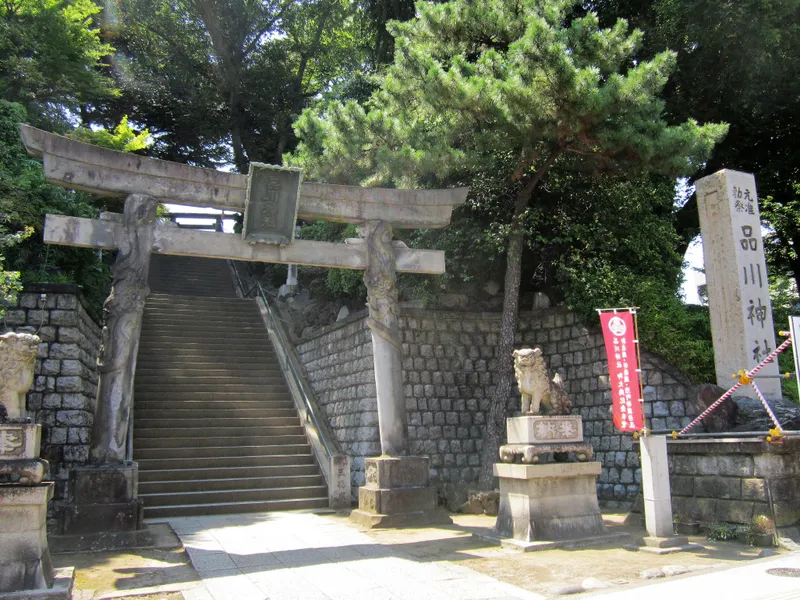
A shrine above Kita-Shinagawa founded in 1187 by Minamoto no Yoritomo, enshrining three deities added across three centuries, one for trade and one for warding.
 Shrine
Tokyo Daijingu
- Family & Home
- Love & Romance
- Money & Prosperity
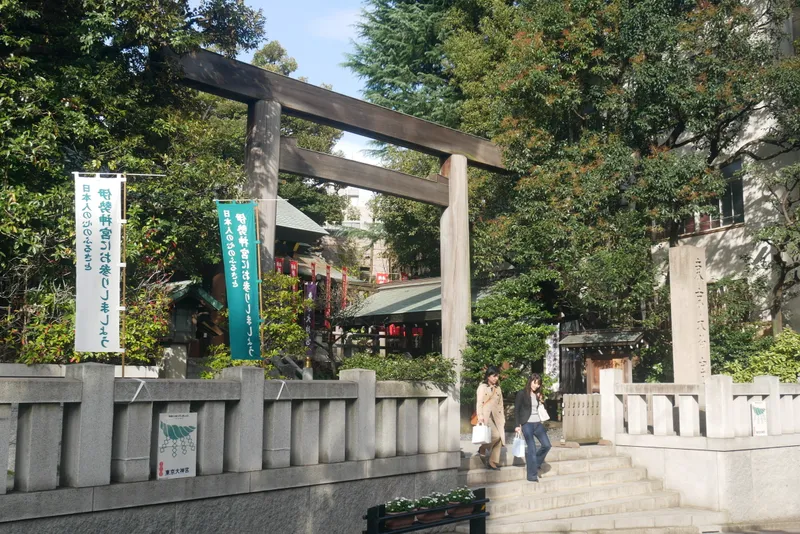
A Chiyoda shrine founded in 1880 as a Tokyo branch of Ise, known as "Tokyo's O-Ise-sama" and visited above all for prayers about relationships, an association the shrine itself explains through the three deities of creation enshrined here.
 Shrine
Koami Shrine
- Money & Prosperity
- Protection & Safety
A small Nihonbashi shrine known as a deity of strong luck and warding off misfortune, with a well where visitors wash money and the only pre-war wooden shrine building left in the district.
No places match your filters