Namiyoke Shrine
波除神社 · Namiyoke Inari Shrine · Namiyoke Jinja
Researched and translated with AI assistance. Every claim is linked to its source, but errors get through, so check the official site for opening times, fees and closures.About
In short
A Tsukiji shrine whose name means wave-averting, founded in 1659 after an Inari image found floating in the sea was credited with calming the water enough to finish the reclamation.
Quick facts
- Address
- 6-20-37 Tsukiji, Chuo-ku, Tokyo 104-0045
- Access
- Tsukiji station on the Tokyo Metro Hibiya line and Tsukijishijo on the Toei Oedo line are both a few minutes away, at the far end of the outer market from the station.
- Hours
- The shrine publishes its prayer information on its own site; check there before travelling for a specific rite.
- Best time
- The Tsukiji Lion Festival in June, when the great lion heads are carried. The shrine also keeps the seasonal festivals and the rake market.
- Spiritual entities
- Inari (稲荷大神)
- Official site
- www.namiyoke.or.jp
About this place
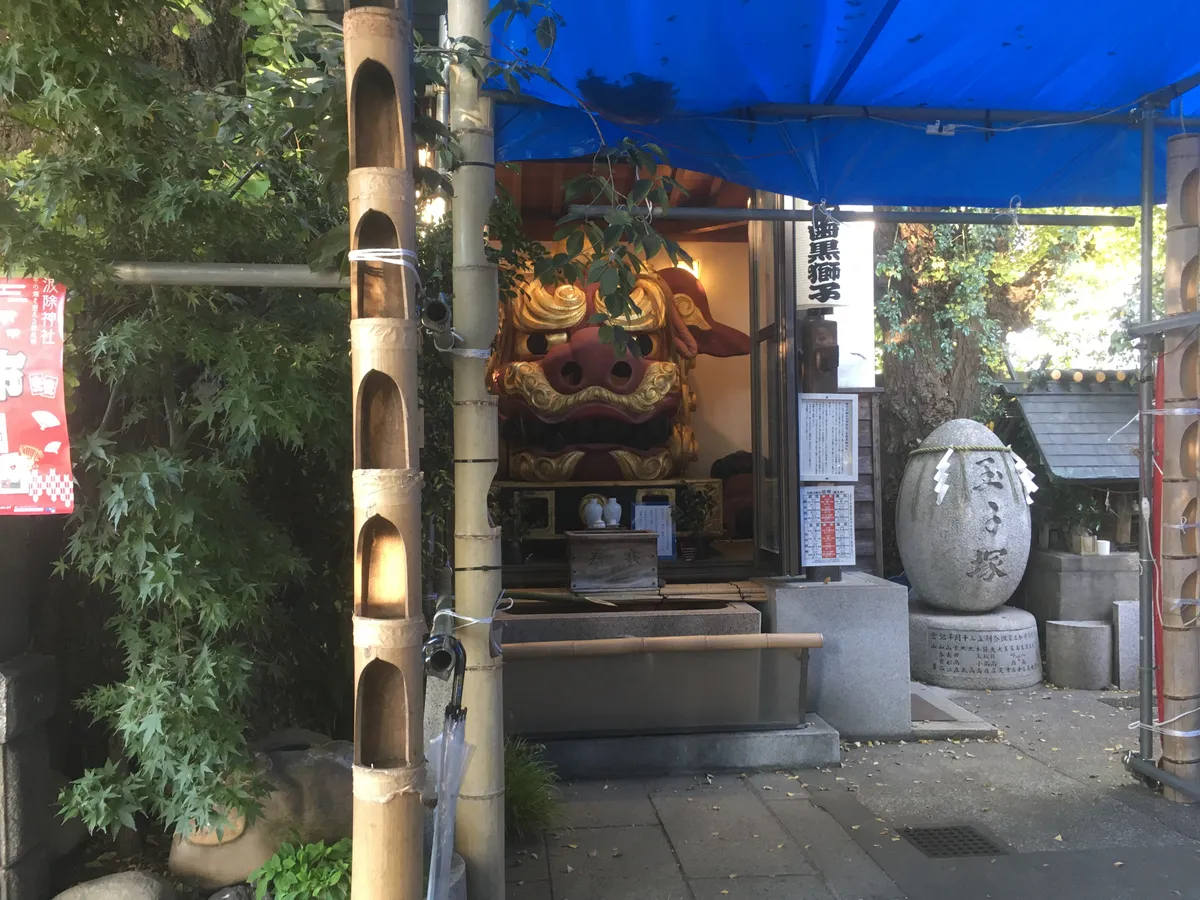
Namiyoke Shrine stands at the edge of Tsukiji, and its name says what it is for: averting waves. The land it sits on was sea until the seventeenth century, and the shrine's account of its own founding is an account of how that reclamation was finished. It is also where the Tsukiji market left its marks, in a row of stones raised to sushi, shrimp, anglerfish, egg and kelp.
Origin and history
About 370 years ago this whole area was open water. Reclamation of the sea south-east of Edo began from the Hibiya inlet using spoil from the moat dug for the castle's western enceinte, with seventy daimyo houses each supplying a labourer for every thousand koku; several districts still carry the names of the men who ran the work.
Seventy years later, after the Meireki fire, the last stretch of that reclamation was attempted here under the fourth shogun, Ietsuna, and it went badly. Embankments were built and swept away by the waves, again and again.
The shrine's account is that one night something was seen floating on the sea, giving off light. People rowed out and found an image of the Inari deity. They built a hall on this spot, enshrined it and held a great festival, and from then the wind and the waves dropped, the work went easily and the reclamation was completed. The shrine dates that to 1659.
Astonished at it, people gave the deity the honorific Namiyoke, wave-averting. Huge heads were dedicated: a dragon, which commands the clouds, a tiger, which commands the wind, and a lion, which subdues all things with a single roar. Carrying those around is the origin of the Tsukiji Lion Festival. The present hall was built in 1937 in the same style as the outer shrine of Ise, in Japanese cypress, and the shrine says it was the last shrine hall built in eastern Japan before the war.
What it is locally associated with
An image found floating in the sea
Embankments kept being swept away until, the shrine says, a glowing Inari image was found on the water. Once it was enshrined the waves dropped and the reclamation was finished, in 1659.
folk traditionRemoving calamity, riding out the waves
The name is the association. The shrine has been turned to since for warding off calamity and misfortune, for prosperity in trade, and for safety on building work.
documented historyThe lion that quiets the dragon and the tiger
The shrine explains the logic: waves are the work of the dragon that commands cloud and the tiger that commands wind, and the lion looking down on them stills both.
documented historyStones for sushi, shrimp and kelp
The grounds hold memorial stones raised by the market trades: for sushi, shrimp, anglerfish, live fish, eggs, kelp and clams.
local custom
This is one of the few shrines whose name states its own association. Namiyoke means averting the waves, and the shrine says the title was given to the deity by the people who watched the sea go quiet once it was enshrined. Since then, in its own words, it has been turned to as the Namiyoke Inari that removes calamity and rides out the waves, and the devotion attaches to warding off calamity and misfortune, to prosperity in trade, and to safety on construction work. The first and the last of those are what a reclamation crew would ask for; the second is what the market that grew here would.
The main hall enshrines Uganomitama, described by the shrine as the guardian of clothing, food and shelter, of industry and of commerce, and given the honorific Namiyoke-sama.
The lion is worth understanding rather than just seeing. The shrine sets out the reasoning: the waves are the work of the dragon, which commands the clouds, and the tiger, which commands the wind, and the lion is the one animal that makes both prostrate themselves with a single roar. With the lion looking down on them the dragon and tiger are calmed and the waves stop, and, the shrine adds, by extension so do the rough waves of a life. A pair of lion heads in the grounds is a Chuo ward cultural property, as is an iron water basin.
The most unusual thing here belongs to the fish market rather than to the shrine. The grounds hold a row of memorial stones raised by the trades: a sushi mound, a shrimp mound, an anglerfish mound, a live-fish mound, an egg mound, a kelp mound and a clam stone. They are markers of gratitude to what was sold and eaten, and there is nowhere else in Tokyo quite like them.
Claims and evidence levels 7
- The Tsukiji area was open sea until the seventeenth century, reclaimed from the Hibiya inlet using spoil from the moat dug for Edo castle's western enceinte, with seventy daimyo houses each supplying one labourer per thousand koku. documented history
- The shrine relates that the final stretch of reclamation here kept being swept away by waves until an image of the Inari deity was found floating and giving off light; once it was enshrined the wind and waves dropped and the work was completed, which the shrine dates to 1659. folk tradition
- The people of the time gave the deity the honorific Namiyoke, wave-averting, and dedicated large heads of a dragon, a tiger and a lion; carrying these is the origin of the Tsukiji Lion Festival. documented history
- The shrine states that it has been turned to as the Namiyoke Inari that removes calamity and rides out the waves, with devotion attaching to warding off calamity and misfortune, prosperity in trade, and safety on construction work. documented history
- The main hall enshrines Uganomitama, described by the shrine as guardian of clothing, food and shelter, of industry and of commerce; the present hall was built in 1937 in the style of the outer shrine of Ise, and the shrine says it was the last shrine hall built in eastern Japan before the war. documented history
- A pair of lion heads and an iron water basin in the grounds are designated cultural properties of Chuo ward. documented history
- The grounds hold memorial stones raised by the market trades for sushi, shrimp, anglerfish, live fish, eggs, kelp and clams. local custom
Visiting tips
The general form is in the visiting guide below. Specific to Namiyoke:
The grounds are small and sit among what is left of the Tsukiji outer market, so the shrine is busiest when the market streets are.
The memorial stones are memorials rather than exhibits. They were raised by working trades for the creatures those trades handled, and are worth reading rather than photographing in passing.
The Tsukiji Lion Festival in June is when the great lion heads come out, and is a substantial event rather than a quiet rite.
Related guides
- How to visit a shrine or temple in JapanThe country-wide basics: purifying at the water basin, the two-bows-two-claps-one-bow form at shrines, and what temples do instead.
- What a "power spot" actually isA modern Japanese coinage, not a traditional religious category. Where the word came from, what it does and does not claim, and why this site uses it anyway.
- Shrine or temple?A shrine is Shinto and a temple is Buddhist, and you can usually tell at the gate. Why the line is cleaner on paper than on the ground, and what a government order in 1868 has to do with it.
- Omamori, ema, omikuji and goshuinThe four things you are most likely to receive, write, draw or be given at a shrine or temple, what each is actually for, and the one of them people most often get wrong.
Sources
- About the shrine, history and grounds (波除神社について) — Namiyoke Shrine (accessed 2026-08-02)
- Prayers (ご祈祷のご案内) — Namiyoke Shrine (accessed 2026-08-02)
- Namiyoke Inari Shrine (Q3335477) coordinate location — Wikidata (accessed 2026-08-02)
Last updated:
Similar places
8 places
 Shrine
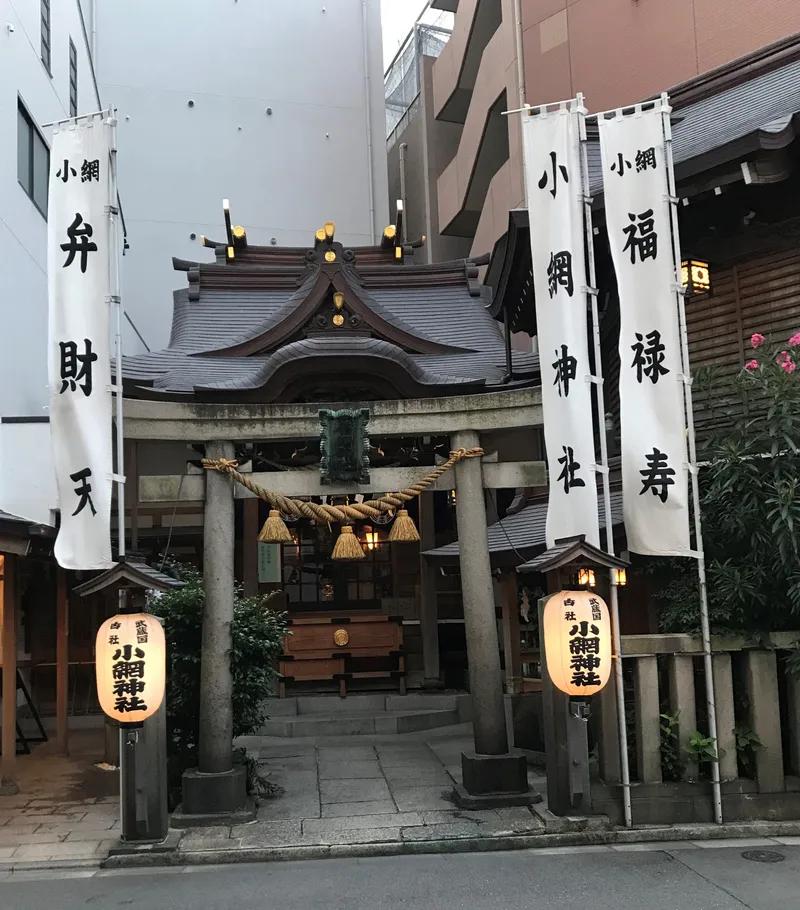
Koami Shrine
- Money & Prosperity
- Protection & Safety
A small Nihonbashi shrine known as a deity of strong luck and warding off misfortune, with a well where visitors wash money and the only pre-war wooden shrine building left in the district.
 Shrine
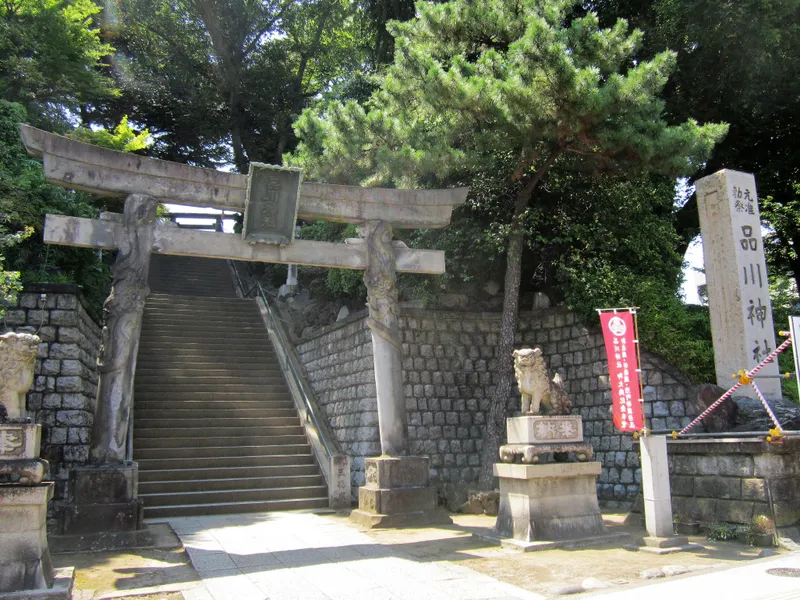
Shinagawa Shrine
- Money & Prosperity
- Protection & Safety
A shrine above Kita-Shinagawa founded in 1187 by Minamoto no Yoritomo, enshrining three deities added across three centuries, one for trade and one for warding.
 Shrine
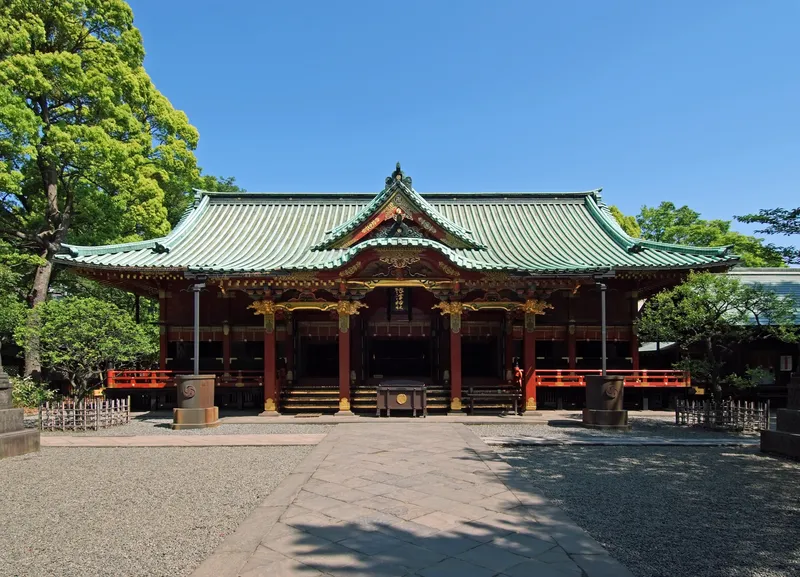
Nezu Shrine
- Career & Work
- Exams & Study
- Family & Home
A Bunkyo shrine whose entire 1706 complex survives intact as an Important Cultural Property, rare in Tokyo, with an azalea hill and a tunnel of small red torii (鳥居).
 Shrine
Fukutoku Shrine
- Money & Prosperity
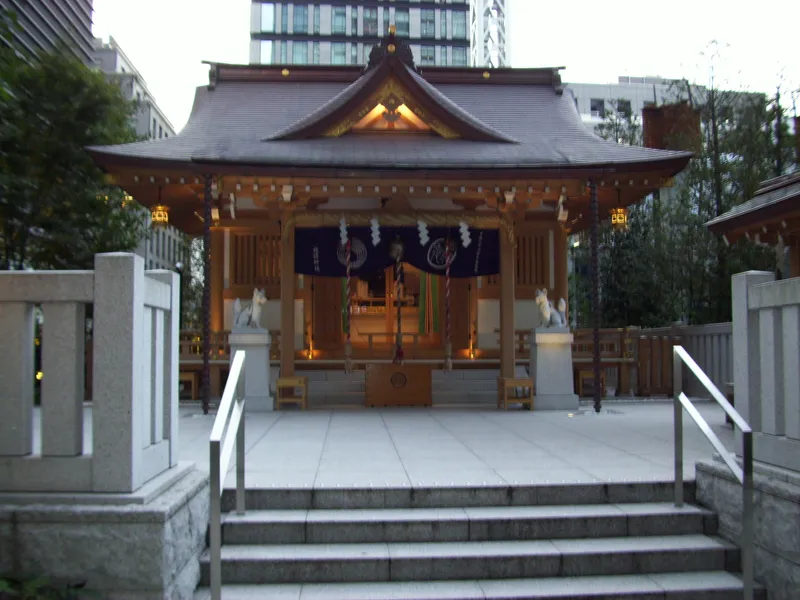
A small Nihonbashi shrine whose name means good fortune, which ran shogunate-licensed lotteries in the Edo period and still performs a prayer for winning one.
 Shrine
Karasumori Shrine
- Career & Work
- Money & Prosperity
- Skill & Mastery
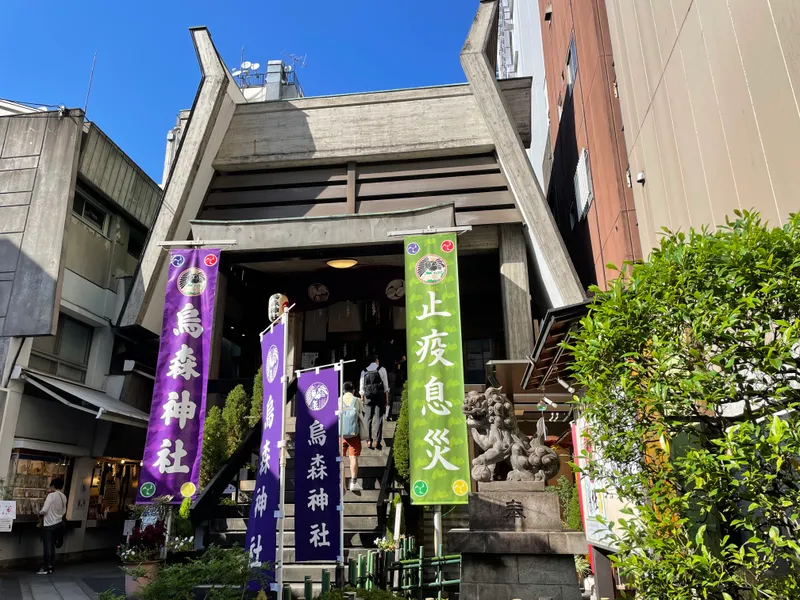
A Shimbashi shrine down an alley, founded in 940 by the general who defeated Taira no Masakado, and one of the few to enshrine the deity of the performing arts.
 Shrine
Shiba Daijingu
- Love & Romance
- Money & Prosperity
- Protection & Safety
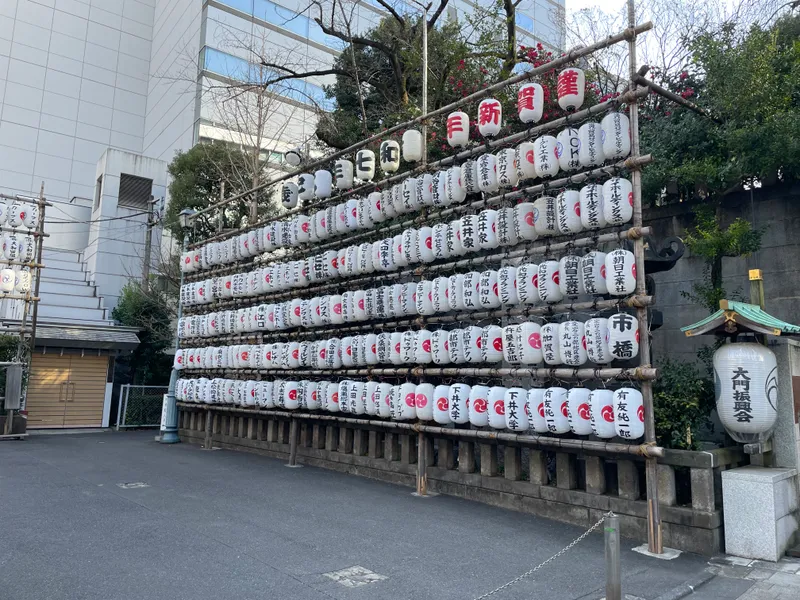
A Minato shrine founded in 1005 that enshrines the two deities of Ise, known in the Edo period as the Ise of the Kanto and today for a box charm sold nowhere else.
 Shrine
Atago Shrine
- Career & Work
- Love & Romance
- Money & Prosperity
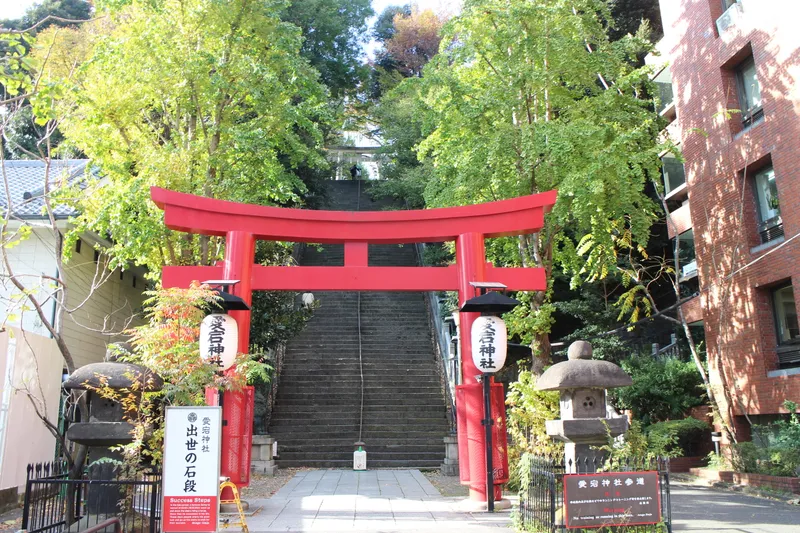
A shrine on a steep hill in Minato, founded in 1603 on Tokugawa Ieyasu's order as a deity against fire, and known for the stone staircase named after a rider who is said to have galloped up it.
 Temple
Zojo-ji
- Career & Work
- Family & Home
- Money & Prosperity
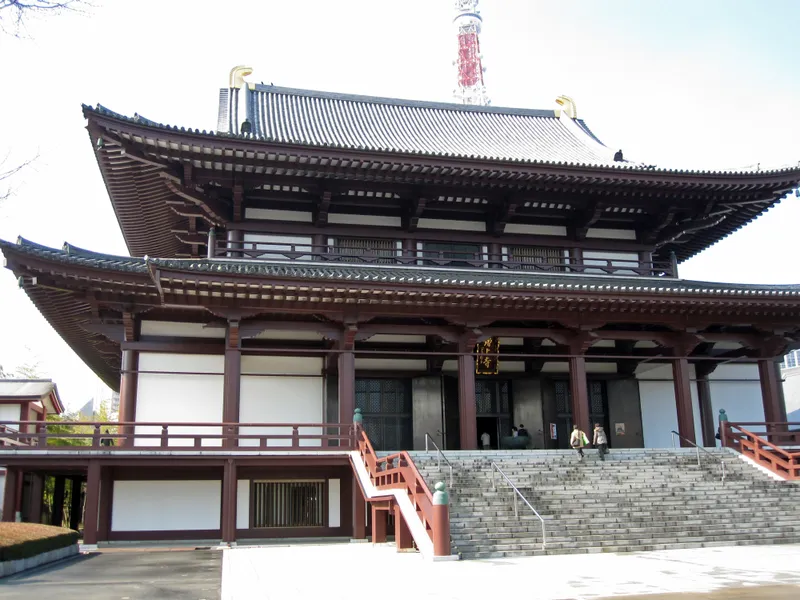
A Pure Land temple in Shiba, founded in 1393 and chosen by the Tokugawa as their family temple, whose hidden principal image is known as the Black Honzon of victory.
No places match your filters