Kanda Myojin
Kanda Shrine · 神田明神 · 神田神社
Researched and translated with AI assistance. Every claim is linked to its source, but errors get through, so check the official site for opening times, fees and closures.About
In short
A Chiyoda shrine that served as the guardian shrine of all Edo, enshrining three deities between them associated with business prosperity, good matches and warding off misfortune, and these days selling a charm for information security.
Quick facts
- Address
- 2-16-2 Sotokanda, Chiyoda-ku, Tokyo 101-0021
- Access
- The shrine sits between two stations and is about five minutes' walk from Ochanomizu: the Hijiribashi exit for the JR Chuo and Sobu lines, exit 1 for the Marunouchi line, or exit B1 at Shin-Ochanomizu on the Chiyoda line. From Akihabara it is about seven minutes, from the Electric Town exit on the JR Keihin-Tohoku and Yamanote lines or from the Hibiya line. Suehirocho on the Ginza line is also five minutes. Visitor parking exists but is very limited.
- Hours
- The grounds are open around the clock, every day of the year. The office for amulets and goshuin (御朱印) keeps 9:00 to 18:00, and the museum in the grounds opens on Saturdays, Sundays and public holidays from 10:00 to 16:00. The shrine publishes no times itself, so treat these as unofficial and check before a special trip.
- Best time
- The Daikoku Festival runs 16–18 January and the annual grand rite falls on 15 May. The Kanda Matsuri, one of the three great festivals of Japan, is held every other year in May — check which year before planning around it. Smaller rites fall on the 1st and 15th of each month.
- Spiritual entities
- Daikokuten (大黒天, Ōnamuchi) · Ebisu (恵比寿, Sukunahikona) · Taira no Masakado (平将門)
- Official site
- www.kandamyoujin.or.jp
About this place
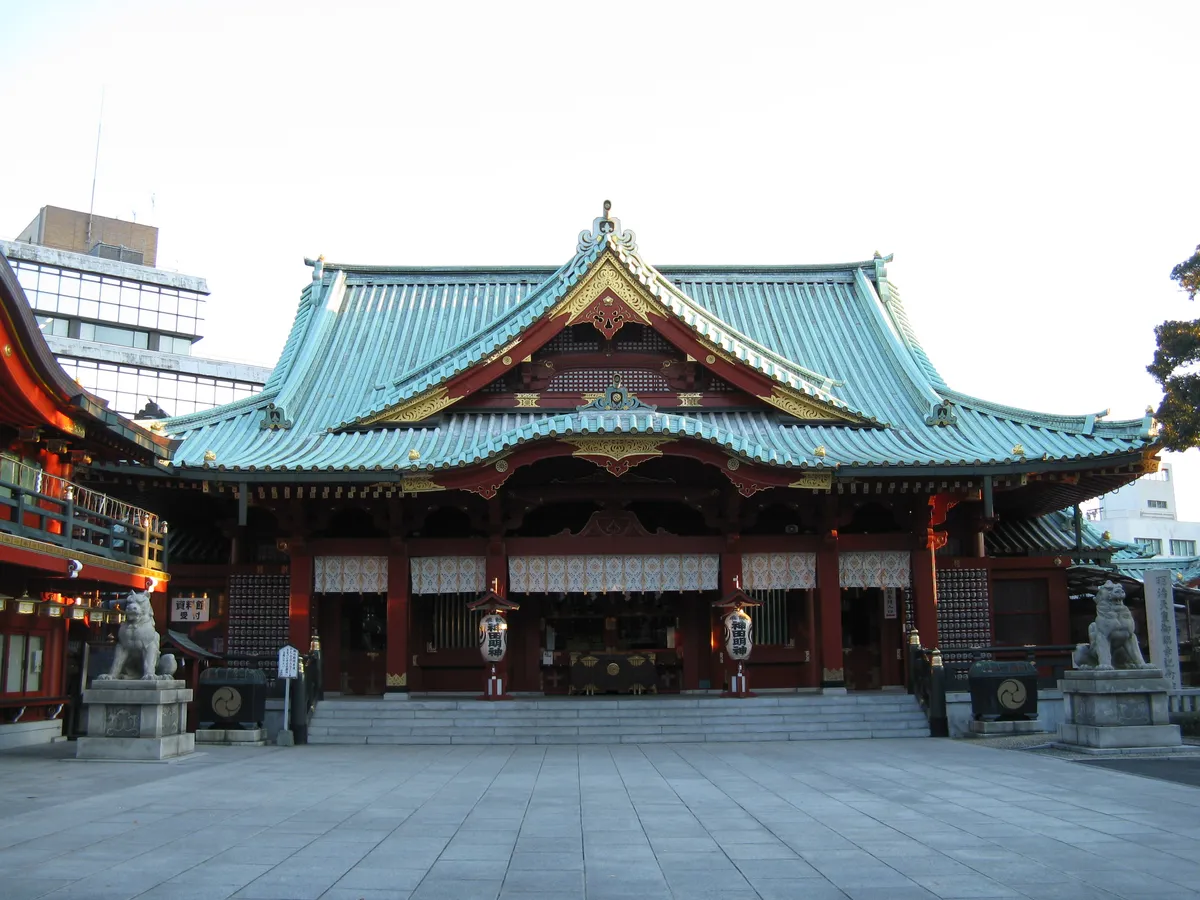
Kanda Myojin sits on a rise between Ochanomizu and Akihabara. Shrine tradition dates its founding to 730 and it was moved to the present site in 1616, where it became the guardian shrine of Edo: the city's tutelary shrine rather than one neighbourhood's. It enshrines three deities, and unusually it says plainly what each is for. Its festival, the Kanda Matsuri, is counted among the three great festivals of Japan and is held in alternate years.
Origin and history
By its own account the shrine was founded in 730 by Makanda no Omi of the Izumo clan, at Shibasaki village in what was then Toshima district, the area now called Otemachi. That founding is shrine tradition rather than documented record, and the shrine words it that way. It was moved twice under the Tokugawa, in 1603 and again in 1616, arriving at the present hill and taking on the role of sōchinju of Edo: the guardian shrine of the whole city.
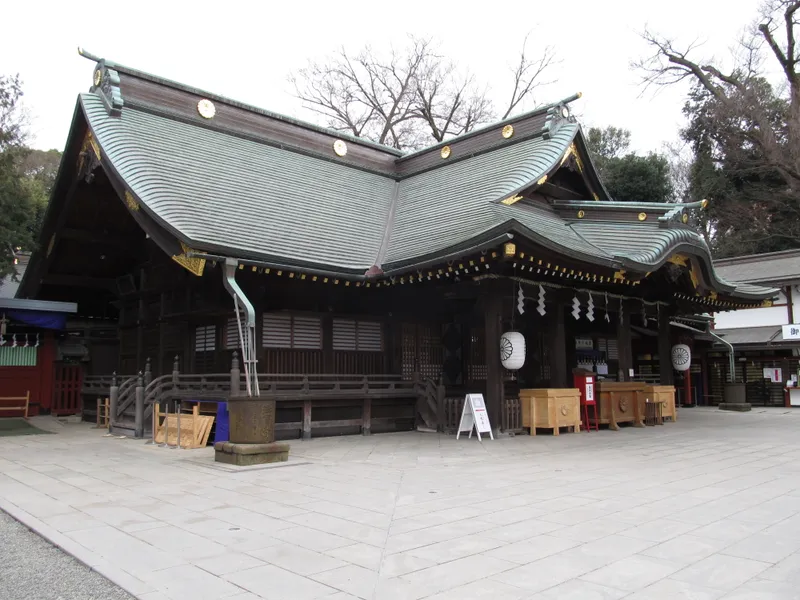
The deity roster grew rather than being fixed at the start. Ōnamuchi has been enshrined since the 730 founding; Taira no Masakado was formally enshrined in 1309, some six centuries later. The buildings visitors see are twentieth-century. The shrine burned in the 1923 earthquake and was rebuilt in the 1930s in steel-reinforced concrete rather than timber, which is why it stands where wooden shrines of its age did not survive the following decades.
What it is locally associated with
Guardian shrine of all Edo
Moved here in 1616 and made sōchinju, tutelary shrine of the entire city rather than of one district. The role explains its scale and its festival.
documented historyThree deities, three portfolios
The shrine states what each is for: Ōnamuchi for good matches and marital harmony, Sukunahikona for business prosperity and health, Masakado for warding off calamity.
documented historyA charm for information security
Alongside the usual charms the shrine sells one for IT and information safety, described as a prayer for the safe functioning of computers. Officially listed at ¥1,000.
popular modernThe victory charm
A ¥500 charm the shrine describes as auspicious for business, for sport, and for luck in a contest, which is where its association with competition and work comes from.
local custom
Most shrines leave you to infer what they are petitioned for. Kanda Myojin states it, deity by deity. Ōnamuchi, enshrined since the founding, is described as the deity of national development, marital harmony and the tying of bonds. Sukunahikona, added as the second enshrinement, is the deity of business prosperity, medicine and health, and of fortune generally. Taira no Masakado, formally enshrined in 1309, is described in four words: the deity who wards off calamity and misfortune. The prayers the shrine performs line up with that: matchmaking, business prosperity, warding off misfortune and household harmony are the four it lists first. Those sentences, not the shrine's reputation, are where the tags on this page come from.
Its amulets say the same thing in more everyday language. The business-prosperity charm carries both Daikoku and Ebisu and is described as being for luck in work and in money; the matchmaking charm is explicitly Daikoku's; and a separate victory charm, at ¥500 the cheapest thing on the list, is described as auspicious for business, for sport, and for luck in a contest. That last one is why this shrine reads as a place for work and competition as much as for trade. The association is not about titles or promotion but about coming out ahead in something contested.
Within the grounds are a number of sub-shrines, which the shrine defines as deities with a close connection to the main enshrinement or to the shrine's own history, given their own hall or small shrine on the site. Asked whether a visitor ought to pray at them too, it answers that belief cannot be compelled, but that it is good to visit the ones you feel a connection with, which is characteristic of how this shrine talks to visitors.
The modern association is the charm for IT and information security, designed to look like circuitry and officially listed at ¥1,000. It is sold by the shrine, and it is the thing most visitors have heard about. Worth being precise, though: the shrine sells it without explaining it, and nowhere connects itself to the electronics district ten minutes' walk away. The link between this shrine and Akihabara is one the public drew, not one the shrine claims.
Claims and evidence levels 9
- Shrine tradition dates the founding to 730, by Makanda no Omi of the Izumo clan, at Shibasaki village in what is now Otemachi. folk tradition
- The shrine was moved to its present site in 1616 and served as sōchinju, the guardian shrine of the whole of Edo. documented history
- Three deities are enshrined: Ōnamuchi since the founding, Sukunahikona, and Taira no Masakado, who was formally enshrined in 1309. documented history
- The shrine describes Ōnamuchi as a deity of national development, marital harmony and the tying of bonds; Sukunahikona as a deity of business prosperity, medicine, health and good fortune; and Taira no Masakado as a deity who wards off calamity and misfortune. documented history
- The prayers the shrine lists first are for good matches, business prosperity, warding off misfortune and household harmony. local custom
- The shrine sells a charm for IT and information security, described as a prayer for the safe functioning of computers and listed at ¥1,000; it does not itself explain the charm by reference to nearby Akihabara. popular modern
- The shrine offers a victory charm at ¥500, described as auspicious for business, for sport and for luck in a contest, and a business-prosperity charm described as being for luck in work and in money. local custom
- The Kanda Matsuri is held in alternate years in May and is counted among the three great festivals of Japan. documented history
- The shrine states that bowing at the torii is not obligatory, and that visitors may enter and leave by any approach they like. local custom
Visiting tips
The general form (the water basin, and two bows, two claps, one bow at the hall) is covered in the visiting guide below. What is specific to Kanda Myojin is how relaxed it is about all of it.
Asked whether you should bow when passing through the torii or the gate, the shrine answers that it is not something you have to do, and to judge by your own feeling and the situation. Asked whether it is acceptable to approach from the back path or the steep men's slope rather than the main approach, it answers that a shrine is an open place: come in from wherever you like, pray, and leave from wherever you like. Asked whether you should also visit the sub-shrines, it says belief cannot be compelled. Very little here is presented as obligatory, which is worth knowing if you arrive braced to perform something correctly.
One detail where its instructions differ from the national body's: its water-basin sequence has a fourth step, rinsing the left hand once more at the end, which the Jinja Honcho version does not include. Either is fine.
Two practical notes. The grounds stay open around the clock, while the amulet and goshuin office keeps 9:00 to 18:00 and the museum opens only on weekends and public holidays; the shrine publishes none of this itself, so treat the times as unofficial. And there is visitor parking, but very little of it. The shrine points people at the large paid garages in Akihabara instead.
Related guides
- How to visit a shrine or temple in JapanThe country-wide basics: purifying at the water basin, the two-bows-two-claps-one-bow form at shrines, and what temples do instead.
- What a "power spot" actually isA modern Japanese coinage, not a traditional religious category. Where the word came from, what it does and does not claim, and why this site uses it anyway.
- Shrine or temple?A shrine is Shinto and a temple is Buddhist, and you can usually tell at the gate. Why the line is cleaner on paper than on the ground, and what a government order in 1868 has to do with it.
- Omamori, ema, omikuji and goshuinThe four things you are most likely to receive, write, draw or be given at a shrine or temple, what each is actually for, and the one of them people most often get wrong.
Sources
- About Kanda Myojin (神田明神とは) — Kanda Myojin (accessed 2026-08-02)
- What's KANDAMYOUJIN? (English) — Kanda Myojin (accessed 2026-08-02)
- Amulets and talismans (授与品一覧) — Kanda Myojin (accessed 2026-08-02)
- Online amulet office — charm descriptions and prices (オンライン授与所) — Kanda Myojin (accessed 2026-08-02)
- Frequently asked questions (よくある質問) — Kanda Myojin (accessed 2026-08-02)
Show 3 more sources
- Annual events (年中行事) — Kanda Myojin (accessed 2026-08-02)
- Access (アクセス) — Kanda Myojin (accessed 2026-08-02)
- Kanda-myōjin (Q717682) — coordinate location — Wikidata (accessed 2026-08-02)
Last updated:
Similar places
8 places
 Shrine
Nezu Shrine
- Career & Work
- Exams & Study
- Family & Home
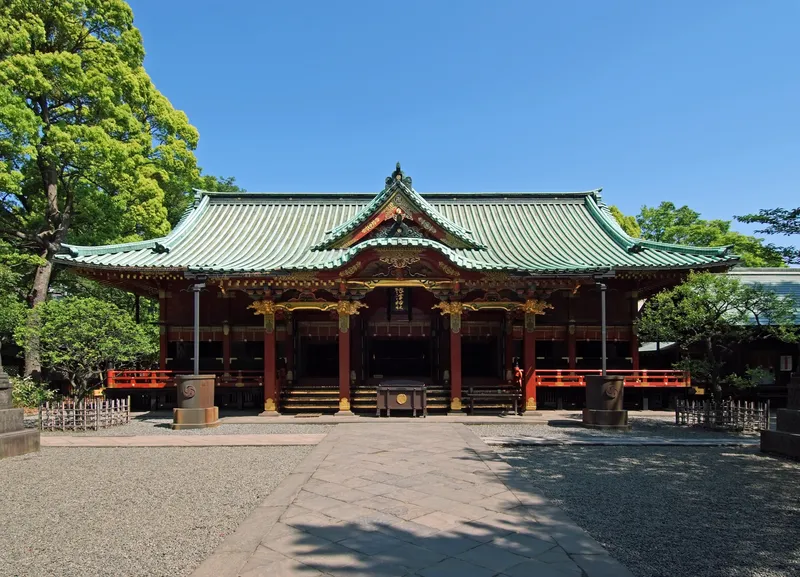
A Bunkyo shrine whose entire 1706 complex survives intact as an Important Cultural Property, rare in Tokyo, with an azalea hill and a tunnel of small red torii (鳥居).
 Shrine
Hie Shrine
- Career & Work
- Fertility & Children
- Money & Prosperity
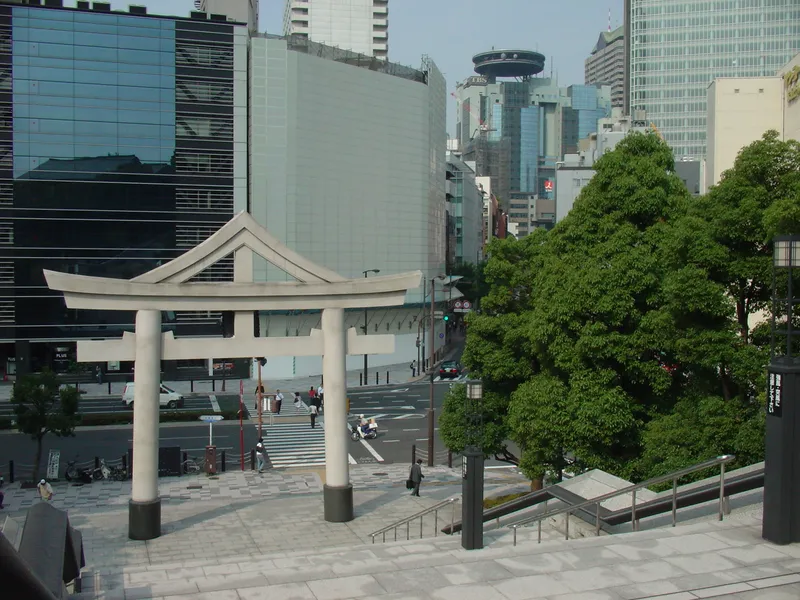
A shrine on a wooded rise in Nagatacho, once the guardian of Edo Castle, whose messenger is the monkey, a pun the shrine explains itself, connecting it to warding off evil, to winning, and to the tying of bonds.
 Shrine
Atago Shrine
- Career & Work
- Love & Romance
- Money & Prosperity
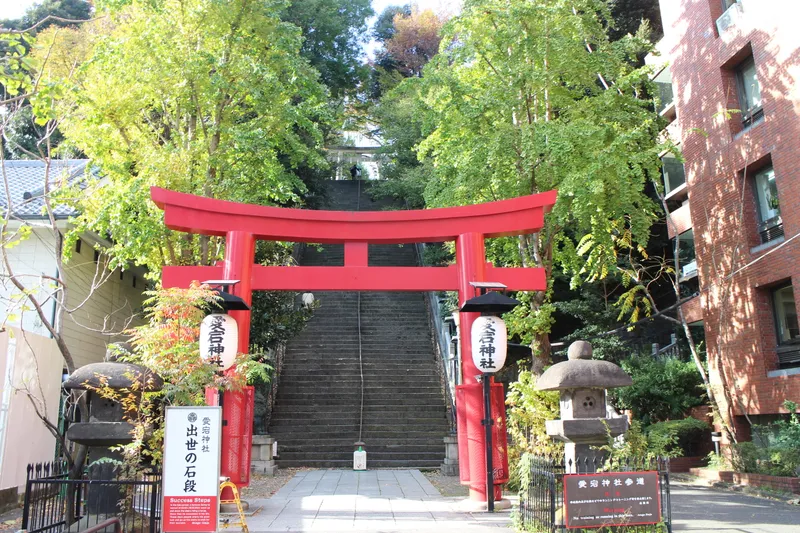
A shrine on a steep hill in Minato, founded in 1603 on Tokugawa Ieyasu's order as a deity against fire, and known for the stone staircase named after a rider who is said to have galloped up it.
 Shrine
Akasaka Hikawa Shrine
- Family & Home
- Love & Romance
- Money & Prosperity
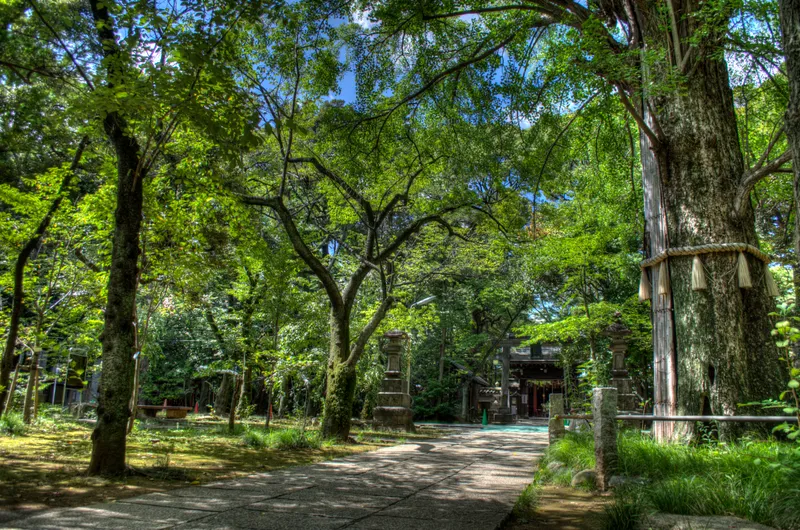
A Minato shrine founded in 951 whose Edo-period buildings survived both the earthquake and the war, known for warding off misfortune and for the tying of bonds, and the shrine explains why it is known for each.
 Temple
Zojo-ji
- Career & Work
- Family & Home
- Money & Prosperity
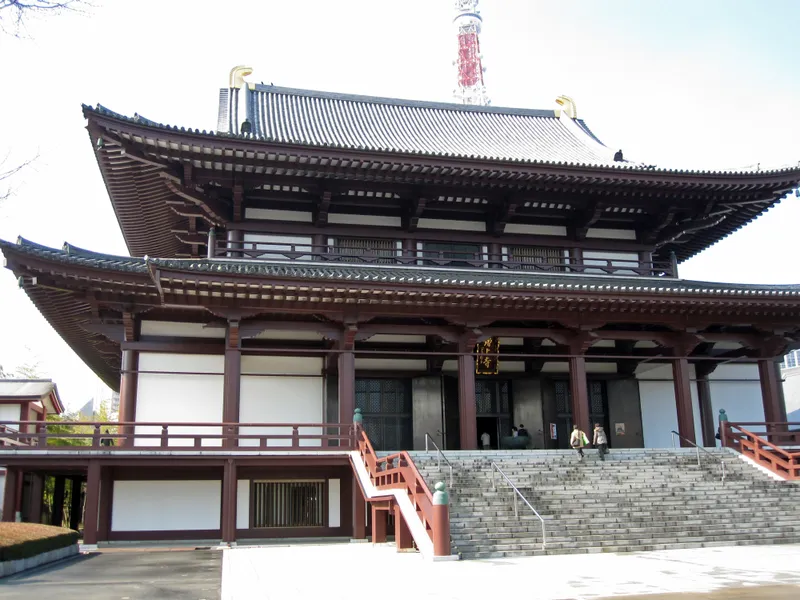
A Pure Land temple in Shiba, founded in 1393 and chosen by the Tokugawa as their family temple, whose hidden principal image is known as the Black Honzon of victory.
 Shrine
Tokyo Daijingu
- Family & Home
- Love & Romance
- Money & Prosperity
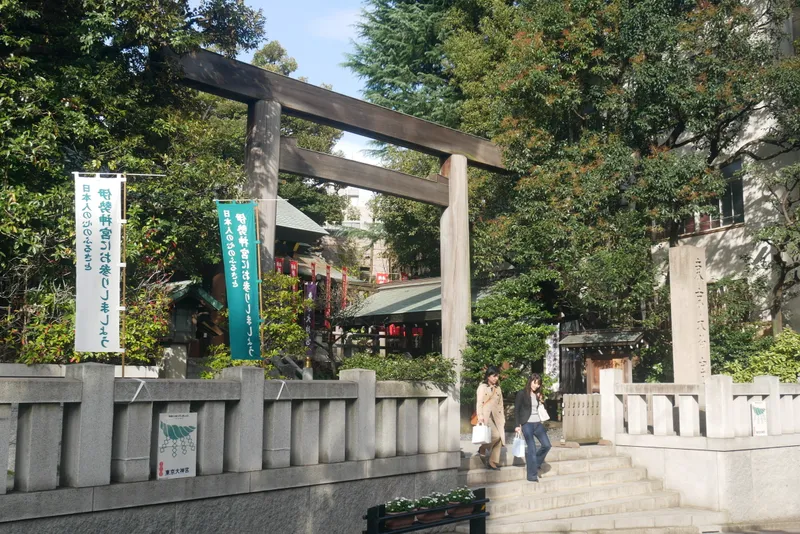
A Chiyoda shrine founded in 1880 as a Tokyo branch of Ise, known as "Tokyo's O-Ise-sama" and visited above all for prayers about relationships, an association the shrine itself explains through the three deities of creation enshrined here.
 Shrine
Shiba Daijingu
- Love & Romance
- Money & Prosperity
- Protection & Safety
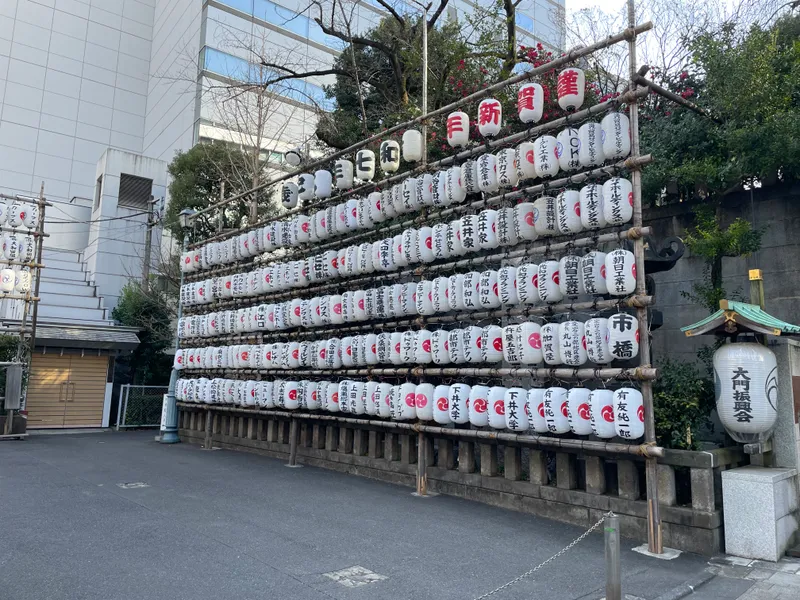
A Minato shrine founded in 1005 that enshrines the two deities of Ise, known in the Edo period as the Ise of the Kanto and today for a box charm sold nowhere else.
 Shrine
Okunitama Shrine
- Money & Prosperity
- Protection & Safety
- Bonds & Matchmaking
The provincial shrine of old Musashi, in Fuchu, which dates its founding to 111 and enshrines a deity it identifies with Ōkuninushi of Izumo.
No places match your filters