Yushima Tenmangu
湯島天満宮 · Yushima Tenjin · 湯島天神
Researched and translated with AI assistance. Every claim is linked to its source, but errors get through, so check the official site for opening times, fees and closures.About
In short
A Bunkyo shrine enshrining Sugawara no Michizane, where Tokyo students come to pray before examinations, and whose plum garden opens each February.
Quick facts
- Address
- 3-30-1 Yushima, Bunkyo-ku, Tokyo
- Access
- Yushima station on the Chiyoda line is two minutes from exit 3. Ueno-hirokoji on the Ginza line and Ueno-okachimachi on the Toei Oedo line (exit A4) are both five minutes, Okachimachi on the JR Yamanote and Keihin-Tohoku lines is eight, and Hongo-sanchome on the Marunouchi line is ten.
- Hours
- Gates 6:00–20:00. The amulet counter is open 9:00–19:00 and prayer bookings are taken 9:00–16:15.
- Best time
- February, for the plum garden and because it overlaps exam season, when the ema (絵馬) racks fill up. The shrine publishes festival dates and opening hours on a seasonal page that is taken down out of season, so check the official site for the current year before travelling. Note that the shrine states part of the plum garden is under renovation. The annual festival is on 25 May.
- Spiritual entities
- Tenjin (天神, Sugawara no Michizane)
- Official site
- www.yushimatenjin.or.jp
About this place
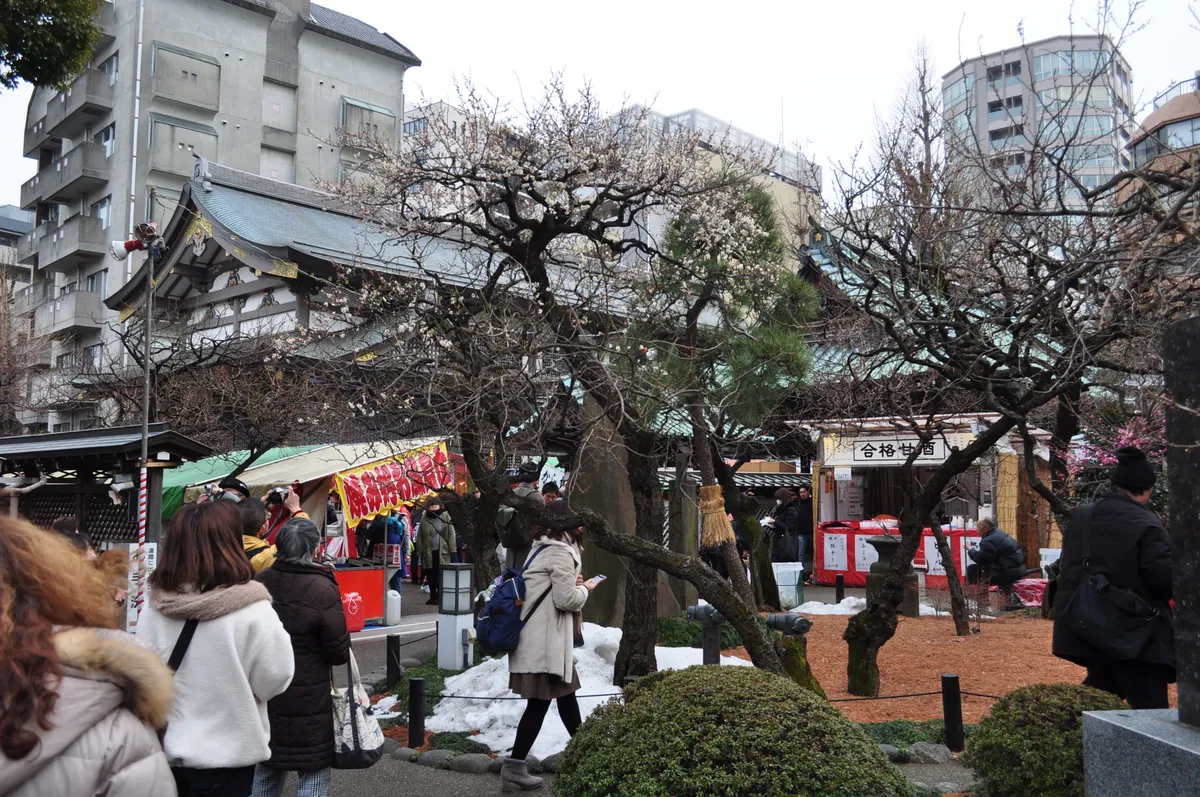
Yushima Tenmangu is the shrine Tokyo associates with study. Sugawara no Michizane (the Heian scholar and statesman venerated as Tenjin) was enshrined here in 1355, and the shrine has drawn scholars ever since; it names Hayashi Razan and Arai Hakuseki among its historical visitors. Every winter the ema racks fill with examination prayers, and the plum trees open in February.
Origin and history
The shrine's own history dates its founding to 458, by imperial command, enshrining Ame no Tajikarao. In 1355 local people, admiring the virtues of Michizane, enshrined him here alongside as the great ancestor of letters. Ōta Dōkan rebuilt the shrine in 1478, and when Tokugawa Ieyasu entered Edo Castle in 1590 he held it in particular regard, granting it land the following year to fund its rites.
Scholars and men of letters kept coming, and the shrine records Hayashi Razan, Matsunaga Sekigo, Hori Kyōan and Arai Hakuseki among them. When Tokugawa Tsunayoshi moved the Yushima Seidō to Shōheizaka, the district became a centre of learning and the shrine's standing rose with it. It burned down entirely in 1703, and Tsunayoshi donated five hundred ryō of gold towards rebuilding the following year. The buildings standing today are much newer than that: the Meiji-era hall had aged, and the present shrine was built in December 1995, entirely in cypress.
What it is locally associated with
Enshrined in 1355
Local people enshrined Sugawara no Michizane here alongside the original deity, honouring him as the great ancestor of letters.
documented historyThe plum garden
Michizane and plum blossom are inseparable in his story, and the shrine keeps a plum garden in the grounds. It states that part of it is currently under renovation.
documented historyA cypress shrine from 1995
The present hall is recent, built in December 1995, entirely in Japanese cypress, replacing an ageing Meiji-era structure.
documented history
What this shrine is for is not in doubt: it is where people pray about examinations, and that follows directly from who is enshrined here. Sugawara no Michizane was a scholar of exceptional standing (a doctor of letters at thirty-three, later Minister of the Right) who was demoted to Dazaifu on a rival's slander and died there in 903. The shrine's own account of Tenjin belief traces what happened next: a run of lightning strikes, eclipses, earthquakes, droughts and epidemics was read as his anger, and he was placated as a thunder deity. Farmers received him differently, as the god who brought the rain the rice needed. Only later, as his scholarship and character came to outweigh the vengeful reading, did he become the deity of letters, poetry, calligraphy and learning that he is today.
The amulet counter is organised almost entirely around that: charms and boards for academic attainment and for passing examinations, sets for exam candidates, writing implements. There is a stroking ox at ¥2,000 among them.
Plum blossom runs through everything here, because it runs through Michizane. The shrine records the poem he wrote at five on seeing plum flowers, and the famous one written at his own plum pavilion before leaving for Dazaifu, asking the blossom to send its scent on the east wind and not forget the spring for want of a master. The tree is said to have flown to Dazaifu after him in a single night. The garden that opens each February is the living end of that story.
Claims and evidence levels 7
- The shrine dates its founding to 458 by imperial command, originally enshrining Ame no Tajikarao. folk tradition
- Sugawara no Michizane was enshrined here in 1355, honoured as the great ancestor of letters. documented history
- Ōta Dōkan rebuilt the shrine in 1478, and Tokugawa Ieyasu granted it land in 1591 to fund its rites. documented history
- The shrine burned down in 1703 and Tokugawa Tsunayoshi donated five hundred ryō towards rebuilding; the present hall was built in cypress in December 1995. documented history
- Michizane died in exile at Dazaifu in 903; disasters that followed in the capital were read as his anger, and he was venerated first as a thunder deity and later as the deity of learning. documented history
- The shrine's amulets are dominated by items for academic attainment and passing examinations, and a stroking ox is offered at ¥2,000. local custom
- A plum tree is said to have flown overnight from Michizane's home to Dazaifu to follow him; the shrine's plum garden opens from early February to early March. folk tradition
Visiting tips
The general form is in the visiting guide below. Specific to Yushima Tenmangu:
There are two approaches, a men's slope and a women's slope, and a stroking ox in the grounds. Note that the shrine does not publish an explanation of what to do with the ox, so treat touching it as the common practice it plainly is rather than as a prescribed rite.
Timing matters more here than at most shrines. Exam season and the plum festival overlap, so February is both the most beautiful and the most crowded time to come; the ema racks are at their fullest then, which is worth seeing in itself.
The gates open at 6:00 and close at 20:00, but the amulet counter shuts at 19:00 and prayer bookings close at 16:15, so arriving in the evening gets you the grounds and nothing else. Parking is paid and fills at New Year, when the shrine asks people to come by train.
Related guides
- How to visit a shrine or temple in JapanThe country-wide basics: purifying at the water basin, the two-bows-two-claps-one-bow form at shrines, and what temples do instead.
- What a "power spot" actually isA modern Japanese coinage, not a traditional religious category. Where the word came from, what it does and does not claim, and why this site uses it anyway.
- Shrine or temple?A shrine is Shinto and a temple is Buddhist, and you can usually tell at the gate. Why the line is cleaner on paper than on the ground, and what a government order in 1868 has to do with it.
- Omamori, ema, omikuji and goshuinThe four things you are most likely to receive, write, draw or be given at a shrine or temple, what each is actually for, and the one of them people most often get wrong.
Sources
- History of the shrine (湯島天満宮縁起) — Yushima Tenmangu (accessed 2026-08-02)
- Amulets and prayer items (ご祈祷授与品のご案内) — Yushima Tenmangu (accessed 2026-08-02)
- Access and parking (交通案内) — Yushima Tenmangu (accessed 2026-08-02)
- Guide to the grounds (境内のご案内) — Yushima Tenmangu (accessed 2026-08-02)
- Yushima Tenmangū (Q335606) — coordinate location — Wikidata (accessed 2026-08-02)
Last updated:
Similar places
8 places
 Shrine
Kameido Tenjin Shrine
- Exams & Study
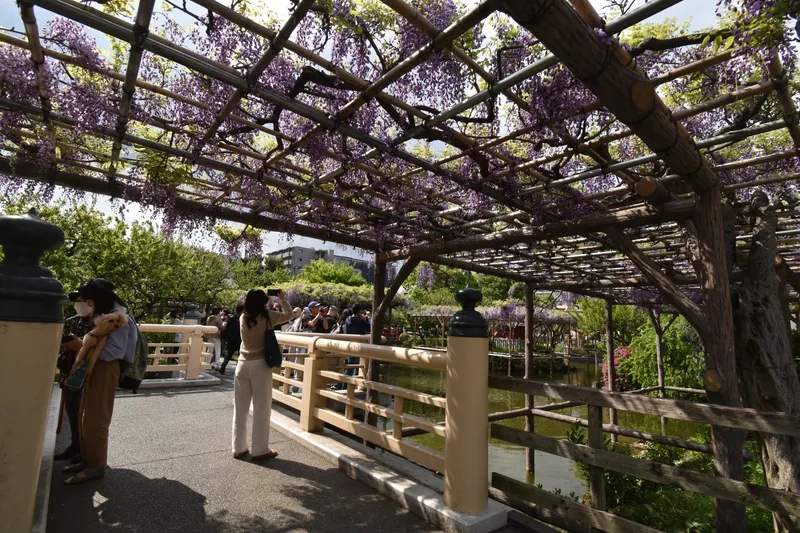
A Koto shrine laid out in 1662 on the model of Dazaifu Tenmangu, head of Tenjin devotion in eastern Japan, and the best place in Tokyo to see wisteria.
 Shrine
Nezu Shrine
- Career & Work
- Exams & Study
- Family & Home
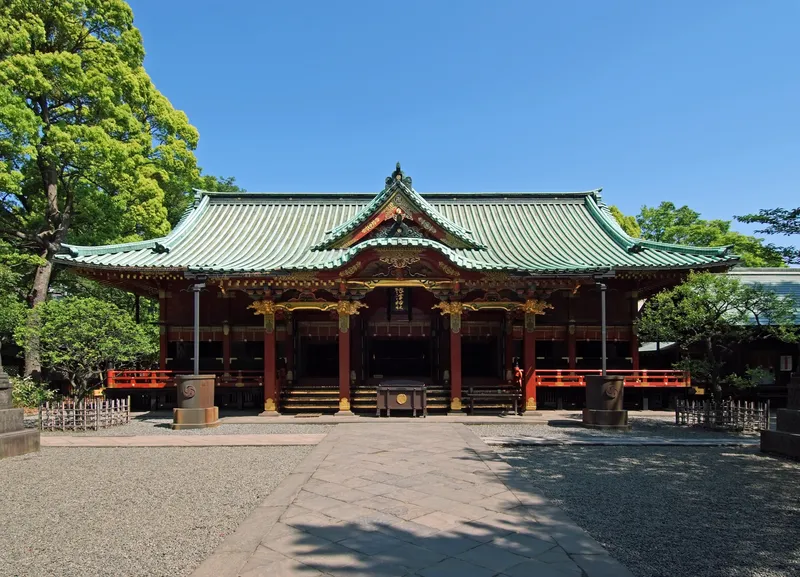
A Bunkyo shrine whose entire 1706 complex survives intact as an Important Cultural Property, rare in Tokyo, with an azalea hill and a tunnel of small red torii (鳥居).
 Shrine
Kanda Myojin
- Career & Work
- Family & Home
- Money & Prosperity
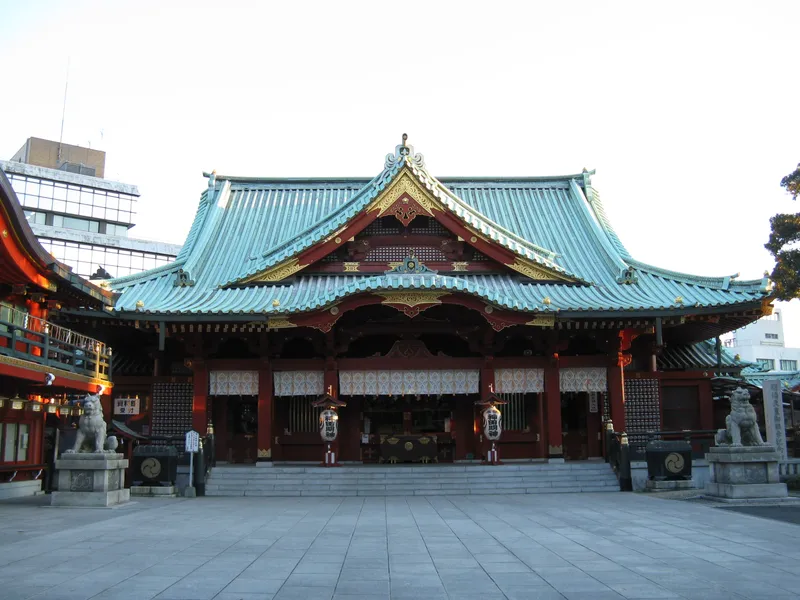
A Chiyoda shrine that served as the guardian shrine of all Edo, enshrining three deities between them associated with business prosperity, good matches and warding off misfortune, and these days selling a charm for information security.
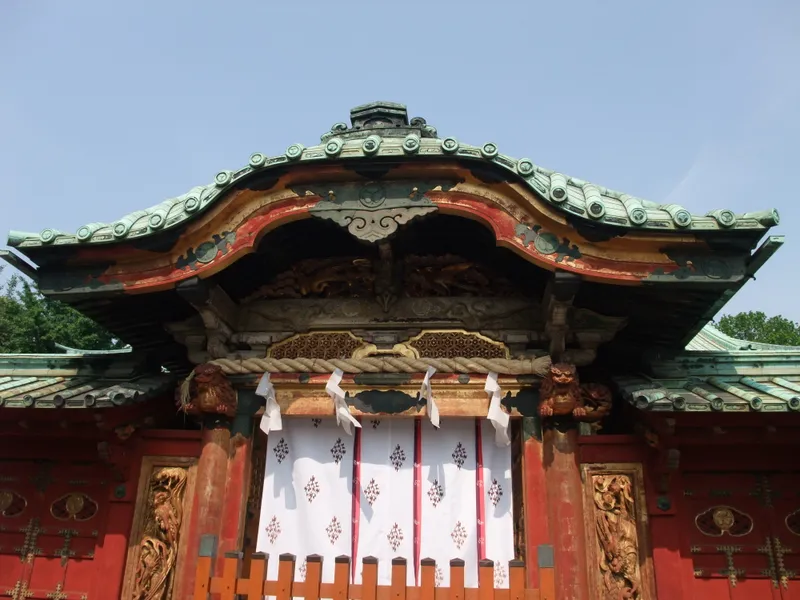 Shrine
Ueno Toshogu
- Career & Work
- Health & Healing
A shrine in Ueno Park founded in 1627 to Tokugawa Ieyasu, whose gilded 1651 hall survived the Ueno war, the earthquake and the air raids intact.
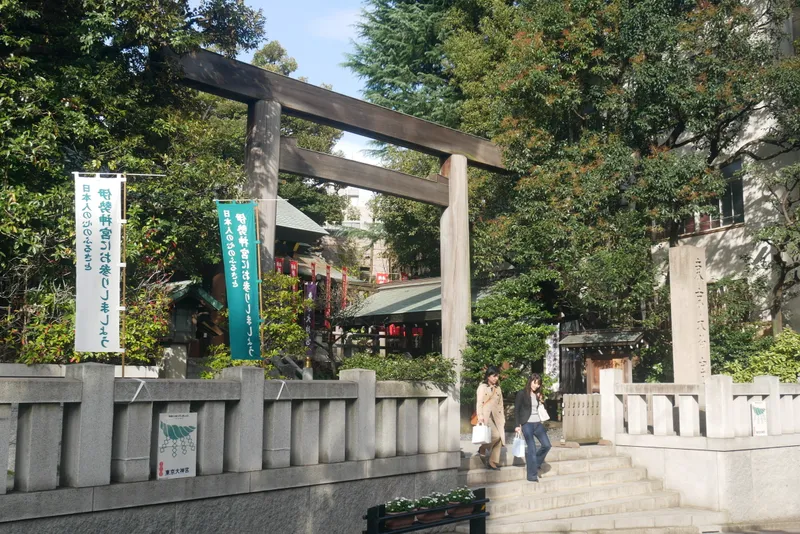 Shrine
Tokyo Daijingu
- Family & Home
- Love & Romance
- Money & Prosperity
A Chiyoda shrine founded in 1880 as a Tokyo branch of Ise, known as "Tokyo's O-Ise-sama" and visited above all for prayers about relationships, an association the shrine itself explains through the three deities of creation enshrined here.
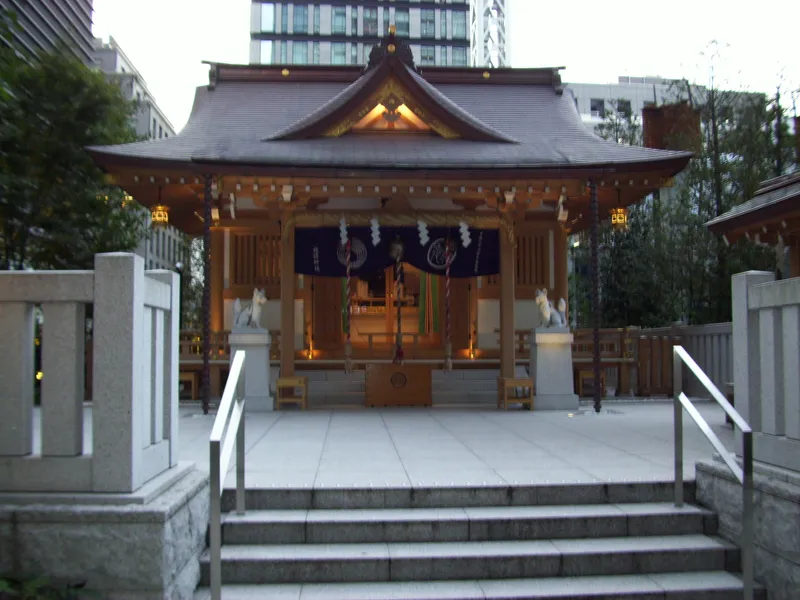 Shrine
Fukutoku Shrine
- Money & Prosperity
A small Nihonbashi shrine whose name means good fortune, which ran shogunate-licensed lotteries in the Edo period and still performs a prayer for winning one.
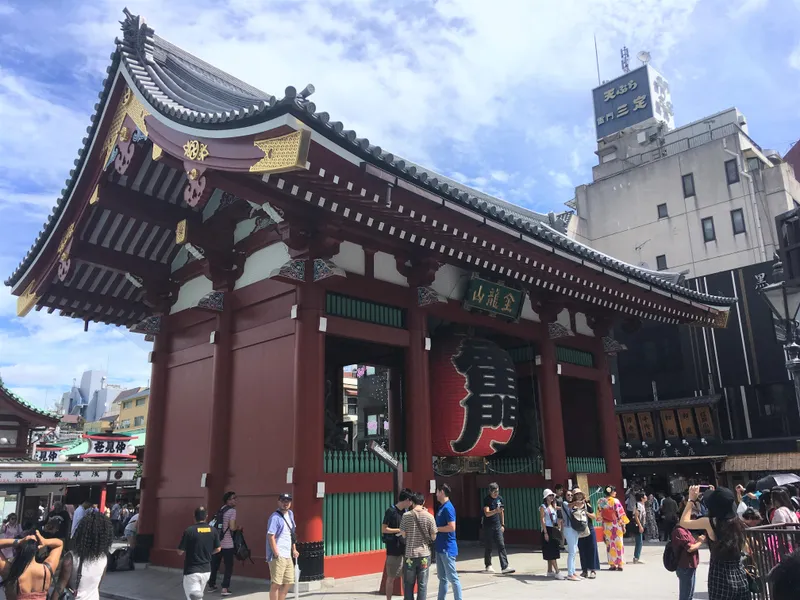 Temple
Senso-ji
- Money & Prosperity
- Protection & Safety
Tokyo's oldest temple, in Asakusa, built around a statue of Kannon that two fishermen brothers are said to have pulled from the river in 628, and visited today for prayers about money and protection.
 Shrine
Koami Shrine
- Money & Prosperity
- Protection & Safety
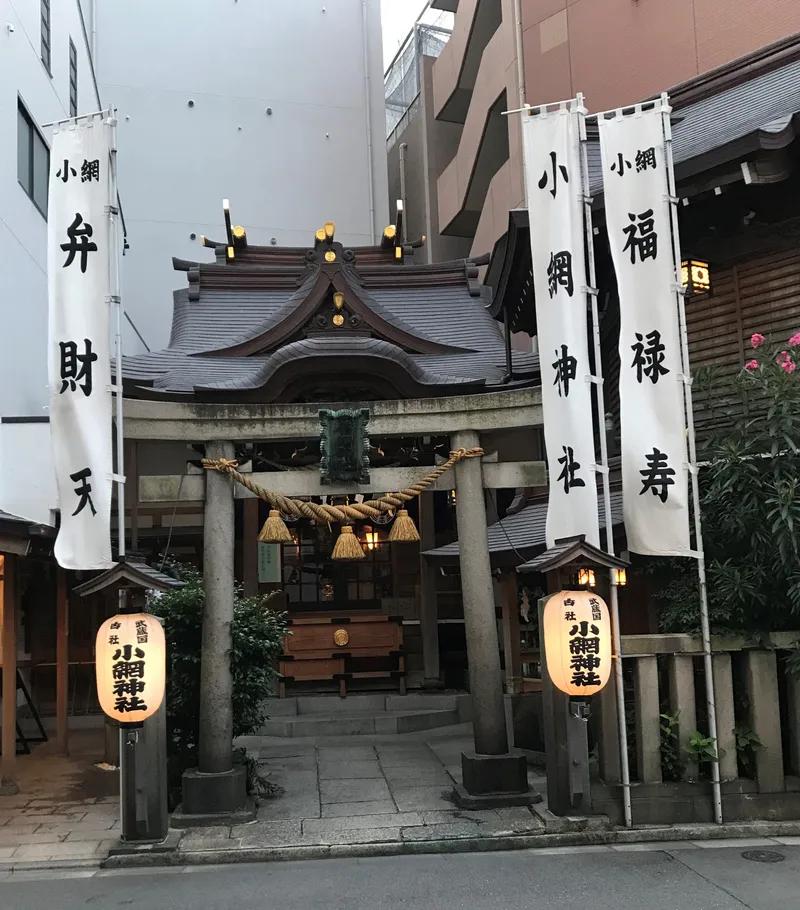
A small Nihonbashi shrine known as a deity of strong luck and warding off misfortune, with a well where visitors wash money and the only pre-war wooden shrine building left in the district.
No places match your filters