Akasaka Hikawa Shrine
赤坂氷川神社 · Akasaka Hikawa Jinja
Researched and translated with AI assistance. Every claim is linked to its source, but errors get through, so check the official site for opening times, fees and closures.About
In short
A Minato shrine founded in 951 whose Edo-period buildings survived both the earthquake and the war, known for warding off misfortune and for the tying of bonds, and the shrine explains why it is known for each.
Quick facts
- Address
- 6-10-12 Akasaka, Minato-ku, Tokyo 107-0052
- Access
- Akasaka on the Tokyo Metro Chiyoda line, Roppongi-itchome on the Namboku line, Roppongi on the Hibiya and Toei Oedo lines, and Tameike-sanno on the Ginza and Namboku lines are all within about ten minutes on foot. The approach is uphill from most of them.
- Hours
- Gates open at 6:00 and close at 17:30. The shrine office takes visitors from 9:00 to 17:00.
- Best time
- The annual festival falls on 15 September, and the Akasaka Hikawa Festival brings out the portable shrine and the floats. The bond-tying rite is held once a month by reservation, and there are seasonal versions in March and July.
- Spiritual entities
- Ōkuninushi (大国主命) · Susanoo no Mikoto (素盞嗚尊)
- Official site
- www.akasakahikawa.or.jp
About this place
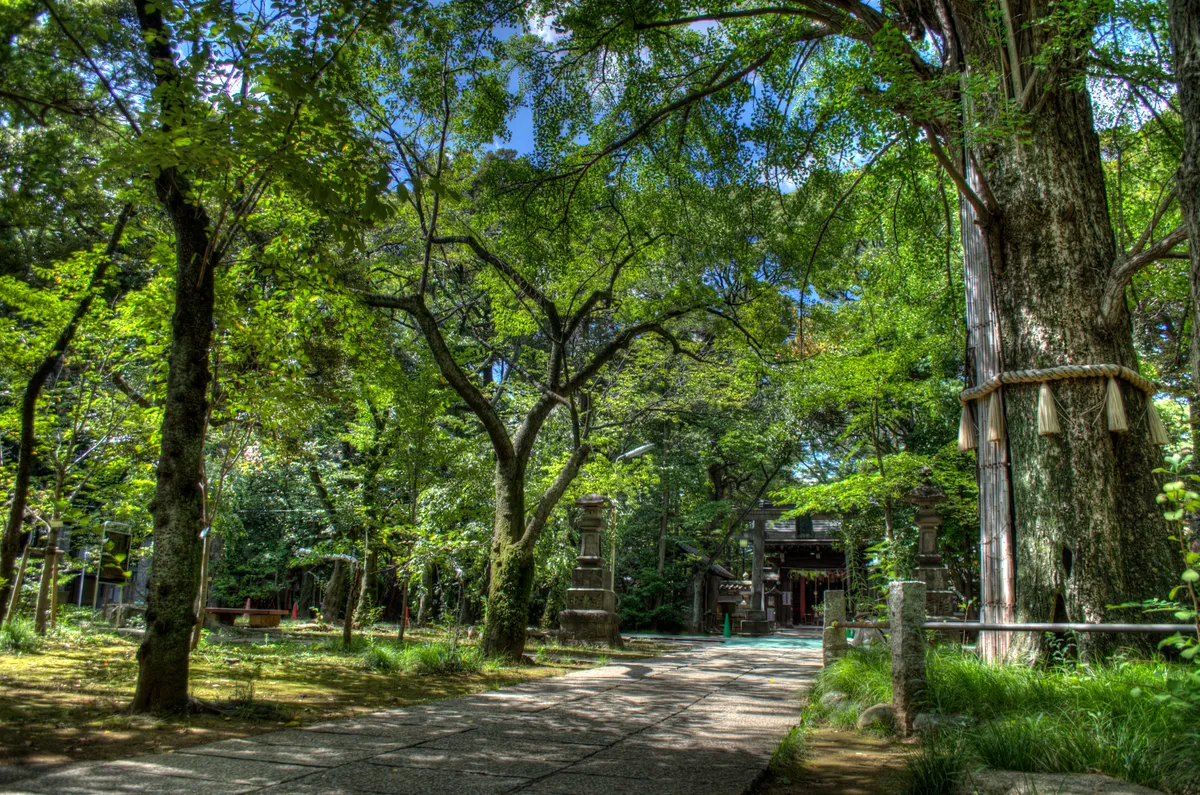
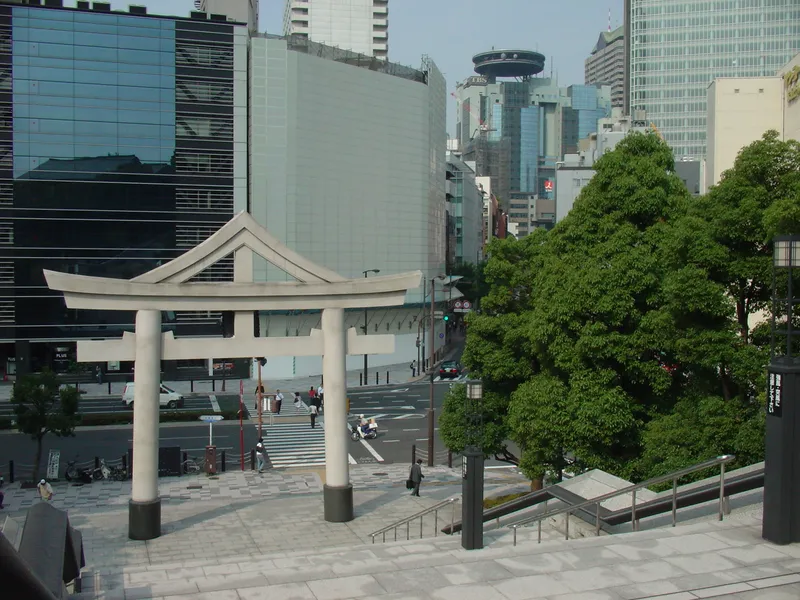
Akasaka Hikawa sits on a wooded slope between Akasaka and Roppongi, a few minutes from some of the densest office blocks in Tokyo. Its main buildings were put up under the shogun Tokugawa Yoshimune and came through the earthquakes and the air raids, so the shrine keeps torii (鳥居), guardian lions and lanterns carved with Edo era names, which is unusual in central Tokyo. It is one of the Tokyo Ten Shrines.
Origin and history
The shrine dates its founding to 951. Its account is that the monk Renrin, travelling in the eastern provinces, spent a night at Hitotsugi village, in what is now the Akasaka 4-chome area, received the deity in a dream, and built a hall to Hikawa Myojin on the spot.
The name Hikawa comes from the Hi River in the old province of Izumo, now the Hii in Shimane. The upper reaches of that river are where the Yamata-no-Orochi story is set, which is the story of the shrine's principal deity.
The buildings visitors see were raised under Tokugawa Yoshimune. They survived the disasters that took most of Tokyo's older shrines, and the grounds still hold a torii, guardian lions and stone lanterns cut with Edo period dates.
What it is locally associated with
Why it wards off misfortune
The shrine reads the "susa" in Susanoo's name as susabu, to rage, and takes it as the power to sweep away impurity and calamity by force. The Orochi story is the same argument.
documented historyThree deities, one married pair
Susanoo and Kushinadahime, husband and wife, are enshrined with their descendant Ōnamuchi, whom the shrine calls the deity of all binding. That is its stated reason for the bond-tying association.
documented historyThe bond-tying rite, by reservation
A monthly rite limited to thirty people. Afterwards the shrine gives out a charm filled with indigo seed grown in its own grounds, the plant name being a homophone for love.
local customEdo buildings that survived
Raised under the shogun Yoshimune and never lost to earthquake or fire, with torii, guardian lions and lanterns still carrying Edo dates.
documented history
Most shrines leave you to work out where a reputation came from. This one sets out four things it is associated with and then explains each from the deities it enshrines, which is why every tag on this page traces to a sentence rather than to a reputation.
Warding off misfortune comes first, and the argument is about a name. Susanoo killed the eight-headed Yamata-no-Orochi, and the shrine reads the susa of his name as susabu, to rage, taking it to mean a power that drives out impurity, calamity and misfortune by force rather than gently. The tying of bonds comes from the household: Susanoo and Kushinadahime are enshrined here as a married pair, together with their descendant Ōnamuchi, who is also the deity of Izumo Taisha and whom the shrine calls the deity of every kind of musubi. Its own gloss is careful to say that this covers friendships, work and children as well as couples, which is why this page carries both the love and the relationship tags. Household safety and prosperity in trade complete the four.
Kushinadahime is worth knowing about even though she has no page here. She was to be the Orochi's sacrifice, and the shrine records that Susanoo turned her into a comb and wore her in his hair through the fight. The poem he composed afterwards, about the eightfold fence of Izumo built to keep his wife within, is held to be the origin of Japanese verse.
One practice belongs to this shrine and not to shrines in general. The bond-tying visit is a reserved rite held once a month for thirty people, with seasonal versions in March and July. The shrine grows indigo inside its own precinct and packs the seed into charm bags by hand, the point being that the word for indigo is a homophone for love. It also gives out a comb, named after the Shigō Inari in the grounds, which Katsu Kaishū named.
Claims and evidence levels 7
- The shrine dates its founding to 951, relating that the monk Renrin received the deity in a dream while staying at Hitotsugi village and built a hall to Hikawa Myojin there. folk tradition
- The name Hikawa derives from the Hi River in the old province of Izumo, now the Hii River in Shimane, whose upper reaches are the setting of the Yamata-no-Orochi story. documented history
- The present shrine buildings were raised under the shogun Tokugawa Yoshimune and survived the earthquakes and wartime destruction that took most of central Tokyo's older shrines; torii, guardian lions and lanterns carved with Edo era dates remain in the grounds. documented history
- The shrine enshrines Susanoo, Kushinadahime and Ōnamuchi, and names warding off misfortune, the tying of bonds, household safety and prosperity in trade as what it is associated with. documented history
- The shrine attributes its warding association to Susanoo's slaying of the Yamata-no-Orochi and to reading the "susa" of his name as susabu, to rage, meaning a power that drives out impurity and calamity by force. documented history
- The shrine attributes its bond-tying association to enshrining the married pair Susanoo and Kushinadahime together with Ōnamuchi, whom it describes as the deity of every kind of binding, covering friendships, work and children as well as couples. documented history
- The shrine holds a reserved bond-tying rite once a month for thirty people, and gives out a charm filled with indigo seed grown inside its own precinct, the word for indigo being a homophone for love. local custom
Visiting tips
The general form is in the visiting guide below. Specific to Akasaka Hikawa:
The bond-tying rite cannot be joined on the day. Reservations open at 9:00 on the first of each month for the following month and the places go quickly, so it is not something to plan around at short notice. Ordinary prayers are also by reservation, in fifteen-minute slots between 9:30 and 16:00.
The shrine publishes rules for photography in the grounds, which is worth checking if you intend to shoot more than a snapshot.
Unusually for this site, the gate times are real published figures rather than an estimate: open at 6:00, closed at 17:30, with the office running 9:00 to 17:00. Arriving in the last hour gets you the grounds but not the counter.
Related guides
- How to visit a shrine or temple in JapanThe country-wide basics: purifying at the water basin, the two-bows-two-claps-one-bow form at shrines, and what temples do instead.
- What a "power spot" actually isA modern Japanese coinage, not a traditional religious category. Where the word came from, what it does and does not claim, and why this site uses it anyway.
- Shrine or temple?A shrine is Shinto and a temple is Buddhist, and you can usually tell at the gate. Why the line is cleaner on paper than on the ground, and what a government order in 1868 has to do with it.
- Omamori, ema, omikuji and goshuinThe four things you are most likely to receive, write, draw or be given at a shrine or temple, what each is actually for, and the one of them people most often get wrong.
Sources
- About Akasaka Hikawa Shrine (赤坂氷川神社について) — Akasaka Hikawa Shrine (accessed 2026-08-02)
- Individual prayers (個人のご祈祷) — Akasaka Hikawa Shrine (accessed 2026-08-02)
- The bond-tying visit (縁むすび参り) — Akasaka Hikawa Shrine (accessed 2026-08-02)
- Hikawa Shrine, Akasaka (Q3135503) coordinate location — Wikidata (accessed 2026-08-02)
Last updated:
Similar places
8 places
 Shrine
Nezu Shrine
- Career & Work
- Exams & Study
- Family & Home
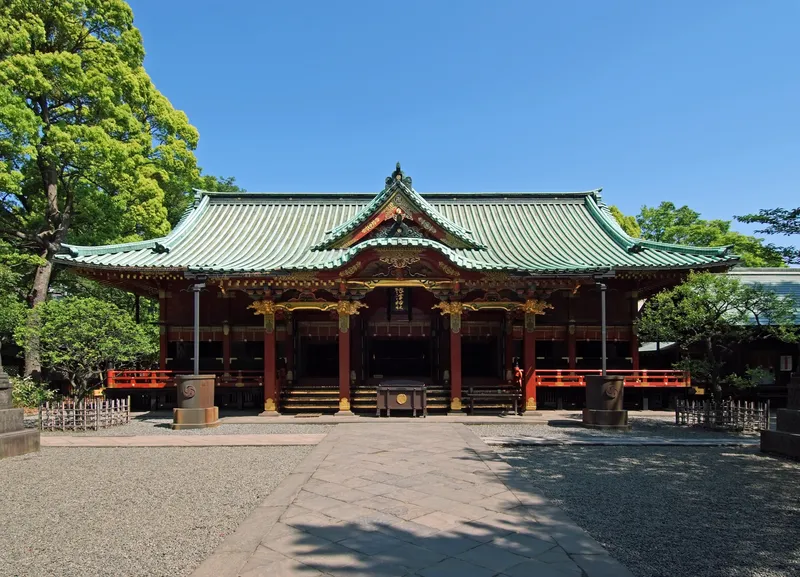
A Bunkyo shrine whose entire 1706 complex survives intact as an Important Cultural Property, rare in Tokyo, with an azalea hill and a tunnel of small red torii (鳥居).
 Shrine
Atago Shrine
- Career & Work
- Love & Romance
- Money & Prosperity
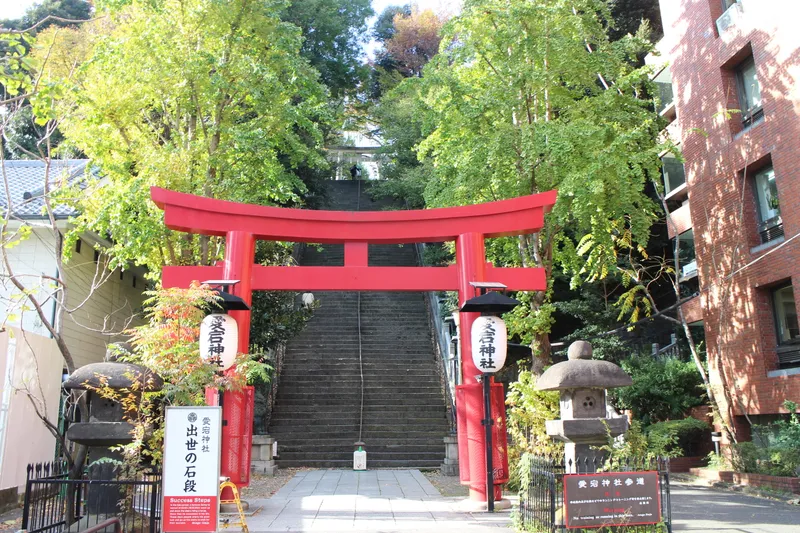
A shrine on a steep hill in Minato, founded in 1603 on Tokugawa Ieyasu's order as a deity against fire, and known for the stone staircase named after a rider who is said to have galloped up it.
 Shrine
Shiba Daijingu
- Love & Romance
- Money & Prosperity
- Protection & Safety
A Minato shrine founded in 1005 that enshrines the two deities of Ise, known in the Edo period as the Ise of the Kanto and today for a box charm sold nowhere else.
 Shrine
Tokyo Daijingu
- Family & Home
- Love & Romance
- Money & Prosperity
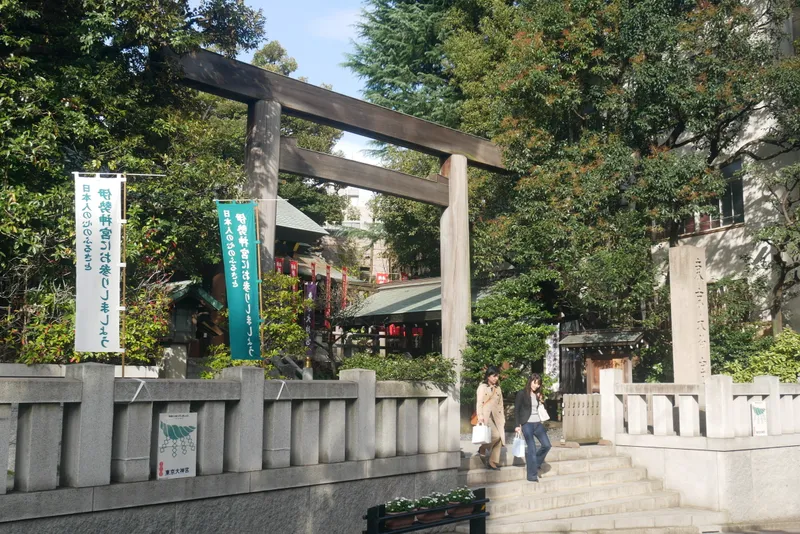
A Chiyoda shrine founded in 1880 as a Tokyo branch of Ise, known as "Tokyo's O-Ise-sama" and visited above all for prayers about relationships, an association the shrine itself explains through the three deities of creation enshrined here.
 Shrine
Kanda Myojin
- Career & Work
- Family & Home
- Money & Prosperity
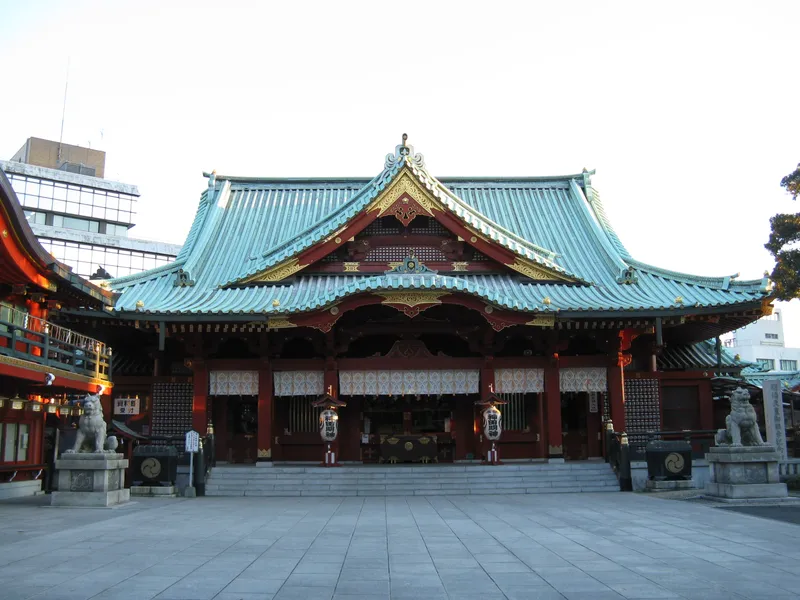
A Chiyoda shrine that served as the guardian shrine of all Edo, enshrining three deities between them associated with business prosperity, good matches and warding off misfortune, and these days selling a charm for information security.
 Shrine
Okunitama Shrine
- Money & Prosperity
- Protection & Safety
- Bonds & Matchmaking
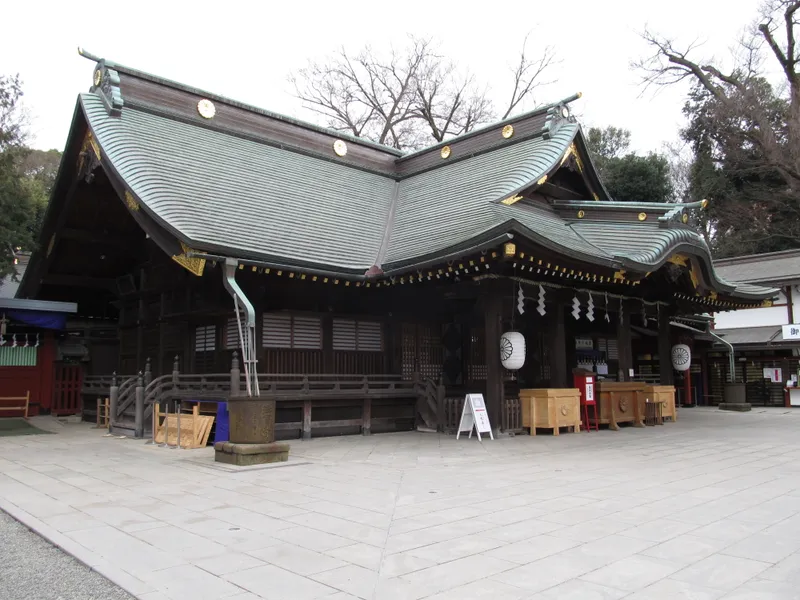
The provincial shrine of old Musashi, in Fuchu, which dates its founding to 111 and enshrines a deity it identifies with Ōkuninushi of Izumo.
 Temple
Zojo-ji
- Career & Work
- Family & Home
- Money & Prosperity
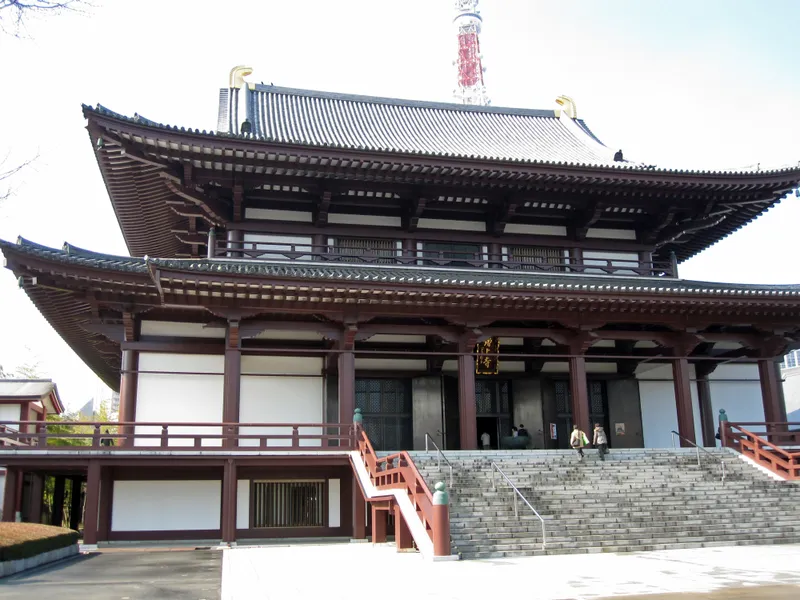
A Pure Land temple in Shiba, founded in 1393 and chosen by the Tokugawa as their family temple, whose hidden principal image is known as the Black Honzon of victory.
 Shrine
Hie Shrine
- Career & Work
- Fertility & Children
- Money & Prosperity
A shrine on a wooded rise in Nagatacho, once the guardian of Edo Castle, whose messenger is the monkey, a pun the shrine explains itself, connecting it to warding off evil, to winning, and to the tying of bonds.
No places match your filters