Koami Shrine
小網神社 · Koami Jinja · Tokyo Zeniarai Benten
Researched and translated with AI assistance. Every claim is linked to its source, but errors get through, so check the official site for opening times, fees and closures.About
In short
A small Nihonbashi shrine known as a deity of strong luck and warding off misfortune, with a well where visitors wash money and the only pre-war wooden shrine building left in the district.
Quick facts
- Address
- 16-23 Nihonbashi-Koamicho, Chuo-ku, Tokyo 103-0016
- Access
- Ningyocho on the Tokyo Metro Hibiya line and the Toei Asakusa line is about five minutes on foot, and Suitengumae on the Hanzomon line about the same. Kayabacho on the Hibiya and Tozai lines is a little further.
- Hours
- The shrine sets no closing time for the grounds. Charms and other items are given out from 9:00 to 17:00.
- Best time
- The Benzaiten festival on 28 October. The grounds are small and busy at lunchtime with office workers from the surrounding district, so early morning is the quiet hour.
- Spiritual entities
- Benzaiten (弁才天) · Fukurokuju (福禄寿) · Inari (稲荷大神)
- Official site
- www.koamijinja.or.jp
About this place
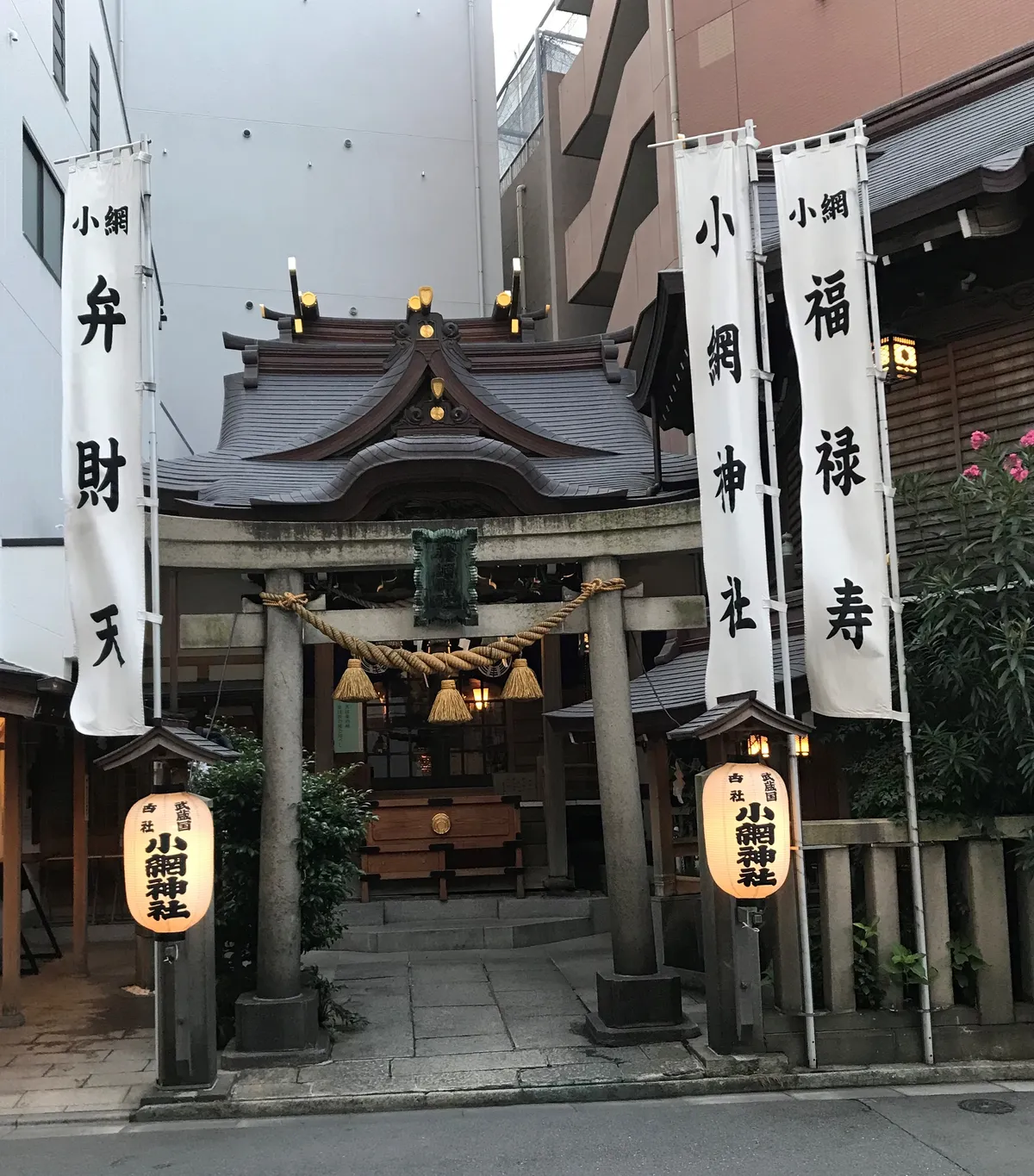
Koami Shrine occupies a plot barely wider than its own hall, hemmed in by office buildings in Nihonbashi. It is known for two things: a reputation for strong luck and warding off misfortune, which the shrine grounds in specific events rather than atmosphere, and a well where visitors wash coins and keep them. The 1929 hall is the only pre-war wooden shrine building surviving in the Nihonbashi district.
Origin and history
The shrine traces its origins to a hermitage called Manpuku-an, which housed images of Kannon and Benzaiten and was founded by the monk Eshin Sōzu. The shrine puts that roughly a thousand years ago, reasoning from Eshin Sōzu's own dates rather than from a record.
Its founding proper is dated to 1466. An epidemic was running through the neighbourhood when an old fisherman arrived at the hermitage carrying ears of rice his net had brought up from the sea, and stayed some days. One night the founder appeared in the abbot's dream and said that if the old man were revered as Inari Ōkami the sickness would end. By morning he had gone. The abbot told the villagers, they honoured him as Koami Inari Daimyōjin and built the shrine, and the epidemic subsided.
Ōta Dōkan, hearing of it, visited and gave land. The surrounding district took the name Koami-chō in the Keichō era. After the separation of Buddhism from Shinto the shrine was designated a village shrine in 1873, and took its present name after the war.
The hall and the kagura stage were built in 1929, after the Great Kanto Earthquake destroyed their predecessors, under the master carpenter Naitō Komasaburō, who had worked on the construction of Meiji Jingu. They came through the war, and are now registered cultural properties of Chuo ward.
What it is locally associated with
The rising and descending dragons
Carved on either side of the hall's canopy. The shrine says the rising dragon carries prayers up to the deity and the descending one brings the deity's virtue back down.
documented historyThe coin-washing well
Money rinsed in the well beside the Benzaiten image and then kept in a wallet is said to bring fortune in money. The shrine notes the Tokyo Zeniarai Benten name is a recent spread.
popular modernA fisherman, an epidemic, 1466
An old man arrived with rice ears caught in his net during an epidemic. A dream instructed the abbot to revere him as Inari, and the shrine records the sickness then ended.
folk traditionNihonbashi's last pre-war shrine hall
Built in 1929 by Naitō Komasaburō, who worked on Meiji Jingu, and unburned in 1945. Registered as a cultural property of Chuo ward.
documented history
This shrine is known as a deity of strong luck and of warding off misfortune, and unusually it argues the point from events rather than from atmosphere. It records three. Soldiers of the parish who attended the send-off rite here and received its charm all returned alive. On 10 March 1945, when the air raid destroyed the surrounding district, the hall and the buildings in the grounds were untouched. And when the earlier hall collapsed in the Great Kanto Earthquake of 1923, the priest carried the deity bodies to the nearby Shin-Ohashi bridge; the crowd that gathered there did not panic, the bridge held, and many survived. The shrine points to the evacuation memorial at the foot of that bridge, which records that people bowed to Koami Shrine's deity bodies and prayed for protection. These are the shrine's own accounts, and this page carries them as that.
The carvings say the same thing in wood. A rising dragon and a descending dragon face each other on the canopy of the hall, and are venerated as the dragons of strong luck and warding. The shrine gives each a job: the rising dragon takes the visitor's prayer up to the deity, the descending dragon brings the deity's virtue back.
The money association comes from the second of the three enshrined deities. Ichikishimahime, identified with Benzaiten, was housed in the temple that once shared this ground; when that temple was abolished after the separation of Buddhism from Shinto, the image was moved here in 1869. Because it rides a boat it is called the Manpuku Funanori Benzaiten. Beside it is a well, and money washed there and kept in a wallet is said to bring fortune in money. The shrine is careful to say that the name Tokyo Zeniarai Benten has spread in recent years, so this page treats it as a modern association rather than an old one. The third deity, Fukurokuju, is credited with three virtues, of character, of fortune and of wealth, and is also worshipped for health and long life.
Two details in the grounds are worth looking up for. The kagura stage is five-sided, which is rare. And a carving on the right of the hall shows the waterfall of Yōrō, from the old story of a devoted son whose feeling turned the water into sake for his father.
Claims and evidence levels 7
- The shrine dates its founding to 1466, relating that during an epidemic an old fisherman arrived at the hermitage on this site carrying rice ears caught in his net, that the founder appeared in a dream instructing that he be revered as Inari Ōkami, and that the sickness ended after the villagers did so. folk tradition
- Ōta Dōkan donated land to the shrine, and the surrounding district was named Koami-cho after it in the Keichō era (1596-1615). documented history
- The present hall and kagura stage were built in 1929 under Naitō Komasaburō, a master carpenter who had worked on the construction of Meiji Jingu, and are registered cultural properties of Chuo ward; they are the only pre-war wooden shrine buildings remaining in the Nihonbashi district. documented history
- The carvings of a rising dragon and a descending dragon on the canopy of the hall are venerated as the dragons of strong luck and warding off misfortune; the shrine describes the rising dragon as carrying prayers to the deity and the descending dragon as bringing the deity's virtue to the worshipper. documented history
- The shrine records that parish soldiers who attended its send-off rite and received its charm all returned from the Second World War, that its buildings escaped the Tokyo air raid of 10 March 1945, and that after the 1923 earthquake the priest carried the deity bodies to Shin-Ohashi bridge, where the evacuation memorial records that people bowed to them and prayed for protection. folk tradition
- The Benzaiten image, identified with Ichikishimahime, was moved here in 1869 from the neighbouring temple after that temple was abolished, and is called the Manpuku Funanori Benzaiten because it rides a boat. documented history
- Money washed in the well beside the Benzaiten image and kept in a wallet is said to bring fortune in money; the shrine states that the name Tokyo Zeniarai Benten has spread in recent years. popular modern
Visiting tips
The general form is in the visiting guide below. Specific to Koami Shrine:
The grounds are very small, and at midday they fill with office workers from the surrounding blocks. There is no room to wait about, and the queue for the coin-washing well is often the longest thing here.
The shrine has no facility for ritually burning returned items, and says so plainly: it cannot accept charms or tablets received at temples, rakes from other shrines, daruma, or household altars. Ask at the office before bringing anything large.
Items are not sent by post, and the shrine states that charms and tablets are given rather than sold, and are not returnable or exchangeable.
No closing time is set for the grounds; the counter runs 9:00 to 17:00.
Related guides
- How to visit a shrine or temple in JapanThe country-wide basics: purifying at the water basin, the two-bows-two-claps-one-bow form at shrines, and what temples do instead.
- What a "power spot" actually isA modern Japanese coinage, not a traditional religious category. Where the word came from, what it does and does not claim, and why this site uses it anyway.
- Shrine or temple?A shrine is Shinto and a temple is Buddhist, and you can usually tell at the gate. Why the line is cleaner on paper than on the ground, and what a government order in 1868 has to do with it.
- Omamori, ema, omikuji and goshuinThe four things you are most likely to receive, write, draw or be given at a shrine or temple, what each is actually for, and the one of them people most often get wrong.
Sources
- Deities and history (ご祭神 / ご由緒) — Koami Shrine (accessed 2026-08-02)
- Guide to the grounds (境内のご案内) — Koami Shrine (accessed 2026-08-02)
- Visiting (ご参拝) — Koami Shrine (accessed 2026-08-02)
- Koami Shrine (Q106852453) coordinate location — Wikidata (accessed 2026-08-02)
Last updated:
Similar places
8 places
 Shrine
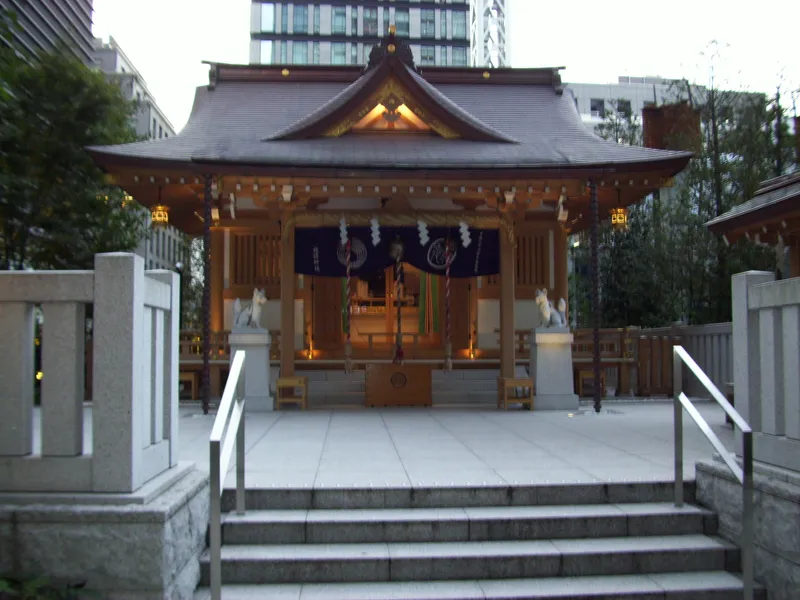
Fukutoku Shrine
- Money & Prosperity
A small Nihonbashi shrine whose name means good fortune, which ran shogunate-licensed lotteries in the Edo period and still performs a prayer for winning one.
 Shrine
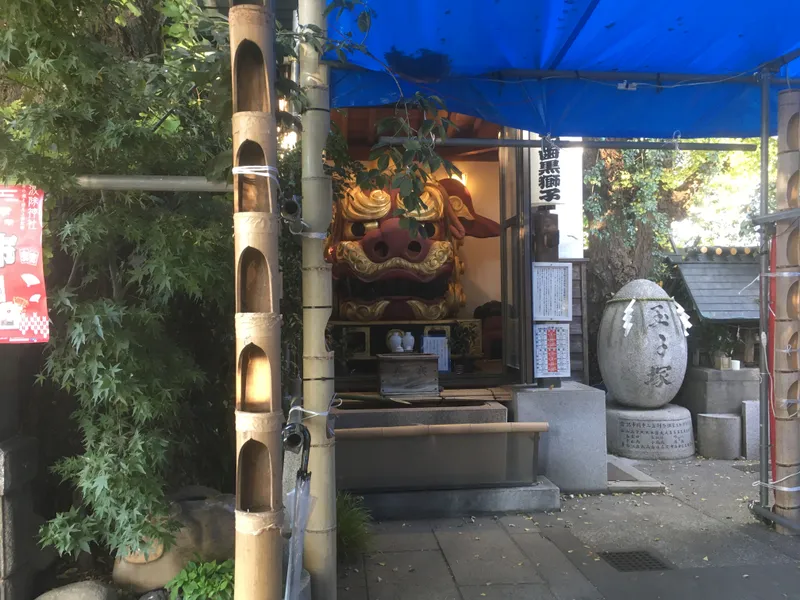
Namiyoke Shrine
- Money & Prosperity
- Protection & Safety
A Tsukiji shrine whose name means wave-averting, founded in 1659 after an Inari image found floating in the sea was credited with calming the water enough to finish the reclamation.
 Shrine
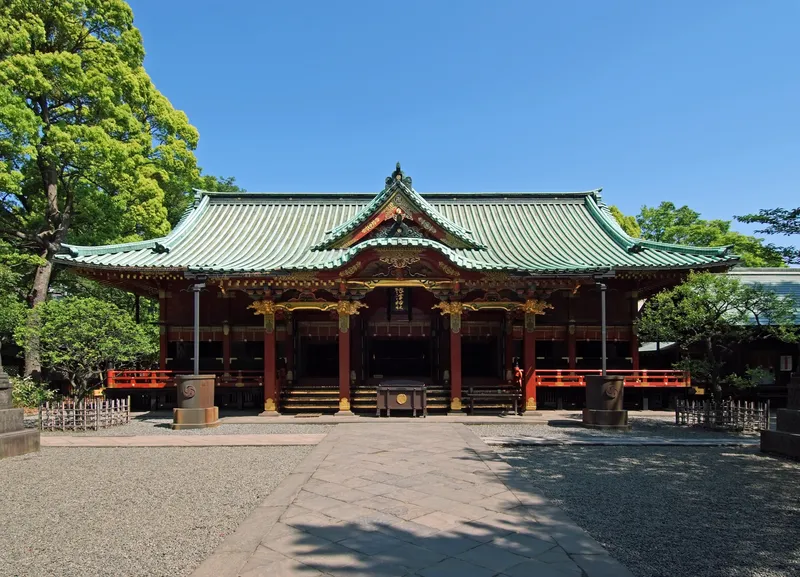
Nezu Shrine
- Career & Work
- Exams & Study
- Family & Home
A Bunkyo shrine whose entire 1706 complex survives intact as an Important Cultural Property, rare in Tokyo, with an azalea hill and a tunnel of small red torii (鳥居).
 Shrine
Shinagawa Shrine
- Money & Prosperity
- Protection & Safety
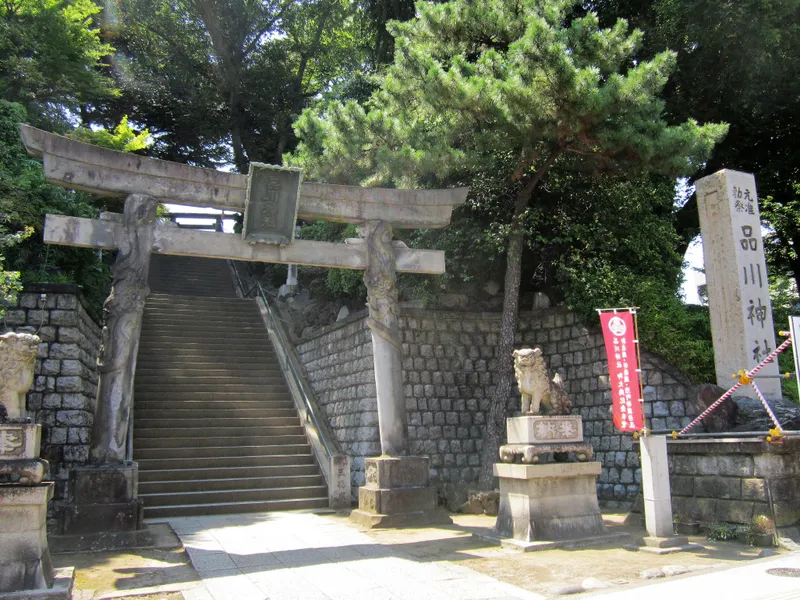
A shrine above Kita-Shinagawa founded in 1187 by Minamoto no Yoritomo, enshrining three deities added across three centuries, one for trade and one for warding.
 Shrine
Kanda Myojin
- Career & Work
- Family & Home
- Money & Prosperity
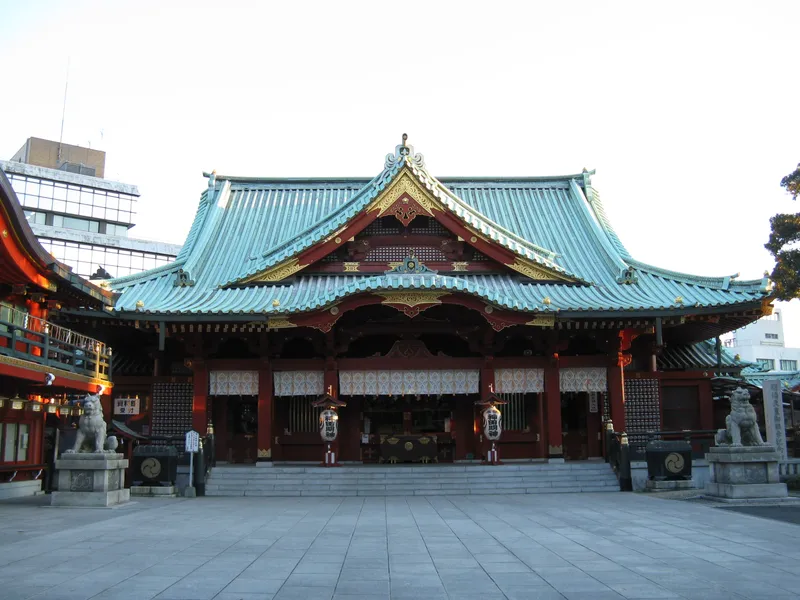
A Chiyoda shrine that served as the guardian shrine of all Edo, enshrining three deities between them associated with business prosperity, good matches and warding off misfortune, and these days selling a charm for information security.
 Shrine
Karasumori Shrine
- Career & Work
- Money & Prosperity
- Skill & Mastery
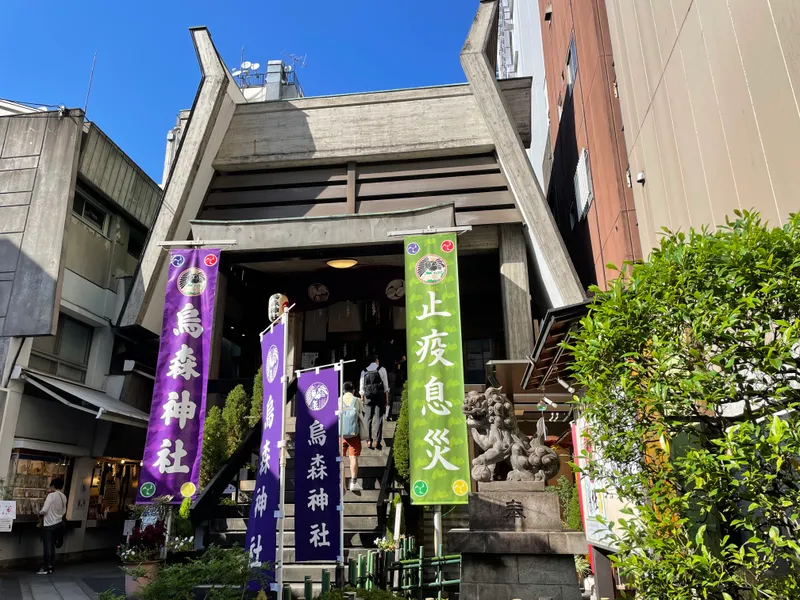
A Shimbashi shrine down an alley, founded in 940 by the general who defeated Taira no Masakado, and one of the few to enshrine the deity of the performing arts.
 Shrine
Atago Shrine
- Career & Work
- Love & Romance
- Money & Prosperity
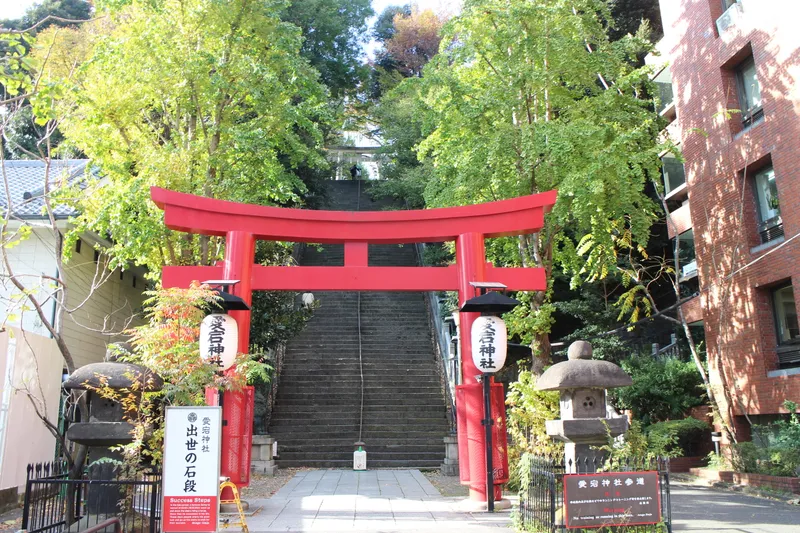
A shrine on a steep hill in Minato, founded in 1603 on Tokugawa Ieyasu's order as a deity against fire, and known for the stone staircase named after a rider who is said to have galloped up it.
 Temple
Senso-ji
- Money & Prosperity
- Protection & Safety
Tokyo's oldest temple, in Asakusa, built around a statue of Kannon that two fishermen brothers are said to have pulled from the river in 628, and visited today for prayers about money and protection.
No places match your filters