Ueno Toshogu
上野東照宮 · Ueno Tōshō-gū
Researched and translated with AI assistance. Every claim is linked to its source, but errors get through, so check the official site for opening times, fees and closures.About
In short
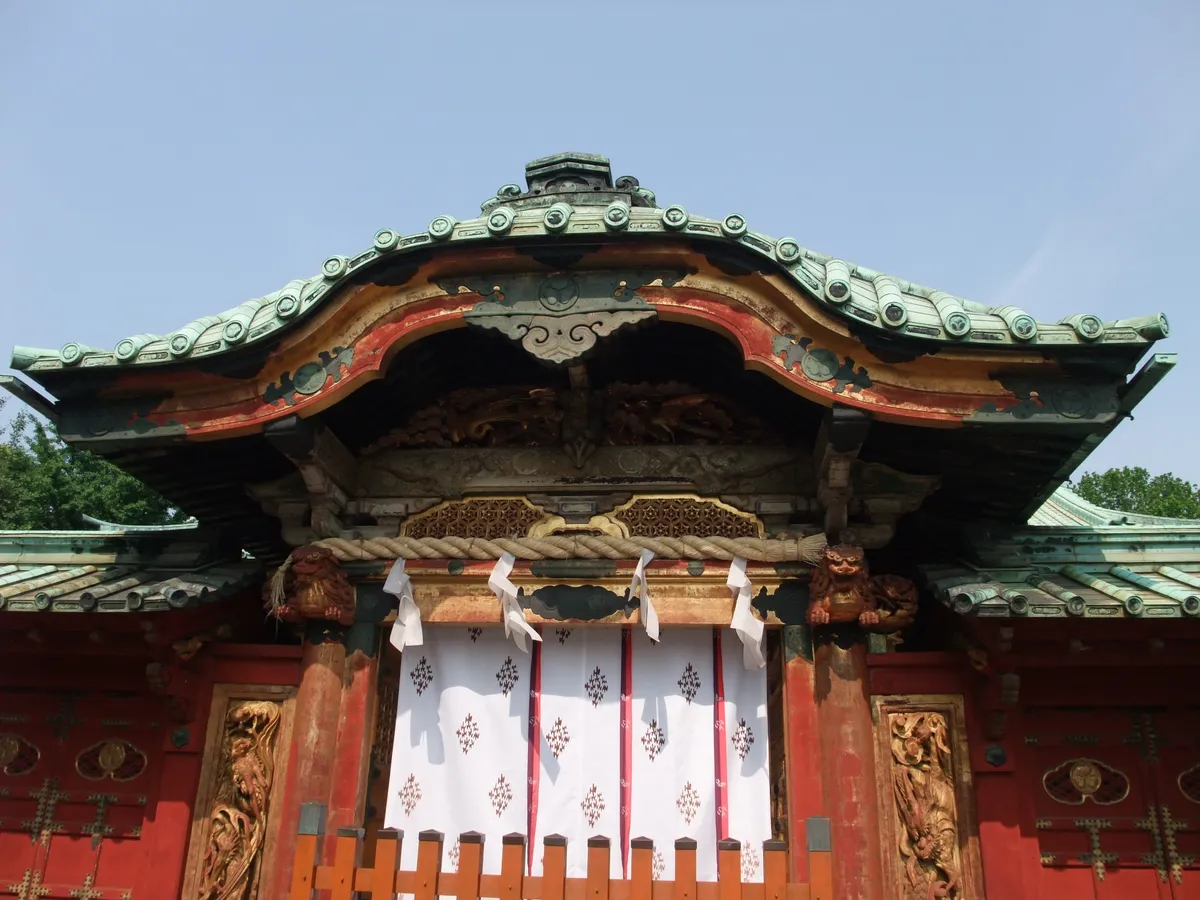
A shrine in Ueno Park founded in 1627 to Tokugawa Ieyasu, whose gilded 1651 hall survived the Ueno war, the earthquake and the air raids intact.
Quick facts
- Address
- 9-88 Uenokoen, Taito-ku, Tokyo 110-0007
- Access
- Ueno station on the JR lines, the Tokyo Metro Ginza and Hibiya lines and the Keisei line is about ten minutes on foot through the park. Uguisudani on the JR Yamanote line is a similar distance from the north side.
- Hours
- The shrine publishes visiting information on its own site and charges admission to the fenced inner precinct and to the peony garden; the outer approach is free. Times vary by season, so check before travelling.
- Best time
- Spring for the peonies and cherry, autumn for the colour and the dahlia show, and the new year for the winter peonies. The approach is lined with stone and bronze lanterns at any time of year.
- Spiritual entities
- Tokugawa Ieyasu (徳川家康)
- Official site
- www.uenotoshogu.com
About this place
Ueno Toshogu stands inside Ueno Park, at the end of an approach lined with some 250 stone and bronze lanterns. Toshogu are the shrines that enshrine Tokugawa Ieyasu as a deity, and this one keeps a gilded hall built in 1651 in the manner of Nikko, put up so that Edo people who could not make the journey to Nikko had somewhere nearer. The shrine says it is believed to be of particular benefit for advancement, for victory, and for health and long life.
Origin and history
The shrine records that on 4 February 1616 the monk Tenkai and the daimyo Tōdō Takatora were called to the bedside of the dying Tokugawa Ieyasu, who asked that a place be made where the three of them could rest together in perpetuity.
Tenkai received the land that is now Ueno Park, then Tōdō Takatora's residence, and founded the temple Kan'ei-ji there. In 1627 a shrine called Tōshō-sha was built as one of its buildings, and that is the beginning of Ueno Toshogu. The court formally granted it the title Tōshōgū in 1646.
The buildings standing today are not the originals. In 1651 the third shogun, Tokugawa Iemitsu, rebuilt the hall as a gilded one in the manner of Nikko Toshogu, for the sake of Edo people who could not travel that far, and around 250 lanterns were donated by daimyo from across the country for the occasion.
What happened afterwards is why the shrine is unusual. The Ueno war at the end of the Tokugawa period destroyed much of Kan'ei-ji, but the fire did not reach here. The Great Kanto Earthquake did not bring the hall down. In the Tokyo air raids an incendiary bomb fell directly behind the gilded hall and failed to explode. The shrine attributes the survival to the strong fortune of the deified lord. Under the Meiji separation of Buddhism from Shinto the five-storey pagoda was transferred to Kan'ei-ji and the grounds shrank, but the 1651 hall is still there.
What it is locally associated with
Advancement, victory, long life
The shrine names three things it is held to be particularly good for: rising in the world, winning, and health and long life. It states them in its own words rather than leaving them to reputation.
documented historyNikko, brought closer
Iemitsu rebuilt the hall in gold in 1651 in the manner of Nikko Toshogu, so that Edo people who could not make that journey had somewhere to go instead.
documented historyThe bomb that did not go off
The hall came through the Ueno war, the 1923 earthquake, and an incendiary bomb that fell just behind it and failed to explode. It is an Important Cultural Property.
documented history
This shrine states what it is associated with in a single sentence, and the tags on this page come from it directly: it is believed to be of particular benefit for advancement in the world, for victory, and for health and long life. The first two are why this page carries the career tag, in the same sense as Kanda Myojin's victory charm and Zojo-ji's Black Honzon: not titles or promotion, but coming out ahead in something contested. The third is the health tag.
The deity is the reason. Toshogu are the shrines that enshrine Tokugawa Ieyasu under the name Tōshō Daigongen, and there are many of them, of which Nikko and Kunozan are the best known. Here he is enshrined with two other shoguns, Yoshimune and Yoshinobu.
What makes the place worth the visit is the building rather than the list. The gilded hall of 1651, its openwork fence and its Chinese-style gate are nationally designated Important Cultural Properties and are rare surviving early-Edo work: the shrine came through the Ueno war, the Great Kanto Earthquake, and an incendiary bomb that landed directly behind the hall and turned out to be a dud. The shrine calls that the fruit of the deified lord's strong fortune. Worth being exact, though: it says that about why the buildings survived, not about what visitors should expect, and this page keeps the two apart.
The interior is closed to protect it. The approach is lined with around 250 lanterns given by daimyo across the country at the 1651 rebuilding, and the peony garden beside the shrine is a destination in its own right, open for spring peonies and again for winter ones at new year.
Claims and evidence levels 6
- The shrine was founded in 1627 as Tōshō-sha, one of the buildings of Kan'ei-ji, and was formally granted the title Tōshōgū by the court in 1646. documented history
- The shrine relates that on 4 February 1616 the monk Tenkai and Tōdō Takatora were called to the dying Tokugawa Ieyasu, who asked that a place be made where the three of them could rest together in perpetuity. documented history
- The gilded hall, openwork fence and Chinese-style gate standing today were rebuilt in 1651 by the third shogun Tokugawa Iemitsu in the manner of Nikko Toshogu, for Edo people unable to travel to Nikko, and around 250 lanterns were donated by daimyo from across the country at that time. documented history
- The shrine states that it is believed to be of particular benefit for advancement in the world, for victory, and for health and long life. documented history
- The buildings escaped the fire of the Ueno war, withstood the Great Kanto Earthquake, and survived the Tokyo air raids when an incendiary bomb fell directly behind the gilded hall and failed to explode; they are nationally designated Important Cultural Properties. documented history
- Tokugawa Ieyasu is enshrined here as Tōshō Daigongen together with Tokugawa Yoshimune and Tokugawa Yoshinobu; the hall interior is closed to visitors for conservation. documented history
Visiting tips
The general form is in the visiting guide below. Specific to Ueno Toshogu:
The hall interior is not open. What visitors see is the exterior of the gilded hall from within the fenced precinct, which is a paid area; the approach and the lantern avenue outside it are free. The peony garden is charged separately and opens seasonally.
This is a working shrine inside a public park, and the approach is a thoroughfare for people crossing Ueno Park rather than only for worshippers. That is normal here and not a reason to hurry.
Opening times and admission vary with the season and with the peony garden calendar, so check the official site rather than assuming.
Related guides
- How to visit a shrine or temple in JapanThe country-wide basics: purifying at the water basin, the two-bows-two-claps-one-bow form at shrines, and what temples do instead.
- What a "power spot" actually isA modern Japanese coinage, not a traditional religious category. Where the word came from, what it does and does not claim, and why this site uses it anyway.
- Shrine or temple?A shrine is Shinto and a temple is Buddhist, and you can usually tell at the gate. Why the line is cleaner on paper than on the ground, and what a government order in 1868 has to do with it.
- Omamori, ema, omikuji and goshuinThe four things you are most likely to receive, write, draw or be given at a shrine or temple, what each is actually for, and the one of them people most often get wrong.
Sources
- About Ueno Toshogu and its cultural properties (見どころ) — Ueno Toshogu (accessed 2026-08-02)
- Access and map (交通・地図) — Ueno Toshogu (accessed 2026-08-02)
- Ueno Tōshō-gū (Q708550) coordinate location — Wikidata (accessed 2026-08-02)
Last updated:
Similar places
8 places
 Shrine
Nezu Shrine
- Career & Work
- Exams & Study
- Family & Home
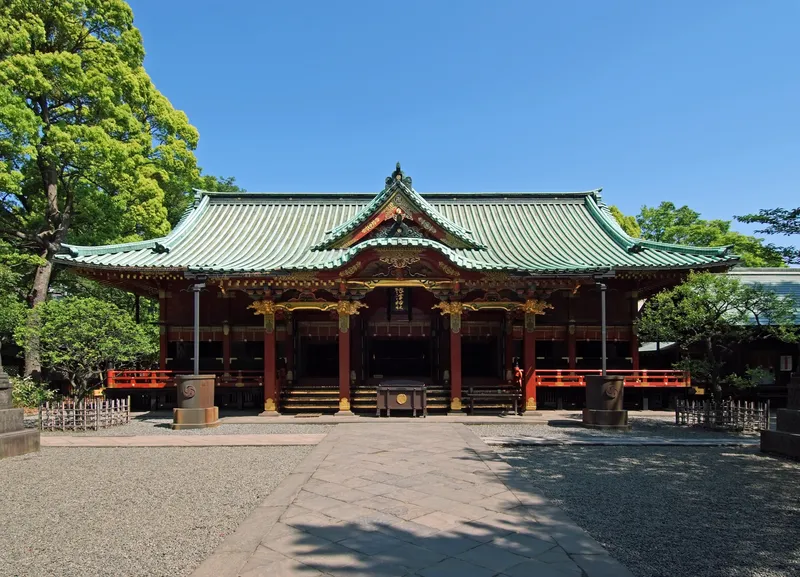
A Bunkyo shrine whose entire 1706 complex survives intact as an Important Cultural Property, rare in Tokyo, with an azalea hill and a tunnel of small red torii (鳥居).
 Shrine
Kanda Myojin
- Career & Work
- Family & Home
- Money & Prosperity
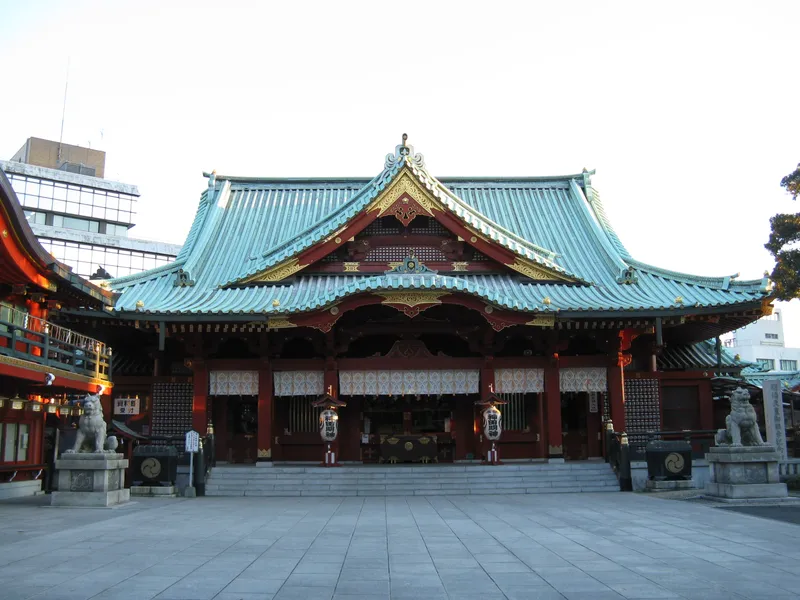
A Chiyoda shrine that served as the guardian shrine of all Edo, enshrining three deities between them associated with business prosperity, good matches and warding off misfortune, and these days selling a charm for information security.
 Shrine
Fukutoku Shrine
- Money & Prosperity
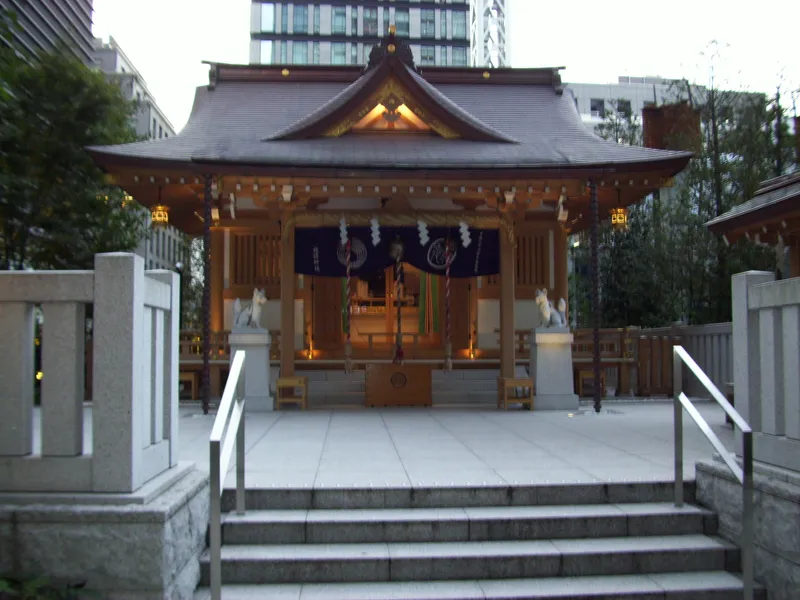
A small Nihonbashi shrine whose name means good fortune, which ran shogunate-licensed lotteries in the Edo period and still performs a prayer for winning one.
 Shrine
Hie Shrine
- Career & Work
- Fertility & Children
- Money & Prosperity
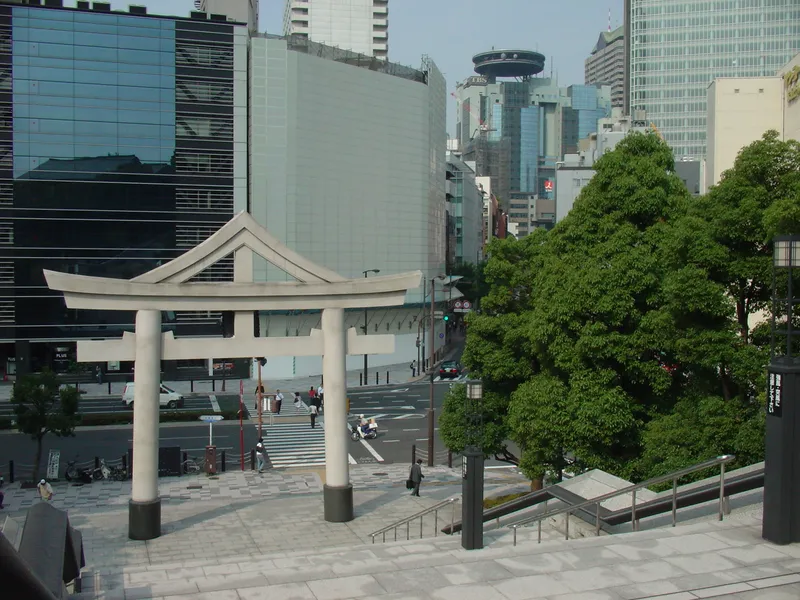
A shrine on a wooded rise in Nagatacho, once the guardian of Edo Castle, whose messenger is the monkey, a pun the shrine explains itself, connecting it to warding off evil, to winning, and to the tying of bonds.
 Shrine
Karasumori Shrine
- Career & Work
- Money & Prosperity
- Skill & Mastery
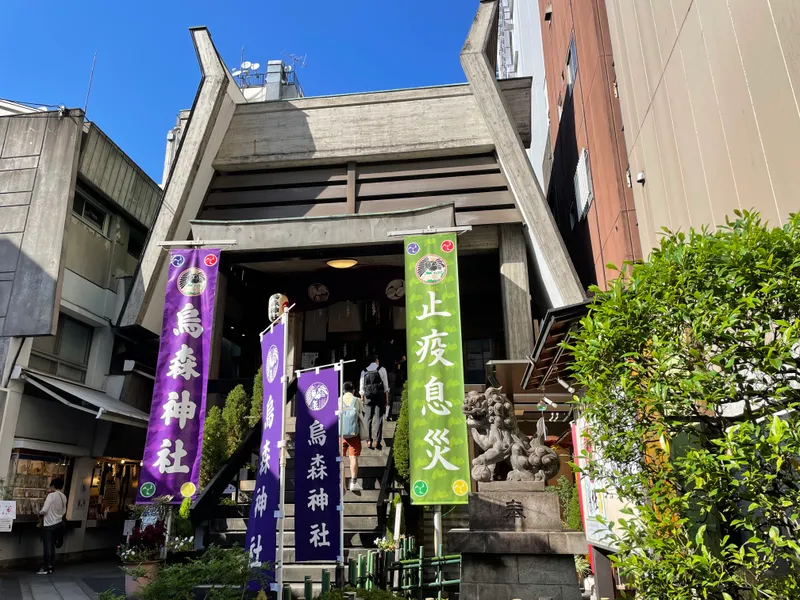
A Shimbashi shrine down an alley, founded in 940 by the general who defeated Taira no Masakado, and one of the few to enshrine the deity of the performing arts.
 Shrine
Atago Shrine
- Career & Work
- Love & Romance
- Money & Prosperity
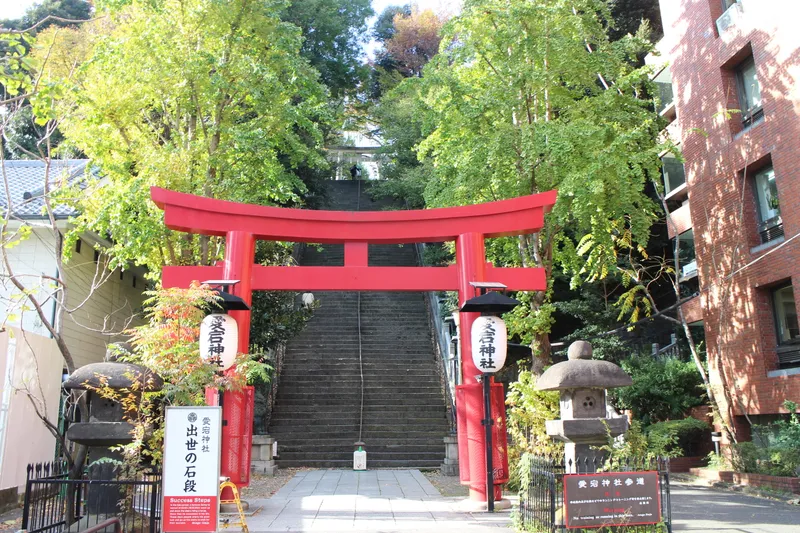
A shrine on a steep hill in Minato, founded in 1603 on Tokugawa Ieyasu's order as a deity against fire, and known for the stone staircase named after a rider who is said to have galloped up it.
 Temple
Zojo-ji
- Career & Work
- Family & Home
- Money & Prosperity
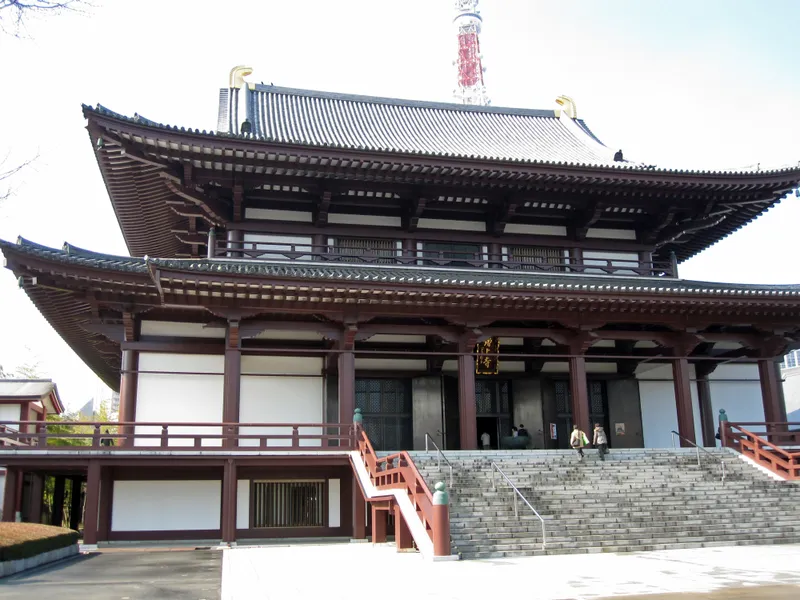
A Pure Land temple in Shiba, founded in 1393 and chosen by the Tokugawa as their family temple, whose hidden principal image is known as the Black Honzon of victory.
 Shrine
Meiji Jingu
- Health & Healing
- Protection & Safety
- Bonds & Matchmaking
A 1920 Shinto shrine in central Tokyo enshrining Emperor Meiji and Empress Shōken, set in a 70-hectare forest that was planted from scratch and is visited today for prayers about bonds, protection and health.
No places match your filters