Hie Shrine
日枝神社 · Hie Jinja · Sanno-sama
Researched and translated with AI assistance. Every claim is linked to its source, but errors get through, so check the official site for opening times, fees and closures.About
In short
A shrine on a wooded rise in Nagatacho, once the guardian of Edo Castle, whose messenger is the monkey, a pun the shrine explains itself, connecting it to warding off evil, to winning, and to the tying of bonds.
Quick facts
- Address
- 2-10-5 Nagatacho, Chiyoda-ku, Tokyo 100-0014
- Access
- Akasaka station on the Chiyoda line is three minutes from exit 2, and Tameike-sanno on the Namboku and Ginza lines is three minutes from exit 7. Kokkai-gijidomae on the Chiyoda line is five minutes from exit 5, and Akasaka-mitsuke on the Ginza and Marunouchi lines is eight minutes from exit 11.
- Hours
- The shrine publishes no opening or closing times for the grounds. The prayer office takes bookings from 9:00 to 16:00, which is the only published figure — treat the rest as unofficial.
- Best time
- The Sanno Matsuri, one of the great festivals of Edo, is held in alternate years in June. The Inari festival, the moon-viewing wind-and-string rite in autumn, and the Koshin rite are the other fixed points, alongside New Year and Setsubun (節分).
- Spiritual entities
- Ōyamakui no Kami (大山咋神)
- Official site
- www.hiejinja.net
About this place
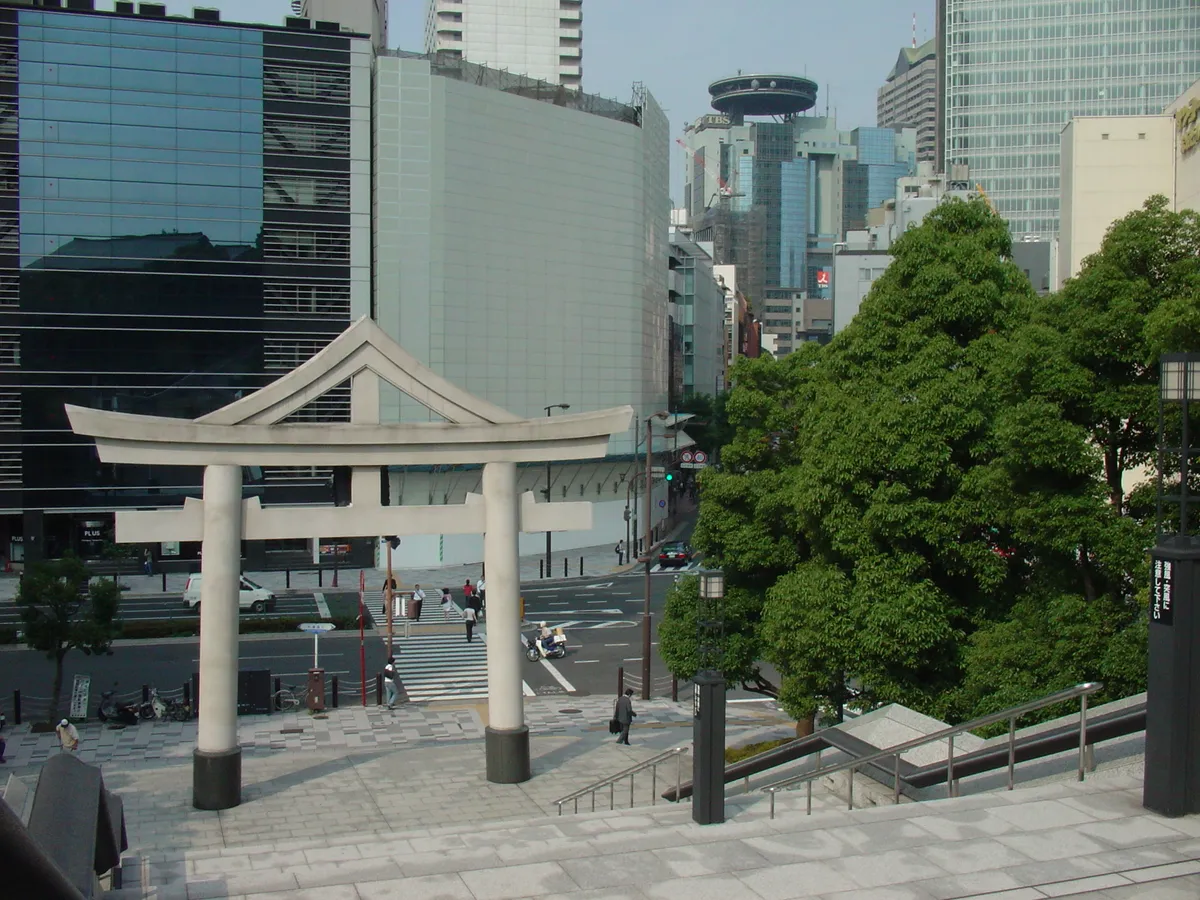
Hie Shrine sits above Akasaka on a hill surrounded by government buildings and offices, which makes the wooded approach a sharper contrast than at most Tokyo shrines. It was brought inside Edo Castle in 1478 as its guardian and moved out to the present site after the great fire of 1657. Its deity is Ōyamakui, and its messenger is the monkey, which is where almost everything visitors come here for begins.
Origin and history
Ōta Dōkan brought the Sanno shrine of Kawagoe inside Edo Castle in 1478 to serve as its guardian. Tokugawa Ieyasu later moved it outside the castle walls, and after the great fire of 1657 the shrine was established on its present hill in Akasaka under the third shogun, Iemitsu. Its deity is Ōyamakui, also known as Yamasue no Ōnushi, described by the shrine as governing the growth and development of all things, the prosperity of industry, and the guardianship of land and water.
What it is locally associated with
The monkey that makes evil leave
The shrine's messenger. Its name masaru is read both as "evil departs" and as "to surpass", which the shrine gives as the source of its warding and winning associations.
documented historyA male and female pair
Two monkey statues stand at the hall, one of each. Because "monkey" can also be read en (the same en as in enmusubi), the pair carries the shrine's matchmaking association.
documented historyGuardian of Edo Castle
Brought inside the castle in 1478, moved out by Ieyasu, and re-established here after the fire of 1657.
documented history
The shrine lists what it is petitioned for plainly: safe childbirth, the tying of bonds, prosperous trade, the flourishing of a company, and warding off misfortune. Behind those is Ōyamakui, whose remit the shrine describes as the growth and development of all things and the prosperity of industry, which is why a shrine hemmed in by ministries and corporate headquarters reads as a business shrine as much as anything else.
But the reason people single this place out is the monkey, and the shrine explains it rather than leaving it to be guessed. Its own amulet office states that the word masaru carries both "evil departs" and "to surpass or prevail", and that from this the divine virtues of warding off evil, warding off misfortune, and certain victory follow. That is a pun doing theological work, stated by the institution, and it is the basis for the protection and career tags here.
The same animal carries the matchmaking. A male and a female monkey stand as a pair at the hall, and because the character for monkey can also be read en (the same en as in enmusubi, the tying of bonds), the shrine treats the pair as connected to good relationships. Its account of Ōyamakui adds a myth for it: the deity turned into an arrow and so met Tamayorihime by the Kamo river, and a child followed. Prayers for a good match are taken at the grounds office from 9:00 to 16:00 without booking, from ¥10,000. Visitors also touch the monkeys when hoping for a child or an easy birth.
Claims and evidence levels 6
- Ōta Dōkan brought the Sanno shrine of Kawagoe inside Edo Castle in 1478 as its guardian; the shrine was later moved outside the walls and established on its present Akasaka site after the fire of 1657. documented history
- The enshrined deity is Ōyamakui, also known as Yamasue no Ōnushi, described by the shrine as governing the growth of all things, the prosperity of industry and the guardianship of land and water. documented history
- The shrine states that the name of its monkey messenger, masaru, carries both "evil departs" and "to prevail", giving it virtues of warding off evil and misfortune and of certain victory. documented history
- Because the character for monkey can be read en, the same syllable as in enmusubi, the shrine connects its paired male and female monkey statues with the tying of bonds. documented history
- The shrine lists safe childbirth, the tying of bonds, prosperous trade, company prosperity and warding off misfortune among what it is petitioned for. local custom
- Prayers for a good match are taken at the grounds office from 9:00 to 16:00 without advance booking, from ¥10,000. local custom
Visiting tips
The general form is in the visiting guide below. Specific to Hie Shrine:
Photography inside the prayer hall is asked to be refrained from. Outdoors it is fine, provided you are not obstructing the path or other people's worship. The shrine words it exactly that way, as a matter of not getting in the way rather than a prohibition.
The monkey statues are meant to be touched, not merely looked at: people hoping for a child or an easy delivery touch them, which is the local practice rather than a rule.
Two practical notes. No opening or closing times are published for the grounds at all; the only official figure is the prayer office, 9:00 to 16:00. And prayers here are walk-up: the shrine states no advance reservation is needed.
Related guides
- How to visit a shrine or temple in JapanThe country-wide basics: purifying at the water basin, the two-bows-two-claps-one-bow form at shrines, and what temples do instead.
- What a "power spot" actually isA modern Japanese coinage, not a traditional religious category. Where the word came from, what it does and does not claim, and why this site uses it anyway.
- Shrine or temple?A shrine is Shinto and a temple is Buddhist, and you can usually tell at the gate. Why the line is cleaner on paper than on the ground, and what a government order in 1868 has to do with it.
- Omamori, ema, omikuji and goshuinThe four things you are most likely to receive, write, draw or be given at a shrine or temple, what each is actually for, and the one of them people most often get wrong.
Sources
- About Hie Shrine (日枝神社について) — Hie Shrine (accessed 2026-08-02)
- Prayers for a good match (縁結び祈願について) — Hie Shrine (accessed 2026-08-02)
- Masaru amulets — official amulet office (まさる) — Hie Shrine (accessed 2026-08-02)
- Frequently asked questions (よくあるご質問) — Hie Shrine (accessed 2026-08-02)
- Annual events (行事) — Hie Shrine (accessed 2026-08-02)
Last updated:
Similar places
8 places
 Shrine
Nezu Shrine
- Career & Work
- Exams & Study
- Family & Home
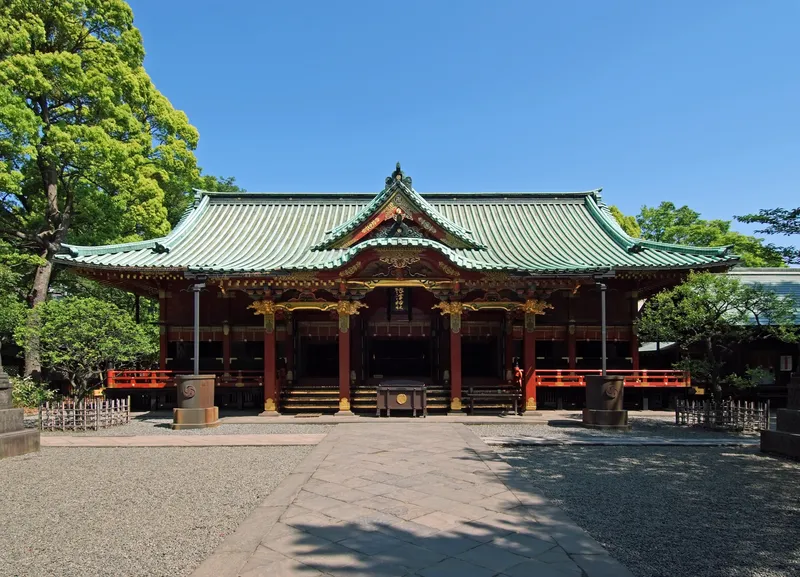
A Bunkyo shrine whose entire 1706 complex survives intact as an Important Cultural Property, rare in Tokyo, with an azalea hill and a tunnel of small red torii (鳥居).
 Shrine
Kanda Myojin
- Career & Work
- Family & Home
- Money & Prosperity
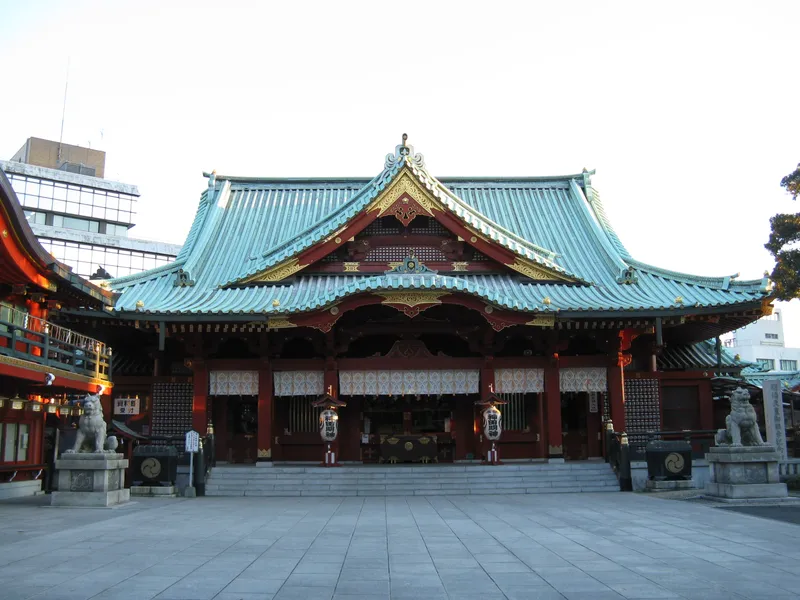
A Chiyoda shrine that served as the guardian shrine of all Edo, enshrining three deities between them associated with business prosperity, good matches and warding off misfortune, and these days selling a charm for information security.
 Shrine
Atago Shrine
- Career & Work
- Love & Romance
- Money & Prosperity
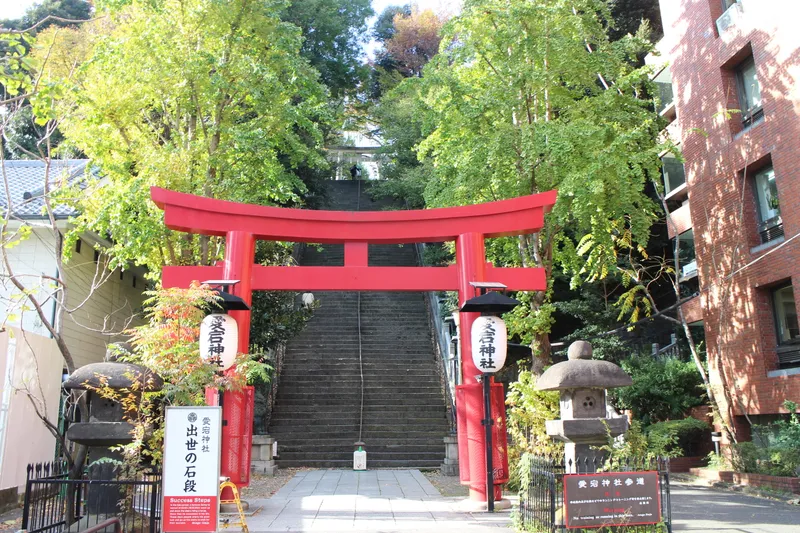
A shrine on a steep hill in Minato, founded in 1603 on Tokugawa Ieyasu's order as a deity against fire, and known for the stone staircase named after a rider who is said to have galloped up it.
 Shrine
Akasaka Hikawa Shrine
- Family & Home
- Love & Romance
- Money & Prosperity
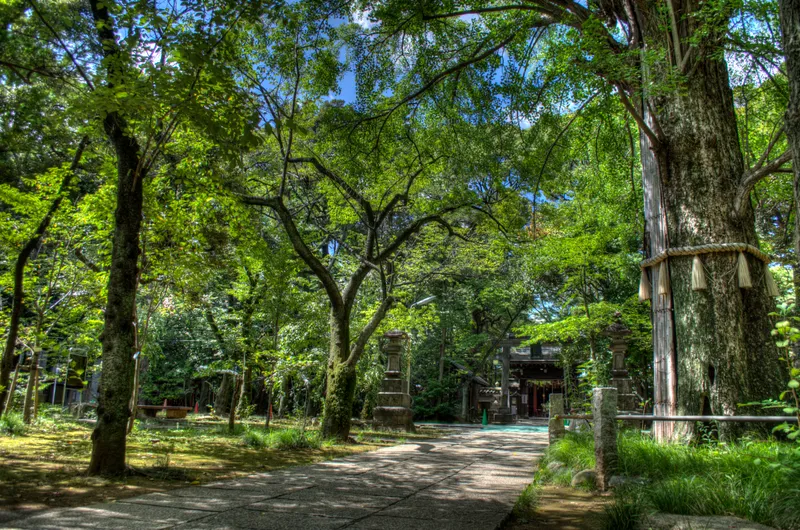
A Minato shrine founded in 951 whose Edo-period buildings survived both the earthquake and the war, known for warding off misfortune and for the tying of bonds, and the shrine explains why it is known for each.
 Temple
Zojo-ji
- Career & Work
- Family & Home
- Money & Prosperity
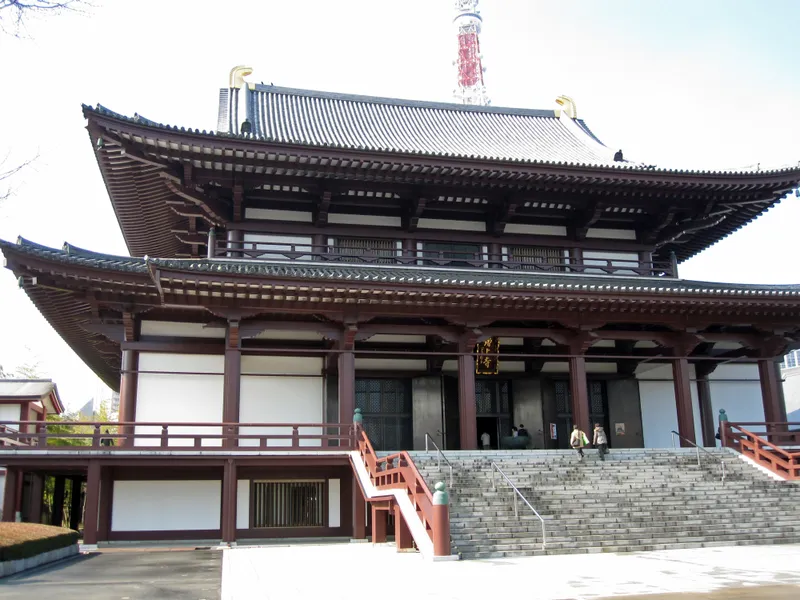
A Pure Land temple in Shiba, founded in 1393 and chosen by the Tokugawa as their family temple, whose hidden principal image is known as the Black Honzon of victory.
 Shrine
Shiba Daijingu
- Love & Romance
- Money & Prosperity
- Protection & Safety
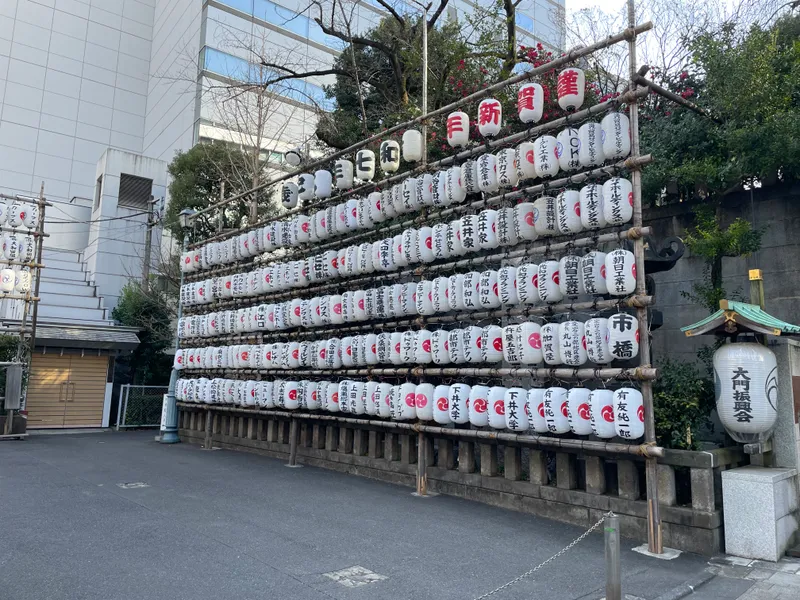
A Minato shrine founded in 1005 that enshrines the two deities of Ise, known in the Edo period as the Ise of the Kanto and today for a box charm sold nowhere else.
 Shrine
Omiya Hachimangu
- Fertility & Children
- Protection & Safety
- Bonds & Matchmaking
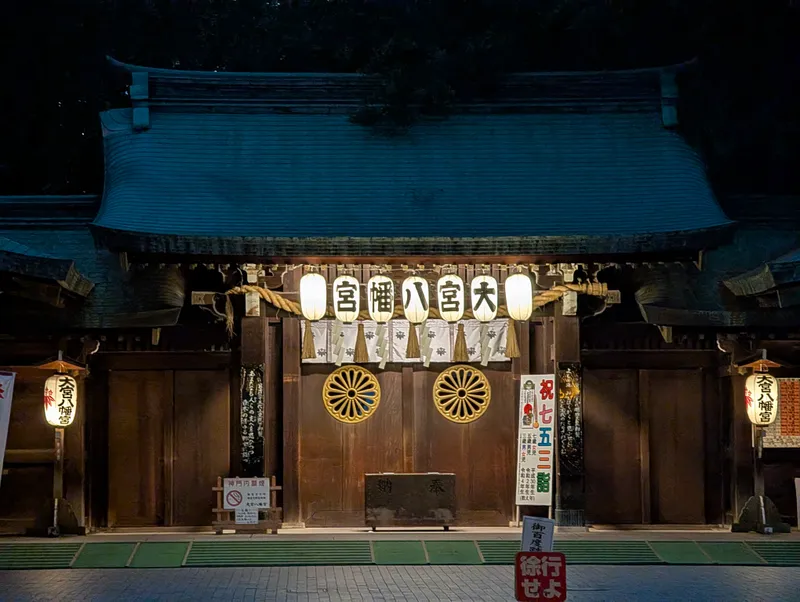
A large wooded shrine in Suginami, founded in 1063 by Minamoto no Yoriyoshi after he read a bank of white cloud as the banners of his own clan, and known for child-rearing and warding.
 Shrine
Okunitama Shrine
- Money & Prosperity
- Protection & Safety
- Bonds & Matchmaking
The provincial shrine of old Musashi, in Fuchu, which dates its founding to 111 and enshrines a deity it identifies with Ōkuninushi of Izumo.
No places match your filters