Suitengu
水天宮 · Suiten-gu · Nihonbashi Suitengu
Researched and translated with AI assistance. Every claim is linked to its source, but errors get through, so check the official site for opening times, fees and closures.About
In short
A Nihonbashi shrine long known for safe childbirth and for praying to conceive, whose safe-birth charm is a length of cotton worn as a belly band.
Quick facts
- Address
- 2-4-1 Nihonbashi-Kakigaracho, Chuo-ku, Tokyo 103-0014
- Access
- Suitengumae on the Tokyo Metro Hanzomon line is the nearest, effectively at the foot of the shrine. Ningyocho on the Hibiya and Toei Asakusa lines and Kayabacho on the Hibiya and Tozai lines are both a short walk.
- Hours
- The shrine publishes its visiting hours on a dedicated page and takes prayers without reservation, so times are best checked there before travelling.
- Best time
- A day of the dog, which comes round once every twelve days and two or three times a month; it is when expectant visitors traditionally come, and correspondingly the busiest. The shrine notes that some deliberately avoid it and take the blessing on a quieter day instead.
- Spiritual entities
- Amenominakanushi (天之御中主神)
- Official site
- www.suitengu.or.jp
About this place
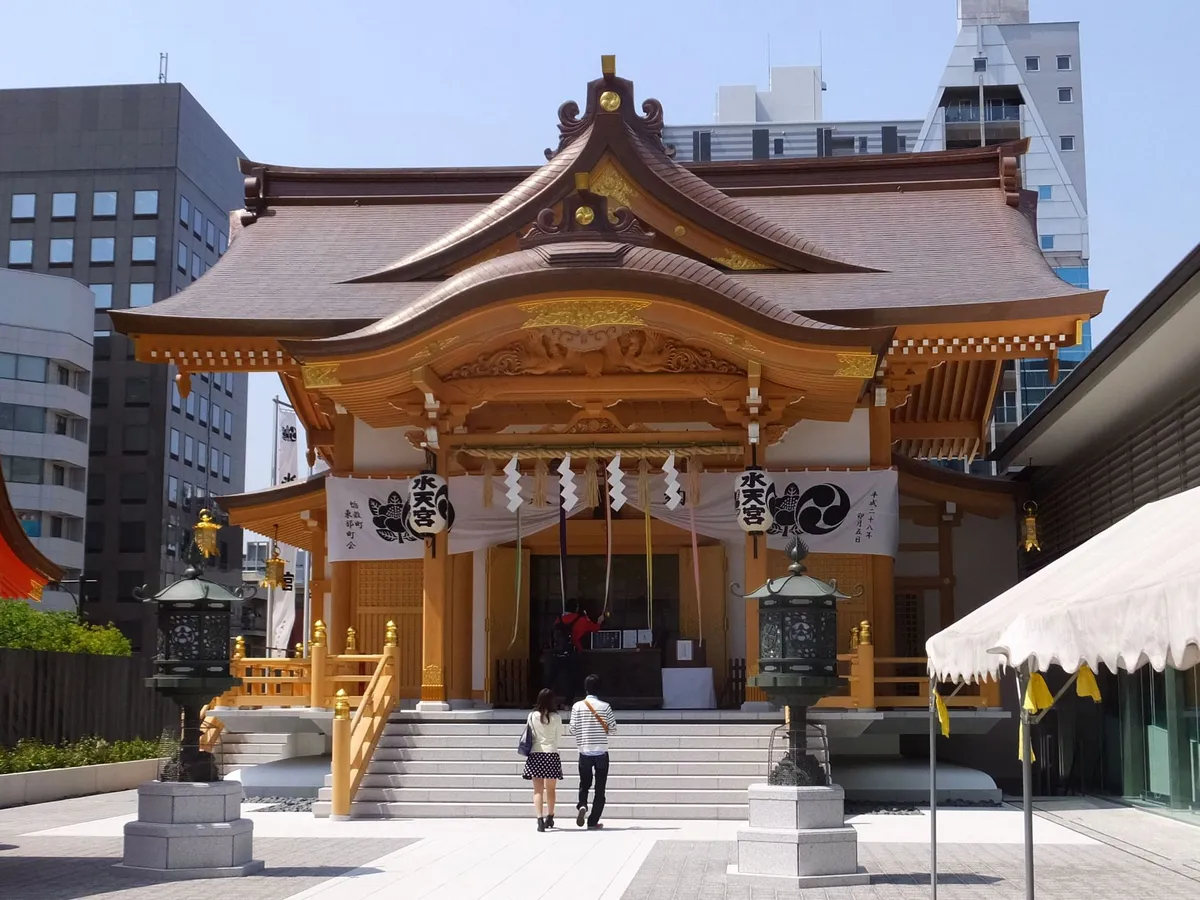
Suitengu stands above street level in Nihonbashi, rebuilt in 2016 on a raised podium with the shrine office beneath. It is the shrine Tokyo associates with pregnancy: people come on the day of the dog, which falls every twelve days, and its safe-birth charm is not a pouch but a bolt of bleached cotton meant to be wrapped. The shrine explains where that came from, and the explanation is a good deal more specific than most.
Origin and history
Suitengu began in Kyushu, at Kurume in what is now Fukuoka. The Tokyo shrine dates from 1818, when Arima Yorinori, the ninth lord of Kurume, branched the Suitengu his family worshipped to their residence at Mita Akabane.
The Arima connection to the deity runs further back. The family descends from the Akamatsu, and after the Kakitsu disturbance of 1441 they fled to the village of Arima, in what is now northern Kobe, and took their name from the place. They were later brought back to prominence under Hideyoshi, and to keep the deity of the Arima shrine in mind they adopted that shrine's three-comma crest as their own. The shrine records that only the head of the house is permitted to wear it. In 1620 Arima Toyouji received the Kurume domain and built the Suitengu hall there.
Four figures are enshrined. Amenominakanushi appeared, in the account the shrine gives, at the very beginning of the universe, at the highest point of heaven, and is the ancestor of the Japanese deities. The other three belong to the end of the Taira. Emperor Antoku was born to Emperor Takakura and Kenreimon'in and became emperor at three; in 1185, aged eight, he was carried into the sea at Dan-no-ura by his grandmother, Nii-no-Ama, the widow of Taira no Kiyomori. Kenreimon'in survived the battle and spent the rest of her life praying for her clan.
What it is locally associated with
The charm that is a belly band
The safe-birth charm here is a length of bleached cotton, the misuzu-obi. It is blessed on the day of the dog and given out daily, so any visit gets a dog-day charm.
documented historyA bell cord, and an easy birth
The shrine records that a pregnant woman was given a cast-off of its bell cord, wore it as a belly band, and had an unusually easy delivery. The story spread, and the cotton became the charm.
folk traditionThe day of the dog
Dogs bear many young and bear them easily, so the twelve-day cycle brings a dog day two or three times a month, and that is when people come.
documented historyThe child-treasure dog
A dog statue in the grounds. Stroking it is said to bring the blessing of children, which is the practice here rather than a published rule.
local custom
What this shrine is petitioned for is unusually concentrated, and it comes from the first of its four deities. Amenominakanushi is the ancestor of the Japanese deities, and the shrine says his virtue extends without limit to safe childbirth and to the granting of children. Both have their own page on the shrine's site, and both are why this page carries the fertility tag; warding off misfortune has a page too, which is where protection comes from.
The safe-birth charm is the thing most worth knowing about, because it is not a charm in the usual sense. It is a length of bleached cotton, meant to be wrapped as a belly band, and the shrine tells you exactly why. Long ago a pregnant woman was given a cast-off of the shrine's bell cord, the bleached rope you pull to sound the bell, and wore it at her belt-blessing praying for a safe delivery. Her birth was exceptionally easy. The account passed from person to person until the shrine began giving out the bleached cord itself as a safe-birth charm. It is now called the misuzu-obi, and it is blessed on the day of the dog and handed out every day, so a visit on any date still gets a charm prayed over on a dog day.
The day of the dog is the other half of it. Dogs bear many young and bear them lightly, and the shrine says people come on the dog day to take after them. It comes round once every twelve days, so two or three times a month, and the shrine is practical about the consequence: those days are crowded, and it suggests taking the blessing on a quieter day and wrapping the band at home on the dog day instead. Prayers are not by reservation at all, and it also blesses charms sent by post for those who cannot travel.
In the grounds there is a dog statue, the child-treasure dog, which visitors stroke for the blessing of children, and a sub-shrine to Hōshō Benzaiten.
Claims and evidence levels 7
- Suitengu originated at Kurume in Kyushu; the Tokyo shrine dates from 1818, when Arima Yorinori, ninth lord of Kurume, branched the shrine his family worshipped to their residence at Mita Akabane. documented history
- The Arima family took its name from the village of Arima after fleeing there following the Kakitsu disturbance of 1441, and adopted the three-comma crest of the Arima shrine, whose deity is Amenominakanushi, as their family crest; Arima Toyouji received the Kurume domain in 1620 and built the Suitengu hall there. documented history
- The shrine enshrines four figures: Amenominakanushi, Emperor Antoku, Kenreimon'in and Nii-no-Ama. Emperor Antoku acceded at three and was carried into the sea at Dan-no-ura in 1185 at the age of eight by his grandmother Nii-no-Ama; Kenreimon'in survived and spent her remaining years praying for the Taira. documented history
- The shrine describes Amenominakanushi as the ancestor of the Japanese deities, appearing at the beginning of the universe, and as showing boundless virtue in safe childbirth and the granting of children. documented history
- The shrine relates that a pregnant woman was given a cast-off of its bleached bell cord, wore it as a belly band at her belt-blessing, and had an exceptionally easy delivery; the account spread and the shrine began giving out the bleached cord as its safe-birth charm. folk tradition
- The safe-birth charm, called the misuzu-obi, is a length of bleached cotton blessed on the day of the dog and given out daily, so that a charm received on any date has been prayed over on a dog day. documented history
- A dog statue in the grounds, the child-treasure dog, is stroked by visitors who hope for children. local custom
Visiting tips
The general form is in the visiting guide below. Specific to Suitengu:
No prayer here is booked in advance. You come on the day you want, which is why the dog days are so busy; up to six people may go up into the hall, and only two on a dog day.
The safe-birth charm is meant to be worn rather than carried. It is the belly band itself, traditionally wrapped at the belt-blessing in the fifth month of pregnancy.
The shrine performs blessings for people who cannot come, by post, and states that this is for those unable to travel rather than a convenience.
The site sits on a raised podium above the street with the office underneath, which is worth knowing if you are visiting late in a pregnancy: the approach is by steps or lift rather than a level walk.
Related guides
- How to visit a shrine or temple in JapanThe country-wide basics: purifying at the water basin, the two-bows-two-claps-one-bow form at shrines, and what temples do instead.
- What a "power spot" actually isA modern Japanese coinage, not a traditional religious category. Where the word came from, what it does and does not claim, and why this site uses it anyway.
- Shrine or temple?A shrine is Shinto and a temple is Buddhist, and you can usually tell at the gate. Why the line is cleaner on paper than on the ground, and what a government order in 1868 has to do with it.
- Omamori, ema, omikuji and goshuinThe four things you are most likely to receive, write, draw or be given at a shrine or temple, what each is actually for, and the one of them people most often get wrong.
Sources
- About Suitengu, deities and history (水天宮のご案内) — Suitengu (accessed 2026-08-02)
- Safe-childbirth prayer (安産祈願の水天宮) — Suitengu (accessed 2026-08-02)
- Prayer to conceive (子授け祈願の水天宮) — Suitengu (accessed 2026-08-02)
- Warding off misfortune (厄除け祈願) — Suitengu (accessed 2026-08-02)
- Suitengū (Q3503320) coordinate location — Wikidata (accessed 2026-08-02)
Last updated:
Similar places
8 places
 Shrine
Nezu Shrine
- Career & Work
- Exams & Study
- Family & Home
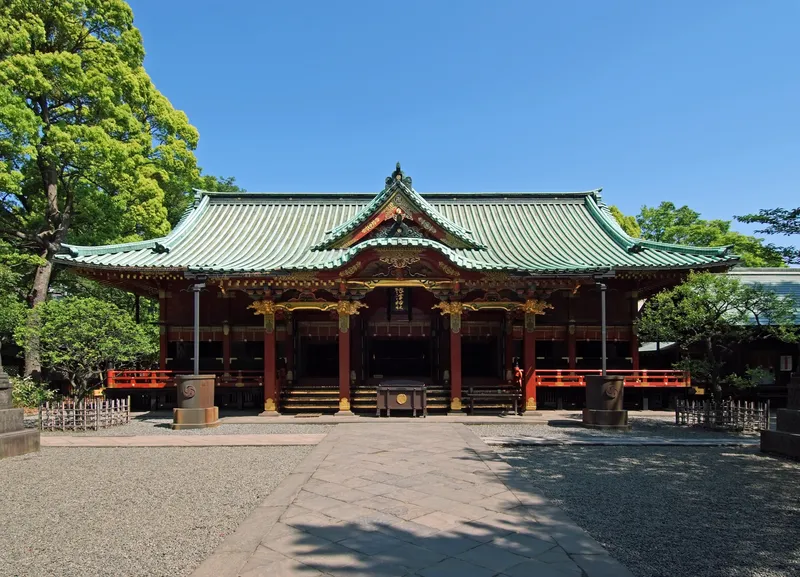
A Bunkyo shrine whose entire 1706 complex survives intact as an Important Cultural Property, rare in Tokyo, with an azalea hill and a tunnel of small red torii (鳥居).
 Shrine
Kanda Myojin
- Career & Work
- Family & Home
- Money & Prosperity
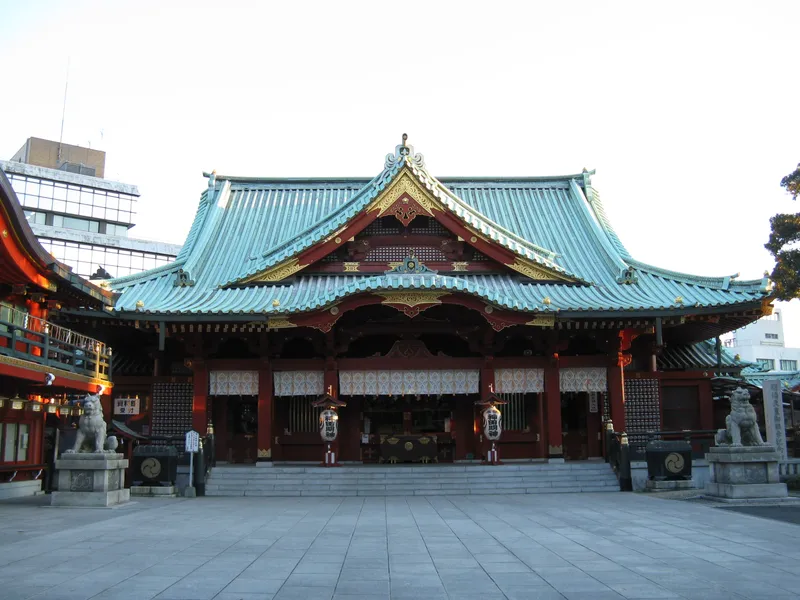
A Chiyoda shrine that served as the guardian shrine of all Edo, enshrining three deities between them associated with business prosperity, good matches and warding off misfortune, and these days selling a charm for information security.
 Shrine
Hie Shrine
- Career & Work
- Fertility & Children
- Money & Prosperity
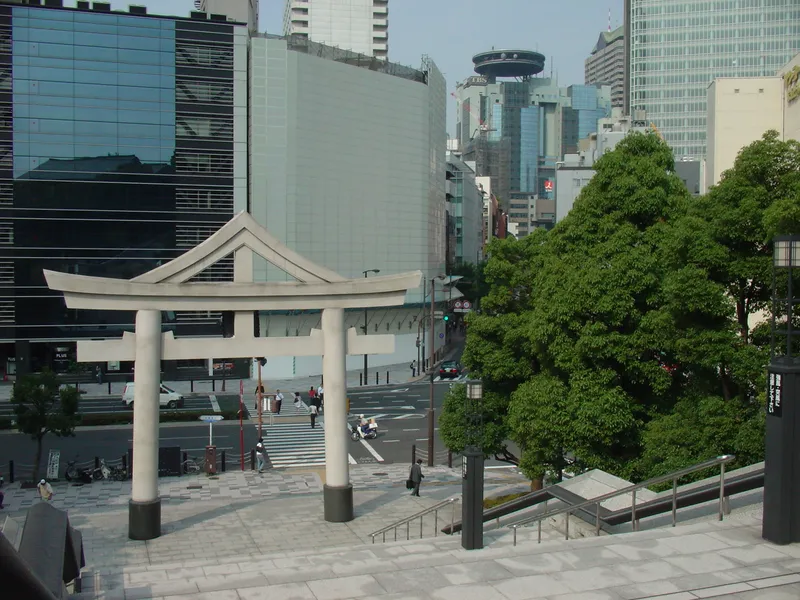
A shrine on a wooded rise in Nagatacho, once the guardian of Edo Castle, whose messenger is the monkey, a pun the shrine explains itself, connecting it to warding off evil, to winning, and to the tying of bonds.
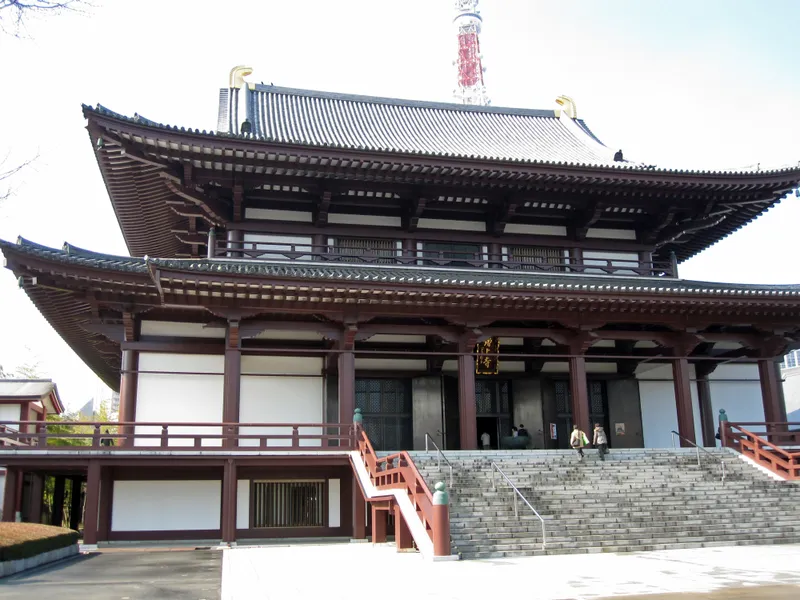 Temple
Zojo-ji
- Career & Work
- Family & Home
- Money & Prosperity
A Pure Land temple in Shiba, founded in 1393 and chosen by the Tokugawa as their family temple, whose hidden principal image is known as the Black Honzon of victory.
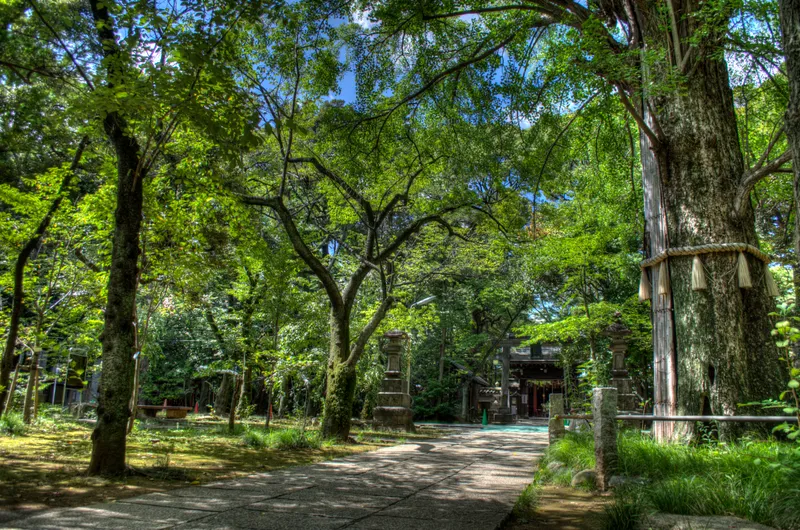 Shrine
Akasaka Hikawa Shrine
- Family & Home
- Love & Romance
- Money & Prosperity
A Minato shrine founded in 951 whose Edo-period buildings survived both the earthquake and the war, known for warding off misfortune and for the tying of bonds, and the shrine explains why it is known for each.
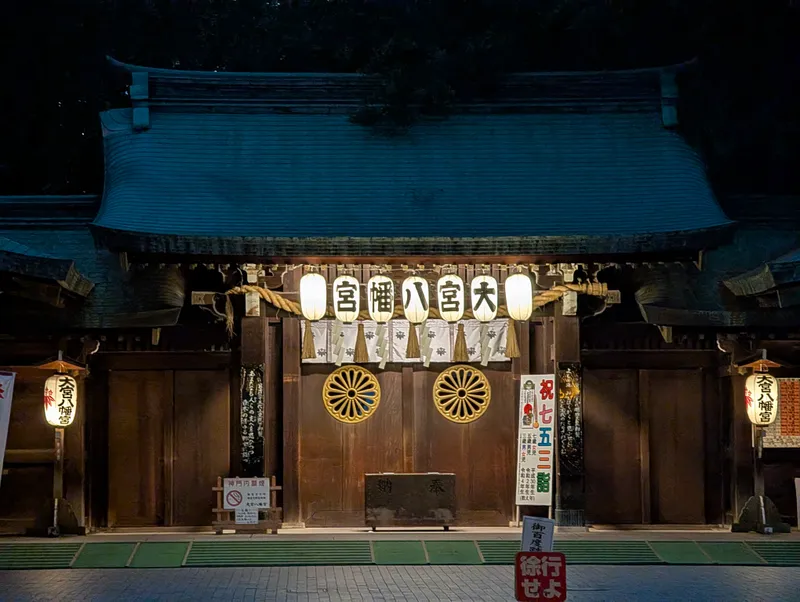 Shrine
Omiya Hachimangu
- Fertility & Children
- Protection & Safety
- Bonds & Matchmaking
A large wooded shrine in Suginami, founded in 1063 by Minamoto no Yoriyoshi after he read a bank of white cloud as the banners of his own clan, and known for child-rearing and warding.
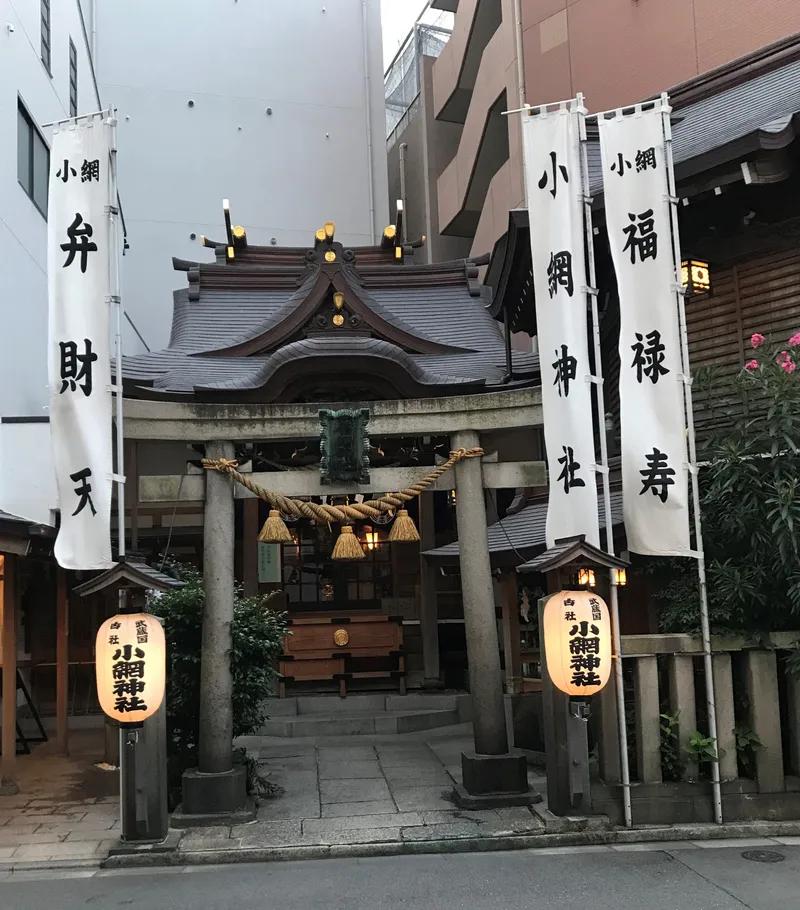 Shrine
Koami Shrine
- Money & Prosperity
- Protection & Safety
A small Nihonbashi shrine known as a deity of strong luck and warding off misfortune, with a well where visitors wash money and the only pre-war wooden shrine building left in the district.
 Shrine
Namiyoke Shrine
- Money & Prosperity
- Protection & Safety
A Tsukiji shrine whose name means wave-averting, founded in 1659 after an Inari image found floating in the sea was credited with calming the water enough to finish the reclamation.
No places match your filters