Omiya Hachimangu
大宮八幡宮 · Ōmiya Hachimangū · Omiya Hachiman Shrine
Researched and translated with AI assistance. Every claim is linked to its source, but errors get through, so check the official site for opening times, fees and closures.About
In short
A large wooded shrine in Suginami, founded in 1063 by Minamoto no Yoriyoshi after he read a bank of white cloud as the banners of his own clan, and known for child-rearing and warding.
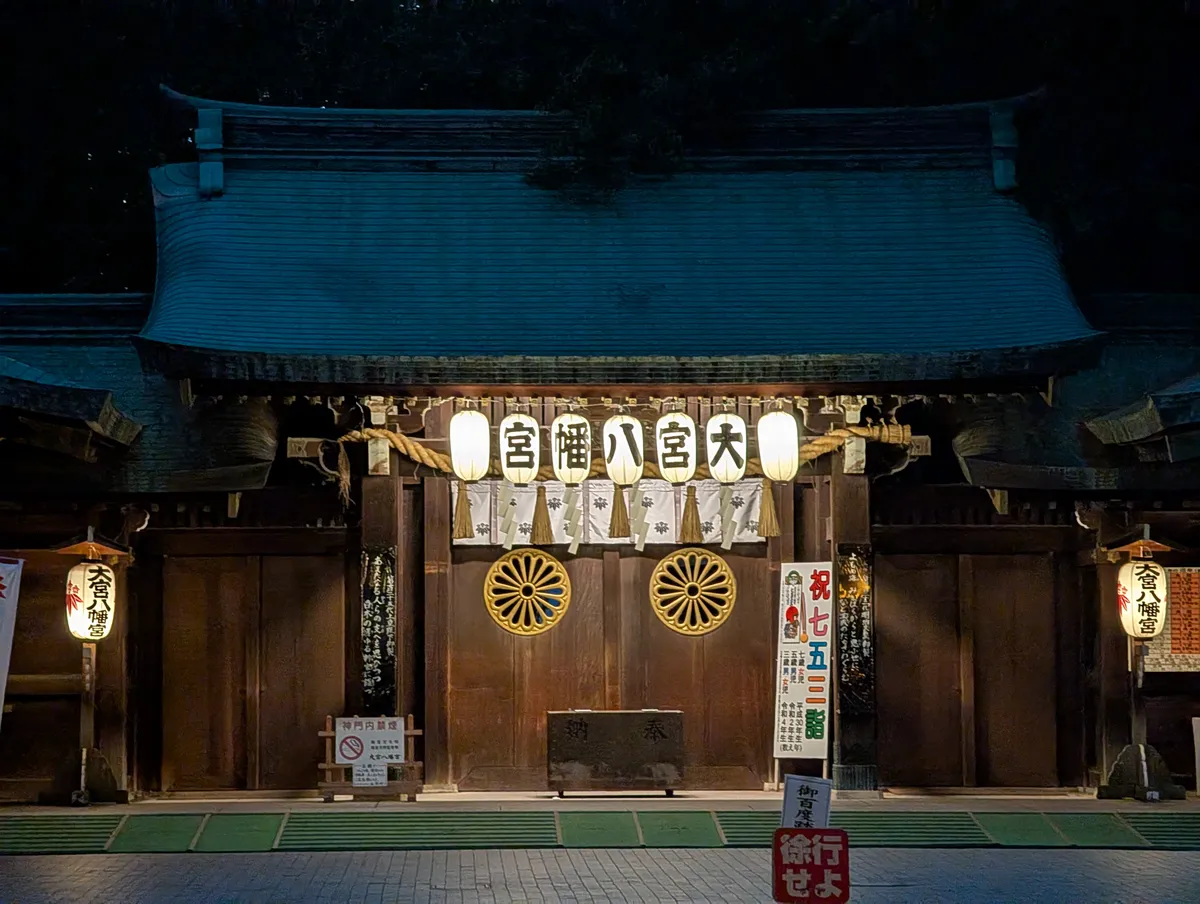
Quick facts
- Address
- 2-3-1 Omiya, Suginami-ku, Tokyo 168-8570
- Access
- Nishi-Eifuku on the Keio Inokashira line is about seven minutes on foot and is the route the shrine recommends; Eifukucho on the same line is about ten. Buses run from Shinjuku, Nakano, Koenji and Asagaya to stops beside the shrine.
- Hours
- Prayers are received every day from 9:30 to 16:30, without a booking, and performed in the order people arrive. The telephone is answered from 10:00 to 17:00.
- Best time
- A day of the dog, when the shrine performs its prayers for safe childbirth. The grounds are wooded and large enough to be worth an unhurried visit at any season.
- Spiritual entities
- Emperor Chuai (仲哀天皇) · Empress Jingu (神功皇后) · Hachiman (八幡神)
- Official site
- www.ohmiya-hachimangu.or.jp
About this place
Omiya Hachimangu sits in a wide wooded precinct in Suginami, well away from any station, which is part of why it feels unlike the shrines in central Tokyo. It enshrines three deities who are a family: Emperor Ojin, his father Chuai and his mother Jingu. The shrine calls itself the Hachiman of child-rearing and warding, and both halves of that go back to who is enshrined here.
Origin and history
The founding story is a reading of the sky. Between 1053 and 1057, in the reign of Emperor Go-Reizei, Minamoto no Yoriyoshi saw white cloud trailing across the heavens in eight long bands, so that it looked like the white banners of the Minamoto streaming out. He took it as a sign that the Hachiman deity was with him, and in 1063 he had a divided spirit brought from Iwashimizu Hachimangu in Kyoto and founded this shrine.
His son Yoshiie, the warrior known as Hachimantaro, repaired the halls after the Later Three Year War and is said to have planted a thousand young pines here.
What the shrine has kept from that beginning is the shape of a country shrine rather than a city one: a long approach, a great deal of standing timber, and room enough that the festivals do not spill into the street.
What it is locally associated with
Eight bands of white cloud
Yoriyoshi read the sky over this place as the white banners of his own clan, took it for the Hachiman deity, and founded the shrine in 1063 with a spirit divided from Iwashimizu.
documented historyThree deities who are one family
Ojin, his father Chuai and his mother Jingu are enshrined together, and the shrine rests its devotions for matchmaking, safe birth and child-rearing on the bond between them.
documented historyWarding, from what Ojin is remembered for
The shrine grounds its warding devotion in Ojin putting down disorder and working to bring continental culture into the country.
documented historyA thousand pines, and the room they need
Yoshiie is said to have planted a thousand young pines after the Later Three Year War. The precinct is still large and wooded, which is rare this side of the Tama.
folk tradition
The shrine puts its own summary in four words on its front page: the Hachiman of child-rearing and warding. The three tags on this page come from the paragraph underneath that, not from the list of rites it performs.
Warding comes first because of who Ojin was. The shrine describes him as having put down armed disorder and having worked to bring continental culture into the country, and attaches to that a devotion for turning away misfortune and opening up fortune. That is the protection tag.
The other two come from the arrangement of the deities rather than from any one of them. Ojin is enshrined with his father Chuai and his mother Jingu, and the shrine says that from the bond between the three as a family come devotions for matchmaking, for safe childbirth and for raising children. Prayers for an easy birth are performed on the day of the dog, which is the customary day for them. Matchmaking gives the bonds tag and childbirth gives the children tag, and both trace to that one sentence.
The shrine adds a fourth, safe travel, after a story told of Jingu; there is no key for it here and it stays in prose.
What a visitor notices first, though, is none of this. It is the size. The precinct is wide and heavily wooded, the approach is long, and the shrine sits well away from any station, so the ordinary business of a large shrine, first visits after birth, the seven-five-three, safe-birth prayers, happens in a space that can absorb it.
Claims and evidence levels 7
- The shrine relates that between 1053 and 1057 Minamoto no Yoriyoshi saw white cloud trailing in eight bands across the sky, resembling the white banners of the Minamoto, and took it as the protection of the Hachiman deity. documented history
- The shrine was founded in 1063 with a spirit divided from Iwashimizu Hachimangu in Kyoto. documented history
- Yoriyoshi's son Yoshiie is said to have repaired the halls after the Later Three Year War and planted a thousand young pines. folk tradition
- The enshrined deities are Emperor Ojin, his father Emperor Chuai and his mother Empress Jingu. documented history
- The shrine describes Ojin as having quelled armed disorder and worked to bring continental culture into the country, and attaches to that a devotion for warding off misfortune and opening fortune. documented history
- The shrine states that devotions for matchmaking, safe childbirth and child-rearing come from the bond between the three enshrined deities as a family, and performs prayers for safe childbirth on the day of the dog. documented history
- The shrine calls itself the Hachiman of child-rearing and warding, and also holds a devotion for safe travel after a story told of Empress Jingu. documented history
Visiting tips
The general form is in the visiting guide below. Specific to Omiya Hachimangu:
No booking is needed for a prayer. The shrine takes people from 9:30 to 16:30 every day and serves them in the order they sign in, so a busy day of the dog or a seven-five-three weekend means waiting.
There is free parking, but few spaces, and the shrine says it may be closed at peak times and during major festivals. The bus is the more reliable option.
This is a family shrine in practice as well as in doctrine, and much of what happens here involves small children.
Related guides
- How to visit a shrine or temple in JapanThe country-wide basics: purifying at the water basin, the two-bows-two-claps-one-bow form at shrines, and what temples do instead.
- What a "power spot" actually isA modern Japanese coinage, not a traditional religious category. Where the word came from, what it does and does not claim, and why this site uses it anyway.
- Shrine or temple?A shrine is Shinto and a temple is Buddhist, and you can usually tell at the gate. Why the line is cleaner on paper than on the ground, and what a government order in 1868 has to do with it.
- Omamori, ema, omikuji and goshuinThe four things you are most likely to receive, write, draw or be given at a shrine or temple, what each is actually for, and the one of them people most often get wrong.
Sources
- Deities and history (御祭神・御由緒) — Omiya Hachimangu (accessed 2026-08-02)
- Prayers (ご祈祷) — Omiya Hachimangu (accessed 2026-08-02)
- Access (交通のご案内) — Omiya Hachimangu (accessed 2026-08-02)
- Ōmiya Hachiman Shrine (Q10934922) coordinate location — Wikidata (accessed 2026-08-02)
Last updated:
Similar places
8 places
 Shrine
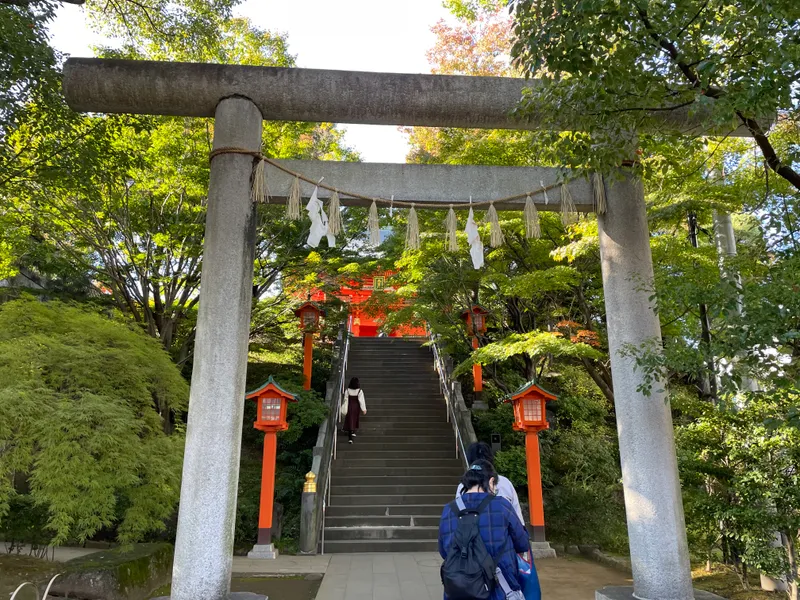
Ana Hachimangu
- Fertility & Children
- Money & Prosperity
- Skill & Mastery
A Waseda shrine named for a cave found in its hillside in 1641, which gives out an amulet for the circulation of money for six weeks each winter and nothing the rest of the year.
 Shrine
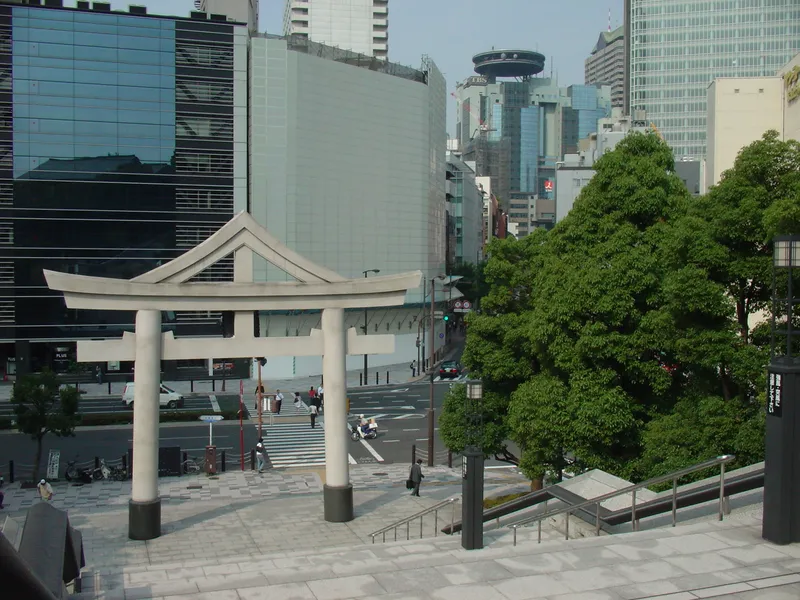
Hie Shrine
- Career & Work
- Fertility & Children
- Money & Prosperity
A shrine on a wooded rise in Nagatacho, once the guardian of Edo Castle, whose messenger is the monkey, a pun the shrine explains itself, connecting it to warding off evil, to winning, and to the tying of bonds.
 Shrine
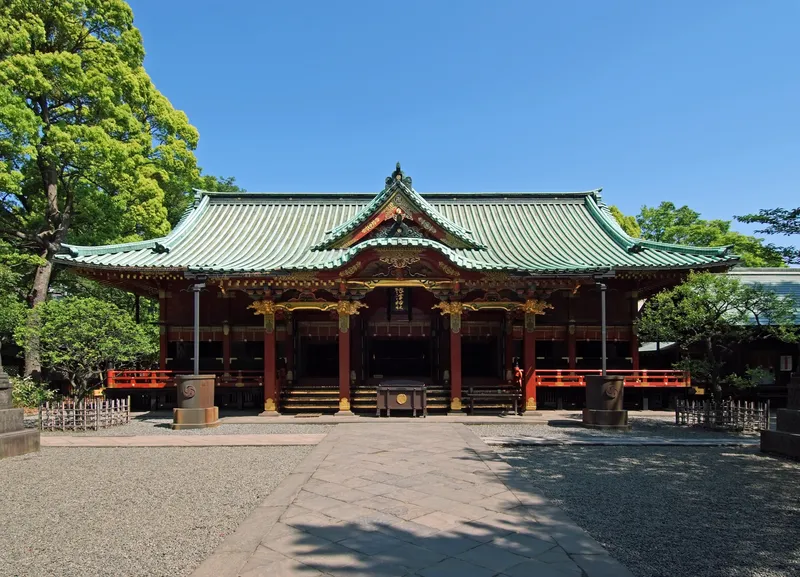
Nezu Shrine
- Career & Work
- Exams & Study
- Family & Home
A Bunkyo shrine whose entire 1706 complex survives intact as an Important Cultural Property, rare in Tokyo, with an azalea hill and a tunnel of small red torii (鳥居).
 Shrine
Meiji Jingu
- Health & Healing
- Protection & Safety
- Bonds & Matchmaking
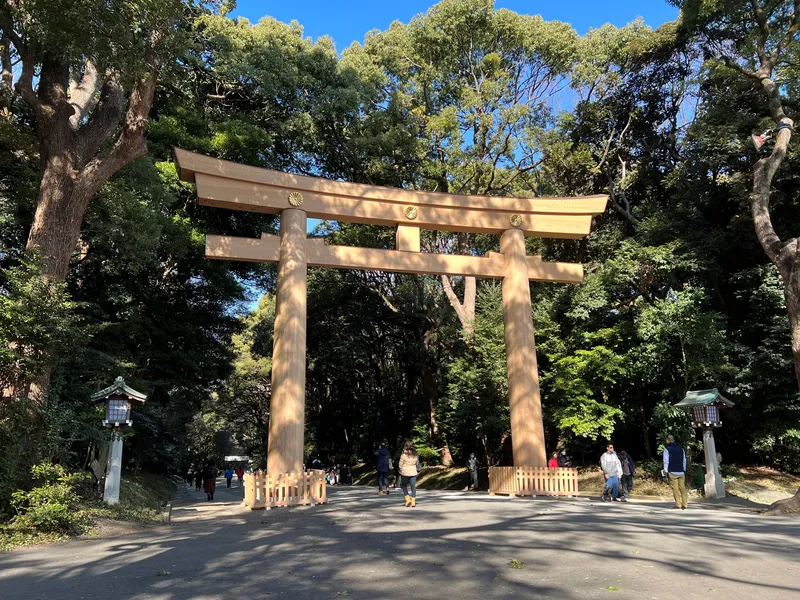
A 1920 Shinto shrine in central Tokyo enshrining Emperor Meiji and Empress Shōken, set in a 70-hectare forest that was planted from scratch and is visited today for prayers about bonds, protection and health.
 Shrine
Hatonomori Hachiman Shrine
- Skill & Mastery
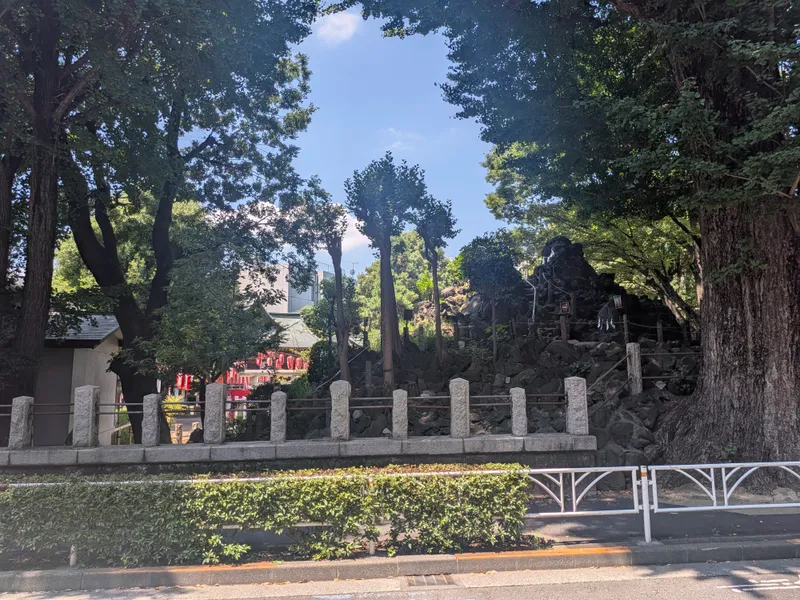
A Sendagaya shrine named after a flight of white doves, holding a Fuji mound raised in 1789 and a small hexagonal hall built with the Japan Shogi Association.
 Shrine
Akasaka Hikawa Shrine
- Family & Home
- Love & Romance
- Money & Prosperity
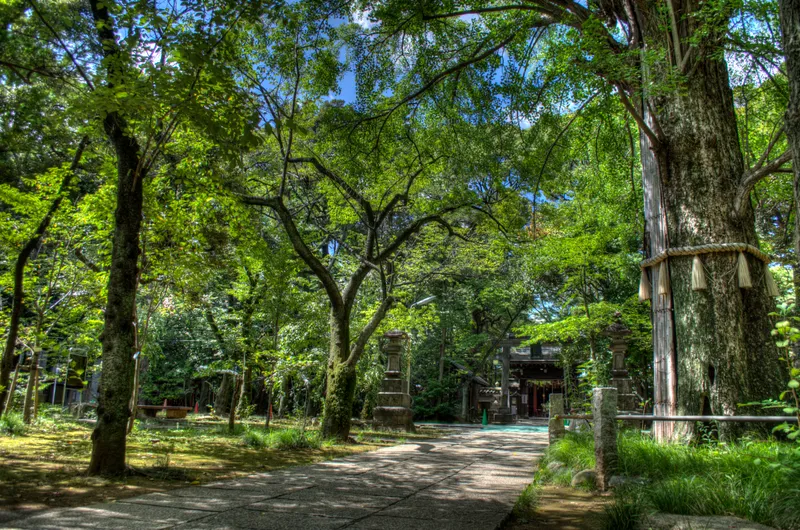
A Minato shrine founded in 951 whose Edo-period buildings survived both the earthquake and the war, known for warding off misfortune and for the tying of bonds, and the shrine explains why it is known for each.
 Shrine
Atago Shrine
- Career & Work
- Love & Romance
- Money & Prosperity
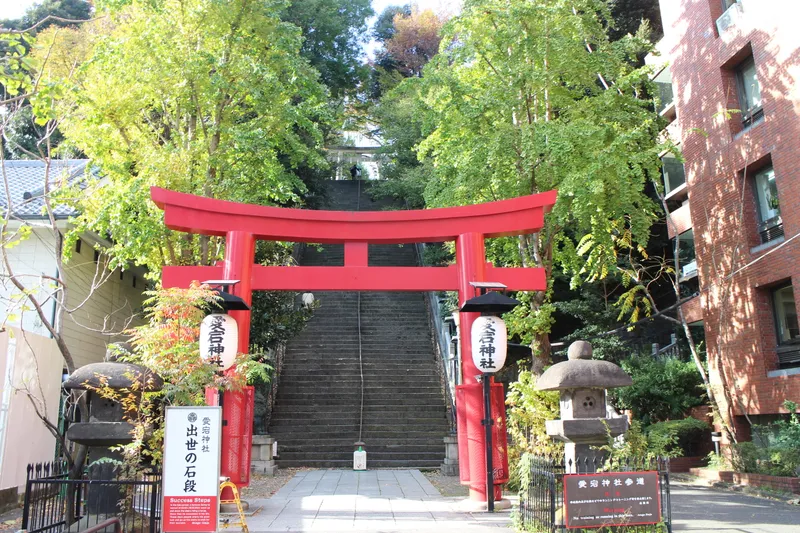
A shrine on a steep hill in Minato, founded in 1603 on Tokugawa Ieyasu's order as a deity against fire, and known for the stone staircase named after a rider who is said to have galloped up it.
 Shrine
Shiba Daijingu
- Love & Romance
- Money & Prosperity
- Protection & Safety
A Minato shrine founded in 1005 that enshrines the two deities of Ise, known in the Edo period as the Ise of the Kanto and today for a box charm sold nowhere else.
No places match your filters