Zojo-ji
増上寺 · Zōjō-ji · Sanen-zan Zojo-ji
Researched and translated with AI assistance. Every claim is linked to its source, but errors get through, so check the official site for opening times, fees and closures.About
In short
A Pure Land temple in Shiba, founded in 1393 and chosen by the Tokugawa as their family temple, whose hidden principal image is known as the Black Honzon of victory.
Quick facts
- Address
- 4-7-35 Shibakoen, Minato-ku, Tokyo 105-0011
- Access
- Onarimon and Shibakoen on the Toei Mita line are both three minutes on foot, and Daimon on the Toei Asakusa and Oedo lines is five. Akabanebashi on the Oedo line is seven minutes, and Hamamatsucho on the JR lines and the Tokyo Monorail is ten, as is Kamiyacho on the Tokyo Metro Hibiya line.
- Hours
- The temple publishes no opening or closing times for the grounds or the main hall. Its office answers the telephone from 9:00 to 17:00, which is the only published figure, so treat the rest as unofficial.
- Best time
- Early morning or late afternoon, when the main hall, the Sangedatsumon gate and Tokyo Tower line up without the crowds. Setsubun (節分) in February and the memorial days the temple keeps for the Tokugawa shoguns are its most distinctive dates.
- Spiritual entities
- Amida Nyorai (阿弥陀如来)
- Official site
- www.zojoji.or.jp
About this place
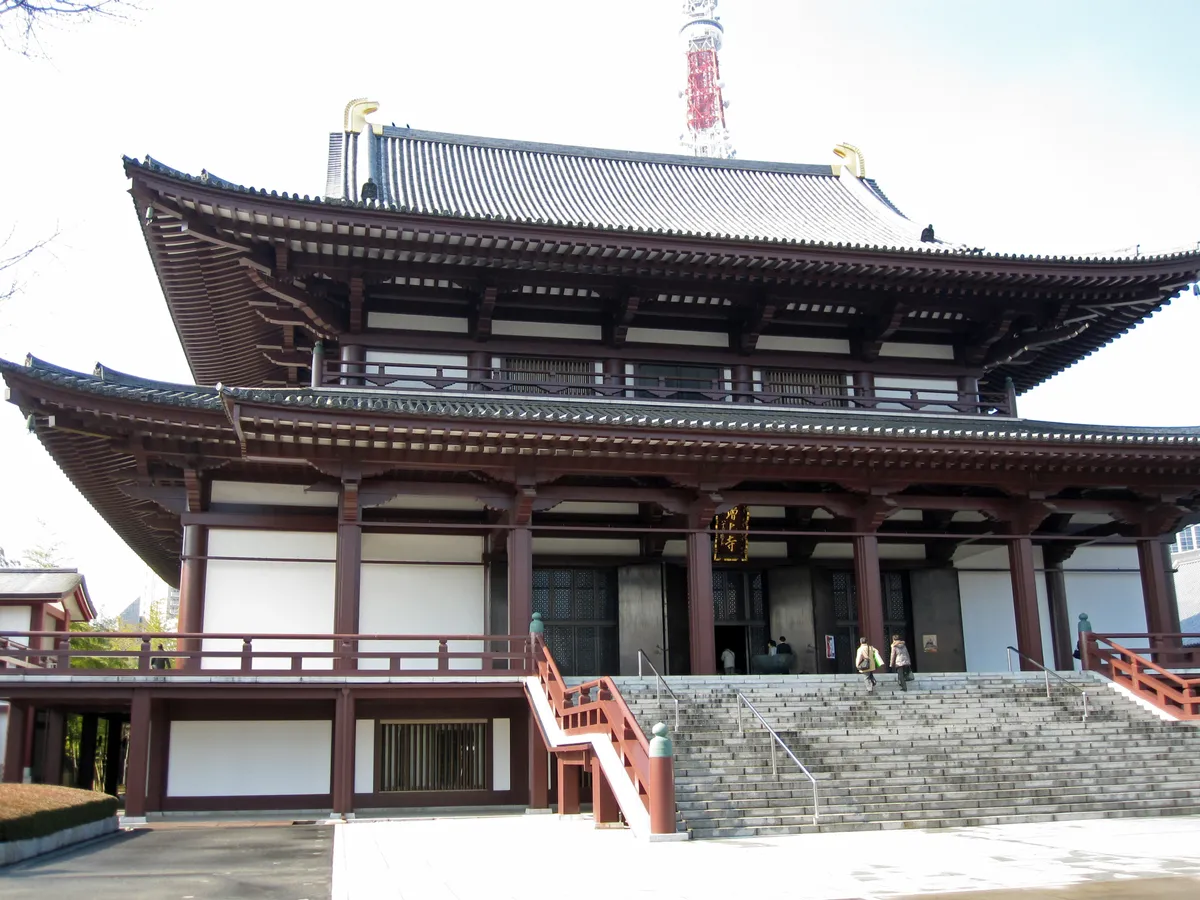
Zojo-ji stands at the foot of Tokyo Tower in Shiba Park, and the two in one frame are among the most photographed things in the city. The temple dates its founding to 1393 and became the Tokugawa family temple in 1590; six of the fifteen shoguns are buried in its grounds. Almost every building a visitor sees is post-war, but the great gate at the front is not.
Origin and history
The temple was founded in 1393 by Yūyo Shōsō, the eighth patriarch of the Jōdo school of Pure Land Buddhism. Its principal image is an Amida Buddha, and the temple attributes the carving to the monk Eshin Sōzu.
In 1590, when Tokugawa Ieyasu took control of the Kantō region, the Tokugawa chose Zojo-ji as their family temple. The temple gives the reason plainly: Ieyasu held its abbot of the time, Genyo Zon'ō, in deep faith. Through the Edo period it grew into one of the largest religious institutions in the country, with three thousand resident monks, holdings of more than ten thousand koku and grounds of some 250,000 tsubo. Six shoguns were eventually buried there.
The Meiji period was hard on it, and it was made a head temple of the school in 1875. The buildings burned in the war in 1945, and the present main hall was completed in 1971. The Sangedatsumon gate at the entrance survived, which is why it is the oldest thing on the site.
What it is locally associated with
The Black Honzon of victory
The temple calls its hidden principal image the Katsuun Kuro-honzon, the Black Honzon of victory fortune, and connects it to Tokugawa Ieyasu. Prayers for victory and for winning a contest head its own list.
documented historyThe Tokugawa family temple, from 1590
Chosen when Ieyasu took the Kanto region, because, the temple says, he held its abbot in deep faith. Six of the fifteen shoguns are buried in the grounds.
documented historyThe gate that survived
The Sangedatsumon at the entrance came through the 1945 air raids when the rest did not. The present main hall behind it dates from 1971.
documented history
What Zojo-ji is petitioned for starts with its principal image, and the temple is unusually direct about it. The image is hidden, and its name is the Katsuun Kuro-honzon: the Black Honzon of victory fortune. Prayers for victory and for prevailing in a contest head the temple's own published list, and that is where the career tag on this page comes from. It is worth being exact about what that means here, because it is not about titles or promotion. It is about coming out ahead in something contested, which is the same sense in which Kanda Myojin sells a victory charm.
The rest of the tags come from the same list. Prosperity in trade and the flourishing of a company give the money association; household safety gives family; warding off misfortune gives protection. The temple accepts a much wider range than that, examination success and safe childbirth and recovery from illness among them, but those are the ordinary breadth of a large temple's practice rather than anything particular to this one, and they are not tagged here for that reason.
The other thing people come for is not a prayer at all. Six of the fifteen Tokugawa shoguns are buried in the grounds, and the mausoleum precinct is a destination in its own right. So is the view: the main hall with Tokyo Tower rising directly behind it is one of the defining images of the city, and it is entirely an accident of the tower being built in 1958 next to a temple founded in 1393.
Claims and evidence levels 6
- The temple was founded in 1393 by Yūyo Shōsō, the eighth patriarch of the Jōdo school of Pure Land Buddhism. documented history
- In 1590, after Tokugawa Ieyasu took control of the Kantō region, the Tokugawa family chose Zojo-ji as their family temple; the temple attributes the choice to Ieyasu's faith in its abbot of the time, Genyo Zon'ō. documented history
- At its Edo-period height the temple held more than ten thousand koku, grounds of some 250,000 tsubo, and three thousand resident monks; six of the fifteen Tokugawa shoguns are buried there. documented history
- The temple calls its hidden principal image the Katsuun Kuro-honzon, the Black Honzon of victory fortune, and associates it with Tokugawa Ieyasu. documented history
- The temple lists prayers for victory, for prevailing in a contest, for prosperity in trade, for the flourishing of a company, for household safety and for warding off misfortune among the intentions it performs. documented history
- The buildings were destroyed in the air raids of 1945 and the present main hall was completed in 1971; the Sangedatsumon gate at the entrance survived. documented history
Visiting tips
The general form for a temple is in the visiting guide below: hands together, and no clapping. Specific to Zojo-ji:
The principal image is a hidden one and is not on view. What you face in the hall is not the Black Honzon itself, and the temple does not present it as such.
The Tokugawa mausoleum precinct is a burial place. It is open to visitors and photography is normal in the grounds, but it is worth carrying the difference between a temple hall and a family grave, because the site holds both.
One practical point. No opening or closing times are published anywhere for the grounds or the hall, so treat the grounds as open and the office as keeping ordinary daytime hours. Prayer plaques for the Black Honzon start at ¥5,000.
Related guides
- How to visit a shrine or temple in JapanThe country-wide basics: purifying at the water basin, the two-bows-two-claps-one-bow form at shrines, and what temples do instead.
- What a "power spot" actually isA modern Japanese coinage, not a traditional religious category. Where the word came from, what it does and does not claim, and why this site uses it anyway.
- Shrine or temple?A shrine is Shinto and a temple is Buddhist, and you can usually tell at the gate. Why the line is cleaner on paper than on the ground, and what a government order in 1868 has to do with it.
- Omamori, ema, omikuji and goshuinThe four things you are most likely to receive, write, draw or be given at a shrine or temple, what each is actually for, and the one of them people most often get wrong.
Sources
- History of Zojo-ji (増上寺の歴史) — Zojo-ji (accessed 2026-08-02)
- Prayers and intentions (ご祈願) — Zojo-ji (accessed 2026-08-02)
- The grounds (境内のご案内) — Zojo-ji (accessed 2026-08-02)
- Tokugawa shogun mausoleum (徳川将軍家墓所) — Zojo-ji (accessed 2026-08-02)
- Access (交通のご案内) — Zojo-ji (accessed 2026-08-02)
Last updated:
Similar places
8 places
 Shrine
Kanda Myojin
- Career & Work
- Family & Home
- Money & Prosperity
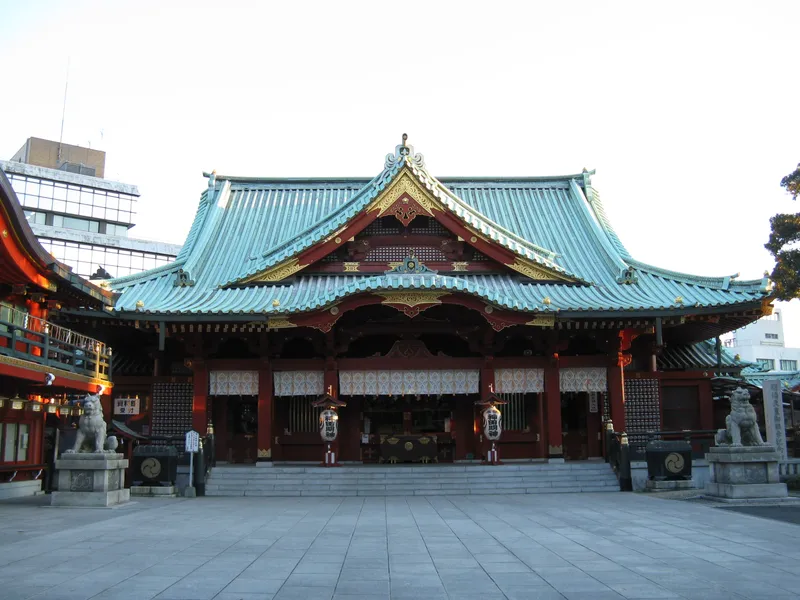
A Chiyoda shrine that served as the guardian shrine of all Edo, enshrining three deities between them associated with business prosperity, good matches and warding off misfortune, and these days selling a charm for information security.
 Shrine
Nezu Shrine
- Career & Work
- Exams & Study
- Family & Home
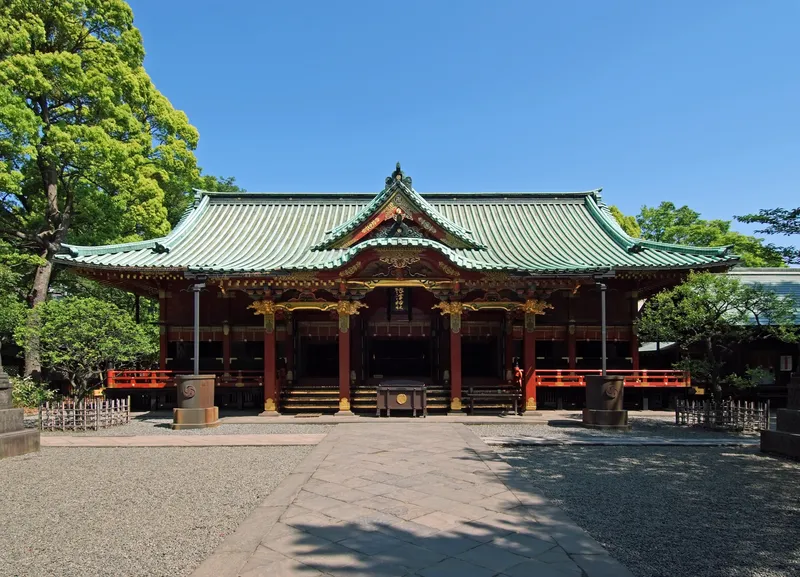
A Bunkyo shrine whose entire 1706 complex survives intact as an Important Cultural Property, rare in Tokyo, with an azalea hill and a tunnel of small red torii (鳥居).
 Shrine
Atago Shrine
- Career & Work
- Love & Romance
- Money & Prosperity
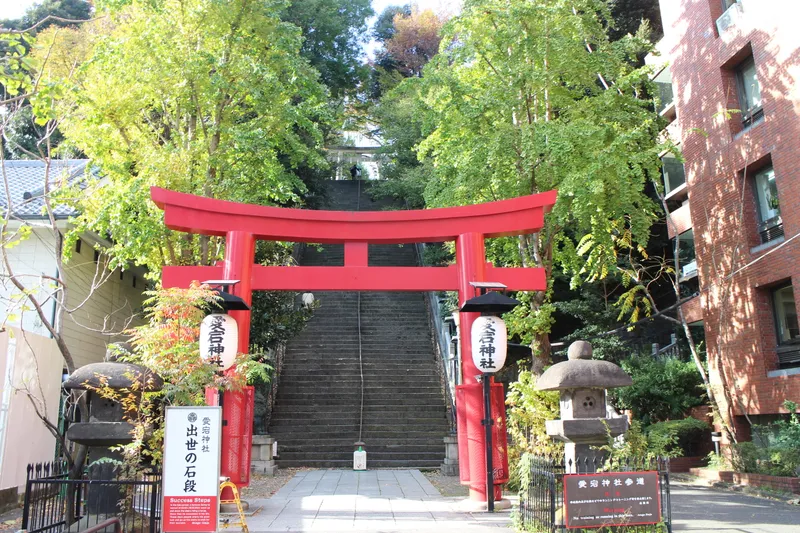
A shrine on a steep hill in Minato, founded in 1603 on Tokugawa Ieyasu's order as a deity against fire, and known for the stone staircase named after a rider who is said to have galloped up it.
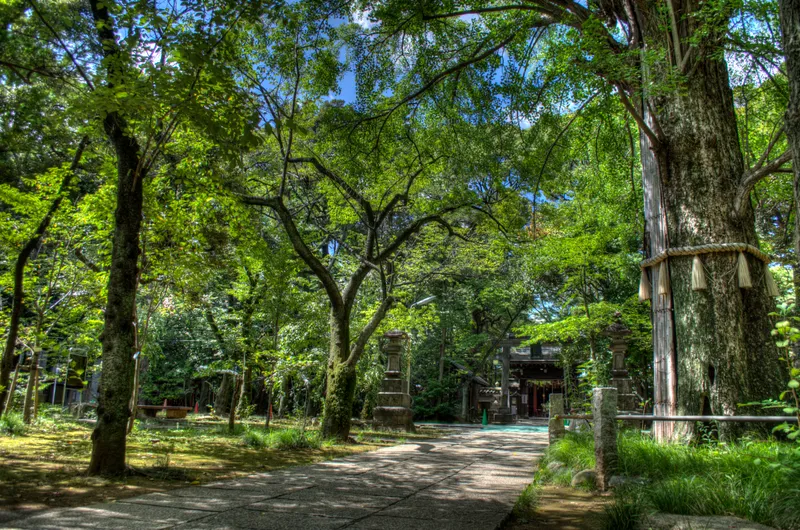 Shrine
Akasaka Hikawa Shrine
- Family & Home
- Love & Romance
- Money & Prosperity
A Minato shrine founded in 951 whose Edo-period buildings survived both the earthquake and the war, known for warding off misfortune and for the tying of bonds, and the shrine explains why it is known for each.
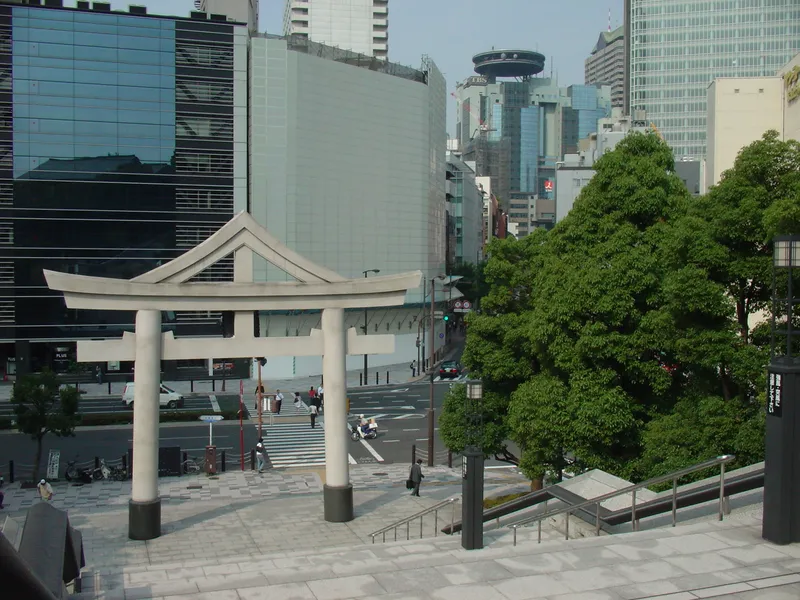 Shrine
Hie Shrine
- Career & Work
- Fertility & Children
- Money & Prosperity
A shrine on a wooded rise in Nagatacho, once the guardian of Edo Castle, whose messenger is the monkey, a pun the shrine explains itself, connecting it to warding off evil, to winning, and to the tying of bonds.
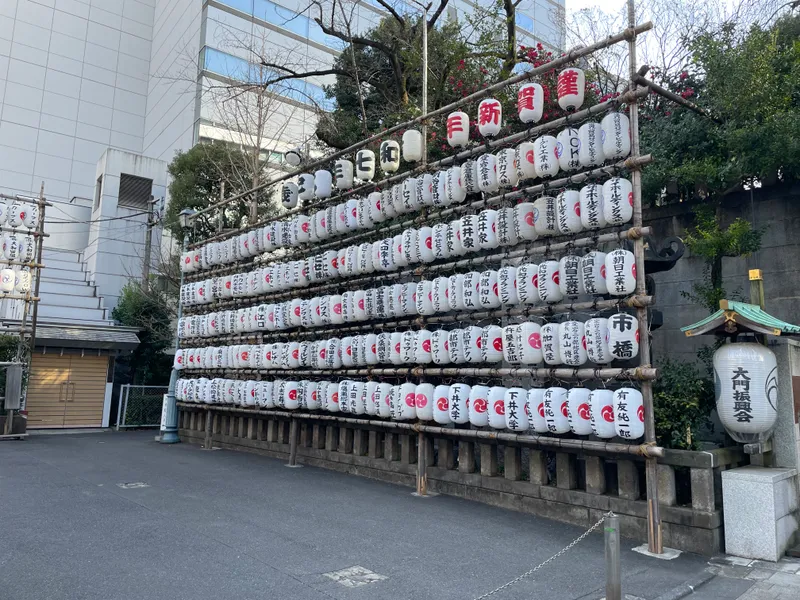 Shrine
Shiba Daijingu
- Love & Romance
- Money & Prosperity
- Protection & Safety
A Minato shrine founded in 1005 that enshrines the two deities of Ise, known in the Edo period as the Ise of the Kanto and today for a box charm sold nowhere else.
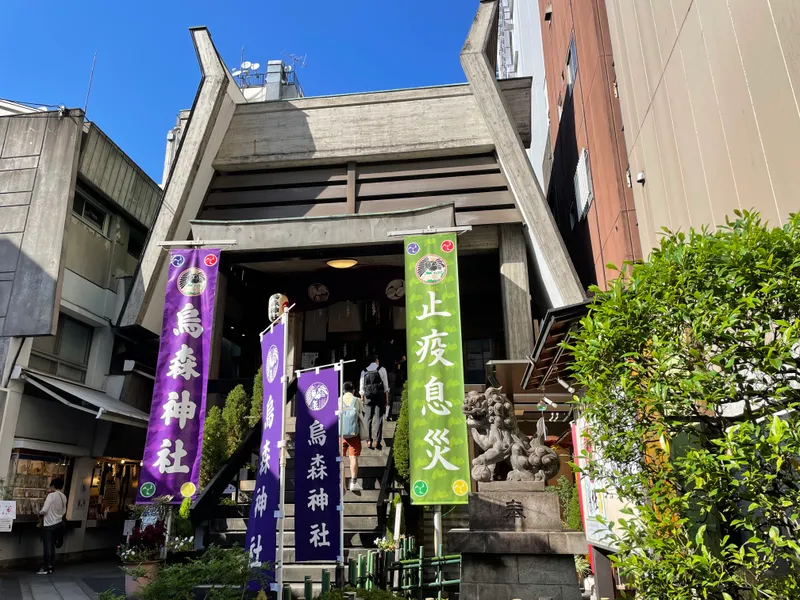 Shrine
Karasumori Shrine
- Career & Work
- Money & Prosperity
- Skill & Mastery
A Shimbashi shrine down an alley, founded in 940 by the general who defeated Taira no Masakado, and one of the few to enshrine the deity of the performing arts.
 Shrine
Namiyoke Shrine
- Money & Prosperity
- Protection & Safety
A Tsukiji shrine whose name means wave-averting, founded in 1659 after an Inari image found floating in the sea was credited with calming the water enough to finish the reclamation.
No places match your filters