Fukutoku Shrine
福徳神社 · Mebuki Inari · Fukutoku Inari
Researched and translated with AI assistance. Every claim is linked to its source, but errors get through, so check the official site for opening times, fees and closures.About
In short
A small Nihonbashi shrine whose name means good fortune, which ran shogunate-licensed lotteries in the Edo period and still performs a prayer for winning one.
Quick facts
- Address
- 2-4-14 Nihonbashi-Muromachi, Chuo-ku, Tokyo 103-0022
- Access
- Mitsukoshimae station on the Tokyo Metro Ginza and Hanzomon lines is one minute from exit A6, and Shin-Nihombashi on the JR Sobu rapid line is close.
- Hours
- The amulet counter and seal desk are open from 10:00 to 17:00. Prayers run from 11:00 to 15:00 at half-hourly intervals and must be booked by telephone.
- Best time
- Any weekday, since the shrine sits among offices and is a minute from the station. The grounds are small and a visit takes minutes.
- Spiritual entities
- Benzaiten (弁才天) · Inari (稲荷大神) · Tokugawa Ieyasu (徳川家康)
- Official site
- mebuki.jp
About this place
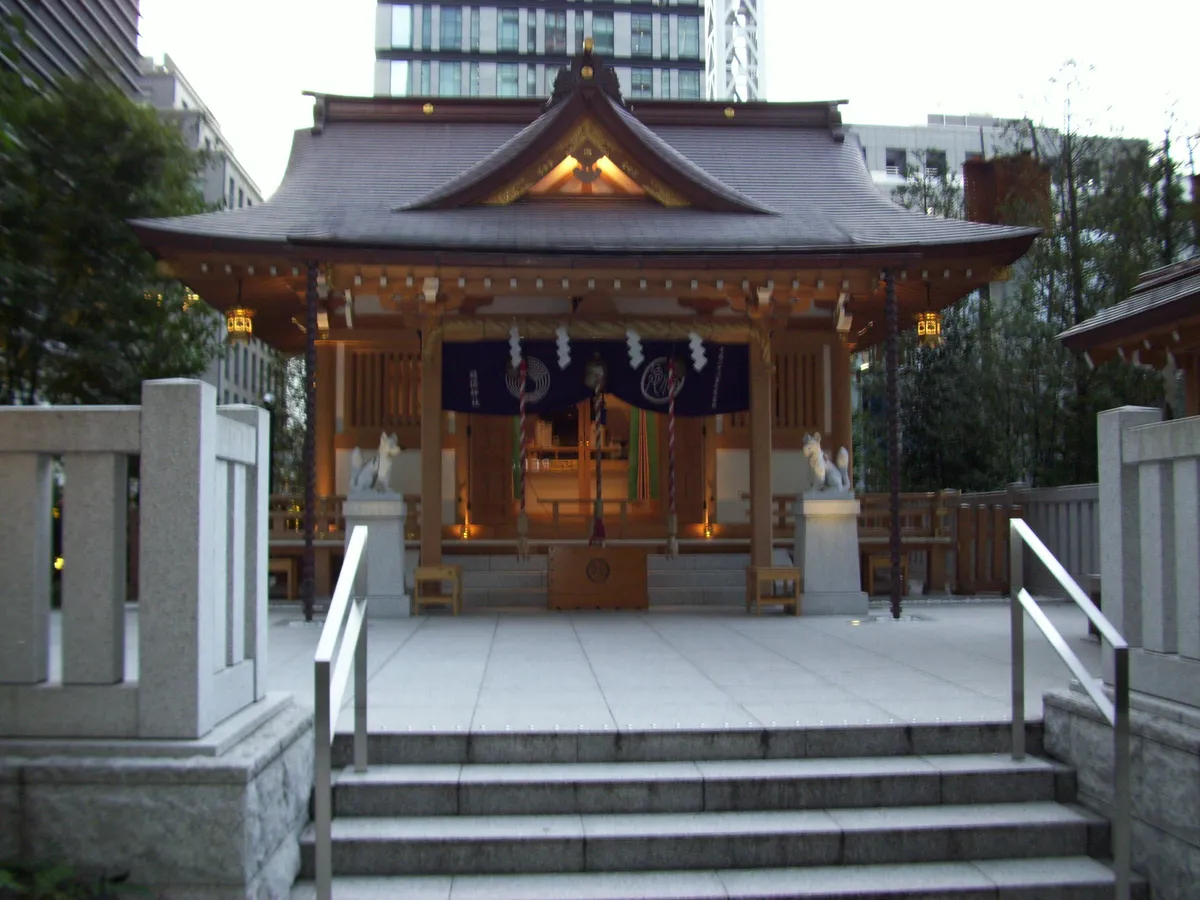
Fukutoku Shrine stands in a modern plaza in Nihonbashi Muromachi, a minute from Mitsukoshimae station and hemmed in by office blocks. It is said to have been here since the ninth century, when this was farmland called Fukutoku village. Under the Tokugawa it held licensed lotteries to pay for rebuilding after fires, and it still performs a prayer for winning the lottery.
Origin and history
The shrine says its founding date is not clear, but that by old tradition it already stood here in the Jōgan era, between 859 and 877. The area around Nihonbashi Muromachi 2-chome was then Fukutoku village in Toshima district of Musashi province, scattered farming and fishing households in open country.
It was called simply the Inari hall at first, and later Fukutoku Inari after the village. Local people called its grove the Inari forest, and a stone milestone at the edge of it the Inari milestone; that stone collapsed in the earthquake of 1657, and its inscription survives only as a copy.
The shrine records that Minamoto no Yoshiie and Ōta Dōkan revered it, and that Dōkan was himself later enshrined here. Tokugawa Ieyasu first visited in the eighth month of 1590 and returned several times. Honda Tadakatsu, given a paper-holder by Ieyasu for his service at Sekigahara, dedicated it here and ordered it enshrined as the spirit of Tōshōgū, which is why Ieyasu is among the deities. The second shogun, Hidetada, visited in the first month of 1614 and praised the name Fukutoku as a most auspicious one.
What it is locally associated with
Licensed lotteries under the shogunate
The shrine was permitted to raise funds by lottery after fires, six times between 1822 and 1858. In the Bunsei and Tenpo years these were the shogunate-licensed draws.
documented historyA prayer for winning the lottery
Among the rites the shrine performs, listed first, is one for winning the lottery. There is also one for winning tickets in a ballot.
documented historyA top prize of three hundred ryō
A late-Edo compendium records this shrine's draw at the highest prize level of its day, level with Sanno, Nezu and two Kyoto shrines.
documented historyA name a shogun approved of
Hidetada visited in 1614 and said that Fukutoku, good fortune, was a most auspicious name for a shrine.
documented history
This is the clearest money association on this site, and unusually the evidence runs in both directions: what the shrine did historically, and what it performs now.
The history first. Fires destroyed the shrine repeatedly, and the shogunate permitted it to raise rebuilding funds by public subscription six times between 1822 and 1858. In the Bunsei and Tenpo years at least, that subscription took the form of the licensed lottery the period called gomen-tomi. Private lotteries had been banned since 1692 and the bans were reissued often enough to show how widely they were ignored; from the Kyoho era the shogunate licensed them instead, but only for shrines and temples of established standing. Fukutoku was one.
The shrine is candid about why it did well out of it. A lottery held at a shrine literally named good fortune was an auspicious proposition, and it adds that the Benzaiten brought here from inside Edo castle by the second shogun drew attention as a deity of wealth. A late-Edo compendium of the city's draws records its top prize at three hundred ryo, the highest level of the day, matching Sanno, Nezu and two Kyoto shrines. Two of the other lottery grounds it names, Shiba Shinmei and Nezu, have their own pages on this site.
What makes the association current rather than historical is the prayer list. The first rite named on it is for winning the lottery, and there is a second for winning tickets in a ballot. Alongside those sit the ordinary ones, prosperity in trade, household safety, warding, safe childbirth and the rest, but a shrine that puts lottery winning at the head of its own list is telling you what people come for.
The deities are worth reading as a record of that history. The principal one is Uganomitama, the Inari deity of the five grains. Merged into the hall over the centuries are Ōnamuchi and Sukunahikona, known popularly as Daikoku and Ebisu, along with Ōta Dōkan, the Benzaiten from the castle, and Tokugawa Ieyasu.
Claims and evidence levels 7
- The shrine states that its founding date is not clear but that by old tradition it already stood here in the Jōgan era, between 859 and 877, when the area was Fukutoku village in Toshima district of Musashi province. folk tradition
- The shrine was formerly called Fukutoku Inari after the village; a stone milestone at the edge of its grove collapsed in the earthquake of 1657 and survives only as a copied inscription. documented history
- Tokugawa Ieyasu first visited the shrine in the eighth month of 1590 and returned several times; Honda Tadakatsu dedicated a paper-holder given him by Ieyasu for his service at Sekigahara and ordered it enshrined as the spirit of Tōshōgū. documented history
- The second shogun, Tokugawa Hidetada, visited in the first month of 1614 and praised Fukutoku as a most auspicious name for a shrine. documented history
- The shogunate permitted the shrine to raise rebuilding funds by public subscription six times between 1822 and 1858; in the Bunsei and Tenpo years this took the form of the licensed lottery known as gomen-tomi. documented history
- A late-Edo compendium of the city's lotteries records the top prize of this shrine's draw at three hundred ryo, the highest level of the day, matching Sanno, Nezu and two Kyoto shrines. documented history
- Among the rites the shrine performs, the first listed is a prayer for winning the lottery, alongside one for winning tickets in a ballot. documented history
Visiting tips
The general form is in the visiting guide below. Specific to Fukutoku:
Prayers must be booked by telephone and run only between 11:00 and 15:00, at half-hourly intervals.
The shrine asks that anyone going up into the hall remove their shoes, and states plainly that bare feet are not acceptable: bring socks.
The grounds are very small and sit inside a modern commercial development, with a garden beside them. A visit takes minutes rather than an afternoon, which the shrine itself points out.
Several of its charms and tablets are given out in limited numbers and are suspended from time to time, so anything specific is worth checking on the site before travelling for it.
Related guides
- How to visit a shrine or temple in JapanThe country-wide basics: purifying at the water basin, the two-bows-two-claps-one-bow form at shrines, and what temples do instead.
- What a "power spot" actually isA modern Japanese coinage, not a traditional religious category. Where the word came from, what it does and does not claim, and why this site uses it anyway.
- Shrine or temple?A shrine is Shinto and a temple is Buddhist, and you can usually tell at the gate. Why the line is cleaner on paper than on the ground, and what a government order in 1868 has to do with it.
- Omamori, ema, omikuji and goshuinThe four things you are most likely to receive, write, draw or be given at a shrine or temple, what each is actually for, and the one of them people most often get wrong.
Sources
- Deities and history (御由緒) — Fukutoku Shrine (accessed 2026-08-02)
- Fukutoku Shrine and the lottery (福徳神社と富くじ) — Fukutoku Shrine (accessed 2026-08-02)
- Prayers (御祈願) — Fukutoku Shrine (accessed 2026-08-02)
- Access (交通案内) — Fukutoku Shrine (accessed 2026-08-02)
Last updated:
Similar places
8 places
 Shrine
Koami Shrine
- Money & Prosperity
- Protection & Safety
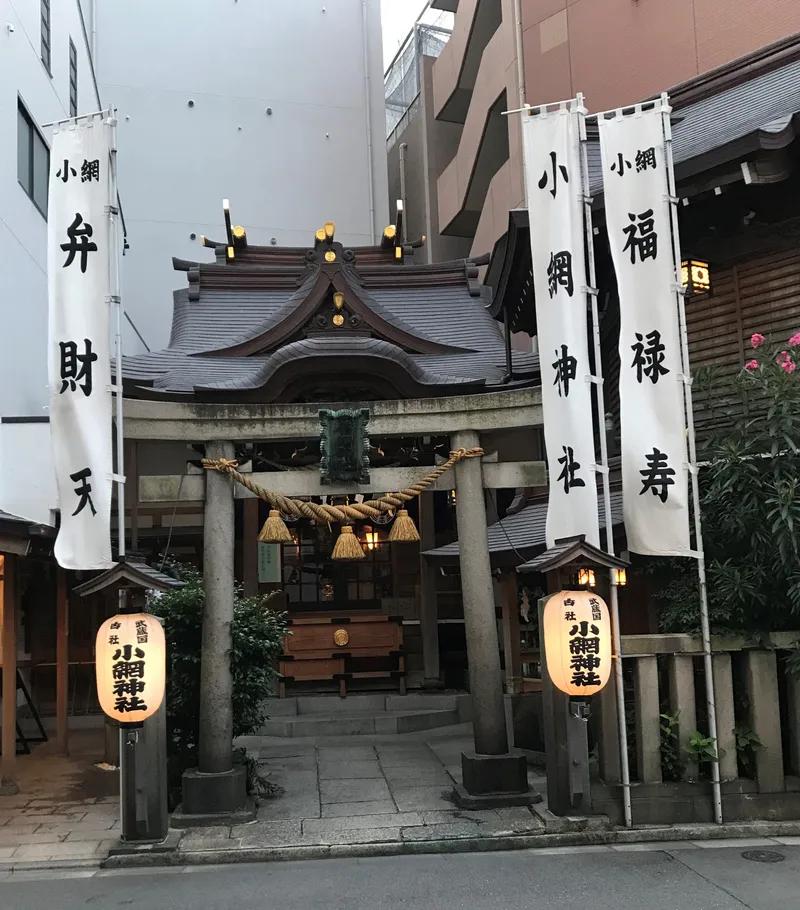
A small Nihonbashi shrine known as a deity of strong luck and warding off misfortune, with a well where visitors wash money and the only pre-war wooden shrine building left in the district.
 Shrine
Namiyoke Shrine
- Money & Prosperity
- Protection & Safety
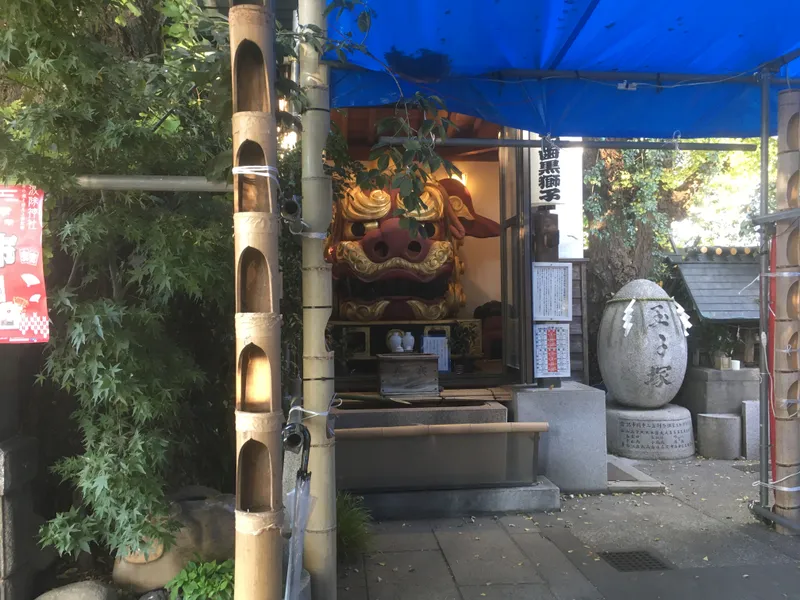
A Tsukiji shrine whose name means wave-averting, founded in 1659 after an Inari image found floating in the sea was credited with calming the water enough to finish the reclamation.
 Shrine
Karasumori Shrine
- Career & Work
- Money & Prosperity
- Skill & Mastery
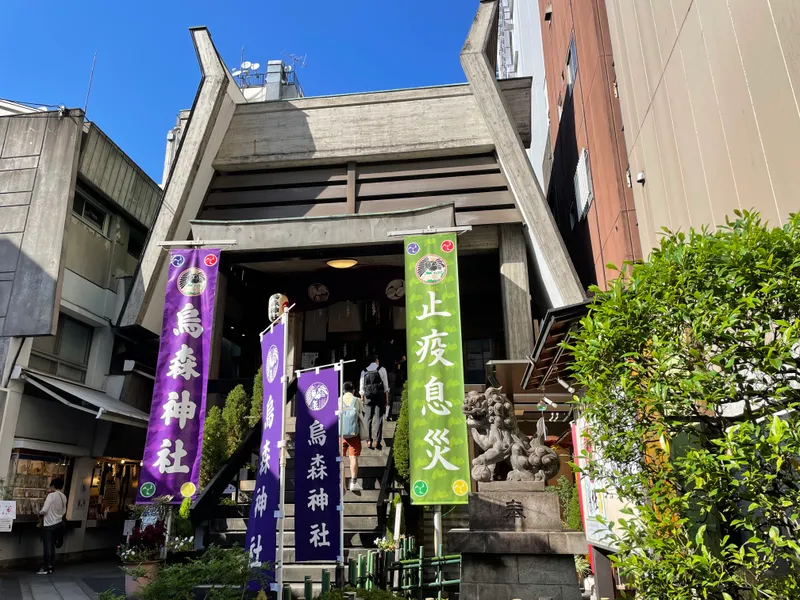
A Shimbashi shrine down an alley, founded in 940 by the general who defeated Taira no Masakado, and one of the few to enshrine the deity of the performing arts.
 Shrine
Nezu Shrine
- Career & Work
- Exams & Study
- Family & Home
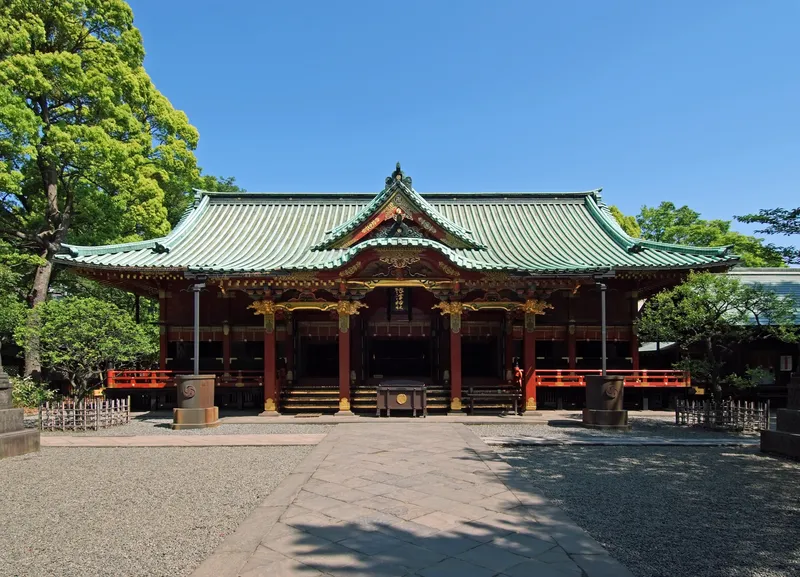
A Bunkyo shrine whose entire 1706 complex survives intact as an Important Cultural Property, rare in Tokyo, with an azalea hill and a tunnel of small red torii (鳥居).
 Shrine
Shinagawa Shrine
- Money & Prosperity
- Protection & Safety
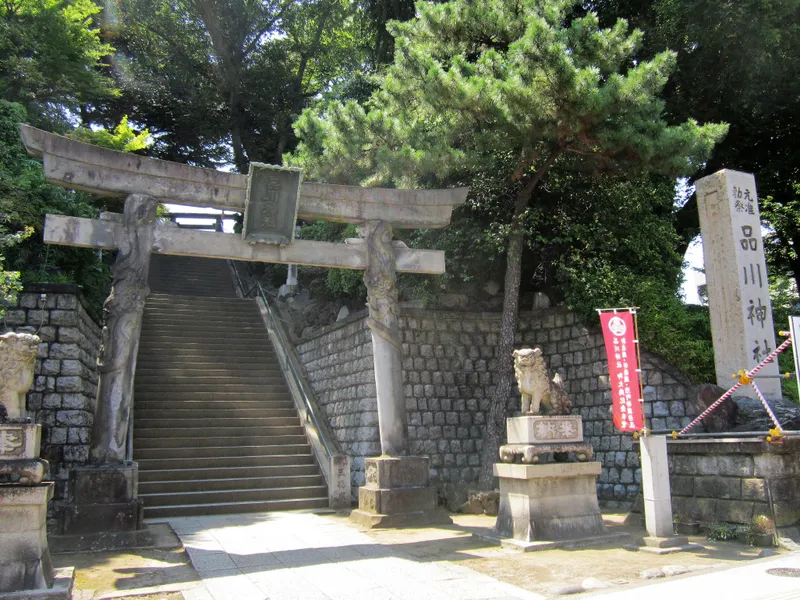
A shrine above Kita-Shinagawa founded in 1187 by Minamoto no Yoritomo, enshrining three deities added across three centuries, one for trade and one for warding.
 Shrine
Kanda Myojin
- Career & Work
- Family & Home
- Money & Prosperity
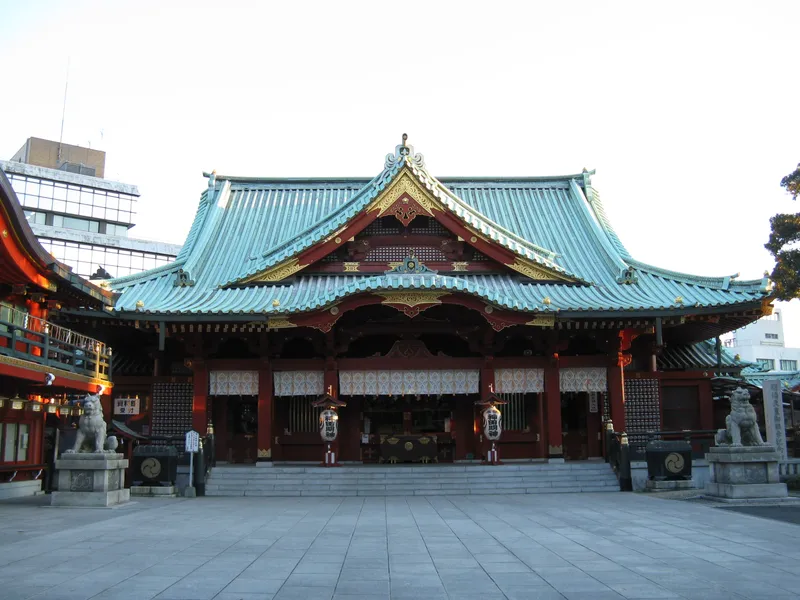
A Chiyoda shrine that served as the guardian shrine of all Edo, enshrining three deities between them associated with business prosperity, good matches and warding off misfortune, and these days selling a charm for information security.
 Shrine
Tokyo Daijingu
- Family & Home
- Love & Romance
- Money & Prosperity
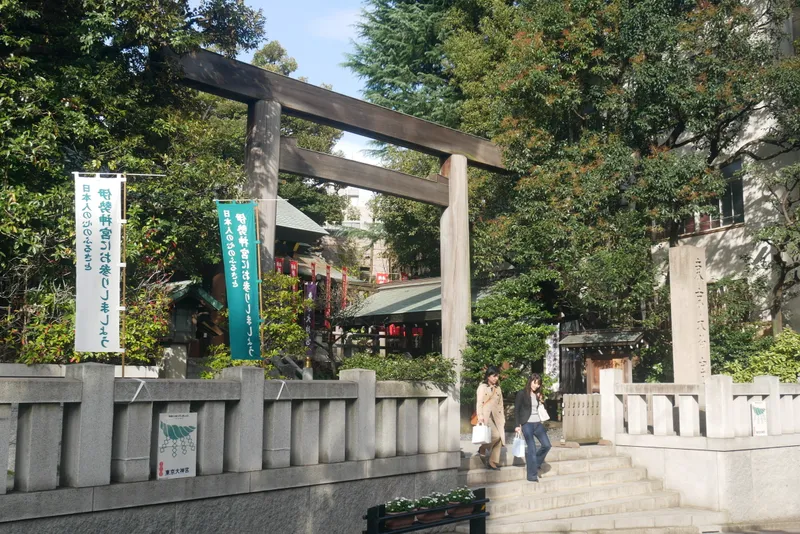
A Chiyoda shrine founded in 1880 as a Tokyo branch of Ise, known as "Tokyo's O-Ise-sama" and visited above all for prayers about relationships, an association the shrine itself explains through the three deities of creation enshrined here.
 Shrine
Ueno Toshogu
- Career & Work
- Health & Healing
A shrine in Ueno Park founded in 1627 to Tokugawa Ieyasu, whose gilded 1651 hall survived the Ueno war, the earthquake and the air raids intact.
No places match your filters