Shinagawa Shrine
品川神社 · Shinagawa Jinja
Researched and translated with AI assistance. Every claim is linked to its source, but errors get through, so check the official site for opening times, fees and closures.About
In short
A shrine above Kita-Shinagawa founded in 1187 by Minamoto no Yoritomo, enshrining three deities added across three centuries, one for trade and one for warding.
Quick facts
- Address
- 3-7-15 Kita-Shinagawa, Shinagawa-ku, Tokyo 140-0001
- Access
- Shimbamba station on the Keikyu line is a short walk, and Shinagawa station is about ten minutes further on foot. The shrine sits above the old Tokaido road.
- Hours
- The shrine office takes enquiries from 9:00 to 17:00. Prayers run from 9:30 to 16:00, on the hour and the half hour, and must be booked at least two days ahead.
- Best time
- The shrine is one of the Tokyo Ten Shrines and a station on the Tokai Seven Lucky Gods circuit, which is walked in the first days of January.
- Spiritual entities
- Ame-no-Hirinome (天比理乃咩命) · Inari (稲荷大神) · Susanoo no Mikoto (素盞嗚尊)
- Official site
- shinagawajinja.tokyo
About this place
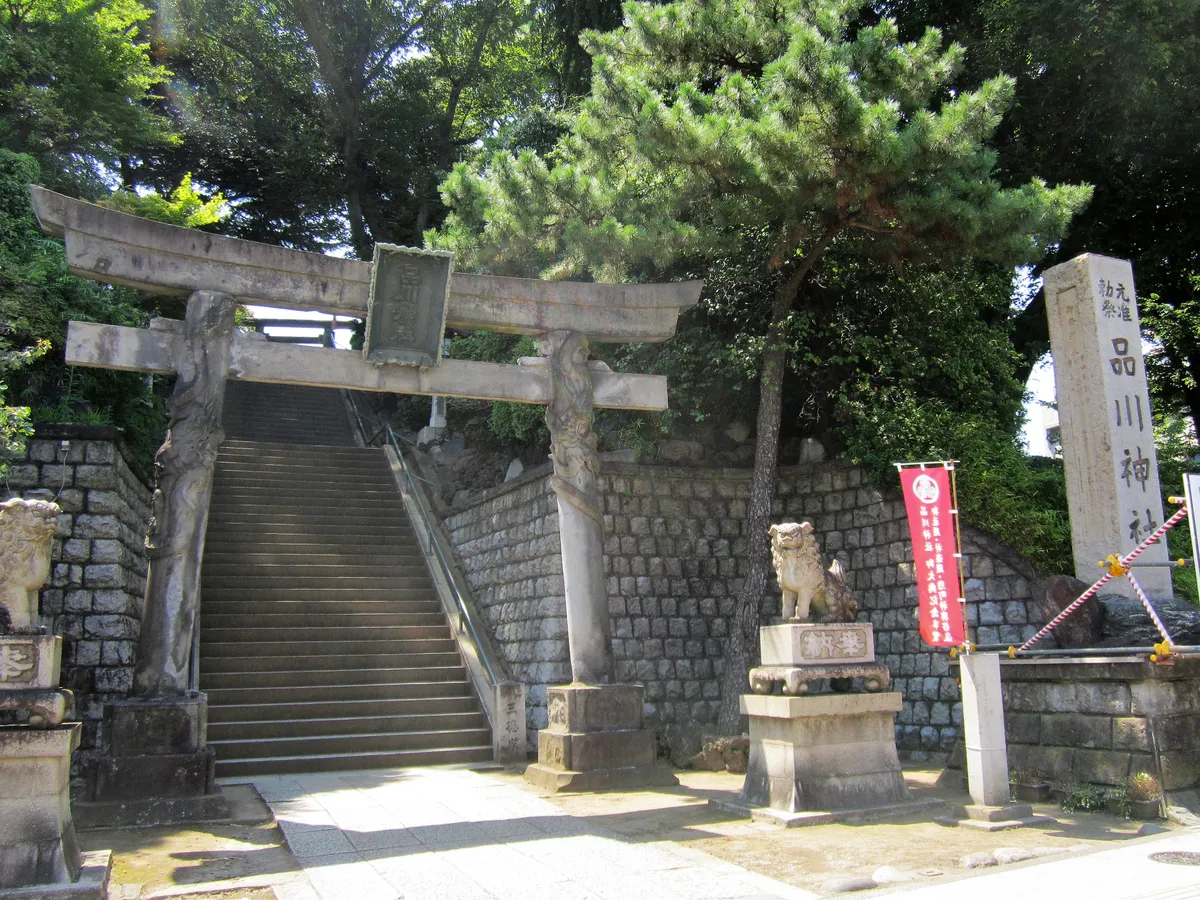
Shinagawa Shrine stands on a rise above Kita-Shinagawa, up a flight of steps past a torii (鳥居) carved with a climbing and a descending dragon. Three deities are enshrined, and the shrine is unusually clear about them: each was brought here by a different figure in a different century, and each is given its own portfolio. It is one of the ten shrines Emperor Meiji designated to pray for the new capital in 1868.
Origin and history
The shrine dates its founding to 1187, when Minamoto no Yoritomo brought Ame-no-Hirinome here from Susaki Myojin in Awa province, now Susaki Shrine in Tateyama, and prayed for safety at sea and for prayers to be fulfilled.
The other two deities arrived later. In 1319 Nikaidō Dōun enshrined Uka-no-me, that is Inari; in 1478 Ōta Dōkan enshrined Susanoo, known here as Tennō-sama.
In 1600 Tokugawa Ieyasu prayed here for victory on his way to Sekigahara, and afterwards gave the shrine a mask and a portable shrine in thanks. In 1637 the third shogun, Iemitsu, built Tōkai-ji and made this shrine its guardian, at which point the shogunate took on all rebuilding and repair; when the halls burned in 1694 and again in 1850, each rebuilding was ordered by the shogun of the day.
In November 1868 Emperor Meiji designated ten shrines in Tokyo, this among them, to pray for the peace of the new capital and the prosperity of the country, and sent envoys to worship at them. The shrine came through the war, but the buildings had aged, and the present hall was rebuilt in 1964 with the help of the parish. The halls were repaired again in 2020 to mark the enthronement.
What it is locally associated with
Three deities, three portfolios
The shrine gives each its own: Ame-no-Hirinome for prayers fulfilled and safety at sea, Uka-no-me for farming, trade and industry, Susanoo for warding storm, misfortune and illness.
documented historyBrought from across the bay, 1187
Minamoto no Yoritomo fetched the first deity from Susaki in Awa, across Tokyo Bay, and prayed here for safe passage by sea.
documented historyIeyasu prayed here before Sekigahara
He stopped on his way to the battle in 1600 and afterwards gave the shrine a mask and a portable shrine in thanks for the prayer being answered.
documented history
What this shrine is petitioned for is easier to state than at most places, because it says so deity by deity, and the two tags on this page come straight from that list.
Uka-no-me, the Inari deity brought here in 1319, is described as the deity of farming, of commerce and of the prosperity of industry, which is where the money tag comes from. Susanoo, brought in 1478 and known here as Tennō-sama, is described as the deity who wards off storm and flood damage, misfortune, and illness, which is the warding tag. The first deity, Ame-no-Hirinome, sits slightly outside both: the shrine gives her as the deity of prayers fulfilled and of safety at sea, which follows from how she came here, fetched by Yoritomo across the bay from Awa.
The accumulation is the interesting part. Three deities arrived in 1187, 1319 and 1478, brought by three different men, and the shrine has kept all three portfolios rather than merging them into one reputation. Reading the page is closer to reading a ledger than a legend.
The Tokugawa connection runs through the rest of its history. Ieyasu prayed here on his way to Sekigahara in 1600 and gave a mask and a portable shrine afterwards; from 1637 the shogunate paid for the shrine's upkeep as guardian of Tōkai-ji, and rebuilt it after both of its fires. In 1868 Emperor Meiji named it among the ten Tokyo shrines to be prayed at for the new capital, which is the circuit this site knows as the Tokyo Ten Shrines and which also includes Nezu and Akasaka Hikawa.
Claims and evidence levels 7
- The shrine dates its founding to 1187, when Minamoto no Yoritomo brought Ame-no-Hirinome from Susaki Myojin in Awa province and prayed for safety at sea and for prayers to be fulfilled. documented history
- Nikaidō Dōun enshrined Uka-no-me here in 1319 and Ōta Dōkan enshrined Susanoo in 1478. documented history
- The shrine describes Ame-no-Hirinome as the deity of prayers fulfilled and safety at sea, Uka-no-me as the deity of farming, commerce and the prosperity of industry, and Susanoo as the deity who wards off storm and flood damage, misfortune and illness. documented history
- Tokugawa Ieyasu prayed here for victory on his way to Sekigahara in 1600 and afterwards donated a mask and a portable shrine in thanks. documented history
- From 1637, when Iemitsu built Tōkai-ji and made this shrine its guardian, the shogunate took responsibility for its rebuilding and repair; the halls burned in 1694 and 1850 and were rebuilt by shogunal order each time. documented history
- In November 1868 Emperor Meiji designated ten Tokyo shrines, this among them, to pray for the peace of the new capital and the prosperity of the country, and sent envoys to worship at them. documented history
- The present hall was rebuilt in 1964 with the help of the parish, and the buildings were repaired in 2020 to mark the enthronement. documented history
Visiting tips
The general form is in the visiting guide below. Specific to Shinagawa Shrine:
Prayers must be booked at least two days in advance, by telephone or at the office, and run on the hour and the half hour between 9:30 and 16:00. This is not a shrine where you can turn up and ask.
The shrine asks that anyone going up before the deity dress accordingly, and specifically not in shorts, a T-shirt or bare feet. It also states that there is no space for changing or feeding a baby, which is worth knowing if you are coming for a child's rite.
Photography and video inside the hall are not permitted, and the shrine publishes separate rules for professional photography in the grounds.
The approach is a steep flight of steps from the road.
Related guides
- How to visit a shrine or temple in JapanThe country-wide basics: purifying at the water basin, the two-bows-two-claps-one-bow form at shrines, and what temples do instead.
- What a "power spot" actually isA modern Japanese coinage, not a traditional religious category. Where the word came from, what it does and does not claim, and why this site uses it anyway.
- Shrine or temple?A shrine is Shinto and a temple is Buddhist, and you can usually tell at the gate. Why the line is cleaner on paper than on the ground, and what a government order in 1868 has to do with it.
- Omamori, ema, omikuji and goshuinThe four things you are most likely to receive, write, draw or be given at a shrine or temple, what each is actually for, and the one of them people most often get wrong.
Sources
- Deities and history (御祭神・御由緒) — Shinagawa Shrine (accessed 2026-08-02)
- Prayers (ご祈祷) — Shinagawa Shrine (accessed 2026-08-02)
- Shinagawa Shrine (Q11418419) coordinate location — Wikidata (accessed 2026-08-02)
Last updated:
Similar places
8 places
 Shrine
Nezu Shrine
- Career & Work
- Exams & Study
- Family & Home
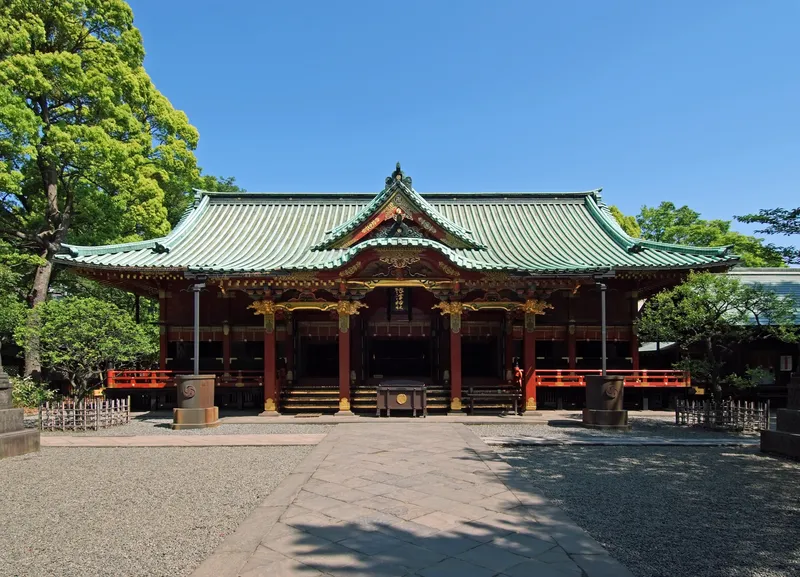
A Bunkyo shrine whose entire 1706 complex survives intact as an Important Cultural Property, rare in Tokyo, with an azalea hill and a tunnel of small red torii (鳥居).
 Shrine
Akasaka Hikawa Shrine
- Family & Home
- Love & Romance
- Money & Prosperity
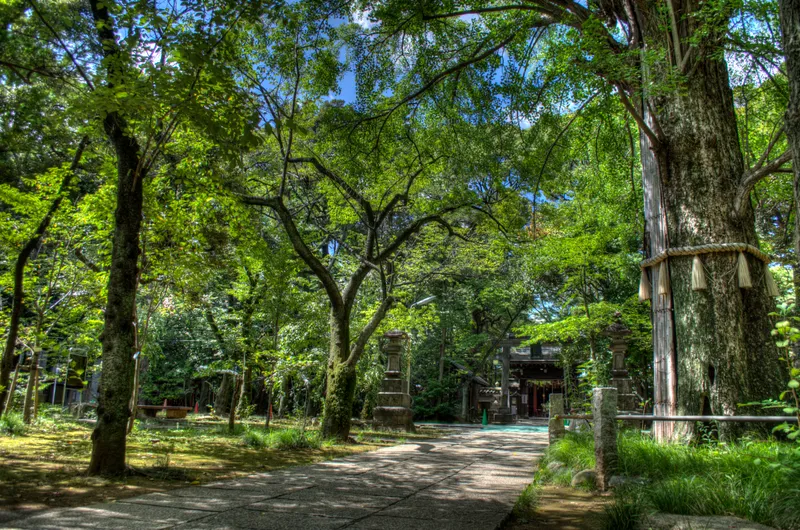
A Minato shrine founded in 951 whose Edo-period buildings survived both the earthquake and the war, known for warding off misfortune and for the tying of bonds, and the shrine explains why it is known for each.
 Shrine
Namiyoke Shrine
- Money & Prosperity
- Protection & Safety
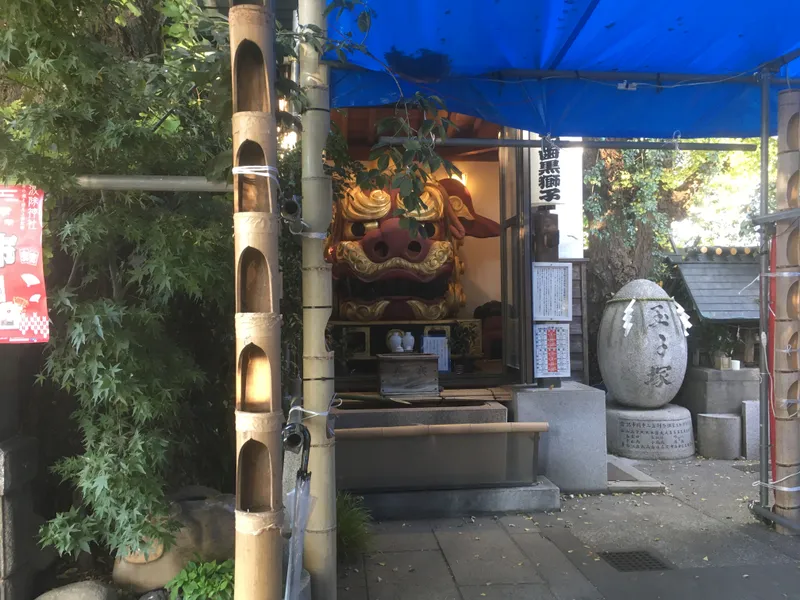
A Tsukiji shrine whose name means wave-averting, founded in 1659 after an Inari image found floating in the sea was credited with calming the water enough to finish the reclamation.
 Shrine
Koami Shrine
- Money & Prosperity
- Protection & Safety
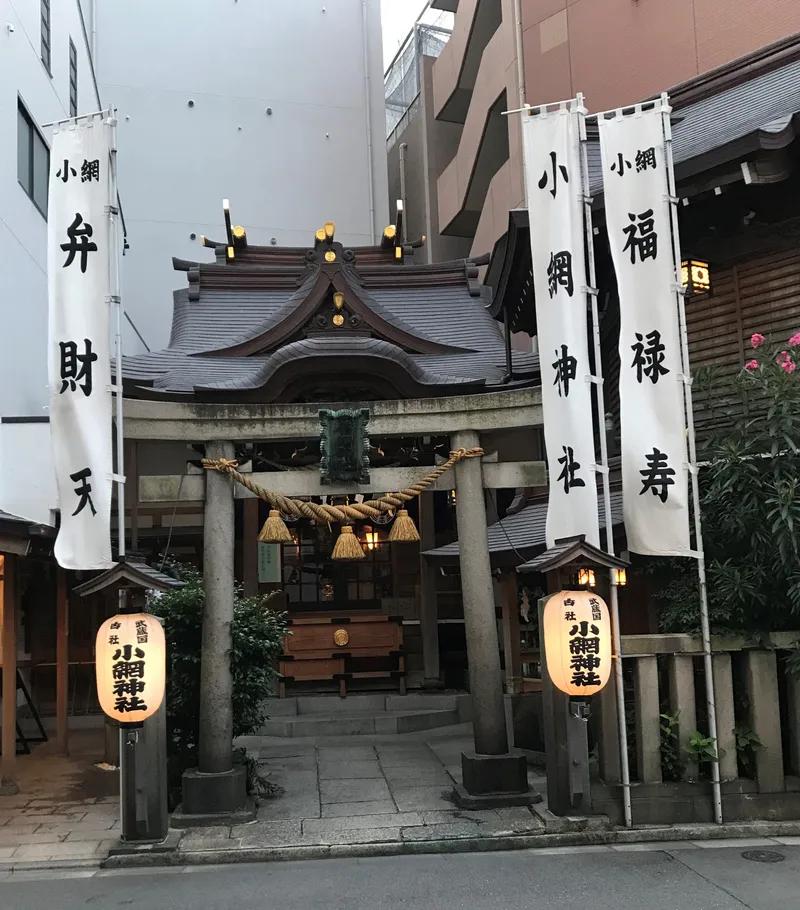
A small Nihonbashi shrine known as a deity of strong luck and warding off misfortune, with a well where visitors wash money and the only pre-war wooden shrine building left in the district.
 Temple
Zojo-ji
- Career & Work
- Family & Home
- Money & Prosperity
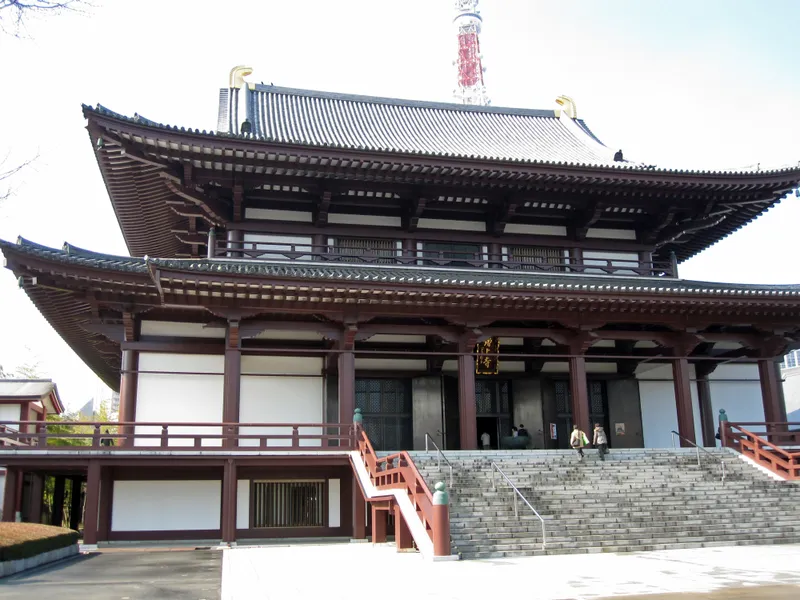
A Pure Land temple in Shiba, founded in 1393 and chosen by the Tokugawa as their family temple, whose hidden principal image is known as the Black Honzon of victory.
 Shrine
Shiba Daijingu
- Love & Romance
- Money & Prosperity
- Protection & Safety
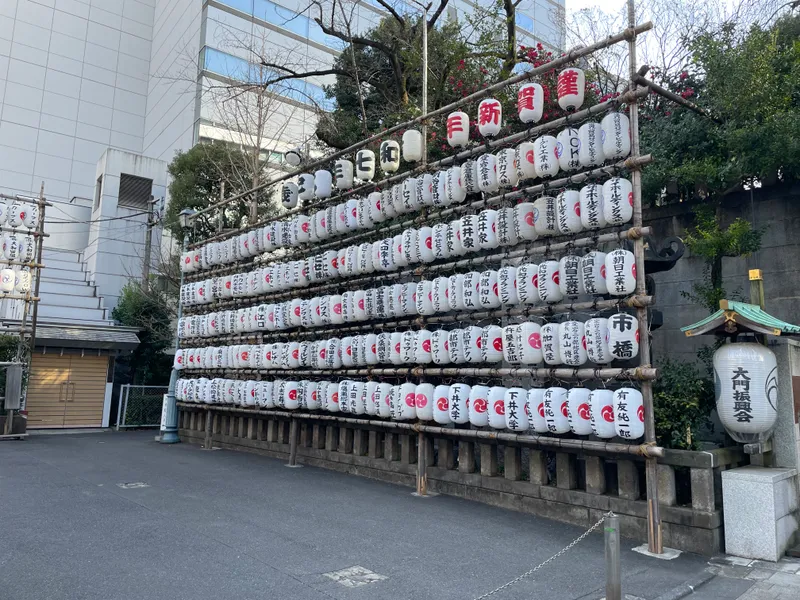
A Minato shrine founded in 1005 that enshrines the two deities of Ise, known in the Edo period as the Ise of the Kanto and today for a box charm sold nowhere else.
 Shrine
Atago Shrine
- Career & Work
- Love & Romance
- Money & Prosperity
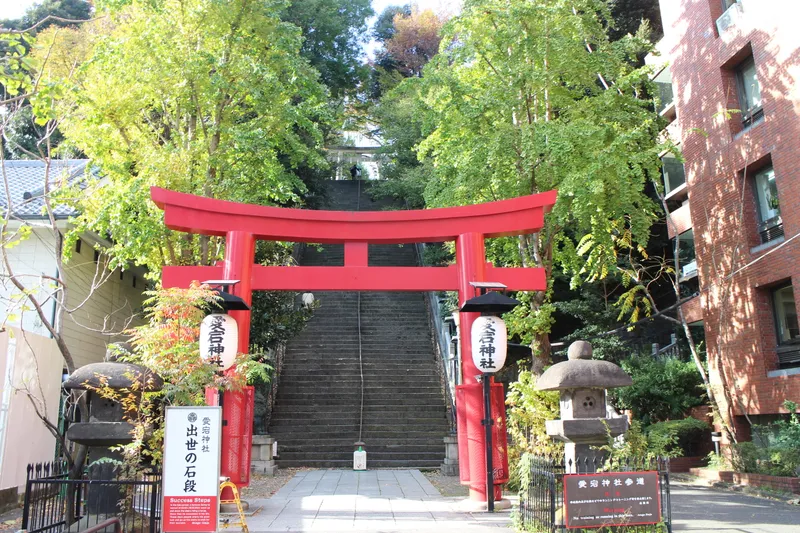
A shrine on a steep hill in Minato, founded in 1603 on Tokugawa Ieyasu's order as a deity against fire, and known for the stone staircase named after a rider who is said to have galloped up it.
 Shrine
Karasumori Shrine
- Career & Work
- Money & Prosperity
- Skill & Mastery
A Shimbashi shrine down an alley, founded in 940 by the general who defeated Taira no Masakado, and one of the few to enshrine the deity of the performing arts.
No places match your filters