Karasumori Shrine
烏森神社 · Karasumori Jinja · Karasumori Inari
Researched and translated with AI assistance. Every claim is linked to its source, but errors get through, so check the official site for opening times, fees and closures.About
In short
A Shimbashi shrine down an alley, founded in 940 by the general who defeated Taira no Masakado, and one of the few to enshrine the deity of the performing arts.
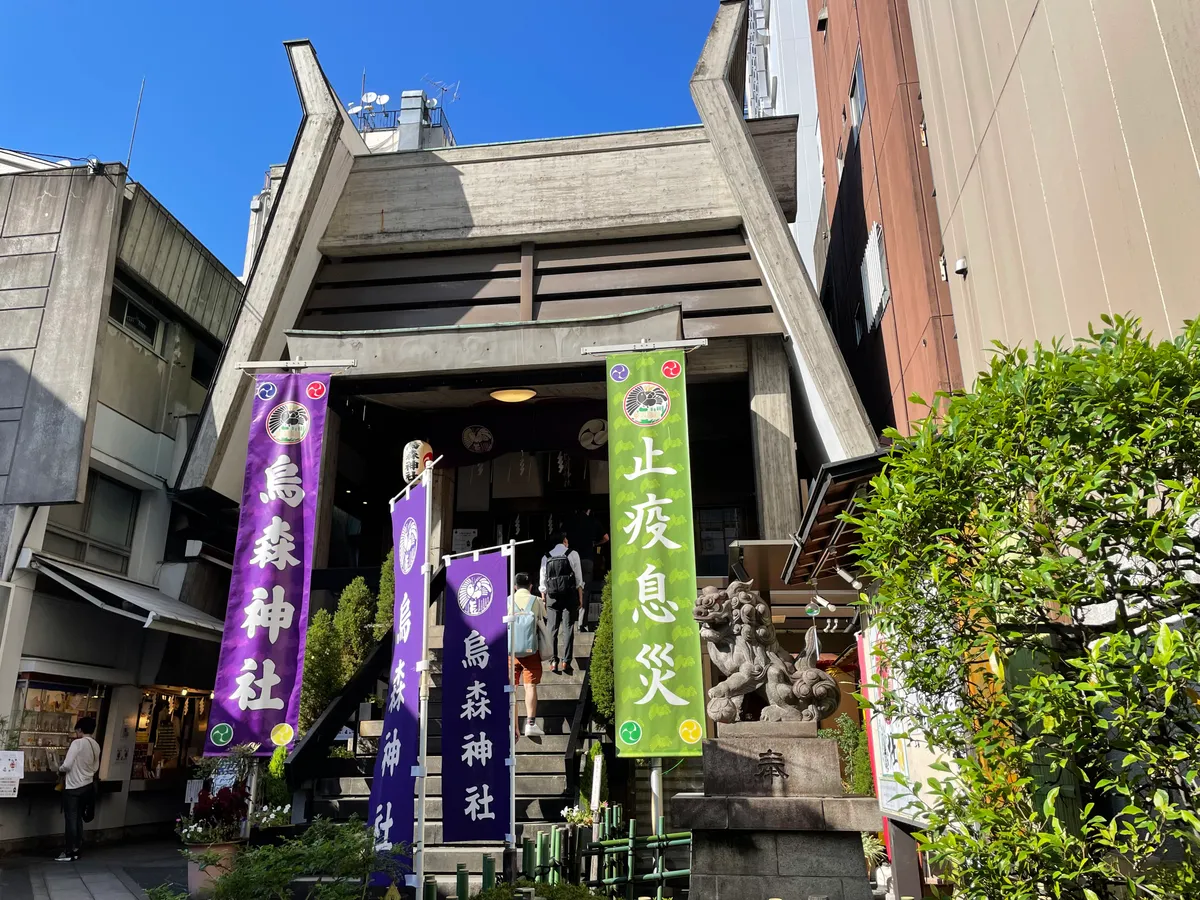
Quick facts
- Address
- 2-15-5 Shimbashi, Minato-ku, Tokyo 105-0004
- Access
- Shimbashi station on the JR lines, the Tokyo Metro Ginza line, the Toei Asakusa line and the Yurikamome is two or three minutes away, through the alleys on the west side.
- Hours
- The shrine publishes its opening and its amulet hours on its own site; check there before travelling.
- Best time
- The main festival on 4, 5 and 6 May, known as the Karasumori Festival, which the shrine describes as the earliest of the summer festivals.
- Spiritual entities
- Ame-no-Uzume (天鈿女命) · Inari (稲荷大神) · Ninigi (瓊瓊杵尊)
- Official site
- karasumorijinja.or.jp
About this place
Karasumori Shrine sits at the end of a narrow alley among the bars of Shimbashi, which is an odd setting for a shrine founded in 940. Its name comes from the crows that nested in the pine woods when this was a beach on Edo Bay. It enshrines three deities, among them Ame-no-Uzume, and the shrine notes that few shrines enshrine her.
Origin and history
The area was once part of Sakurada village in Musashi province, a sandy beach on Edo Bay covered in pine woods. It was called the forest of the dry sandbank, and because crows gathered and nested in those pines it came to be called the crow forest, which is where the name Karasumori comes from.
The shrine dates its founding to 940. When Taira no Masakado raised his rebellion in the east, the general Fujiwara no Hidesato, known also as Tawara Tōta and famous from the tale of the centipede, prayed for victory at an Inari shrine in Musashi. A white fox came and gave him a white-feathered arrow, and with it he was able to put down the rising quickly. Wishing to found a shrine in thanks, he was told in a dream by the white fox that the holy ground was where the sacred crows gathered; he came to the forest of Sakurada village, found the crows gathered there as in the dream, and built the shrine.
When the Meireki fire burned out the city, the shrine relates that Karasumori Inari alone escaped, which was taken as a sign and drew devotion to it. Together with Sugimori Shrine in Nihonbashi and Yanagimori Shrine in Kanda it was known as the three forests of Edo. It was renamed from Karasumori Inari to Karasumori Shrine in 1873, and the present hall dates from 1971.
What it is locally associated with
A white fox, an arrow, and a dream
The shrine relates that a white fox gave Fujiwara no Hidesato a white-feathered arrow for his campaign against Masakado, then told him in a dream to build where crows gathered.
folk traditionVictory, and getting through the difficult
Among the things the shrine names itself for are the fulfilment of prayers for victory and the overcoming of great difficulty, alongside prosperity in trade.
documented historyA deity of the performing arts
The shrine notes that it is one of the few to enshrine Ame-no-Uzume, revered as the deity of performance, and names improvement in the arts among its virtues.
documented historyThe fire it came through
When the Meireki fire burned out Edo, the shrine says this one alone escaped, and devotion to it grew from then.
folk tradition
The shrine lists what it is held to be good for without ceremony: prosperity in trade, improvement in the arts, safety in the household, the fulfilment of prayers for victory, overcoming great difficulty, unending prosperity, all things going smoothly, and wealth and flourishing. Three of those give the tags on this page. Prosperity in trade and wealth give the money tag, which suits a shrine that has stood in a business district for a very long time. The fulfilment of prayers for victory and the overcoming of great difficulty give the career tag, in the same sense used elsewhere on this site: not promotion, but coming out ahead in something contested.
That sense is not incidental here. The shrine was founded on a victory. Fujiwara no Hidesato prayed at an Inari shrine before facing Taira no Masakado, received a white-feathered arrow from a white fox, and put down the rising; the shrine exists because he wanted to give thanks for it. This site now holds three places connected to that same rebellion from three different directions: Kanda Myojin, which enshrines Masakado; Fukagawa Fudo-do, whose parent temple was founded to subdue him by ritual; and this one, founded by the man who beat him. Each states its own half, and none of them mentions the others.
Improvement in the arts is the third thing the shrine names, and it comes from a deity rather than a reputation. Ame-no-Uzume is the dancer of the myth of the heavenly rock cave and is revered as the deity of performance, and the shrine points out that few shrines enshrine her. That is the skill tag on this page, and it is the reason performers have come.
The rest is Edo. The shrine was one of the three forests of Edo with Sugimori in Nihonbashi and Yanagimori in Kanda, and an old ranking of more than a hundred Inari shrines placed it high, with a festival that rivalled the busiest in the city. Its great portable shrine, made in 1930, is an eight-ridged type the shrine says is both very rare and unmatched in size.
Claims and evidence levels 7
- The name Karasumori comes from the pine woods on the beach of Edo Bay here, where crows gathered and nested, giving the place the name crow forest. documented history
- The shrine dates its founding to 940, relating that Fujiwara no Hidesato prayed for victory at an Inari shrine in Musashi during the rebellion of Taira no Masakado, received a white-feathered arrow from a white fox, put down the rising, and was told in a dream to build where the sacred crows gathered. folk tradition
- The shrine enshrines Uganomitama, Ame-no-Uzume and Ninigi, and notes that it is one of the few shrines to enshrine Ame-no-Uzume, who is revered as a deity of the performing arts. documented history
- The shrine names prosperity in trade, improvement in the arts, safety in the household, the fulfilment of prayers for victory, overcoming great difficulty, unending prosperity, all things going smoothly, and wealth and flourishing among its virtues. documented history
- The shrine relates that it alone escaped the Meireki fire when the rest of the city burned, and that devotion to it grew from then. folk tradition
- The shrine was known as one of the three forests of Edo together with Sugimori Shrine in Nihonbashi and Yanagimori Shrine in Kanda; it was renamed from Karasumori Inari to Karasumori Shrine in 1873 and the present hall was built in 1971. documented history
- Its great portable shrine was made in 1930 by the shrine-maker Yamamoto Shōtarō of Kanda Tashirocho and repaired in 1982; the shrine describes the eight-ridged form as very rare and its size as unmatched. documented history
Visiting tips
The general form is in the visiting guide below. Specific to Karasumori:
The shrine is hard to find. It sits at the end of a narrow alley off the bar streets of Shimbashi, with no open approach, and looks like nothing from the road.
It is best known today for its coloured fortune slips and its calligraphic seals, and the queue for those can be longer than the queue to pray.
The main festival on 4, 5 and 6 May fills the surrounding alleys rather than a shrine precinct, because there is no precinct to speak of.
Related guides
- How to visit a shrine or temple in JapanThe country-wide basics: purifying at the water basin, the two-bows-two-claps-one-bow form at shrines, and what temples do instead.
- What a "power spot" actually isA modern Japanese coinage, not a traditional religious category. Where the word came from, what it does and does not claim, and why this site uses it anyway.
- Shrine or temple?A shrine is Shinto and a temple is Buddhist, and you can usually tell at the gate. Why the line is cleaner on paper than on the ground, and what a government order in 1868 has to do with it.
- Omamori, ema, omikuji and goshuinThe four things you are most likely to receive, write, draw or be given at a shrine or temple, what each is actually for, and the one of them people most often get wrong.
Sources
- About Karasumori Shrine (烏森神社について) — Karasumori Shrine (accessed 2026-08-02)
- Karasumori Shrine (Q11567255) coordinate location — Wikidata (accessed 2026-08-02)
Last updated:
Similar places
8 places
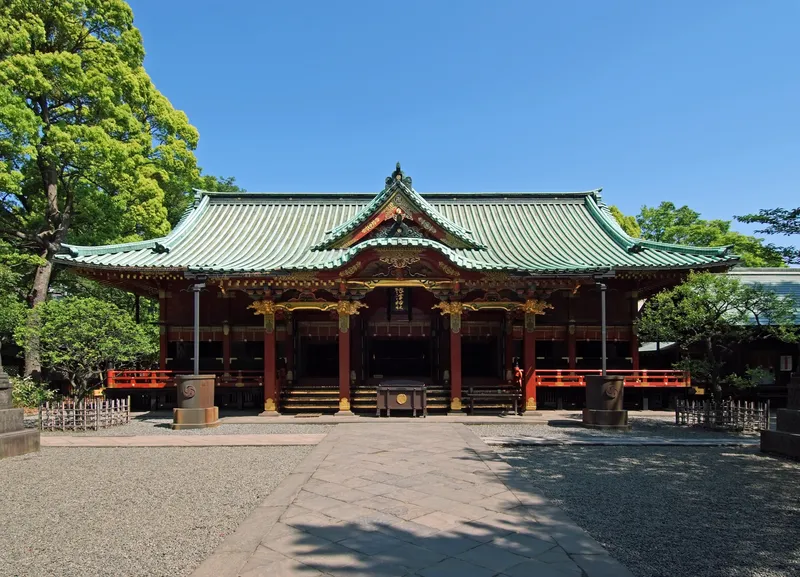 Shrine
Nezu Shrine
- Career & Work
- Exams & Study
- Family & Home
A Bunkyo shrine whose entire 1706 complex survives intact as an Important Cultural Property, rare in Tokyo, with an azalea hill and a tunnel of small red torii (鳥居).
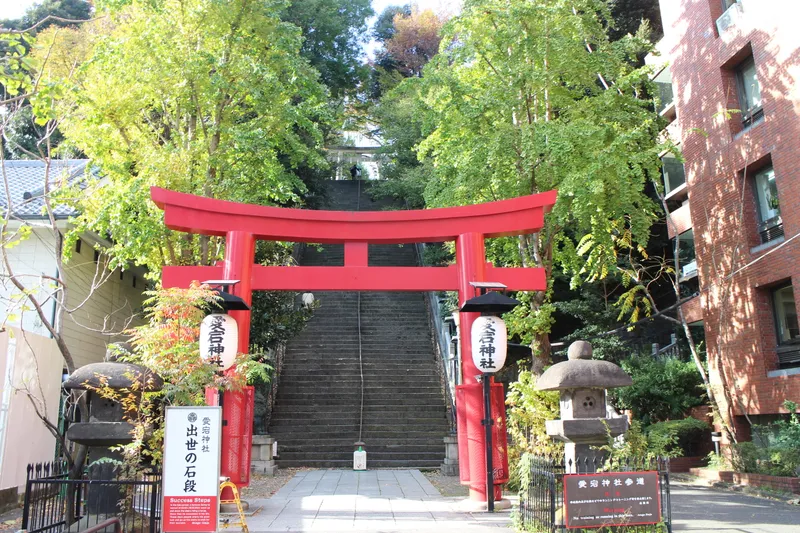 Shrine
Atago Shrine
- Career & Work
- Love & Romance
- Money & Prosperity
A shrine on a steep hill in Minato, founded in 1603 on Tokugawa Ieyasu's order as a deity against fire, and known for the stone staircase named after a rider who is said to have galloped up it.
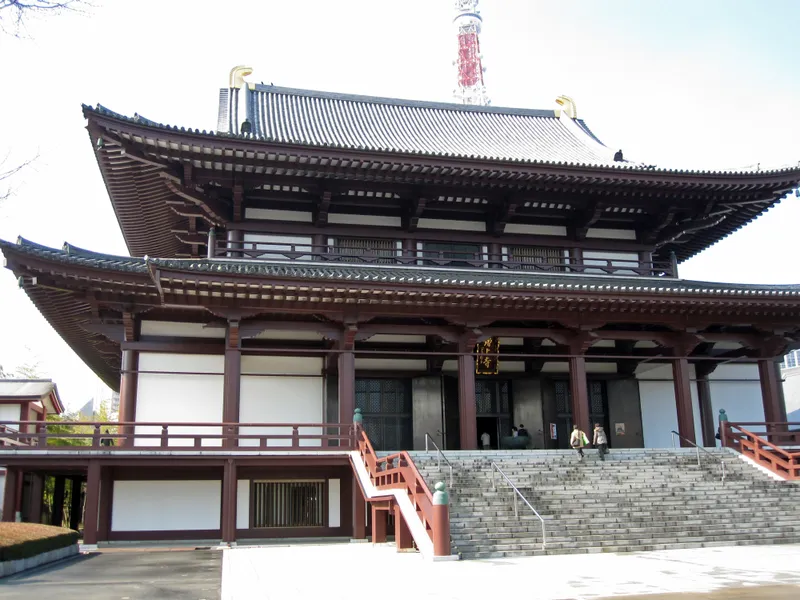 Temple
Zojo-ji
- Career & Work
- Family & Home
- Money & Prosperity
A Pure Land temple in Shiba, founded in 1393 and chosen by the Tokugawa as their family temple, whose hidden principal image is known as the Black Honzon of victory.
 Shrine
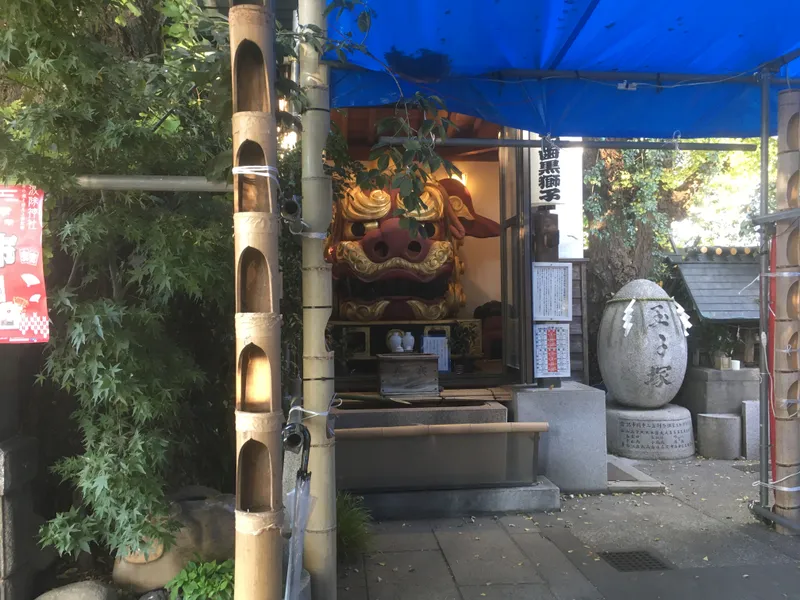
Namiyoke Shrine
- Money & Prosperity
- Protection & Safety
A Tsukiji shrine whose name means wave-averting, founded in 1659 after an Inari image found floating in the sea was credited with calming the water enough to finish the reclamation.
 Shrine
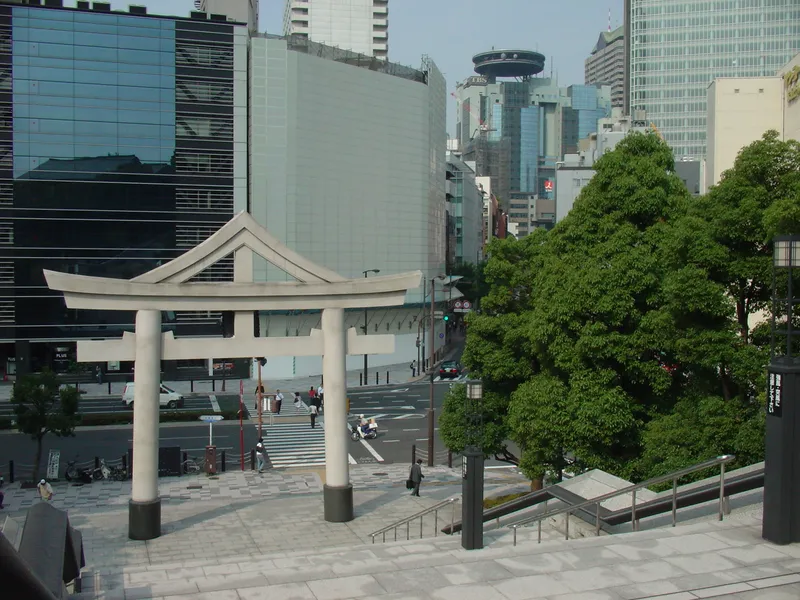
Hie Shrine
- Career & Work
- Fertility & Children
- Money & Prosperity
A shrine on a wooded rise in Nagatacho, once the guardian of Edo Castle, whose messenger is the monkey, a pun the shrine explains itself, connecting it to warding off evil, to winning, and to the tying of bonds.
 Shrine
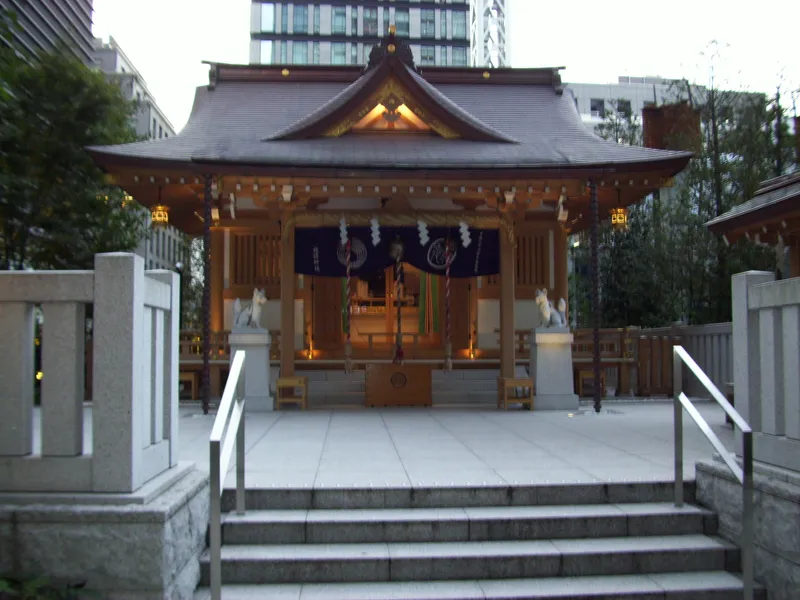
Fukutoku Shrine
- Money & Prosperity
A small Nihonbashi shrine whose name means good fortune, which ran shogunate-licensed lotteries in the Edo period and still performs a prayer for winning one.
 Shrine
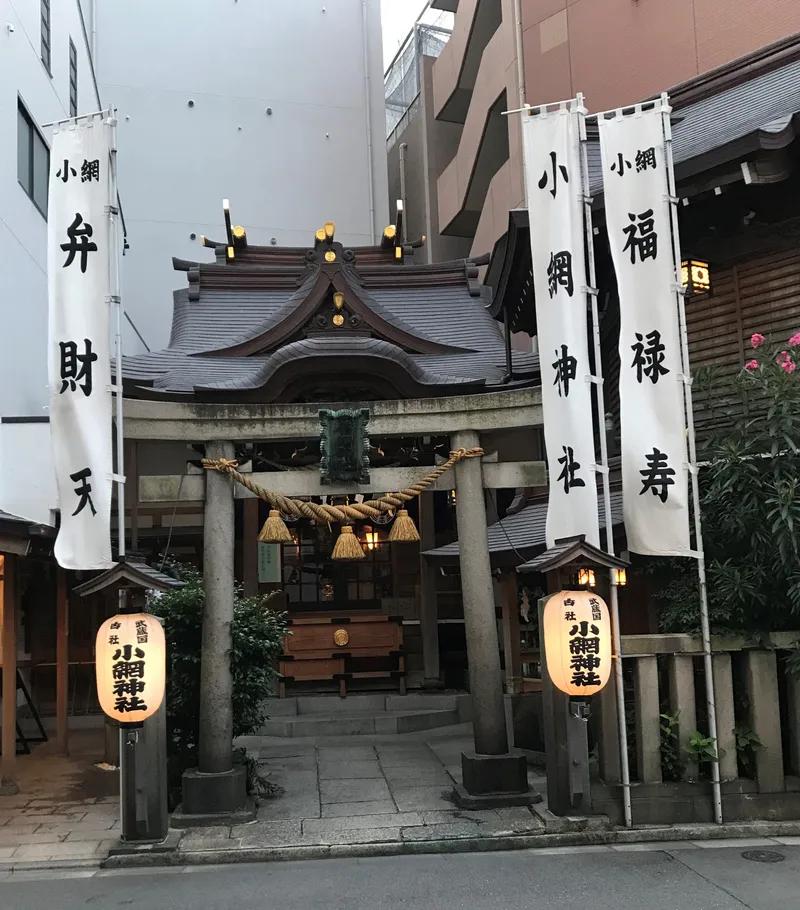
Koami Shrine
- Money & Prosperity
- Protection & Safety
A small Nihonbashi shrine known as a deity of strong luck and warding off misfortune, with a well where visitors wash money and the only pre-war wooden shrine building left in the district.
 Shrine
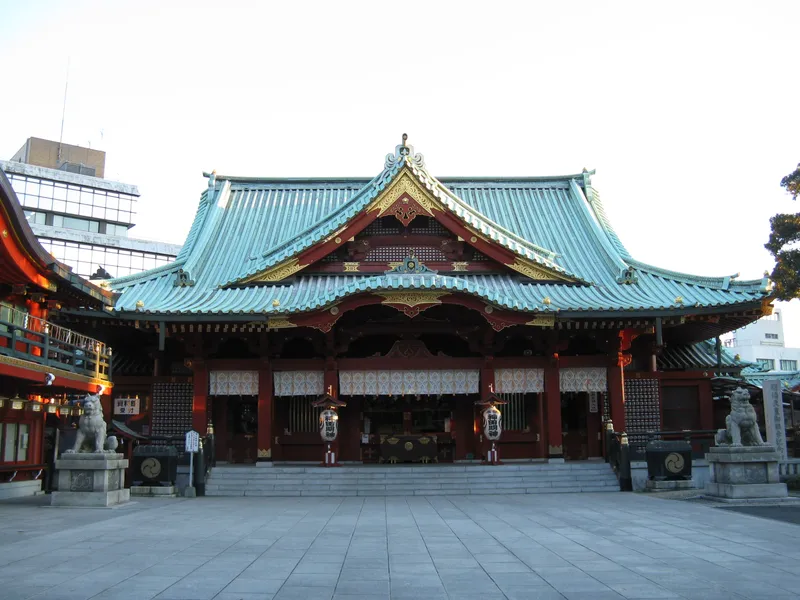
Kanda Myojin
- Career & Work
- Family & Home
- Money & Prosperity
A Chiyoda shrine that served as the guardian shrine of all Edo, enshrining three deities between them associated with business prosperity, good matches and warding off misfortune, and these days selling a charm for information security.
No places match your filters