Tokyo Daijingu
東京大神宮 · Tokyo Daijingū
Researched and translated with AI assistance. Every claim is linked to its source, but errors get through, so check the official site for opening times, fees and closures.About
In short
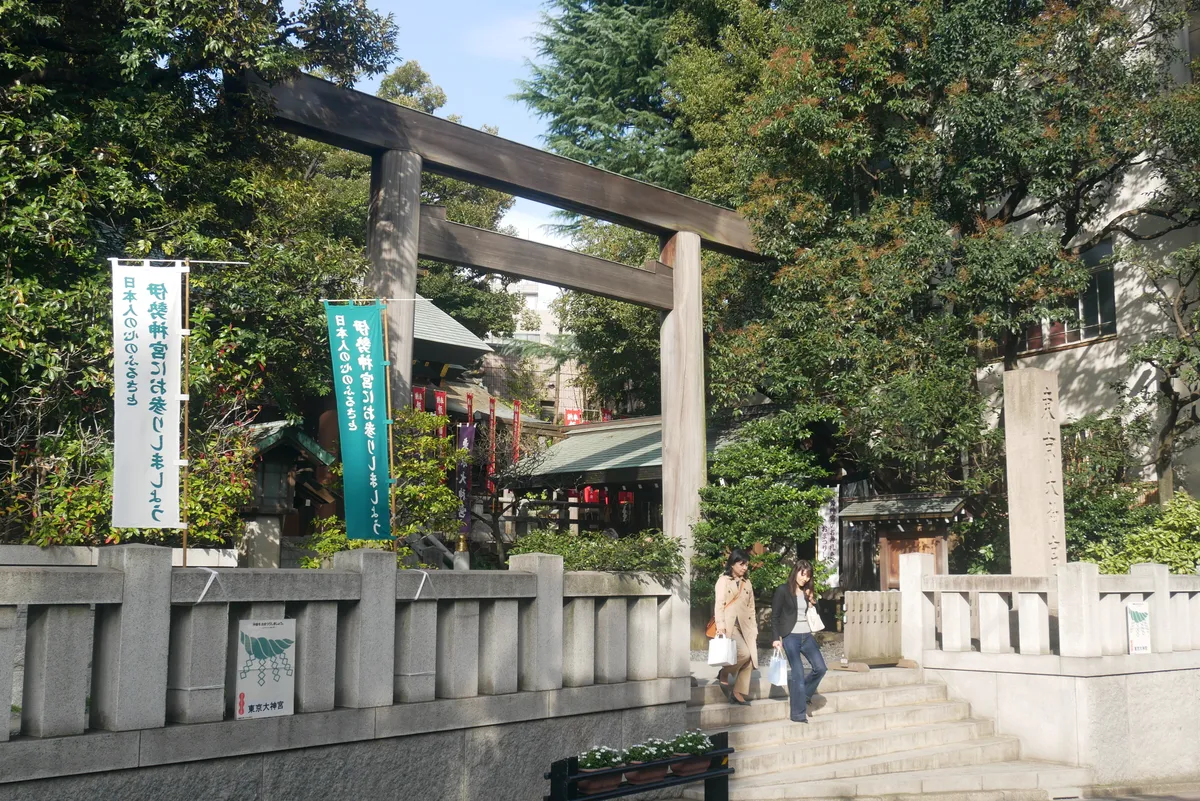
A Chiyoda shrine founded in 1880 as a Tokyo branch of Ise, known as "Tokyo's O-Ise-sama" and visited above all for prayers about relationships, an association the shrine itself explains through the three deities of creation enshrined here.
Quick facts
- Address
- 2-4-1 Fujimi, Chiyoda-ku, Tokyo 102-0071
- Access
- Iidabashi station is about five minutes on foot, and every line that serves it works: the JR Chuo and Sobu lines, the Tokyo Metro Marunouchi, Tozai, Namboku and Yurakucho lines, and the Toei Shinjuku line.
- Hours
- The shrine publishes no opening or closing times. In practice the grounds are open through the day and the amulet counter keeps daytime hours — unofficial, so check before travelling for a specific time.
- Best time
- The annual festival falls on 17 April and the autumn grand festival on 17 October. The Tanabata prayer rite on 7 July and the moon-viewing rite on 25 September are the two most atmospheric. Weekend mornings often have Shinto weddings crossing the grounds — the ceremony this shrine says it originated.
- Spiritual entities
- Amaterasu Ōmikami (天照大御神)
- Official site
- www.tokyodaijingu.or.jp
About this place
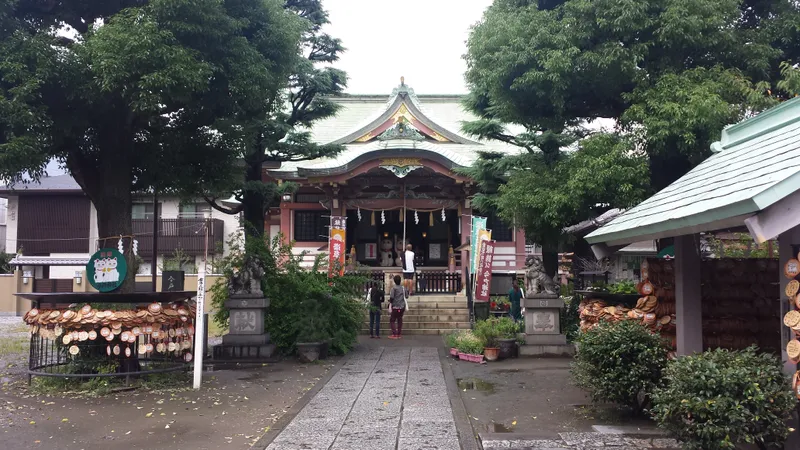
Tokyo Daijingu stands a few minutes from Iidabashi station and is the shrine most Tokyo residents name first when the subject is matchmaking. It was founded in 1880 so that people in the capital could worship the deities of Ise without travelling, and it is still called "Tokyo's O-Ise-sama". Two things set it apart: it says plainly why it is associated with bonds, and it says the modern Shinto wedding began here.
Origin and history
The shrine was founded in 1880 at Hibiya, where it was known as Hibiya Daijingu. It moved to its present site in Iidabashi in 1928, after the Great Kanto Earthquake, and was called Iidabashi Daijingu for a time; the name Tokyo Daijingu dates from after the war.
Its purpose from the start was to let people in the new capital worship the deities of Ise without making the journey, which is why it is still known as "Tokyo's O-Ise-sama". Enshrined here are Amaterasu and Toyouke, the deities of Ise's inner and outer shrines, together with Yamatohime, and with the three deities of creation: Amenominakanushi, Takamimusubi and Kamimusubi.
What it is locally associated with
Tokyo's O-Ise-sama
Founded in 1880 so people in the capital could worship the deities of Ise without travelling there. It has carried the nickname ever since.
documented historyThe three deities of creation
The shrine states its matchmaking association comes from enshrining the three musubi deities of creation alongside the deities of Ise. A reason, not just a reputation.
documented historyWhere the Shinto wedding began
By the shrine's own account, the Shinto wedding ceremony now performed across Japan originated here.
documented history
Most shrines with a matchmaking reputation leave you to wonder where it came from. This one answers. Its own account is that because the three deities of creation (the musubi deities, whose name is the same word as the "musubi" in enmusubi, the tying of bonds) are enshrined here alongside the deities of Ise, the shrine is one with a blessing for the tying of relationships. That is a stated reason rather than an accumulated rumour, and it is why this page carries the love and relationship tags. The shrine also names household safety and business prosperity among what it is petitioned for.
The second thread is the wedding. By the shrine's own account, the Shinto wedding ceremony as it is now performed across Japan originated here. That is a large claim, and it is worth carrying with the "by its own account" attached. But it is the shrine's claim about its own history, not an outside legend, and it explains why weddings are a normal sight in the grounds at weekends.
The amulet counter is unusually specific, and unusually forthcoming with prices. Alongside the plain bond-tying charms at ¥700 there is a small family of lily-of-the-valley designs (a beaded one and an embroidered lace one, ¥800 and ¥1,500), chosen because that flower's meaning in the language of flowers is that happiness is coming. A metal netsuke charm carries the shrine's hanabishi crest, and a braided-cord "star charm" is described as carrying a prayer for a good match, with happiness falling like shooting stars.
Claims and evidence levels 6
- The shrine was founded in 1880 at Hibiya as Hibiya Daijingu, moved to Iidabashi in 1928 after the Great Kanto Earthquake, and took the name Tokyo Daijingu after the war. documented history
- It enshrines Amaterasu and Toyouke, the deities of the inner and outer shrines of Ise, together with Yamatohime and the three deities of creation: Amenominakanushi, Takamimusubi and Kamimusubi. documented history
- The shrine states that its blessing for the tying of bonds comes from enshrining the three deities of creation alongside the deities of Ise. documented history
- By the shrine's own account, the Shinto wedding ceremony now performed widely across Japan originated here. documented history
- The shrine offers a range of bond-tying charms from ¥700, including lily-of-the-valley designs chosen because that flower is held to mean that happiness is coming. local custom
- It also names household safety and business prosperity among the concerns it is petitioned for. local custom
Visiting tips
The general form is covered in the visiting guide below; this shrine's own instructions follow it closely, with one difference worth noting. Its purification sequence has five steps rather than the three the national association gives, finishing by running water down the ladle handle before returning it.
Beyond that, nothing here is unusual or restricted: there are no photography rules, no closed halls and no special customs published. What there is instead is weddings: they are held here regularly and are visible from the grounds. Watching discreetly is normal; joining the procession or photographing the couple at close range is not.
One practical point. No opening or closing times are published anywhere on the official site, so treat the grounds as open and the amulet counter as keeping ordinary daytime hours.
Related guides
- How to visit a shrine or temple in JapanThe country-wide basics: purifying at the water basin, the two-bows-two-claps-one-bow form at shrines, and what temples do instead.
- What a "power spot" actually isA modern Japanese coinage, not a traditional religious category. Where the word came from, what it does and does not claim, and why this site uses it anyway.
- Shrine or temple?A shrine is Shinto and a temple is Buddhist, and you can usually tell at the gate. Why the line is cleaner on paper than on the ground, and what a government order in 1868 has to do with it.
- Omamori, ema, omikuji and goshuinThe four things you are most likely to receive, write, draw or be given at a shrine or temple, what each is actually for, and the one of them people most often get wrong.
Sources
- About the shrine (東京大神宮のご紹介) — Tokyo Daijingu (accessed 2026-08-02)
- Talismans and amulets (おふだ・お守り) — Tokyo Daijingu (accessed 2026-08-02)
- Worship etiquette (参拝の作法) — Tokyo Daijingu (accessed 2026-08-02)
- Festival calendar (祭典) — Tokyo Daijingu (accessed 2026-08-02)
- Access (交通のご案内) — Tokyo Daijingu (accessed 2026-08-02)
Last updated:
Similar places
8 places
 Shrine
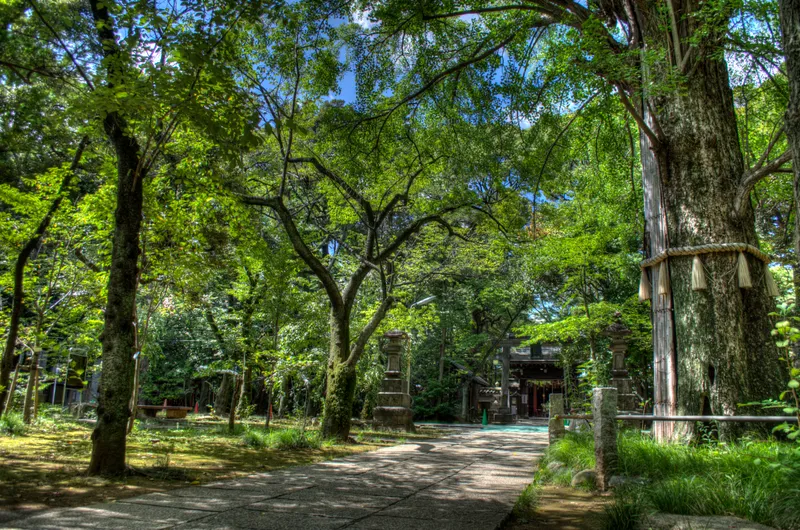
Akasaka Hikawa Shrine
- Family & Home
- Love & Romance
- Money & Prosperity
A Minato shrine founded in 951 whose Edo-period buildings survived both the earthquake and the war, known for warding off misfortune and for the tying of bonds, and the shrine explains why it is known for each.
 Shrine
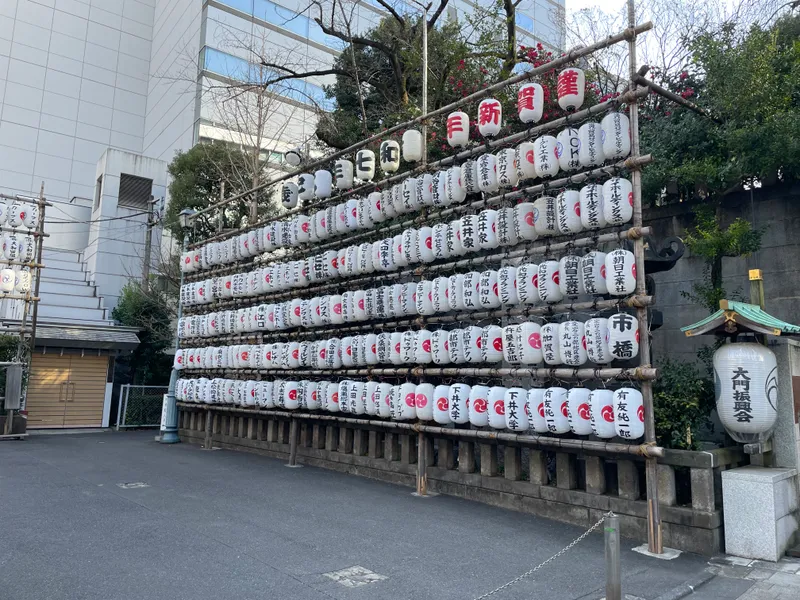
Shiba Daijingu
- Love & Romance
- Money & Prosperity
- Protection & Safety
A Minato shrine founded in 1005 that enshrines the two deities of Ise, known in the Edo period as the Ise of the Kanto and today for a box charm sold nowhere else.
 Shrine
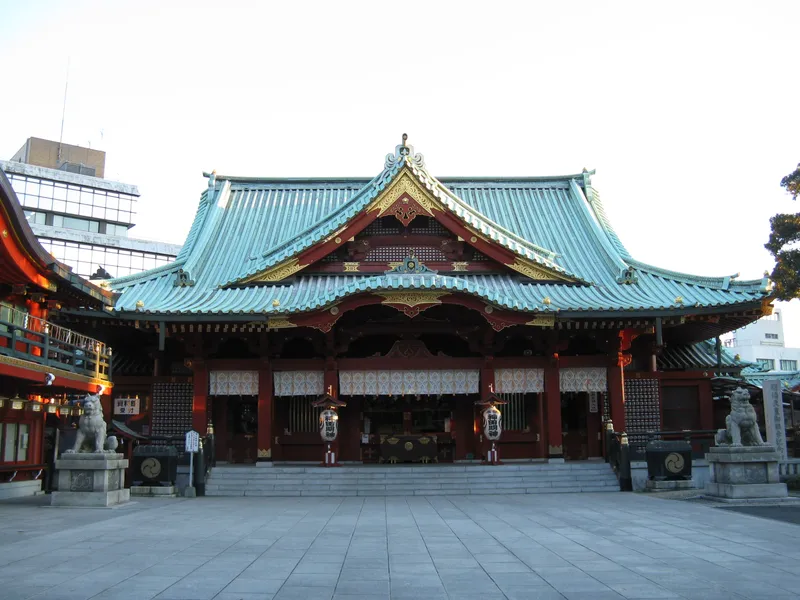
Kanda Myojin
- Career & Work
- Family & Home
- Money & Prosperity
A Chiyoda shrine that served as the guardian shrine of all Edo, enshrining three deities between them associated with business prosperity, good matches and warding off misfortune, and these days selling a charm for information security.
 Shrine
Nezu Shrine
- Career & Work
- Exams & Study
- Family & Home
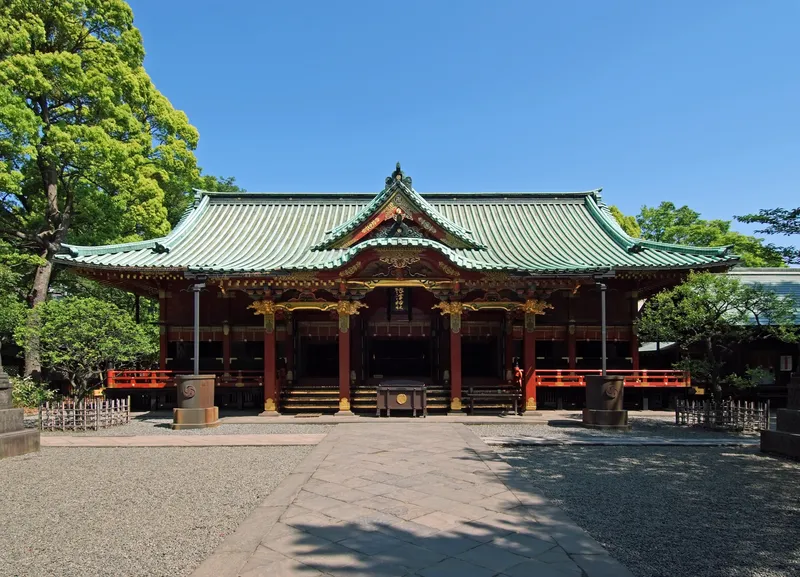
A Bunkyo shrine whose entire 1706 complex survives intact as an Important Cultural Property, rare in Tokyo, with an azalea hill and a tunnel of small red torii (鳥居).
 Shrine
Atago Shrine
- Career & Work
- Love & Romance
- Money & Prosperity
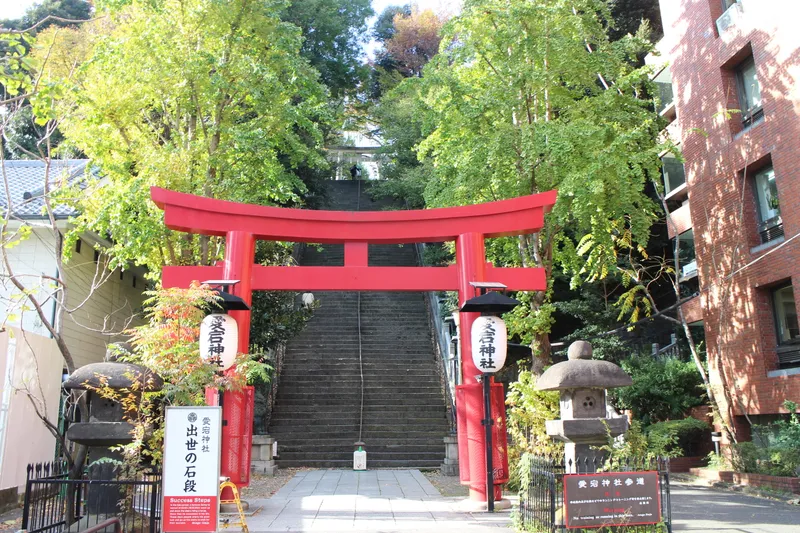
A shrine on a steep hill in Minato, founded in 1603 on Tokugawa Ieyasu's order as a deity against fire, and known for the stone staircase named after a rider who is said to have galloped up it.
 Shrine
Hie Shrine
- Career & Work
- Fertility & Children
- Money & Prosperity
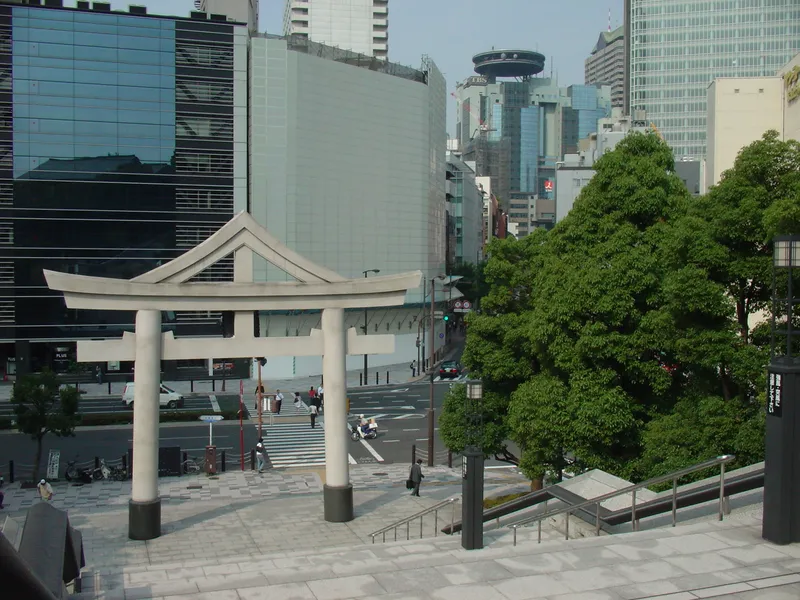
A shrine on a wooded rise in Nagatacho, once the guardian of Edo Castle, whose messenger is the monkey, a pun the shrine explains itself, connecting it to warding off evil, to winning, and to the tying of bonds.
 Temple
Zojo-ji
- Career & Work
- Family & Home
- Money & Prosperity
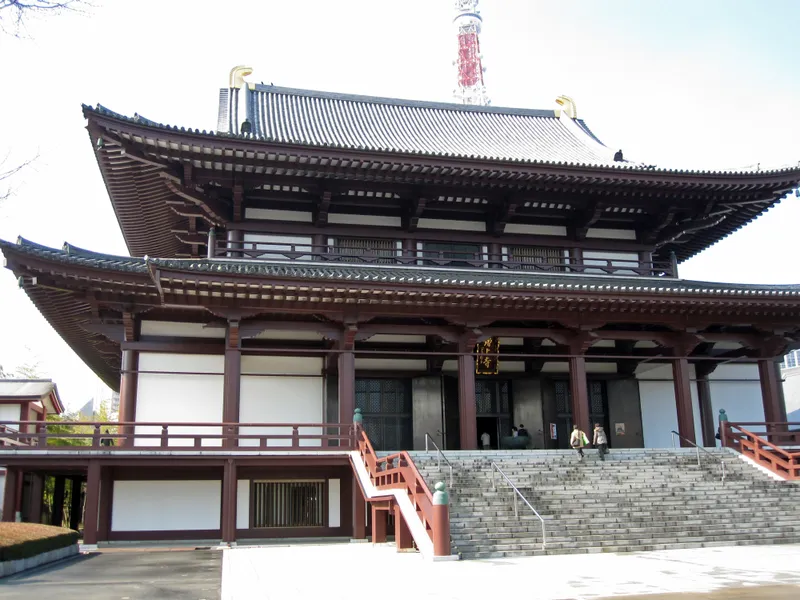
A Pure Land temple in Shiba, founded in 1393 and chosen by the Tokugawa as their family temple, whose hidden principal image is known as the Black Honzon of victory.
 Shrine
Imado Shrine
- Love & Romance
- Bonds & Matchmaking
An Asakusa shrine founded in 1063 that calls itself a shrine of bond-tying, and which has run its own matchmaking gatherings since 2008.
No places match your filters