Gotoku-ji
豪徳寺 · Gōtoku-ji · the cat temple
Researched and translated with AI assistance. Every claim is linked to its source, but errors get through, so check the official site for opening times, fees and closures.About
In short
A Sōtō Zen temple in Setagaya where thousands of white beckoning-cat figurines are left by visitors, and where the temple is careful to say the cat brings connections, not fortune.
Quick facts
- Address
- 2-24-7 Gotokuji, Setagaya-ku, Tokyo
- Access
- Gotokuji station on the Odakyu line and Miyanosaka on the Tokyu Setagaya line are both a short walk away. The temple sits in a residential neighbourhood; the approach is on foot from either.
- Hours
- Grounds 6:00–17:00. The temple office is open 8:00–15:00.
- Best time
- Early morning, before the figurine hall fills up. The temple grounds are known for autumn colour, and the ranks of white cats photograph best in flat, bright light rather than direct sun.
- Spiritual entities
- Kannon (観音菩薩, Avalokiteśvara)
- Official site
- gotokuji.jp
About this place
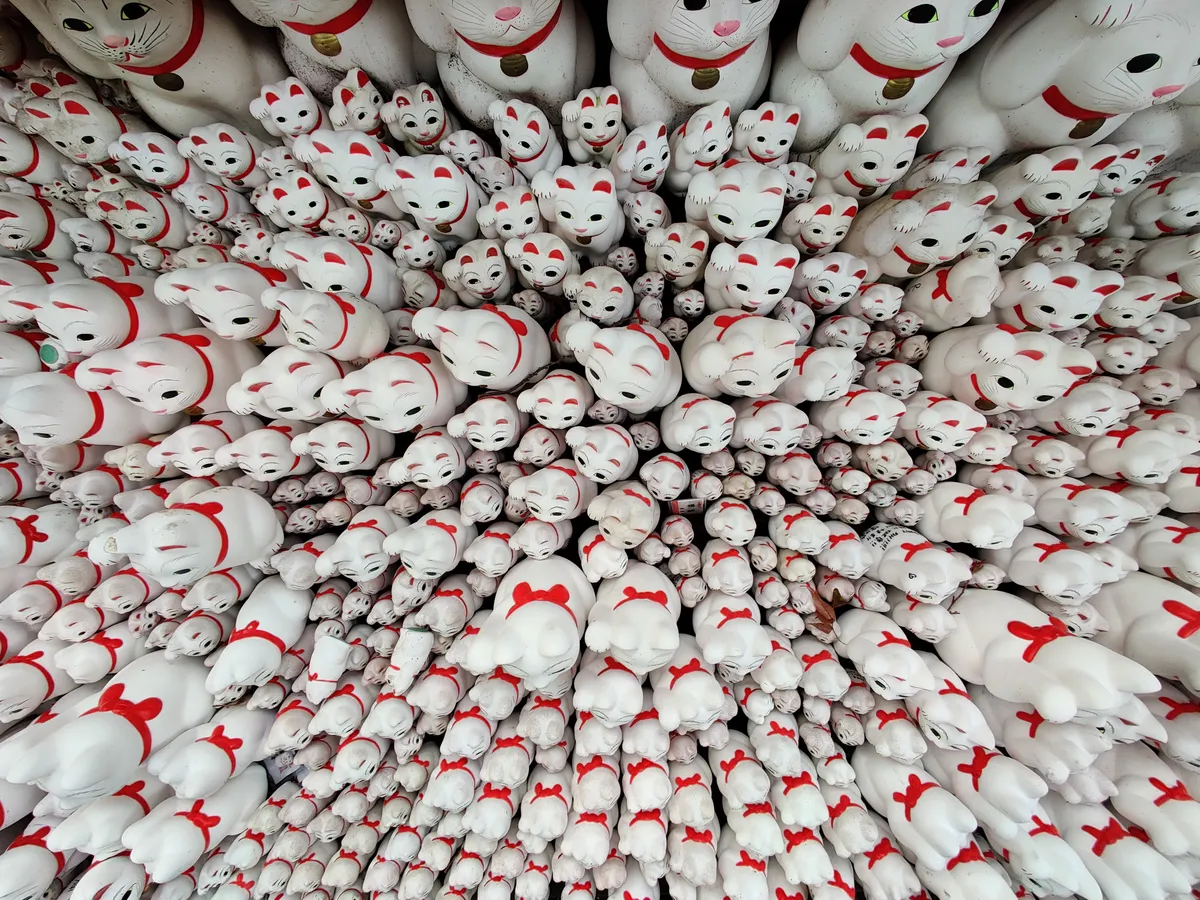
Gotoku-ji is quiet, wooded, and covered in cats. Visitors leave white beckoning-cat figurines at a hall in the grounds, where they accumulate in ranks by size. The temple is the burial place of the Ii family, lords of Hikone, and its connection to them is also the origin of the cat: a lord is said to have been beckoned in from the gate by one. The temple tells that story, and then corrects the thing most people assume about what the cat does.
Origin and history
The temple was founded in 1480 as Kōtoku-in. In 1633 Setagaya became territory of the Hikone domain, and the Ii lords made the temple their family temple in Edo. It was renamed Gotoku-ji in 1659, after the posthumous name of the second lord, Ii Naotaka. It belongs to the Sōtō school of Zen.
Among its designated properties are a temple bell of 1679 and the images in the buddha hall, dating from 1677. The graves of the Ii family are here, including that of Ii Naosuke.
What it is locally associated with
Beckoned in from the gate
A lord returning from hawking is said to have been beckoned in by a cat at the temple gate. His patronage restored the temple in 1633.
folk traditionA cat holding nothing
The Gotoku-ji cat holds no coin and raises its right paw. The temple says it brings people and connections, but does not itself give fortune.
documented historyLeaving a cat, afterwards
There is no rule about offering a figurine, but the temple notes most people bring one back after the wish it was bought for has already come true.
local custom
The temple tells the origin story briefly: one day a lord, passing this way on his return from hawking, was beckoned by a cat at the temple gate and turned in. That lord was Ii Naotaka, and his patronage restored the temple in 1633. It is told as tradition, not as record.
What the temple says next is more unusual, and it is the reason this page is worded the way it is. The Gotoku-ji cat holds no coin and raises its right paw. And in the temple's own words, the beckoning cat brings people and so brings connections, but does not give fortune itself. That is an institution declining the money-luck reading that the maneki-neko carries almost everywhere else in Japan. Visitors do come here for luck in business, and the figurine's wider reputation is about prosperity, so this page carries that association too; but it is the visitors' association, and the temple's own is about people meeting people.
The practice in the grounds follows from that. There is no rule for offering a figurine, but the temple observes that most people bring one to leave after the wish they bought it for has already been granted, so the ranks of white cats at the Shōfukuden are closer to a wall of thanks than a wall of requests. The Ii family graves, including Ii Naosuke's, are in the same grounds, along with a bell cast in 1679.
Claims and evidence levels 6
- The temple was founded in 1480 as Kōtoku-in, became the Ii family's temple in Edo when Setagaya passed to the Hikone domain in 1633, and was renamed Gotoku-ji in 1659 after the posthumous name of Ii Naotaka. documented history
- A lord returning from hawking is said to have been beckoned in by a cat at the temple gate, and his patronage restored the temple. folk tradition
- The temple states that its beckoning cat holds no coin, and that the cat brings people and connections but does not itself give fortune. documented history
- There is no fixed rule for offering a figurine, but the temple notes that most people offer one after the wish it was bought for has been granted. local custom
- The beckoning cat is widely associated with prosperity in business, and many visitors come to Gotoku-ji on that basis, an association the temple itself does not make. popular modern
- Designated properties include a bell cast in 1679 and images in the buddha hall dating from 1677; the graves of the Ii family, including Ii Naosuke, are in the grounds. documented history
Visiting tips
The general form for a temple (hands together, no clapping) is in the visiting guide below. Specific to Gotoku-ji:
The figurines are offerings, not decorations. The temple has had to post a warning about people drawing on them; do not write on, move or rearrange the cats, and do not take one that someone else has left. Figurines to offer are bought at the temple office.
This is a working Zen temple and a functioning graveyard, not an attraction, and the Ii family graves are the resting place of historical figures. Keeping voices down in the grounds matters more here than the cats suggest.
The grounds are open 6:00 to 17:00, but the temple office, where figurines and seals are handled, closes at 15:00, two hours earlier. Arriving late afternoon means seeing the cats but buying nothing.
Related guides
- How to visit a shrine or temple in JapanThe country-wide basics: purifying at the water basin, the two-bows-two-claps-one-bow form at shrines, and what temples do instead.
- What a "power spot" actually isA modern Japanese coinage, not a traditional religious category. Where the word came from, what it does and does not claim, and why this site uses it anyway.
- Shrine or temple?A shrine is Shinto and a temple is Buddhist, and you can usually tell at the gate. Why the line is cleaner on paper than on the ground, and what a government order in 1868 has to do with it.
- Omamori, ema, omikuji and goshuinThe four things you are most likely to receive, write, draw or be given at a shrine or temple, what each is actually for, and the one of them people most often get wrong.
Sources
- About the temple (豪徳寺について) — Gotoku-ji (accessed 2026-08-02)
- The beckoning cat (招福猫児) — Gotoku-ji (accessed 2026-08-02)
- Notices — hours and the figurine defacement warning (お知らせ) — Gotoku-ji (accessed 2026-08-02)
- Gōtoku-ji (Q11634381) — coordinate location — Wikidata (accessed 2026-08-02)
Last updated:
Similar places
8 places
 Shrine
Akasaka Hikawa Shrine
- Family & Home
- Love & Romance
- Money & Prosperity
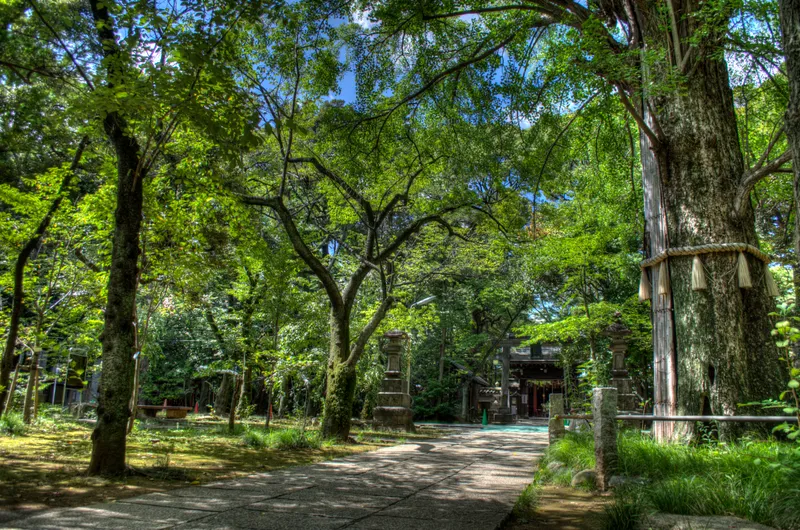
A Minato shrine founded in 951 whose Edo-period buildings survived both the earthquake and the war, known for warding off misfortune and for the tying of bonds, and the shrine explains why it is known for each.
 Shrine
Hie Shrine
- Career & Work
- Fertility & Children
- Money & Prosperity
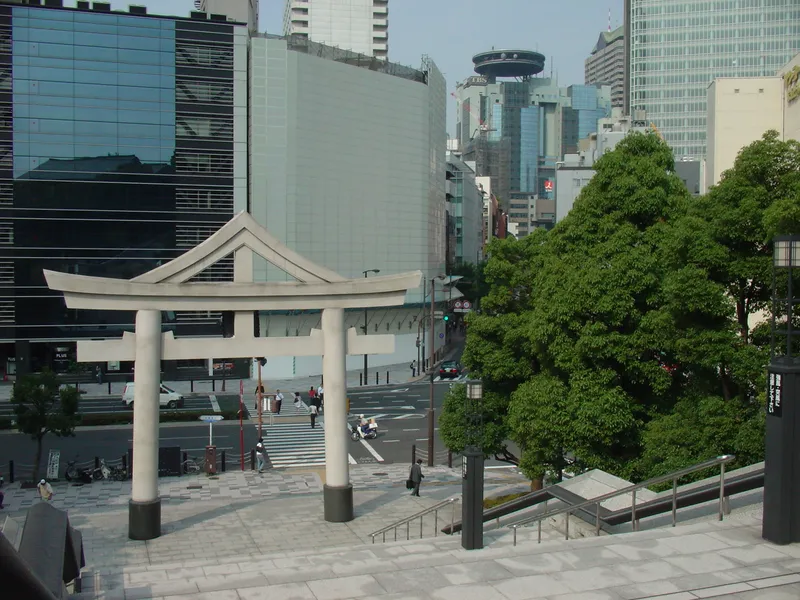
A shrine on a wooded rise in Nagatacho, once the guardian of Edo Castle, whose messenger is the monkey, a pun the shrine explains itself, connecting it to warding off evil, to winning, and to the tying of bonds.
 Shrine
Atago Shrine
- Career & Work
- Love & Romance
- Money & Prosperity
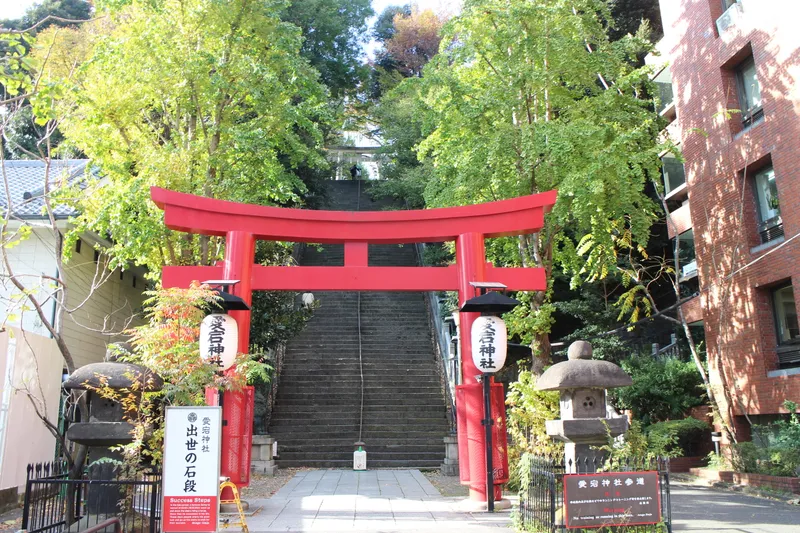
A shrine on a steep hill in Minato, founded in 1603 on Tokugawa Ieyasu's order as a deity against fire, and known for the stone staircase named after a rider who is said to have galloped up it.
 Shrine
Shiba Daijingu
- Love & Romance
- Money & Prosperity
- Protection & Safety
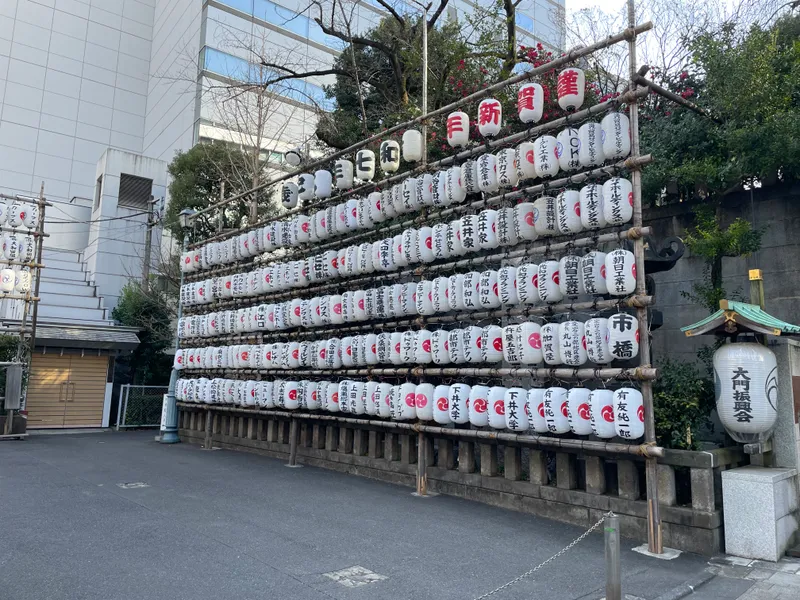
A Minato shrine founded in 1005 that enshrines the two deities of Ise, known in the Edo period as the Ise of the Kanto and today for a box charm sold nowhere else.
 Shrine
Tokyo Daijingu
- Family & Home
- Love & Romance
- Money & Prosperity
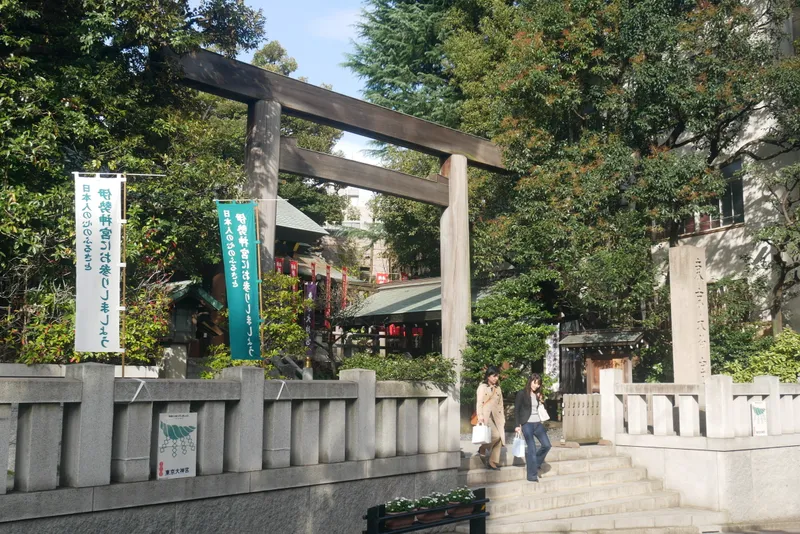
A Chiyoda shrine founded in 1880 as a Tokyo branch of Ise, known as "Tokyo's O-Ise-sama" and visited above all for prayers about relationships, an association the shrine itself explains through the three deities of creation enshrined here.
 Shrine
Kanda Myojin
- Career & Work
- Family & Home
- Money & Prosperity
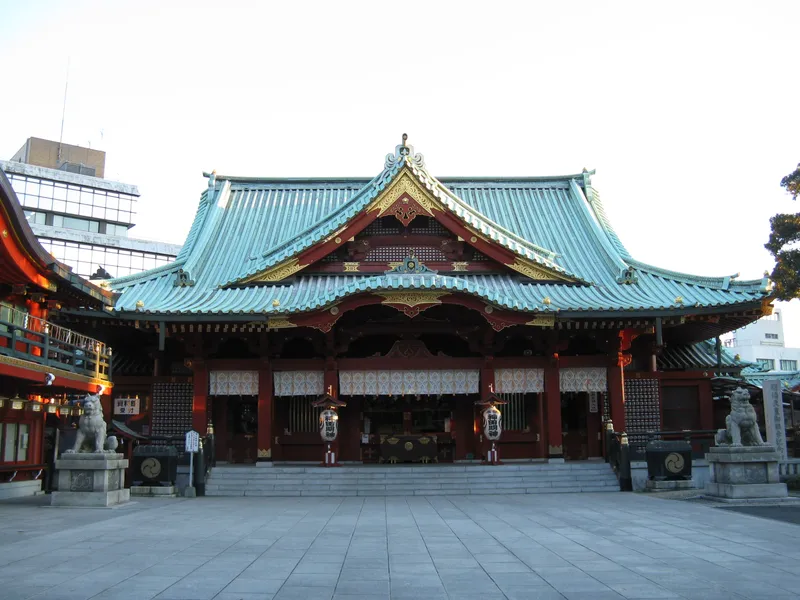
A Chiyoda shrine that served as the guardian shrine of all Edo, enshrining three deities between them associated with business prosperity, good matches and warding off misfortune, and these days selling a charm for information security.
 Shrine
Nezu Shrine
- Career & Work
- Exams & Study
- Family & Home
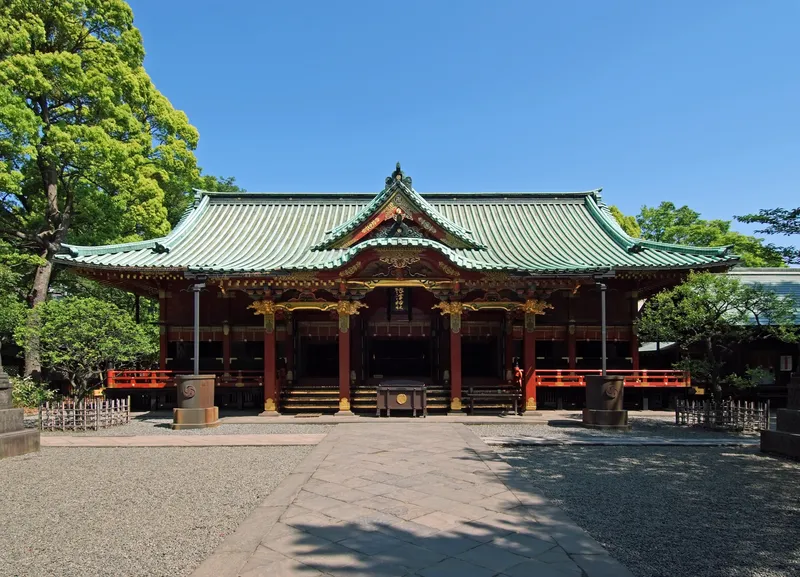
A Bunkyo shrine whose entire 1706 complex survives intact as an Important Cultural Property, rare in Tokyo, with an azalea hill and a tunnel of small red torii (鳥居).
 Temple
Senso-ji
- Money & Prosperity
- Protection & Safety
Tokyo's oldest temple, in Asakusa, built around a statue of Kannon that two fishermen brothers are said to have pulled from the river in 628, and visited today for prayers about money and protection.
No places match your filters