Meiji Jingu
Meiji Shrine · 明治神宮
Researched and translated with AI assistance. Every claim is linked to its source, but errors get through, so check the official site for opening times, fees and closures.About
In short
A 1920 Shinto shrine in central Tokyo enshrining Emperor Meiji and Empress Shōken, set in a 70-hectare forest that was planted from scratch and is visited today for prayers about bonds, protection and health.
Quick facts
- Address
- 1-1 Yoyogi-Kamizonocho, Shibuya-ku, Tokyo 151-8557
- Access
- Harajuku, Yoyogi or Sangubashi station, then about a ten-minute walk
More detail
Three entrances lead in: Harajuku Gate (south approach), Yoyogi Gate (north approach) and Sangubashi Gate (west approach). The shrine buildings sit near the middle of the grounds, roughly ten minutes from any of them. Nearest stations are Harajuku and Yoyogi (JR), Meiji-jingumae 'Harajuku' (Chiyoda and Fukutoshin lines), Kita-sando (Fukutoshin line) and Sangubashi (Odakyu line). Cars can enter at the Yoyogi Gate only, and the shrine asks visitors to use public transport because the car park fills.
- Hours
- Sunrise to sunset (about 5:00–18:30 in June, 6:40–16:00 in December)
More detail
The gates follow the sun rather than a clock, so closing time moves through the year. The Imperial Garden (9:00–16:30, to 16:00 Nov–Feb) and the Meiji Jingu Museum (10:00–16:30, closed Thursdays) keep their own hours.
- Fee
- Free to enter the grounds
More detail
Imperial Garden ¥500 upkeep donation; Meiji Jingu Museum ¥1,000 (¥900 high-school age and under). A formal prayer at the Kagura-den starts from ¥5,000, or ¥10,000 to have your name written on the tablet.
- Best time
- Early morning, soon after the gates open
More detail
The forest approach is quietest then. Irises bloom in the Imperial Garden in June, when the garden opens earlier for them. The largest annual rite is the Autumn Festival on 3 November, and New Year is the busiest period of the year.
- Spiritual entities
- Emperor Meiji (明治天皇) · Empress Shōken (昭憲皇太后)
- Official site
- www.meijijingu.or.jp
About this place
Meiji Jingu sits inside a woodland of about 70 hectares between Harajuku and Yoyogi. Both the shrine and the forest date from 1920: the trees were donated from across Japan and planted deliberately, so what reads as ancient woodland is roughly a century old by design. The shrine enshrines Emperor Meiji and Empress Shōken, and its prayer list today covers good matches, warding off misfortune, safe childbirth, study and health.
Origin and history
Emperor Meiji died in 1912 and Empress Shōken in 1914. The shrine's own account is that it was built in response to public feeling that their spirits should be enshrined and their memory honoured; it was dedicated on 1 November 1920. The roughly 700,000-square-metre forest around the buildings is a planted woodland, created for the shrine from about 100,000 trees donated from across the country with the intention that it would mature into an "eternal forest", a point the shrine states plainly in its own FAQ. The planting was carried out by some 110,000 volunteers and led by the forestry scholar Honda Seiroku, who had also laid out Hibiya Park; the roughly 234 species were chosen for how the woodland would look after one or two centuries rather than for immediate effect. The shrine describes the forest as sacred and left alone ever since: nothing is added or taken away, and fallen trees are allowed to lie and decay. The Imperial Garden to the south is older than the shrine: it was a daimyo residence garden of the Katō and Ii families in the Edo period, became imperial land in the Meiji era, and was laid out as a strolling garden around 1893 at the emperor's direction for the empress's health. The place-name Yoyogi is explained by the shrine as coming from a large fir that stood on the site for generations.
What it is locally associated with
Meoto Kusu, the married camphor trees
Two camphors joined by a shimenawa rope, planted when the shrine was built. The shrine presents them as divine trees standing for good relations between husband and wife, and they are where people hoping for a good match stop.
folk traditionKiyomasa's Well
A spring in the Imperial Garden, long said to have been dug by the warlord Katō Kiyomasa. The shrine records the legend but reports a 1938 survey that found the well to be an entirely natural spring.
folk traditionA forest that was planted, not found
The 70 hectares of woodland are about as old as the shrine. Roughly 100,000 donated trees were planted by some 110,000 volunteers, with species picked for how the forest would look in a century or two.
documented historyDraw an Ōmigokoro slip
The omikuji here tells no fortune. Each slip carries one of thirty poems by the emperor or empress, so there is no luck ranking to draw.
local custom
The shrine's association with bonds, protection and health comes from its own pages, not from its reputation. The list of prayers it performs at the hall includes good matches and marriage, warding off misfortune and household safety, and health and recovery from illness, and the charm lineup mirrors that list almost one for one: bond-tying, warding and health charms. That is the shrine describing its own practice, which is firmer footing than most power-spot claims stand on.
The relationship association has a second, more visible thread. Emperor Meiji and Empress Shōken are enshrined here together, and in the grounds a pair of camphor trees joined by a shimenawa (注連縄) rope is known as the Meoto Kusu, the "husband and wife camphor trees". The shrine itself presents them as divine trees representing good relations between wife and husband, and a government multilingual-heritage entry adds that they were planted in 1920 and are associated with marital happiness and family wellbeing. They are where visitors hoping for a good match tend to stop. What the shrine does not do is explain the trees by pointing at the enshrined couple. That tidy causal story circulates widely online with no source behind it, so it is left out here.
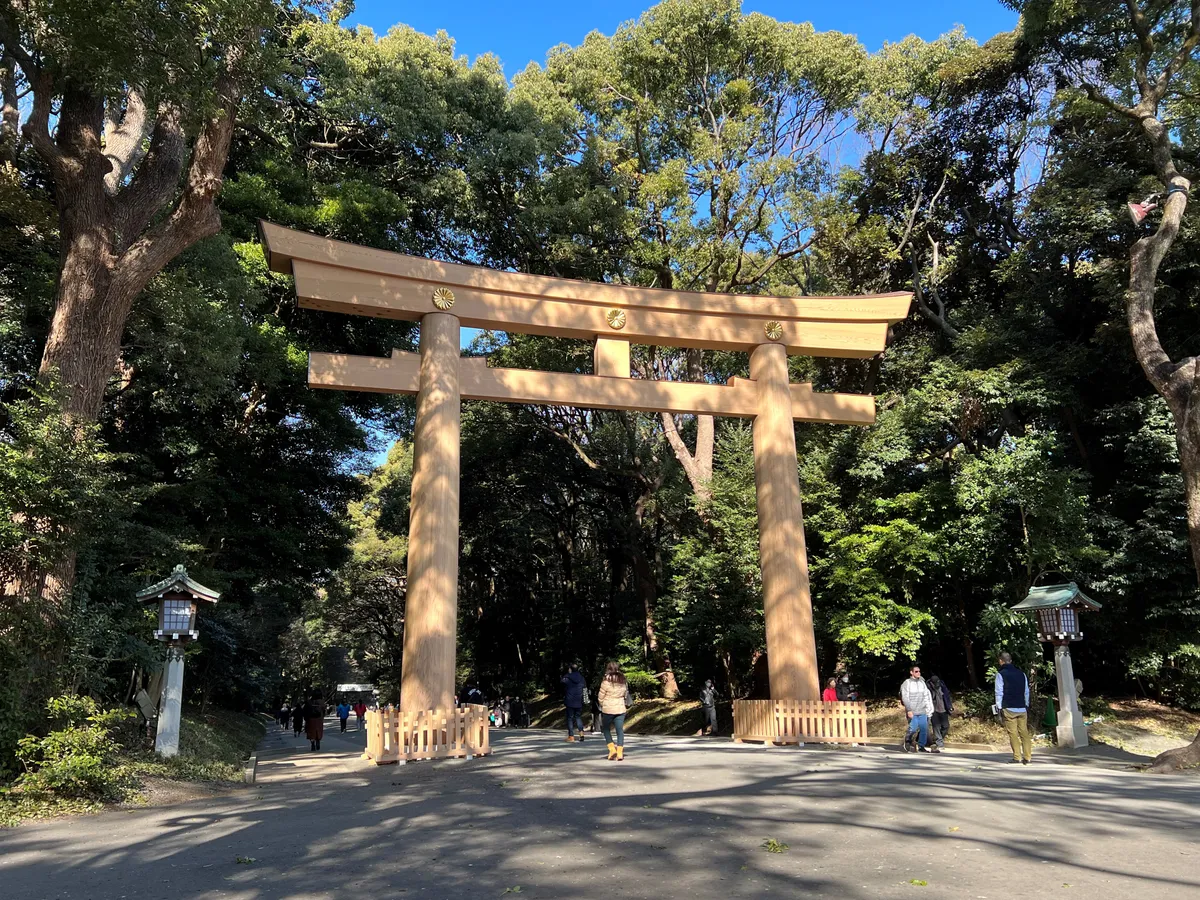
Several parts of the grounds carry associations of their own. The forest is the largest of them: about 70 hectares planted from roughly 100,000 donated trees when the shrine was built, so the deep woodland visitors describe as ancient is a deliberate, century-old creation. The Imperial Garden to the south predates both the shrine and its forest, laid out as a strolling garden around 1893 for Empress Shōken's health. Kiyomasa's Well sits inside that garden and draws visitors of its own; the shrine is careful about it, reporting that a 1938 survey found it to be an entirely natural spring and suggesting the Katō Kiyomasa legend be received as a legend and passed on as one. The great torii (鳥居) on the approach is, by the shrine's account, the largest wooden torii of the myōjin style in Japan.
Claims and evidence levels 7
- Meiji Jingu was dedicated on 1 November 1920 and enshrines Emperor Meiji and Empress Shōken. documented history
- The roughly 70-hectare forest around the shrine is a planted woodland, created for the shrine from about 100,000 trees donated from across Japan. documented history
- The great torii is, by the shrine's account, the largest wooden torii of the myōjin style in Japan. documented history
- The planting was led by the forestry scholar Honda Seiroku, who also laid out Hibiya Park, and carried out by around 110,000 volunteers; the species were chosen for how the woodland would look after 100 to 200 years. documented history
- The shrine performs prayers for good matches and marriage, for warding off misfortune and household safety, and for health and recovery from illness, and offers charms for each. local custom
- A pair of camphor trees joined by a shimenawa rope, planted in 1920 and known as the Meoto Kusu, is associated with marital happiness and family wellbeing. folk tradition
- Kiyomasa's Well is traditionally said to have been dug by the warlord Katō Kiyomasa, a story the shrine records while reporting that a 1938 survey found the well to be a natural spring. folk tradition
Visiting tips
The water basin and the form at the hall (two bows, two claps, one bow) are the same here as at shrines across Japan, and the general visiting guide on this site covers them. What follows is specific to Meiji Jingu.
Photography is the main one. News, cinema and promotional work all need permission, and the shrine asks visitors to refrain from commemorative shoots with a hired professional photographer. Smoking, eating and drinking are limited to designated places, and taking or bringing in animals, insects included, is prohibited on the grounds.
Two things regularly surprise visitors, and the shrine explains both itself. There are no guardian-dog statues to be seen along the approach; they stand inside the inner sanctuary rather than outside it. And the omikuji (おみくじ) here, called Ōmigokoro, carries no fortune ranking at all: each slip holds one of thirty poems by the emperor or empress, so there is no good-or-bad verdict to draw.
The gates follow the sun rather than a clock, opening near sunrise and closing at sunset, so closing time swings by about two and a half hours across the year: 18:30 in June, 16:00 in December. Check the month before planning a late-afternoon visit in winter.
And if you want a formal prayer rather than a visit to the offering box, no booking is taken: applications are made in person at the Kagura-den to the right of the main hall, roughly 9:00 to 16:20, with ceremonies about every thirty minutes and everyone in that slot taking part together. Arrive at least ten minutes before the round you want.
Related guides
- How to visit a shrine or temple in JapanThe country-wide basics: purifying at the water basin, the two-bows-two-claps-one-bow form at shrines, and what temples do instead.
- What a "power spot" actually isA modern Japanese coinage, not a traditional religious category. Where the word came from, what it does and does not claim, and why this site uses it anyway.
- Shrine or temple?A shrine is Shinto and a temple is Buddhist, and you can usually tell at the gate. Why the line is cleaner on paper than on the ground, and what a government order in 1868 has to do with it.
- Omamori, ema, omikuji and goshuinThe four things you are most likely to receive, write, draw or be given at a shrine or temple, what each is actually for, and the one of them people most often get wrong.
Sources
- About Meiji Jingu (明治神宮について) — Meiji Jingu (accessed 2026-08-01)
- Frequently asked questions (よくあるご質問) — Meiji Jingu (accessed 2026-08-01)
- Visiting the shrine — hours and etiquette (参拝案内) — Meiji Jingu (accessed 2026-08-01)
- Prayers performed at the shrine (ご祈願・主な願意) — Meiji Jingu (accessed 2026-08-01)
- Applying for a prayer — fees and reception (ご祈願の方へ・個人) — Meiji Jingu (accessed 2026-08-01)
Show 13 more sources
- How to visit (English) — Meiji Jingu (accessed 2026-08-01)
- What to see — the sanctuary (English) — Meiji Jingu (accessed 2026-08-01)
- What to see — the forest (English) — Meiji Jingu (accessed 2026-08-01)
- Meiji Jingū (Q287165) — coordinate location — Wikidata (accessed 2026-08-01)
- Charms and omikuji (お守り・おみくじ) — Meiji Jingu (accessed 2026-08-01)
- Imperial Garden (御苑) — Meiji Jingu (accessed 2026-08-01)
- Irises in the Imperial Garden (花菖蒲) — Meiji Jingu (accessed 2026-08-01)
- Annual rites calendar (年中行事) — Meiji Jingu (accessed 2026-08-01)
- Access (アクセス) — Meiji Jingu (accessed 2026-08-01)
- Grounds map and landmarks (境内地図) — Meiji Jingu (accessed 2026-08-01)
- Meiji Jingu Museum (明治神宮ミュージアム) — Meiji Jingu (accessed 2026-08-01)
- Meoto Kusu — multilingual heritage commentary database — Ministry of Land, Infrastructure, Transport and Tourism (Japan) (accessed 2026-08-01)
- Meiji Jingu Shrine — GO TOKYO (Tokyo Convention & Visitors Bureau) (accessed 2026-08-01)
Last updated:
Similar places
8 places
 Shrine
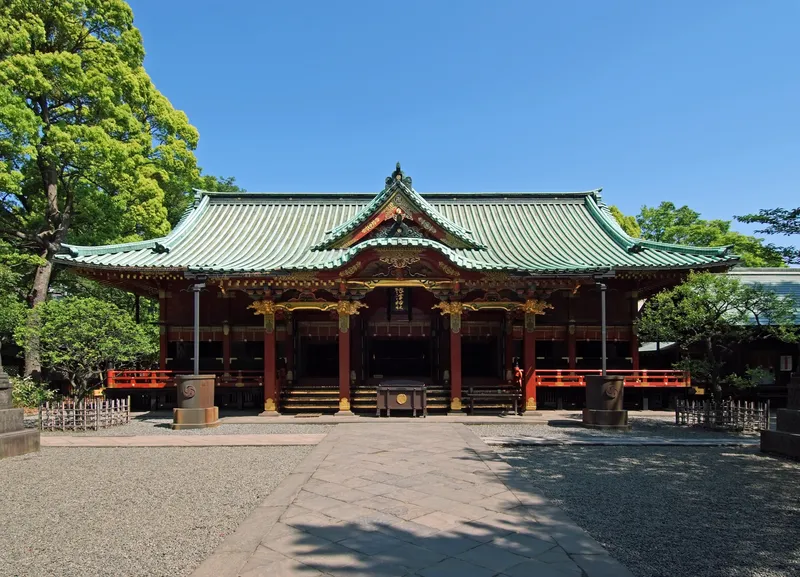
Nezu Shrine
- Career & Work
- Exams & Study
- Family & Home
A Bunkyo shrine whose entire 1706 complex survives intact as an Important Cultural Property, rare in Tokyo, with an azalea hill and a tunnel of small red torii (鳥居).
 Shrine
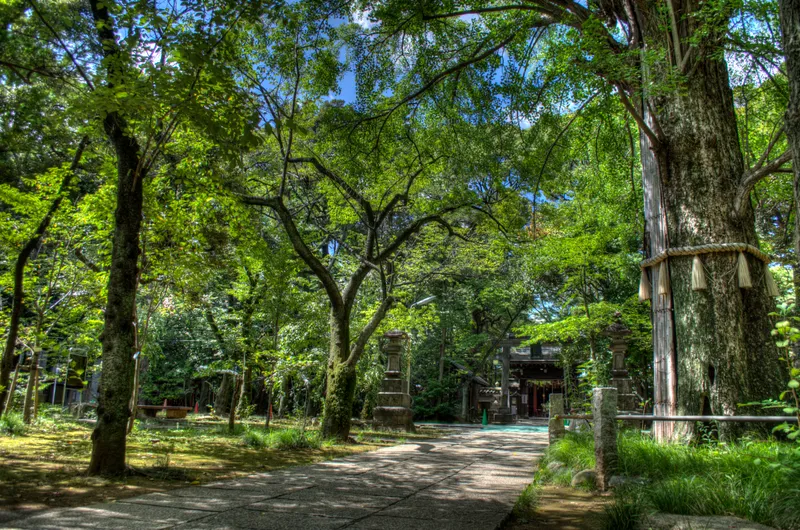
Akasaka Hikawa Shrine
- Family & Home
- Love & Romance
- Money & Prosperity
A Minato shrine founded in 951 whose Edo-period buildings survived both the earthquake and the war, known for warding off misfortune and for the tying of bonds, and the shrine explains why it is known for each.
 Shrine
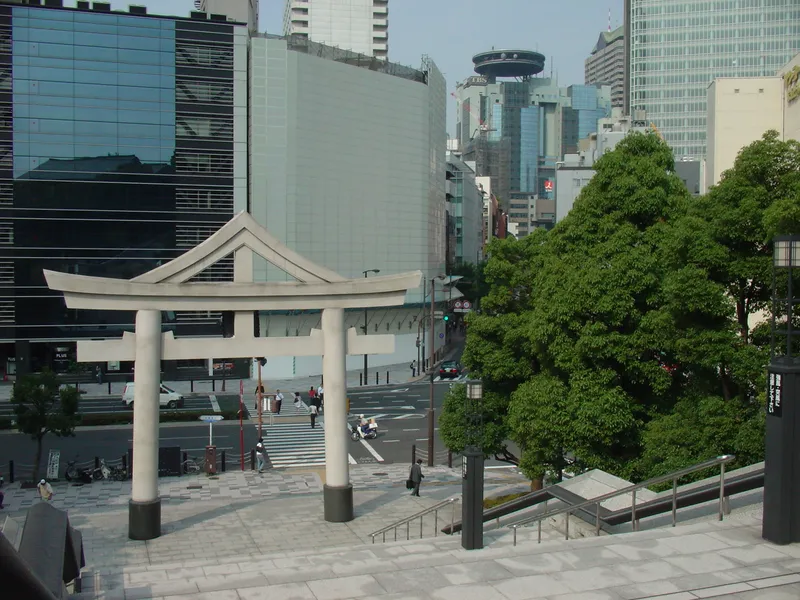
Hie Shrine
- Career & Work
- Fertility & Children
- Money & Prosperity
A shrine on a wooded rise in Nagatacho, once the guardian of Edo Castle, whose messenger is the monkey, a pun the shrine explains itself, connecting it to warding off evil, to winning, and to the tying of bonds.
 Shrine
Atago Shrine
- Career & Work
- Love & Romance
- Money & Prosperity
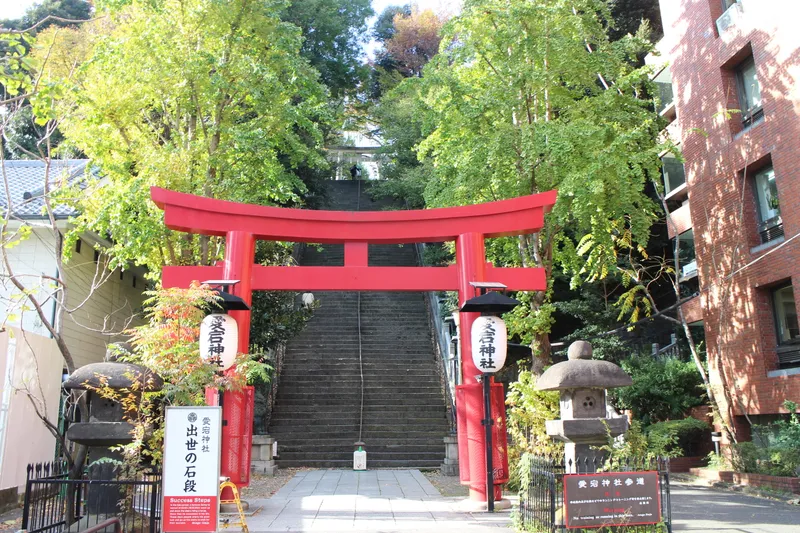
A shrine on a steep hill in Minato, founded in 1603 on Tokugawa Ieyasu's order as a deity against fire, and known for the stone staircase named after a rider who is said to have galloped up it.
 Shrine
Shiba Daijingu
- Love & Romance
- Money & Prosperity
- Protection & Safety
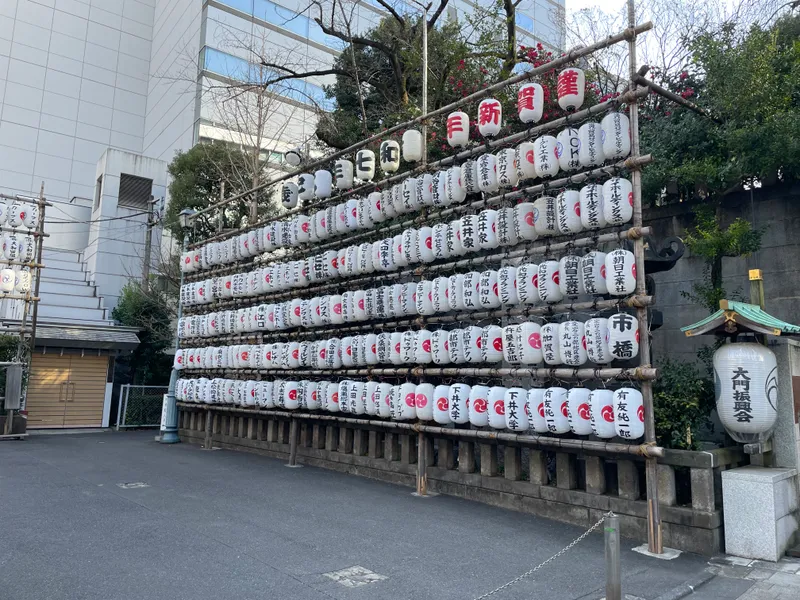
A Minato shrine founded in 1005 that enshrines the two deities of Ise, known in the Edo period as the Ise of the Kanto and today for a box charm sold nowhere else.
 Shrine
Omiya Hachimangu
- Fertility & Children
- Protection & Safety
- Bonds & Matchmaking
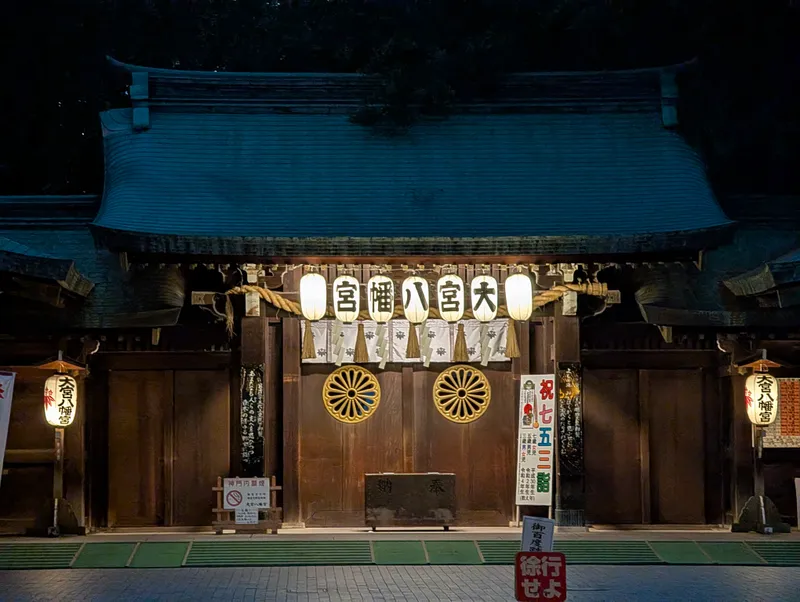
A large wooded shrine in Suginami, founded in 1063 by Minamoto no Yoriyoshi after he read a bank of white cloud as the banners of his own clan, and known for child-rearing and warding.
 Shrine
Kanda Myojin
- Career & Work
- Family & Home
- Money & Prosperity
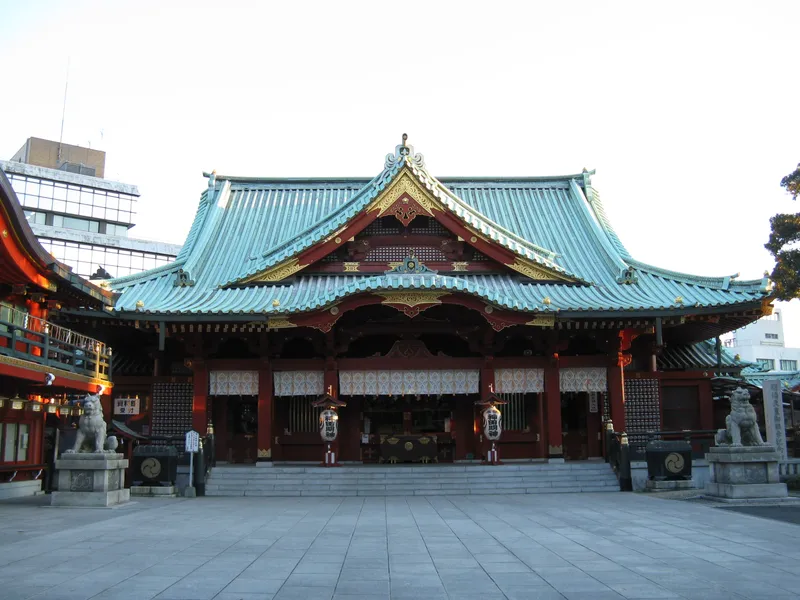
A Chiyoda shrine that served as the guardian shrine of all Edo, enshrining three deities between them associated with business prosperity, good matches and warding off misfortune, and these days selling a charm for information security.
 Shrine
Okunitama Shrine
- Money & Prosperity
- Protection & Safety
- Bonds & Matchmaking
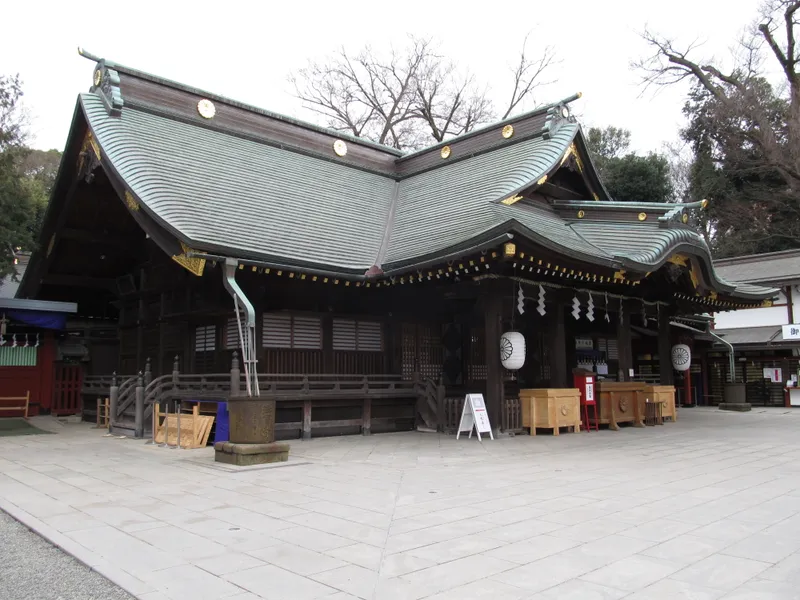
The provincial shrine of old Musashi, in Fuchu, which dates its founding to 111 and enshrines a deity it identifies with Ōkuninushi of Izumo.
No places match your filters