Todoroki Valley
Todoroki Ravine · Todoroki Keikoku · 等々力渓谷
Researched and translated with AI assistance. Every claim is linked to its source, but errors get through, so check the official site for opening times, fees and closures.About
In short
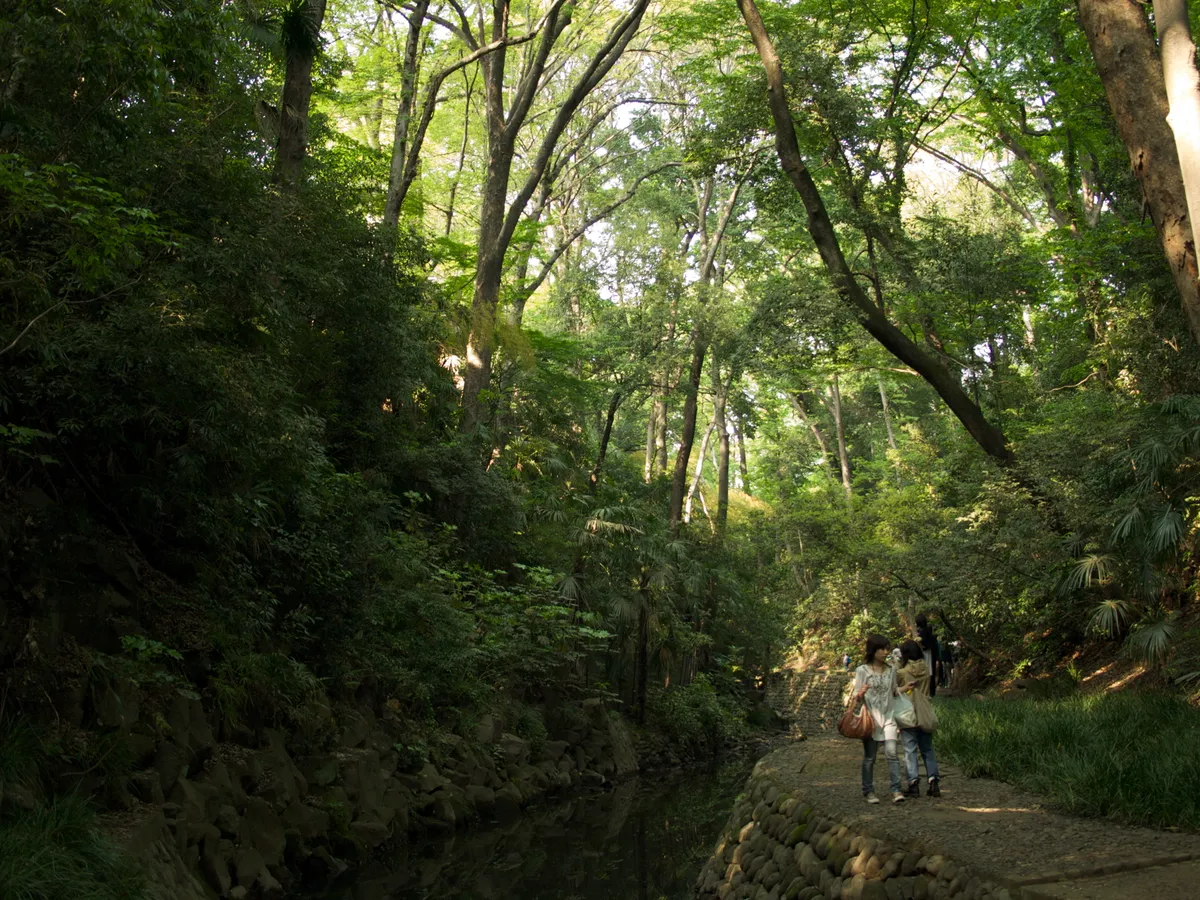
A wooded ravine cut by the Yazawa River in suburban Setagaya, designated a place of scenic beauty by Tokyo in 1999, with a spring-fed waterfall and a Shingon Fudo hall above it. The ward reopened the path on 24 March 2026 after a long closure for unsafe trees.
Quick facts
- Address
- 1-22 Todoroki, Setagaya City, Tokyo
- Access
- Three minutes’ walk from Todoroki Station on the Tokyu Oimachi Line
More detail
The ward also gives a five-minute walk from the Todoroki bus stop on the Tokyu bus network. There is no parking at the valley and bicycles may not be brought in, so the train is not merely the easiest way but effectively the only one.
- Hours
- 9:00–17:00 (March–October), 9:00–16:30 (November–February)
More detail
Closed 29 December – 3 January. These are the ward park’s hours for the ravine path and the Japanese garden. There is no lighting in the valley, so the closing time is the real one after dark falls early in winter. The Fudo hall above the valley keeps its own schedule.
- Fee
- Free
More detail
The ward charges nothing for the ravine path, the Japanese garden or the study hall.
- Best time
- Early morning on a weekday, or late November
More detail
The path is narrow and single-file in places, which makes it a poor fit for a crowded afternoon. Autumn colour is the busiest season and the reason most people come; the ward also lists cherry blossom and the evergreen stands among the things worth seeing.
- Spiritual entities
- Fudō Myōō (不動明王)
- Official site
- www.city.setagaya.lg.jp
About this place
Todoroki Valley is a ravine about a kilometre long, three minutes from a station on the Tokyu Oimachi Line, and it is a genuinely strange thing to find there. The ward describes it as a valley cut by the Yazawa River, rich in plants and animals, with the feel of deep mountains. Water seeps from the cliff line and falls as Fudo Falls (不動の滝); above the falls stands Todoroki Fudoson, a branch hall of the Shingon temple Mangan-ji. The valley is a Tokyo-designated place of scenic beauty, and the walk through it takes about twenty minutes.
Origin and history
The valley is the work of the Yazawa River, which cuts twenty to thirty metres below the surrounding plateau. The ward points out what the cut exposes: a cliff face where layers of clay, gravel and red earth — the Kanto loam — sit on top of one another, so the change in the strata can be read directly off the wall.
The name has a story attached to it, and the ward tells it with the hedge it deserves. Spring water from the cliff line has long been known as Fudo Falls, and the ward records that the place name Todoroki is said to come from the sound of that fall thundering (とどろく) in the clean air of the valley. It is offered as a derivation people give, not as an established one.
The Fudo hall has its own founding story, and it is the temple’s rather than the ward’s. Mangan-ji records that Kakuban, the priest known as Kogyo Daishi, dreamed of a statue of Fudo Myoo carved by En no Gyoja, which told him there was a place in the Kanto region with which it had a connection. He carried the statue east, found a valley matching the one in the dream, struck the rock with his staff, and water came clear out of it. He enshrined the statue there, and that is where the hall begins.
The valley also holds older residents. One of its tomb caves, cut horizontally into the cliff, survived intact and was excavated; it is designated by Tokyo as a historic site in its own right, as the Todoroki Valley No. 3 tomb cave.
What it is locally associated with
Fudo Falls
Spring water seeping from the cliff line, falling below the Fudo hall. The ward records that it has been known as Fudo Falls since old times, and that the place name Todoroki is said to come from the sound of it.
folk traditionA staff struck the rock
Mangan-ji records that Kogyo Daishi dreamed of a Fudo statue carved by En no Gyoja, carried it east, found the valley from the dream, and struck the rock with his staff until water ran clear.
folk traditionThe strata are the exhibit
Clay, gravel and red Kanto loam stacked in a readable sequence down the cliff. The ward points to the wall itself as the thing to look at.
documented historyThe monthly goma fire rite
Todoroki Fudoson holds its goma (護摩) rite on the 15th and 28th of each month, and on Saturdays, Sundays and public holidays, from 14:00.
documented history
This page carries no purpose tags, which is unusual enough to explain.
The institution in the valley is Todoroki Fudoson, a branch hall of Mangan-ji, and neither publishes what its prayers or its goma (護摩) fire rite are for. There is no list of the usual petitions anywhere on the temple’s site — no household safety, no warding off misfortune, no business prosperity. What it publishes instead is a schedule: the monthly goma rite is held on the 15th and the 28th of each month, and on Saturdays, Sundays and public holidays, from 14:00.
Fudo Myoo has associations that any guide to Japanese Buddhism will list, and it would be easy to attach them here. This site tags what a place says about itself, so the facet stays empty rather than being filled from general knowledge about the deity.
What the valley *is* associated with, in the ward’s own words, is scenery. Tokyo designated it a place of scenic beauty on 3 March 1999 under the metropolitan cultural properties ordinance, and the ward’s description is about cherry blossom, evergreen stands and autumn colour rather than about blessings.
Claims and evidence levels 7
- Tokyo designated Todoroki Valley a place of scenic beauty on 3 March 1999, under the metropolitan cultural properties ordinance. documented history
- The valley was cut by the Yazawa River; the exposed cliff shows layers of clay, gravel and red Kanto loam in sequence. documented history
- Setagaya City reopened the park on 24 March 2026, after closing it to deal with unsafe trees. documented history
- The No. 3 tomb cave in the valley is designated by Tokyo as a historic site. documented history
- The ward records that the place name Todoroki is said to derive from the sound of Fudo Falls thundering in the valley. folk tradition
- Mangan-ji records that its Fudo hall began when Kogyo Daishi, following a dream of a Fudo statue carved by En no Gyoja, struck the valley rock with his staff and water flowed. folk tradition
- Todoroki Fudoson holds its monthly goma rite on the 15th and 28th and on weekends and public holidays, from 14:00. documented history
Visiting tips
The ward’s own conditions for the reopened park, which are more specific than the usual etiquette:
The path is narrow, and the ward asks people to make room for one another on it. There is no fence along parts of the stream, and no lighting anywhere in the valley — which is why the closing time matters rather than being a formality.
Do not go down to the water in heavy rain.
There is no parking, and bicycles cannot be brought in.
One item is easy to misread. The ward states that it is not currently accepting photography requests at the park, for the safety of people using it. That is the language of a permit desk: it concerns arranged shoots, not a visitor with a phone. If you are planning anything with a tripod, a crew or a booking, that is the sentence that applies to you, and the ward is the place to ask.
The Fudo hall above the valley is an active temple and keeps its own hours, separate from the park’s.
Related guides
- What a "power spot" actually isA modern Japanese coinage, not a traditional religious category. Where the word came from, what it does and does not claim, and why this site uses it anyway.
Sources
- Todoroki Valley Park — reopening, hours and conditions of use (等々力渓谷公園) — Setagaya City (accessed 2026-08-04)
- Tokyo-designated place of scenic beauty: Todoroki Valley (東京都指定名勝 等々力渓谷) — Setagaya City (accessed 2026-08-04)
- Todoroki Fudoson (等々力不動尊) — Mangan-ji (accessed 2026-08-04)
- Todoroki Valley guide (等々力渓谷ガイド) — GO TOKYO, Tokyo Convention & Visitors Bureau (accessed 2026-08-04)
Last updated:
Similar places
8 places
 Temple
Meguro Fudoson (Ryusen-ji)
- Protection & Safety
- Purification
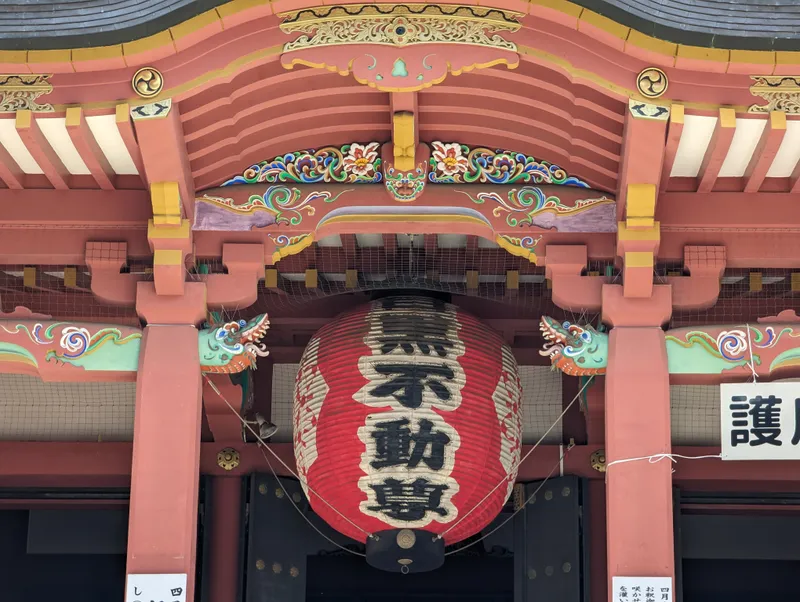
The oldest Fudo site in the Kanto, founded in 808 after a fifteen-year-old monk dreamed of a blue-black figure with a sword and a rope, and one of the Five-Colour Fudo that guarded Edo.
 Temple
Fukagawa Fudo-do
- Protection & Safety
- Purification
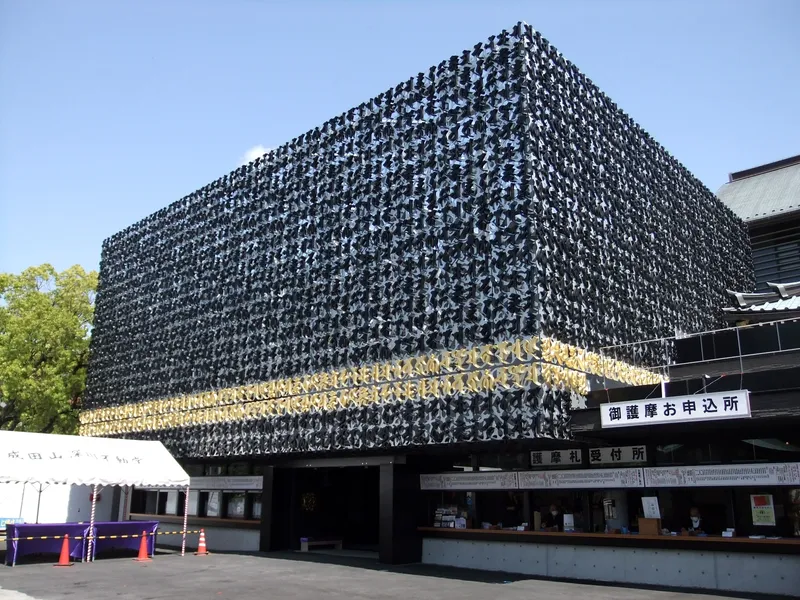
The Tokyo branch of Naritasan Shinshoji, in Monzen-nakacho, where a goma fire rite is performed before Fudo Myoo several times a day.
 Temple
Takaosan Yakuo-in
- Protection & Safety
- Purification
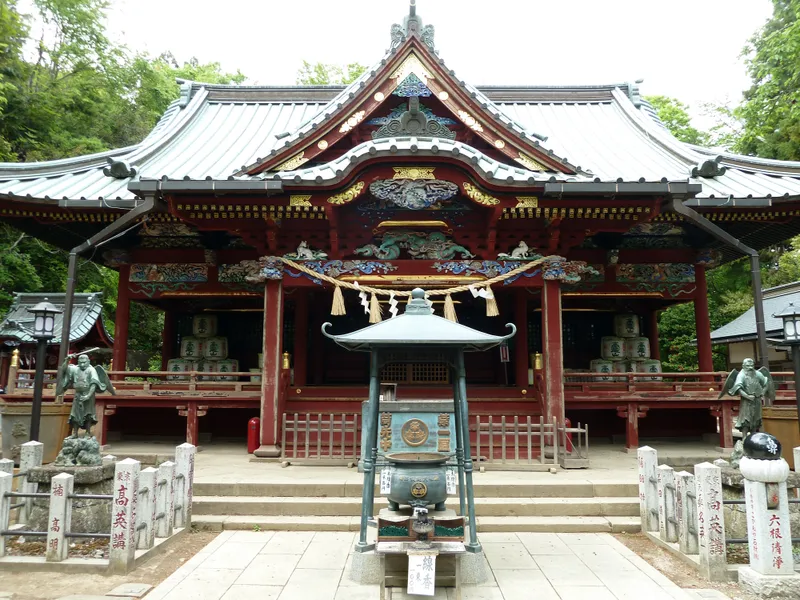
A mountain temple founded in 744 on Mount Takao, west of Tokyo, whose principal image is Izuna Daigongen and whose tengu are held to ward off calamity, still an active centre of Shugendo mountain asceticism.
 Temple
Gotoku-ji
- Money & Prosperity
- Bonds & Matchmaking
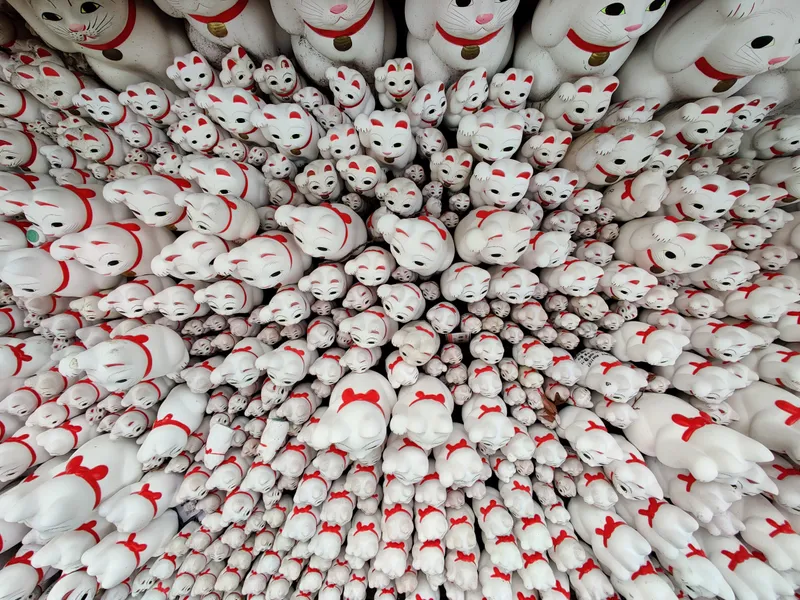
A Sōtō Zen temple in Setagaya where thousands of white beckoning-cat figurines are left by visitors, and where the temple is careful to say the cat brings connections, not fortune.
 Shrine
Shinagawa Shrine
- Money & Prosperity
- Protection & Safety
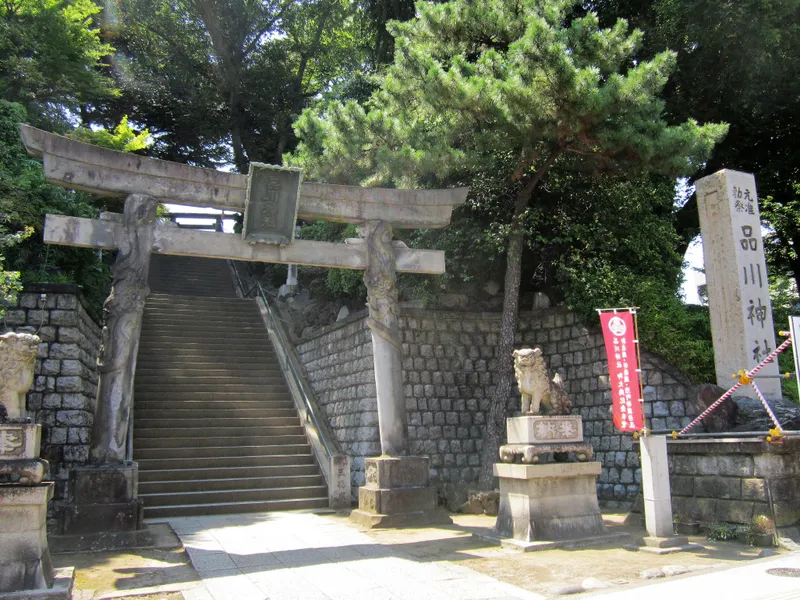
A shrine above Kita-Shinagawa founded in 1187 by Minamoto no Yoritomo, enshrining three deities added across three centuries, one for trade and one for warding.
 Shrine
Omiya Hachimangu
- Fertility & Children
- Protection & Safety
- Bonds & Matchmaking
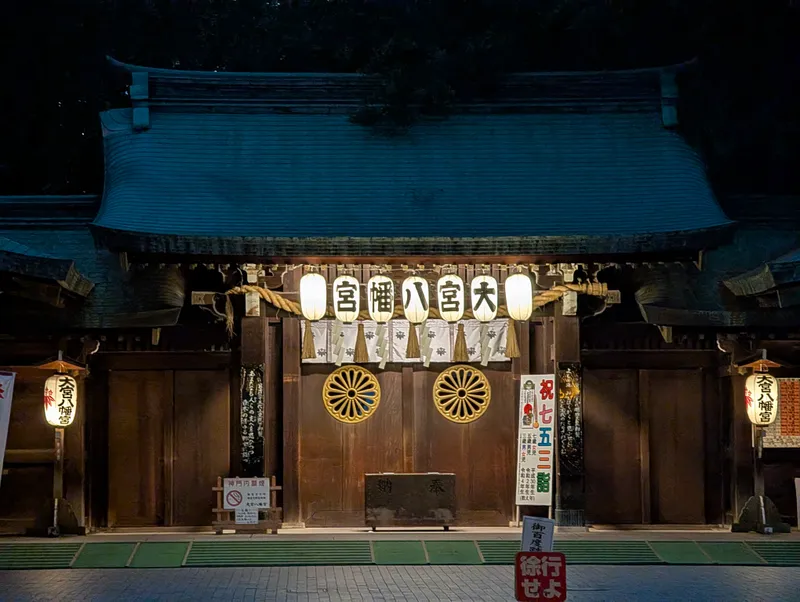
A large wooded shrine in Suginami, founded in 1063 by Minamoto no Yoriyoshi after he read a bank of white cloud as the banners of his own clan, and known for child-rearing and warding.
 Shrine
Meiji Jingu
- Health & Healing
- Protection & Safety
- Bonds & Matchmaking
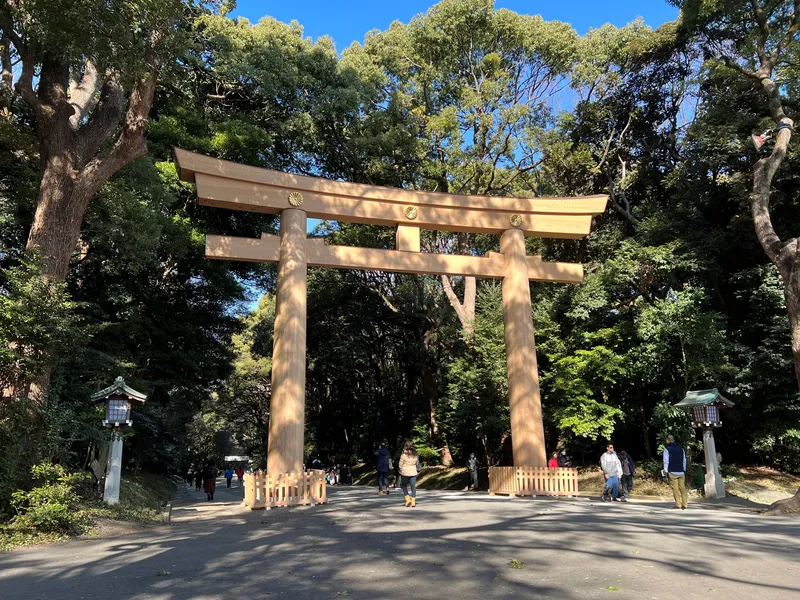
A 1920 Shinto shrine in central Tokyo enshrining Emperor Meiji and Empress Shōken, set in a 70-hectare forest that was planted from scratch and is visited today for prayers about bonds, protection and health.
 Shrine
Hatonomori Hachiman Shrine
- Skill & Mastery
A Sendagaya shrine named after a flight of white doves, holding a Fuji mound raised in 1789 and a small hexagonal hall built with the Japan Shogi Association.
No places match your filters