Koenji Hikawa Shrine
高円寺氷川神社 · Koenji Hikawa Jinja · 気象神社 · Kisho Jinja
Researched and translated with AI assistance. Every claim is linked to its source, but errors get through, so check the official site for opening times, fees and closures.About
In short
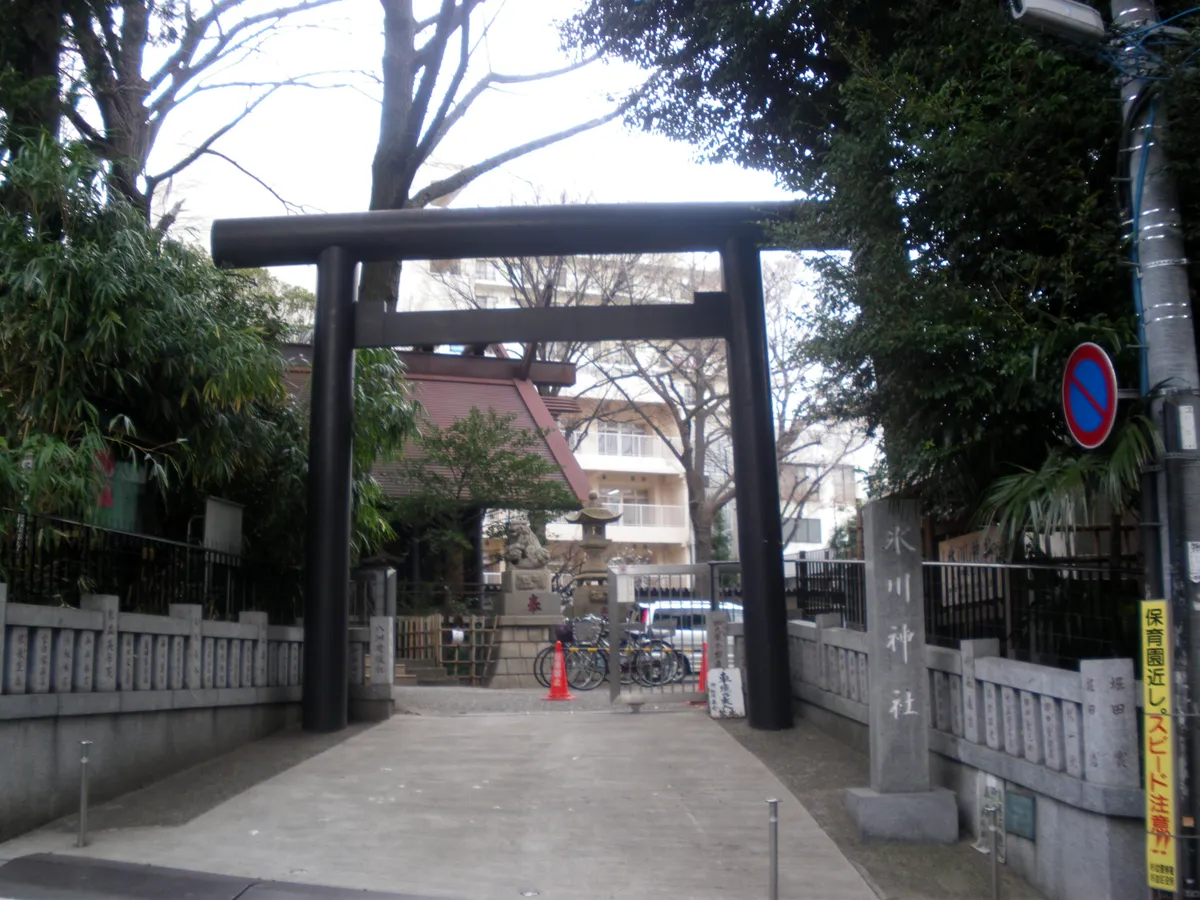
A Suginami shrine whose grounds hold a shrine to the weather, built inside an army meteorological unit in 1944 and left standing after the war by an oversight.
Quick facts
- Address
- 4-44-19 Koenji-minami, Suginami-ku, Tokyo 166-0003
- Access
- Koenji on the JR Chuo-Sobu line is a short walk, and Shin-Koenji on the Tokyo Metro Marunouchi line is about the same. The shrine stands south of the tracks in Koenji-minami.
- Hours
- The gate closes at 17:00 and the grounds open early. The office and seal desk keep 9:00 to 16:00 but close irregularly. Prayers must be booked in advance, by telephone or through the site.
- Best time
- The weather festival on 1 June, held on the anniversary of the start of weather observation in Japan.
- Spiritual entities
- Yagokoro-Omoikane (八意思兼命) · Susanoo no Mikoto (素盞嗚尊)
- Official site
- koenji-hikawa.com
About this place
Koenji Hikawa Shrine is a neighbourhood shrine a few minutes south of Koenji station, enshrining Susanoo, and it would not be widely known except for what stands in its grounds. The Kisho Jinja, the weather shrine, was built in 1944 inside the compound of the Imperial Japanese Army's meteorological unit. It was supposed to be removed after the war and was not. People come to ask for fine weather on a particular day and hang wooden tablets shaped like clogs.
Origin and history
The main shrine is the older and the plainer story. It is said to have been founded when Minamoto no Yoritomo campaigned in the north, at what was then Suginami in Musashi province, and it enshrines Susanoo, whom the shrine describes as born when Izanagi rinsed his nose during his purification, the deity who killed the eight-headed serpent and presented the Kusanagi sword, and who is regarded as a deity of agriculture. It was recognised as a village shrine in 1874 and became a religious corporation after the Pacific War. The halls were rebuilt in 1916, burned in the Tokyo air raid of 1945, replaced with a temporary hall in 1947, and rebuilt in their present form in 1971.
The weather shrine has a much shorter and much stranger history. In April 1944 it was built inside the grounds of the army meteorological unit in the Mabashi district of Suginami, as somewhere the observers could put their minds. It enshrines Yagokoro-Omoikane.
Under the Shinto Directive issued by the occupation after the war it should have been taken down with the rest of the army's shrines. The survey missed it, and it was still standing. A former chief priest of this shrine, Yamamoto Minoru, decided to take it in, and it was moved here. It was rebuilt in 2003.
What it is locally associated with
A shrine the occupation survey overlooked
Built in 1944 inside an army meteorological unit, the Kisho Jinja should have been removed under the Shinto Directive. It was missed, and a priest here took it in.
documented historyTablets shaped like clogs
Instead of the usual wooden plaque, the weather shrine takes votive tablets cut in the shape of a geta, in red or yellow.
local customA deity who thinks from every side
The weather shrine enshrines Yagokoro-Omoikane, whose name the shrine reads as gathering many kinds of wisdom at once, which is a fair description of forecasting.
documented historyA festival on the day observation began
The weather festival falls on 1 June, chosen for the anniversary of the founding of the Tokyo Meteorological Observatory in 1875.
documented history
This page carries the miscellaneous tag, the first on this site, and the shrine has earned it.
This site tags a place with the things its own institution says it is for. Koenji Hikawa states two things about itself. Susanoo, it says, is regarded as a deity of agriculture. And the Kisho Jinja in its grounds takes prayers for fine weather. Neither fits an ordinary category. The shrine also offers the full range of prayers and amulets, from winning to money to passing an examination, but that is the service menu every shrine keeps, and this site does not tag from menus.
Rather than bend weather into career, or the wisdom of Omoikane into examinations, the site files the page honestly under miscellaneous, the category for a stated devotion too specific for any other.
What the tag stands for here is weather. People come before an outdoor wedding, a sports day, a festival, a shoot, and ask for the day to be clear. The shrine takes prayers for fine weather among its weather rites, and instead of the usual wooden plaque the tablets here are cut in the shape of a geta, the clog you throw to see whether tomorrow will be fine. They come in red and yellow.
The deity fits the job. Yagokoro-Omoikane is a deity of wisdom, and the shrine reads the name carefully: the first part means considering a thing from many positions at once, the second means holding several offices together, so the deity is one who can bring many kinds of knowledge to bear on a single question. Whoever chose him for a meteorological unit in 1944 had thought about it.
The festival date is chosen the same way. The weather festival falls on 1 June, which is Meteorological Memorial Day in Japan, the anniversary of the founding of the Tokyo Meteorological Observatory and the start of regular observation in 1875.
Claims and evidence levels 8
- The shrine relates that it was founded at the time of Minamoto no Yoritomo's northern campaign, in what was then Suginami in Musashi province. folk tradition
- The shrine enshrines Susanoo, whom it describes as born when Izanagi rinsed his nose during his purification, and as regarded as a deity of agriculture. documented history
- The shrine was recognised as a village shrine in 1874; its halls were rebuilt in 1916, burned in the Tokyo air raid of 1945, replaced by a temporary hall in 1947, and rebuilt in their present form in 1971. documented history
- The Kisho Jinja was built in April 1944 inside the compound of the Imperial Japanese Army meteorological unit in the Mabashi district of Suginami, as a support for the observers stationed there, and enshrines Yagokoro-Omoikane. documented history
- The shrine states that the Kisho Jinja was due to be removed under the postwar Shinto Directive but survived because it was left out of the survey; a former chief priest of Koenji Hikawa, Yamamoto Minoru, decided to take it in, and it was rebuilt in 2003. documented history
- The Kisho Jinja performs prayers for fine weather among its weather rites, and takes votive tablets cut in the shape of a geta, in red and yellow. documented history
- The shrine reads the name Yagokoro-Omoikane as one who considers from many positions and holds several offices at once, and so as a deity able to bring many kinds of wisdom together. documented history
- The weather festival is held on 1 June each year, chosen to fall on Meteorological Memorial Day, which marks the founding of the Tokyo Meteorological Observatory and the start of weather observation in 1875. documented history
Visiting tips
The general form is in the visiting guide below. Specific to Koenji Hikawa:
The gate closes at 17:00. The office and the seal desk keep roughly 9:00 to 16:00 but close irregularly, so a seal or an amulet is not guaranteed on any given day.
Prayers must be booked in advance. The shrine takes bookings by telephone and through a form on its site, and does not simply accept walk-ins.
The car park in the grounds is for people visiting the shrine and is closed during its own events.
The weather shrine is a small subsidiary structure in the grounds, not a separate site, and the main shrine is the one at the top of the approach.
Related guides
- How to visit a shrine or temple in JapanThe country-wide basics: purifying at the water basin, the two-bows-two-claps-one-bow form at shrines, and what temples do instead.
- What a "power spot" actually isA modern Japanese coinage, not a traditional religious category. Where the word came from, what it does and does not claim, and why this site uses it anyway.
- Shrine or temple?A shrine is Shinto and a temple is Buddhist, and you can usually tell at the gate. Why the line is cleaner on paper than on the ground, and what a government order in 1868 has to do with it.
- Omamori, ema, omikuji and goshuinThe four things you are most likely to receive, write, draw or be given at a shrine or temple, what each is actually for, and the one of them people most often get wrong.
Sources
- About the shrine (神社要覧) — Koenji Hikawa Shrine (accessed 2026-08-02)
- The weather shrine (気象神社) — Koenji Hikawa Shrine (accessed 2026-08-02)
- Prayers (ご祈祷) — Koenji Hikawa Shrine (accessed 2026-08-02)
- Frequently asked questions (よくあるご質問) — Koenji Hikawa Shrine (accessed 2026-08-02)
- Hikawa Shrine, Suginami (Q11549610) coordinate location — Wikidata (accessed 2026-08-02)
Last updated:
Similar places
8 places
 Shrine
Akasaka Hikawa Shrine
- Family & Home
- Love & Romance
- Money & Prosperity
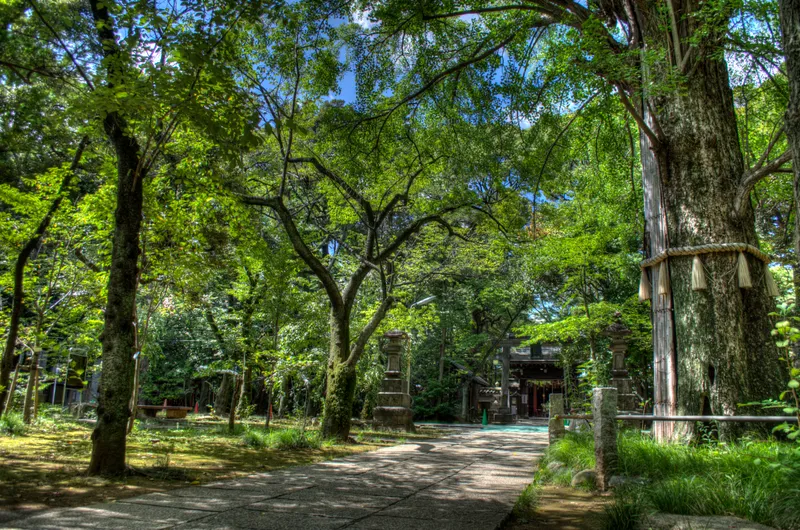
A Minato shrine founded in 951 whose Edo-period buildings survived both the earthquake and the war, known for warding off misfortune and for the tying of bonds, and the shrine explains why it is known for each.
 Shrine
Nezu Shrine
- Career & Work
- Exams & Study
- Family & Home
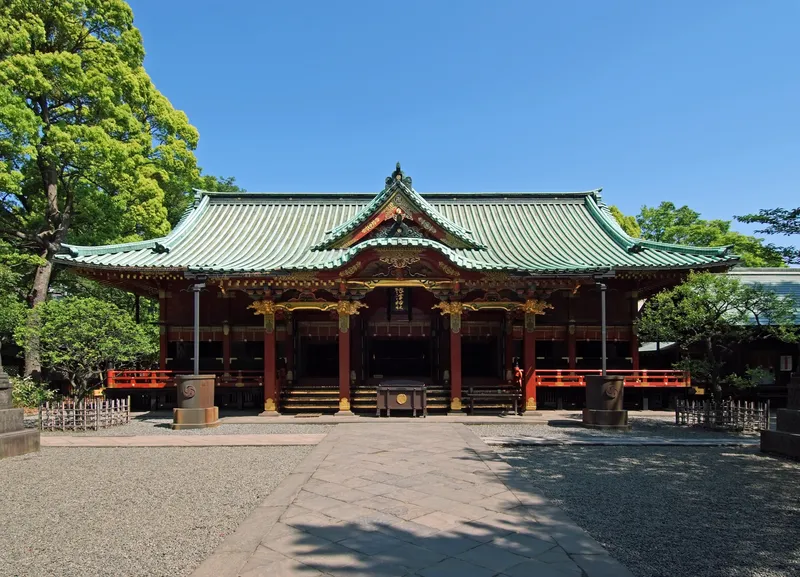
A Bunkyo shrine whose entire 1706 complex survives intact as an Important Cultural Property, rare in Tokyo, with an azalea hill and a tunnel of small red torii (鳥居).
 Shrine
Shinagawa Shrine
- Money & Prosperity
- Protection & Safety
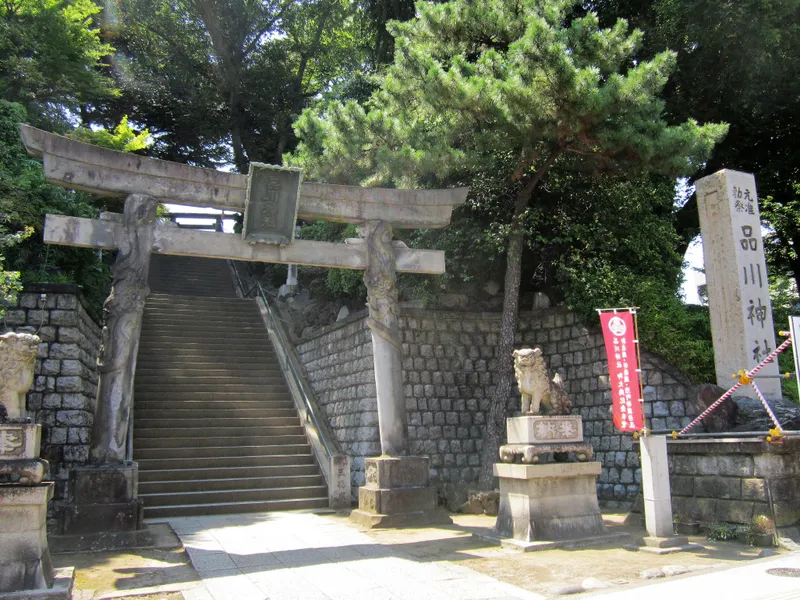
A shrine above Kita-Shinagawa founded in 1187 by Minamoto no Yoritomo, enshrining three deities added across three centuries, one for trade and one for warding.
 Shrine
Omiya Hachimangu
- Fertility & Children
- Protection & Safety
- Bonds & Matchmaking
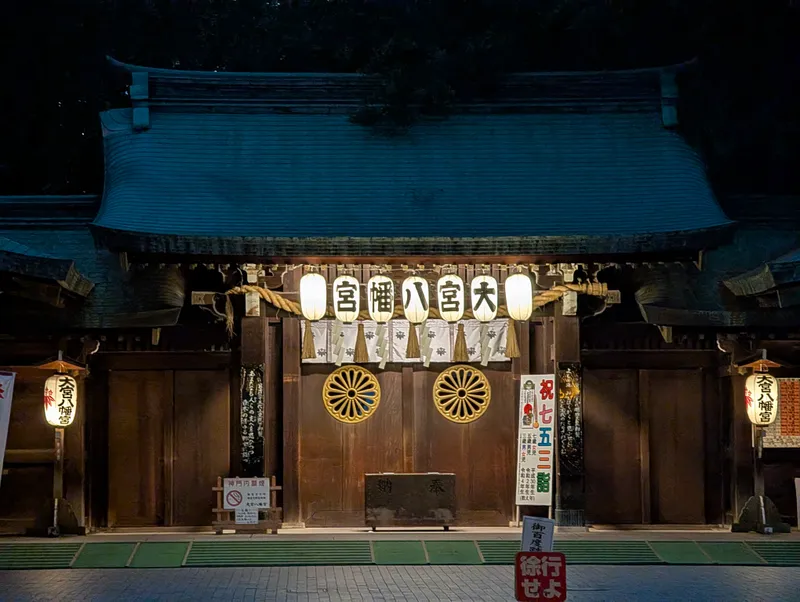
A large wooded shrine in Suginami, founded in 1063 by Minamoto no Yoriyoshi after he read a bank of white cloud as the banners of his own clan, and known for child-rearing and warding.
 Shrine
Meiji Jingu
- Health & Healing
- Protection & Safety
- Bonds & Matchmaking
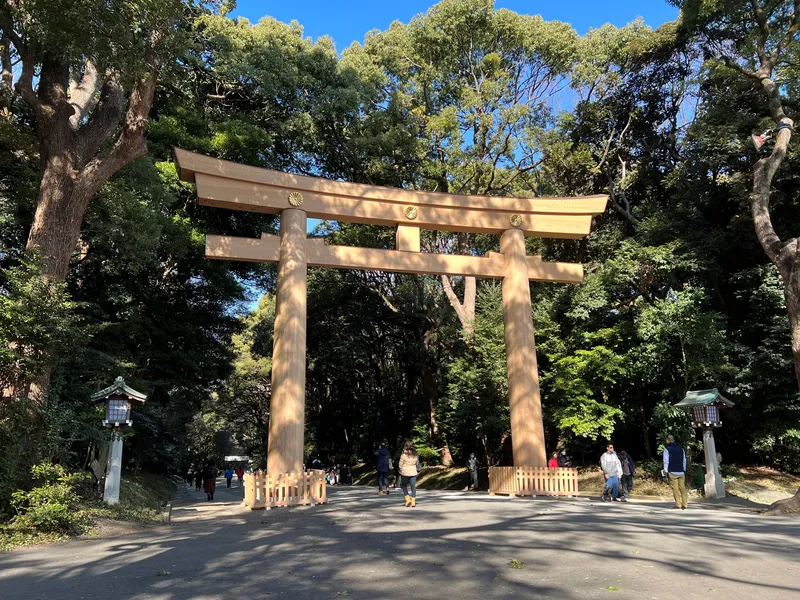
A 1920 Shinto shrine in central Tokyo enshrining Emperor Meiji and Empress Shōken, set in a 70-hectare forest that was planted from scratch and is visited today for prayers about bonds, protection and health.
 Temple
Zoshigaya Kishimojin-do
- Fertility & Children
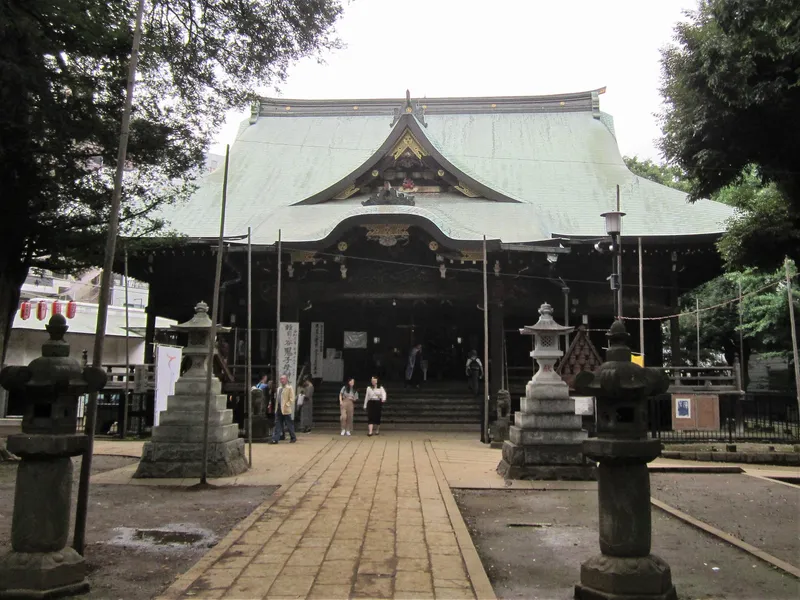
A hall in Zoshigaya, built in 1664 and now a National Important Cultural Property, enshrining a deity who was a child-stealing demon before the Buddha taught her what losing a child meant.
 Shrine
Ana Hachimangu
- Fertility & Children
- Money & Prosperity
- Skill & Mastery
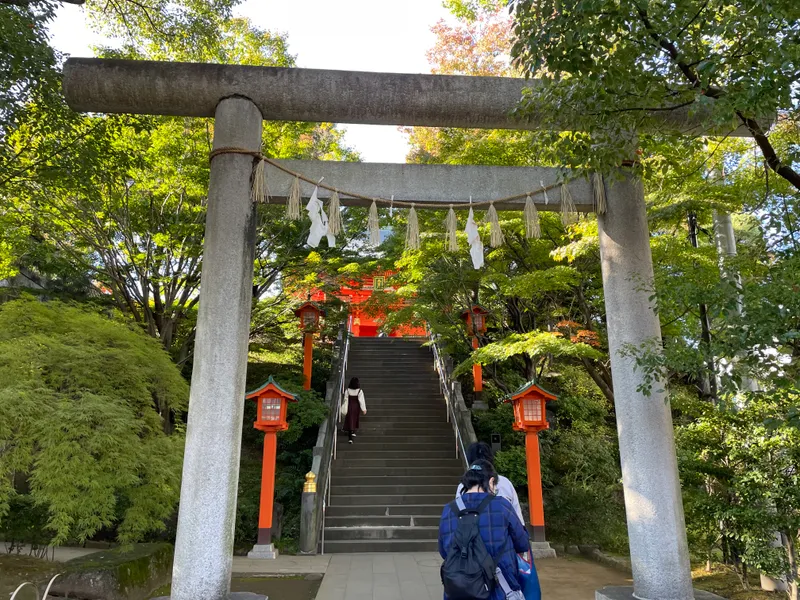
A Waseda shrine named for a cave found in its hillside in 1641, which gives out an amulet for the circulation of money for six weeks each winter and nothing the rest of the year.
 Shrine
Hatonomori Hachiman Shrine
- Skill & Mastery
A Sendagaya shrine named after a flight of white doves, holding a Fuji mound raised in 1789 and a small hexagonal hall built with the Japan Shogi Association.
No places match your filters