Ana Hachimangu
穴八幡宮 · Ana Hachiman Shrine · Ushigome Takada Ana Hachimangu
Researched and translated with AI assistance. Every claim is linked to its source, but errors get through, so check the official site for opening times, fees and closures.About
In short
A Waseda shrine named for a cave found in its hillside in 1641, which gives out an amulet for the circulation of money for six weeks each winter and nothing the rest of the year.
Quick facts
- Address
- 2-1-11 Nishi-Waseda, Shinjuku-ku, Tokyo 162-0051
- Access
- Waseda station on the Tokyo Metro Tozai line is five minutes from exit 3B. Buses stop at Babashitacho, three to five minutes away, and at Nishi-Waseda, about five.
- Hours
- The office is open from 9:00 to 17:00. The rite for infants is taken between 9:00 and 16:00 all year without a booking. There is no car park and no bicycle park.
- Best time
- The winter solstice, when the Ichiyo Raifuku amulet is first given out. It is available only until Setsubun (節分) in early February, and the shrine is at its busiest for it.
- Spiritual entities
- Emperor Chuai (仲哀天皇) · Empress Jingu (神功皇后) · Hachiman (八幡神)
- Official site
- www.anahachimanguu.jp
About this place
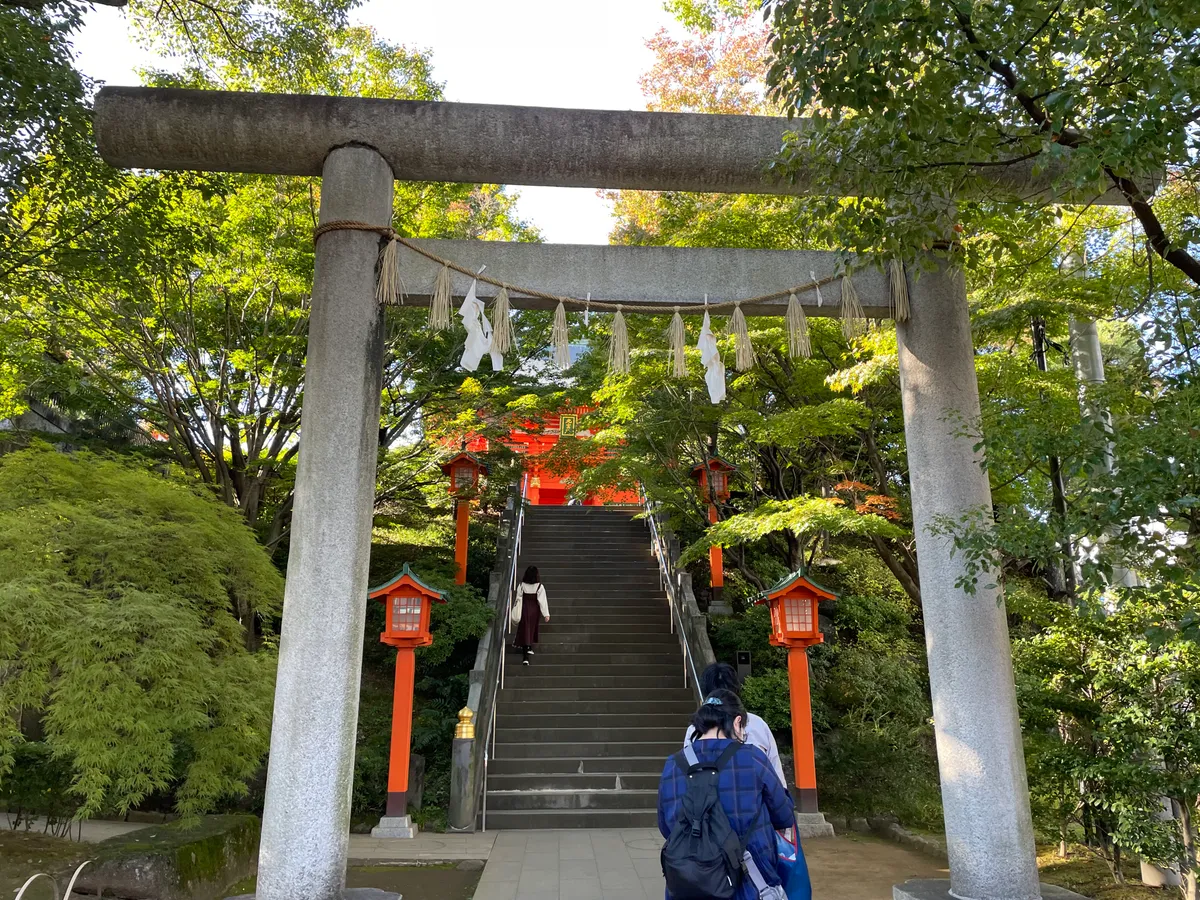
Ana Hachimangu stands on a rise at Babashitacho in Waseda, founded in 1062 by Minamoto no Yoshiie. Its name comes from a cave uncovered in the hillside in 1641 with a golden image inside. For most of the year it is a quiet local shrine. From the winter solstice to Setsubun it gives out the Ichiyo Raifuku amulet, which the shrine says exists nowhere else in the country, and the queue runs down the hill.
Origin and history
The shrine dates its founding to 1062. Minamoto no Yoshiie, coming back from putting down the disturbance in the north, laid his helmet and his sword here and invited the Hachiman deity of his clan to the site.
The name arrived nearly six hundred years later, and by accident. In 1641, while the south side of the hill was being cut into to build a hut for the caretaker, a sacred cave appeared, and a golden image was found inside it. The shrine has been called Ana Hachimangu, the Hachiman of the cave, ever since. The Shutsugenden, the hall of the appearance, stands where the cave was found and is not open to visitors.
The third shogun, Iemitsu, visited, ordered a complete rebuilding, and made the shrine the general guardian of the north side of Edo castle, which turned it into one of the leading shrines of the city. In 1636 shogunate officials had already begun revering Hachiman here as the guardian deity of archery, and the yabusame rite at Takadanobaba grew out of that.
In 1879 the shrine received the imperial commission to perform the rite for infants for the future Emperor Taisho, and it records that devotion has grown year on year since.
What it is locally associated with
A cave nobody was looking for
In 1641 the hillside was being cut back for a caretaker's hut when a cave opened up with a golden image inside. The shrine has carried the name since.
documented historySix weeks a year, and then it stops
The Ichiyo Raifuku amulet, for the circulation of money, is given out only from the winter solstice to Setsubun. The shrine says there is nothing else like it in Japan.
documented historyThe rite for a child who will not settle
The shrine performs the old rite for infants up to fifteen, and records receiving the imperial commission to do it for the future Emperor Taisho in 1879.
documented historyWhere the Takadanobaba yabusame came from
Shogunate officials began revering Hachiman here as the guardian of archery in 1636, and the mounted archery rite at Takadanobaba followed.
documented history
Almost everything people know about this shrine is the amulet, so start there.
Ichiyo Raifuku is a phrase for the turn of the year at the winter solstice, when the light begins to come back. The amulet of that name is described by the shrine as an amulet for the circulation of gold and silver, which is to say for money moving rather than money arriving. Its origin, as the shrine gives it, runs through an object: the lucky mallet recorded in the Shinpen Musashi Fudoki, which the noble Minase family obtained from Kokuhoji in Yamashiro province and deposited here, and which is said to have been given to Emperor Shomu by a dragon deity on the winter solstice of 723. From the middle of the Edo period the amulet began to be given out at the solstice rite, and the shrine says it is the only one of its kind in the country.
It is also the most rule-bound object on this site. It is available only from the winter solstice in December to Setsubun in early February. It goes up in the room where the household actually gathers, facing the lucky direction of the year as measured from the centre of that room, stuck straight onto the wall or the pillar with paste and no backing board. And it goes up on one of three nights, the solstice, New Year's Eve or Setsubun, at exactly midnight. Get the night or the direction wrong and the shrine's instruction is that you have not done it.
The second devotion is much older and much quieter. Mushifuji is the rite for the insect, the traditional explanation for an infant who screams and will not be settled, and the shrine performs it for children from newborn to fifteen. It is taken at the office without a booking, and the charm is given to the child in the first water drawn on each of the two following mornings, while the amulet is worn for a year. What makes it more than a service is the record: in 1879 the shrine was commissioned to perform it for the future Emperor Taisho, and it dates the growth of the devotion from then.
The third devotion is skill at arms. Officials of the shogunate began revering Hachiman here in 1636 as the guardian deity of archery, and the yabusame at Takadanobaba came out of that. That is the skill tag on this page: not work, and not study, but mastery of a discipline.
Claims and evidence levels 10
- The shrine enshrines Emperor Ojin, Emperor Chuai and Empress Jingu. documented history
- The shrine dates its founding to 1062, when Minamoto no Yoshiie, returning from putting down the disturbance in the north, placed his helmet and sword here and invited the Hachiman deity of his clan. documented history
- In 1641, while the southern hillside was being cut back to build a hut for the caretaker, a sacred cave appeared with a golden image inside, and the shrine has been called Ana Hachimangu since. documented history
- The third shogun, Tokugawa Iemitsu, visited, ordered a complete rebuilding, and made the shrine the general guardian of the north of Edo castle. documented history
- In 1636 officials of the shogunate revered Hachiman here as the guardian deity of archery, which led to the mounted archery rite at Takadanobaba. documented history
- In 1879 the shrine received the imperial commission to perform the rite for infants for the future Emperor Taisho, and records that devotion has increased year by year since. documented history
- The Ichiyo Raifuku amulet is described by the shrine as an amulet for the circulation of gold and silver, is given out only from the winter solstice in December to Setsubun in February, and is stated by the shrine to be the only one of its kind in the country. documented history
- The shrine traces the amulet to a lucky mallet recorded in the Shinpen Musashi Fudoki, obtained by the Minase family from Kokuhoji in Yamashiro province and deposited here, and said to have been given to Emperor Shomu by a dragon deity on the winter solstice of 723. folk tradition
- The shrine instructs that the amulet be placed in the room where the household gathers, facing the lucky direction of the year as measured from the centre of that room, fixed directly to the wall or pillar with paste and no backing, on the night of the solstice, New Year's Eve or Setsubun at exactly midnight. documented history
- The rite for infants is performed for children from newborn to fifteen, taken at the office from 9:00 to 16:00 all year without a booking; the charm is given to the child in the first water drawn on each of the two following mornings and the amulet is worn for a year. documented history
Visiting tips
The general form is in the visiting guide below. Specific to Ana Hachimangu:
The amulet season is the whole difficulty here. Between the winter solstice and Setsubun the shrine is extremely busy, the queue runs down the approach, and the east approach is closed for the duration. Outside those six weeks the amulet is simply not available, and no amount of asking changes that.
Read the shrine's own instructions for putting the amulet up before you take one home. The night, the hour and the direction are all specified.
The Shutsugenden, the hall built where the cave was found, cannot be entered.
There is no car park and no bicycle park.
Related guides
- How to visit a shrine or temple in JapanThe country-wide basics: purifying at the water basin, the two-bows-two-claps-one-bow form at shrines, and what temples do instead.
- What a "power spot" actually isA modern Japanese coinage, not a traditional religious category. Where the word came from, what it does and does not claim, and why this site uses it anyway.
- Shrine or temple?A shrine is Shinto and a temple is Buddhist, and you can usually tell at the gate. Why the line is cleaner on paper than on the ground, and what a government order in 1868 has to do with it.
- Omamori, ema, omikuji and goshuinThe four things you are most likely to receive, write, draw or be given at a shrine or temple, what each is actually for, and the one of them people most often get wrong.
Sources
- History and deities (由緒) — Ana Hachimangu (accessed 2026-08-02)
- The Ichiyo Raifuku amulet (一陽来復御守) — Ana Hachimangu (accessed 2026-08-02)
- Prayers (ご祈願) — Ana Hachimangu (accessed 2026-08-02)
- Guide to the grounds (境内のご案内) — Ana Hachimangu (accessed 2026-08-02)
- Access (交通案内) — Ana Hachimangu (accessed 2026-08-02)
Last updated:
Similar places
8 places
 Shrine
Omiya Hachimangu
- Fertility & Children
- Protection & Safety
- Bonds & Matchmaking
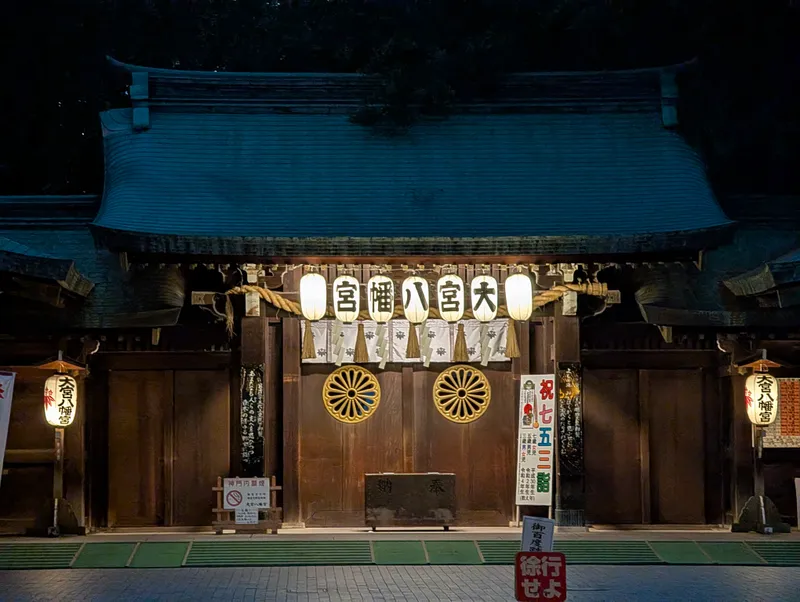
A large wooded shrine in Suginami, founded in 1063 by Minamoto no Yoriyoshi after he read a bank of white cloud as the banners of his own clan, and known for child-rearing and warding.
 Shrine
Hatonomori Hachiman Shrine
- Skill & Mastery
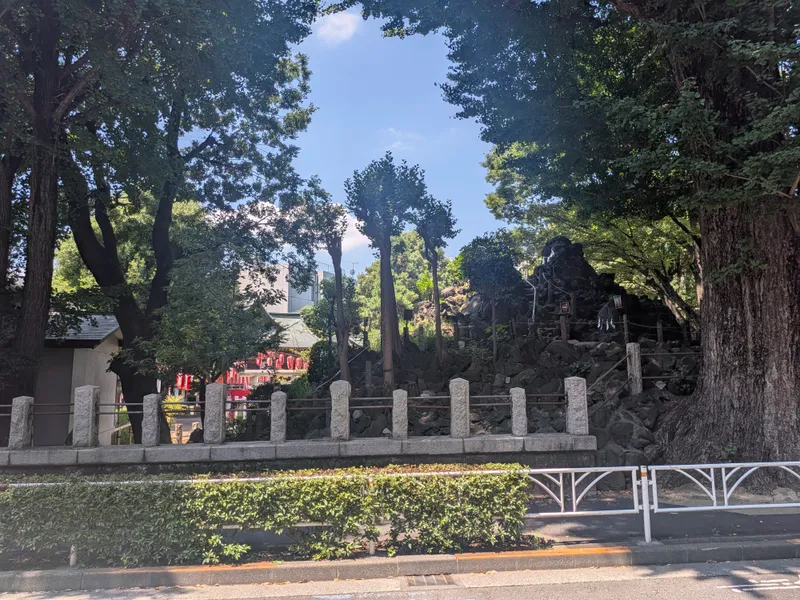
A Sendagaya shrine named after a flight of white doves, holding a Fuji mound raised in 1789 and a small hexagonal hall built with the Japan Shogi Association.
 Shrine
Hie Shrine
- Career & Work
- Fertility & Children
- Money & Prosperity
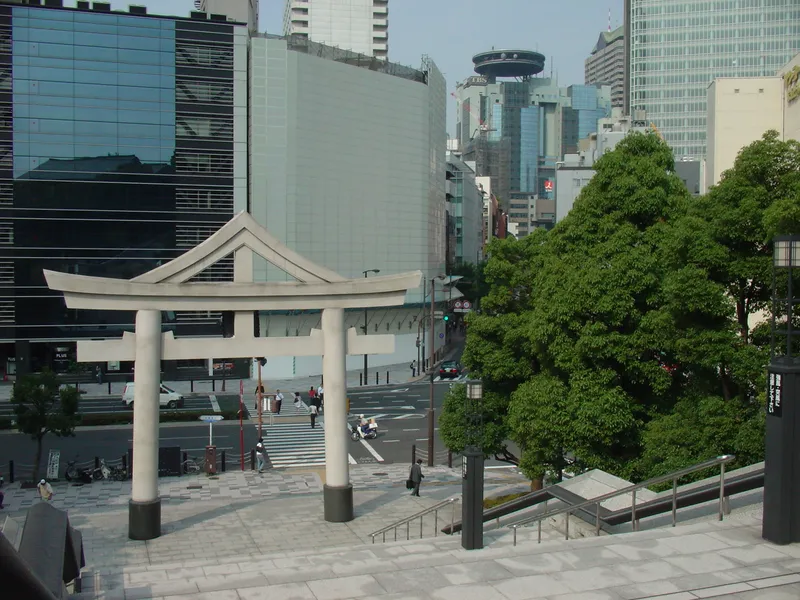
A shrine on a wooded rise in Nagatacho, once the guardian of Edo Castle, whose messenger is the monkey, a pun the shrine explains itself, connecting it to warding off evil, to winning, and to the tying of bonds.
 Shrine
Nezu Shrine
- Career & Work
- Exams & Study
- Family & Home
A Bunkyo shrine whose entire 1706 complex survives intact as an Important Cultural Property, rare in Tokyo, with an azalea hill and a tunnel of small red torii (鳥居).
 Shrine
Karasumori Shrine
- Career & Work
- Money & Prosperity
- Skill & Mastery
A Shimbashi shrine down an alley, founded in 940 by the general who defeated Taira no Masakado, and one of the few to enshrine the deity of the performing arts.
 Temple
Zoshigaya Kishimojin-do
- Fertility & Children
A hall in Zoshigaya, built in 1664 and now a National Important Cultural Property, enshrining a deity who was a child-stealing demon before the Buddha taught her what losing a child meant.
 Shrine
Tokyo Daijingu
- Family & Home
- Love & Romance
- Money & Prosperity
A Chiyoda shrine founded in 1880 as a Tokyo branch of Ise, known as "Tokyo's O-Ise-sama" and visited above all for prayers about relationships, an association the shrine itself explains through the three deities of creation enshrined here.
 Shrine
Kanda Myojin
- Career & Work
- Family & Home
- Money & Prosperity
A Chiyoda shrine that served as the guardian shrine of all Edo, enshrining three deities between them associated with business prosperity, good matches and warding off misfortune, and these days selling a charm for information security.
No places match your filters