Jindai-ji
深大寺 · Jindaiji · Fugakusan Shorakuin Jindaiji
Researched and translated with AI assistance. Every claim is linked to its source, but errors get through, so check the official site for opening times, fees and closures.About
In short
A Tendai temple in Chofu founded in 733, named after a water deity said to remove epidemics, and known for a hidden image of the monk credited with inventing omikuji (おみくじ).
Quick facts
- Address
- 5-15-1 Jindaiji Motomachi, Chofu-shi, Tokyo 182-0017
- Access
- By bus from Chofu or Tsutsujigaoka stations on the Keio line, or from Mitaka or Kichijoji on the JR Chuo line. There is no station within walking distance.
- Hours
- Goma (護摩) prayers are performed to a published timetable and vehicle blessings must be booked two days ahead. Times change over the new year period, so check the official site.
- Best time
- The daruma market in early March is the temple's best-known event. A great-sutra turning rite is held in the Jinja Daiō hall each October, and the hidden Ganzan Daishi image is shown only at rare openings.
- Spiritual entities
- Ganzan Daishi (元三大師, Ryōgen) · Jinja Daiō (深沙大王)
- Official site
- www.jindaiji.or.jp
About this place
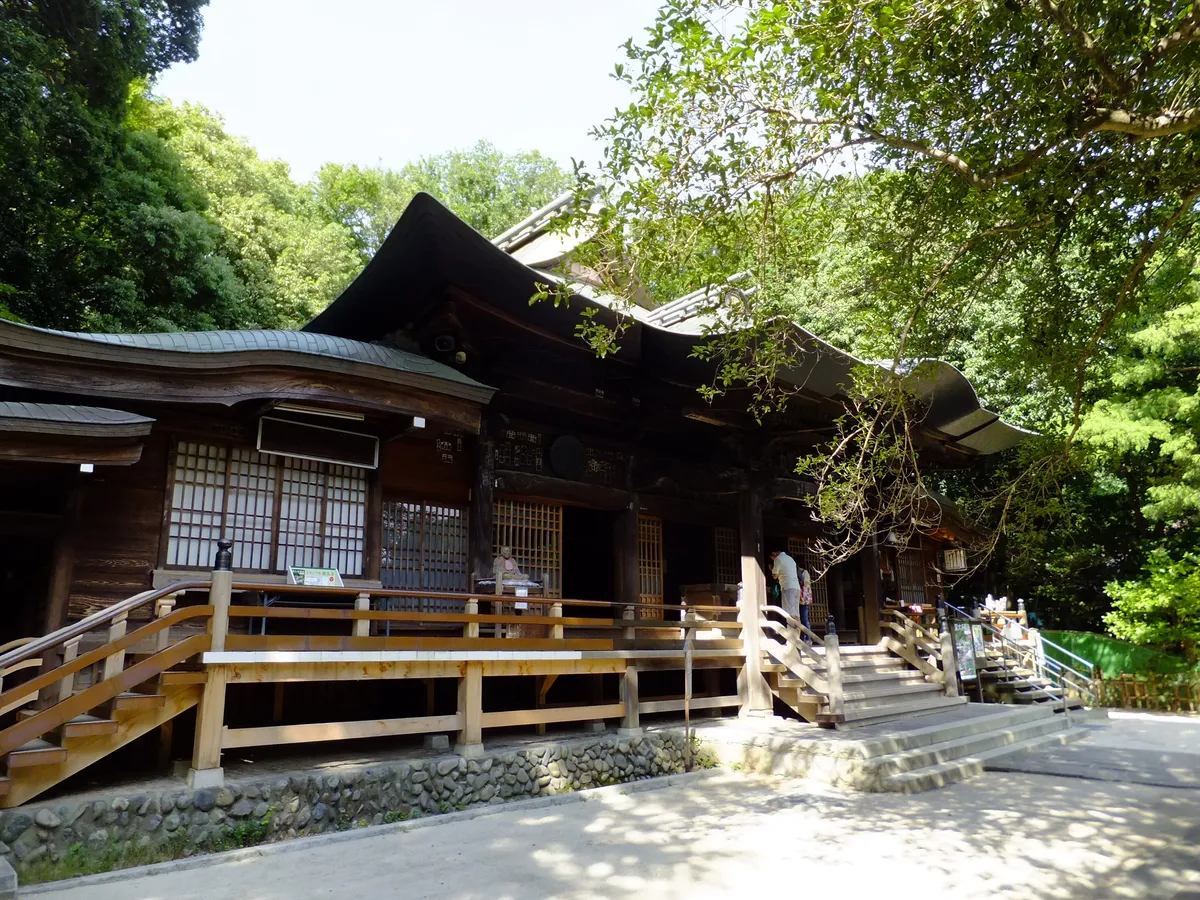
Jindai-ji stands among springs and woodland in Chofu, with a soba street outside its gate and the metropolitan botanical garden next door. It takes its name from Jinja Daiō, a water deity, and dates its founding to 733. Its other figure is Ganzan Daishi, the Tendai abbot the temple credits with originating omikuji, whose image here is hidden and shown only rarely.
Origin and history
The temple tells its founding as a story about a marriage. Fukuman, father of the monk Mankū who founded the temple, fell in love with the daughter of the village head Ukon; her parents were unhappy and hid her on an island in a lake. Fukuman, recalling the tale of the Chinese pilgrim Xuanzang, prayed to Jinja Daiō and was carried to the island on the back of a sacred turtle. Her parents, learning of the wonder, allowed the match, and Mankū was born of it.
Mankū later took orders to fulfil his father's vow, studied the Hossō teaching in Nara, and on returning built a hall here and enshrined Jinja Daiō. The temple dates that to 733. Emperor Junnin is recorded as granting the temple its plaque and fixing the turning of the great sutra as a permanent rite, making it a hall for the protection of the state.
Around 860 the provincial official Kuramune rebelled in Musashi, and the monk Eryō of Mount Hiei was sent east by imperial command to pray against him. He made Jindai-ji his training hall and performed esoteric rites there; for that service Emperor Seiwa granted him seven nearby villages and the temple itself, and it became the foremost Tendai esoteric hall in the eastern provinces.
In the early Muromachi period the temple housed Jōben, a monk of literary talent whose collected writings survive and are a rare record of the shrines, temples and families of the Tama river country. Under the Tokugawa the temple twice took its Ganzan Daishi image to Ryogoku for public showing, in 1765 and 1816. A ritual gong cast in 1267 for the temple's Jinja Daiō hall is the oldest surviving material to carry the temple's name, and was designated an Important Cultural Property in March 2026.
What it is locally associated with
A water deity against epidemics
The temple states that Jinja Daiō is originally a deity effective at removing epidemics and keeping demons at a distance. It is the deity the temple is named after.
documented historyA turtle, an island, and a marriage
The founder's father prayed to Jinja Daiō and crossed to the island where his sweetheart had been hidden, on the back of a sacred turtle. The temple tells this as its origin.
folk traditionThe monk who invented omikuji
The temple credits Ganzan Daishi, the restorer of Mount Hiei, with making the first omikuji. Its image of him is hidden and shown only at rare openings.
documented historyA gong from 1267
Cast for the temple's Jinja Daiō hall, it is the oldest surviving material bearing the temple's name and became an Important Cultural Property in March 2026.
documented history
What this temple is turned to for follows from the deity it is named after. Jinja Daiō is, in the temple's own words, originally a deity effective at removing epidemics and keeping demons at a distance. The same figure saved Xuanzang in the desert on his way to India, which is the story Fukuman was remembering when he prayed. Each October the temple turns the six hundred volumes of the great sutra in the Jinja Daiō hall, with a painting hung inside showing the deity in demon form facing Xuanzang. That, and not an atmosphere, is where the warding tag on this page comes from; the goma prayers carry it too, each one accompanied by an image of Ganzan Daishi described as having the benefit of dispelling epidemics.
The founding story deserves telling in full because it is unusually human for a temple origin, and because of what it is not. Fukuman loved a village head's daughter; her parents hid her on an island in a lake; he prayed and crossed on the back of a sacred turtle; they relented; the child of that marriage grew up to found this temple. Jindai-ji is often described elsewhere as a place to pray about relationships on the strength of it. The temple itself does not say that anywhere, and this site does not add it: a legend about a couple is not a statement about what a place is petitioned for, and the difference is the whole basis on which these pages are written.
The other figure is Ganzan Daishi, the Tendai abbot Ryōgen, who died on the third day of the first month and is named for it. The temple credits him with restoring the halls of Mount Hiei and, more unexpectedly, with making the first omikuji. His image here is a hidden one, brought out only at rare openings.
The surroundings are part of the visit in a way that is rarely true. The temple sits in spring water that once irrigated the fields downstream, and the temple suggests that the gratitude of the people who gathered at those springs produced a simple water devotion long before a temple stood here.
Claims and evidence levels 7
- The temple relates that Fukuman, father of its founder Mankū, prayed to Jinja Daiō and crossed on the back of a sacred turtle to an island where the village head had hidden his daughter; her parents then permitted the match, and Mankū was born of it. folk tradition
- The temple dates its founding to 733, when Mankū, having taken orders and studied the Hossō teaching in Nara, returned and built a hall here enshrining Jinja Daiō. folk tradition
- The temple states that Jinja Daiō is originally a deity effective at removing epidemics and keeping demons at a distance, and that the same deity is said to have saved the pilgrim Xuanzang in the desert. documented history
- Around 860, after the Musashi official Kuramune rebelled, the monk Eryō of Mount Hiei was sent east by imperial command, made Jindai-ji his training hall and performed esoteric rites there; Emperor Seiwa granted him seven nearby villages and the temple, and it became the foremost Tendai esoteric hall in the eastern provinces. documented history
- The temple credits Ganzan Daishi, the Tendai abbot Ryōgen, with restoring the halls of Mount Hiei and with making the first omikuji. documented history
- The temple took its Ganzan Daishi image to Ekōin in Ryogoku for public showing twice in the Tokugawa period, in 1765 and 1816. documented history
- A ritual gong cast in 1267 for the temple's Jinja Daiō hall is the oldest surviving material bearing the temple's name; it was designated an Important Cultural Property in March 2026, the first such designation for a gong since 1979. documented history
Visiting tips
The general form for a temple is in the visiting guide below. Specific to Jindai-ji:
The principal Ganzan Daishi image is hidden and is not on view except at the rare public openings the temple announces. What you see in the hall on an ordinary day is not it.
Goma prayers run to a timetable, and anyone wanting the prayer performed in front of a vehicle must book by telephone two days ahead; the temple states that vehicle-side prayers are not performed over the new year period or on a few days in early March.
The temple will send a prayer tablet by post to people who cannot come, but asks that payment be sent by registered mail rather than ordinary post.
The soba shops outside the gate are famous and busy at weekends, which shapes the character of a visit more than anything inside the grounds does.
Related guides
- How to visit a shrine or temple in JapanThe country-wide basics: purifying at the water basin, the two-bows-two-claps-one-bow form at shrines, and what temples do instead.
- What a "power spot" actually isA modern Japanese coinage, not a traditional religious category. Where the word came from, what it does and does not claim, and why this site uses it anyway.
- Shrine or temple?A shrine is Shinto and a temple is Buddhist, and you can usually tell at the gate. Why the line is cleaner on paper than on the ground, and what a government order in 1868 has to do with it.
- Omamori, ema, omikuji and goshuinThe four things you are most likely to receive, write, draw or be given at a shrine or temple, what each is actually for, and the one of them people most often get wrong.
Sources
- History of Jindai-ji (深大寺の歴史) — Jindai-ji (accessed 2026-08-02)
- The founding and the water deity Jinja Daiō (深大寺開創と水神「深沙大王」) — Jindai-ji (accessed 2026-08-02)
- Goma prayers (ご祈願) — Jindai-ji (accessed 2026-08-02)
- Important Cultural Property, the peacock gong (重要文化財「孔雀文磬」) — Jindai-ji (accessed 2026-08-02)
- Jindai-ji (Q500736) coordinate location — Wikidata (accessed 2026-08-02)
Last updated:
Similar places
8 places
 Shrine
Okunitama Shrine
- Money & Prosperity
- Protection & Safety
- Bonds & Matchmaking
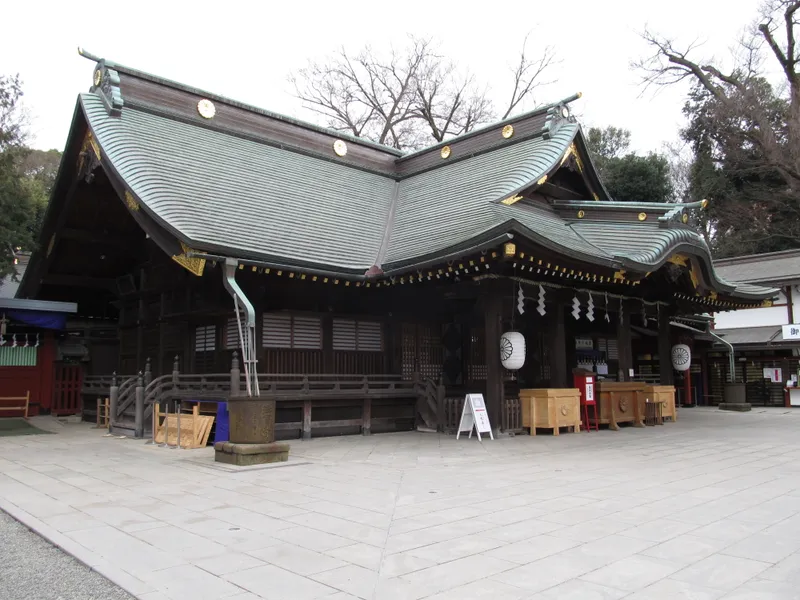
The provincial shrine of old Musashi, in Fuchu, which dates its founding to 111 and enshrines a deity it identifies with Ōkuninushi of Izumo.
 Shrine
Omiya Hachimangu
- Fertility & Children
- Protection & Safety
- Bonds & Matchmaking
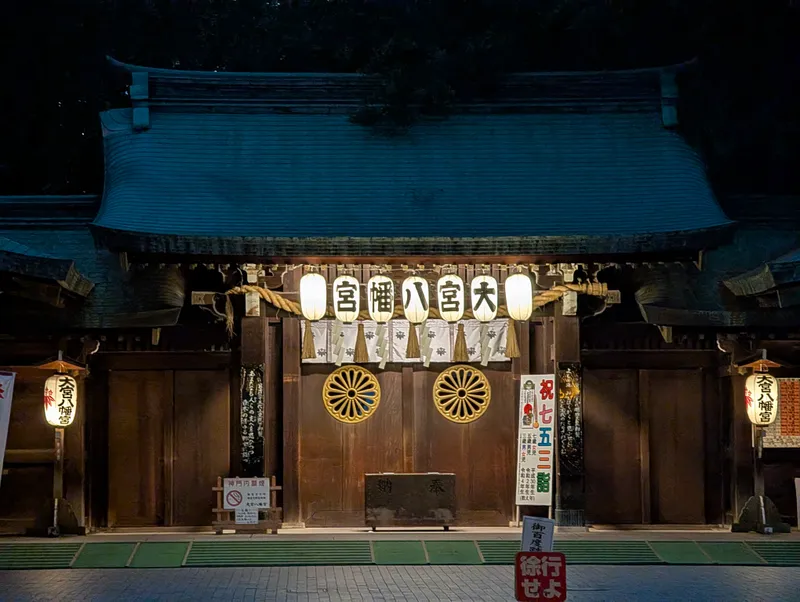
A large wooded shrine in Suginami, founded in 1063 by Minamoto no Yoriyoshi after he read a bank of white cloud as the banners of his own clan, and known for child-rearing and warding.
 Shrine
Meiji Jingu
- Health & Healing
- Protection & Safety
- Bonds & Matchmaking
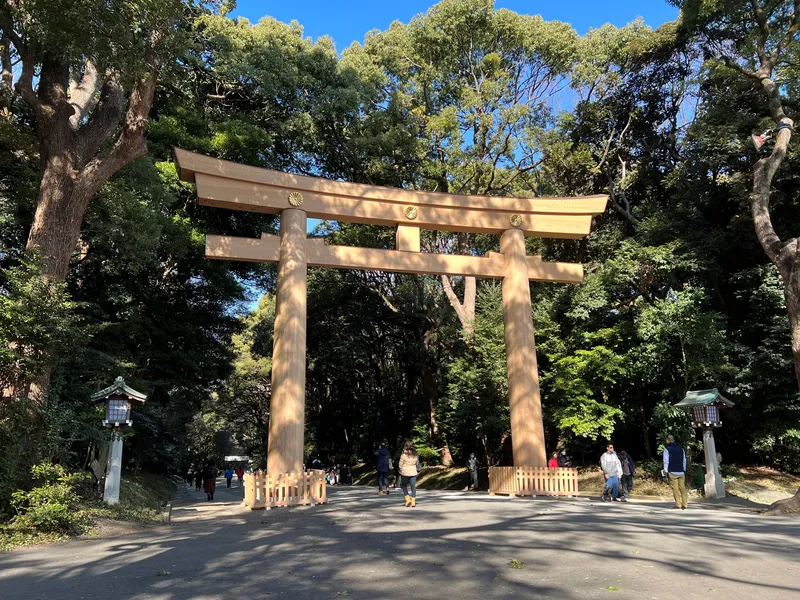
A 1920 Shinto shrine in central Tokyo enshrining Emperor Meiji and Empress Shōken, set in a 70-hectare forest that was planted from scratch and is visited today for prayers about bonds, protection and health.
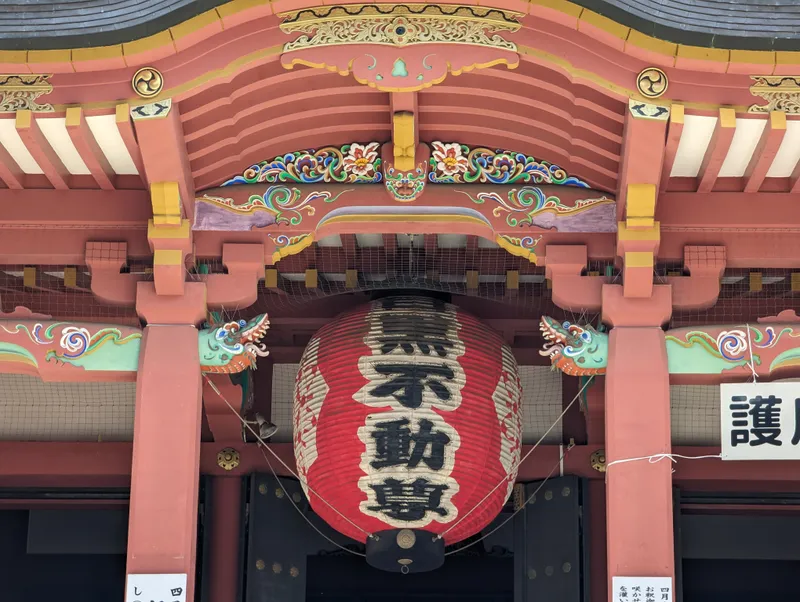 Temple
Meguro Fudoson (Ryusen-ji)
- Protection & Safety
- Purification
The oldest Fudo site in the Kanto, founded in 808 after a fifteen-year-old monk dreamed of a blue-black figure with a sword and a rope, and one of the Five-Colour Fudo that guarded Edo.
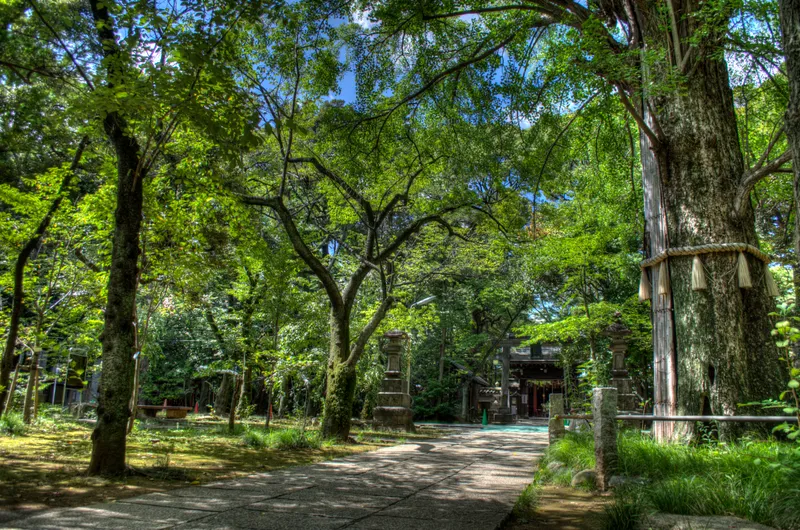 Shrine
Akasaka Hikawa Shrine
- Family & Home
- Love & Romance
- Money & Prosperity
A Minato shrine founded in 951 whose Edo-period buildings survived both the earthquake and the war, known for warding off misfortune and for the tying of bonds, and the shrine explains why it is known for each.
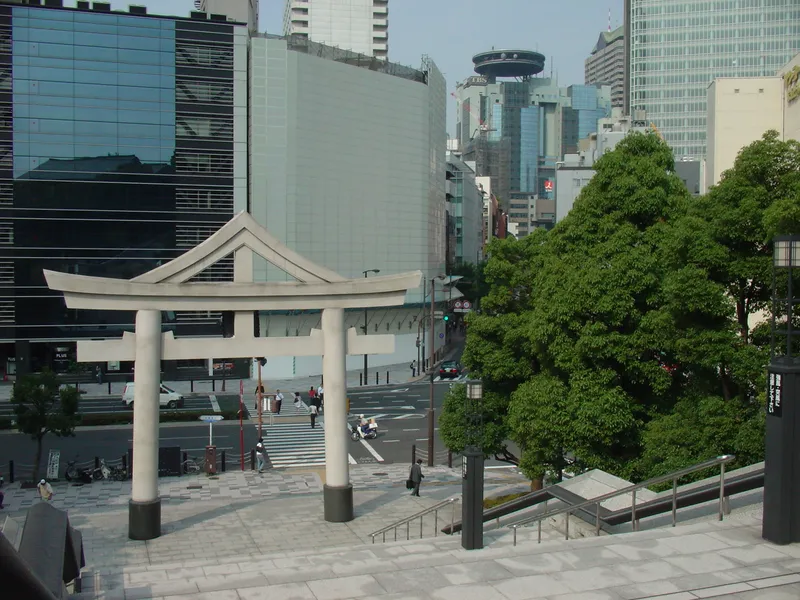 Shrine
Hie Shrine
- Career & Work
- Fertility & Children
- Money & Prosperity
A shrine on a wooded rise in Nagatacho, once the guardian of Edo Castle, whose messenger is the monkey, a pun the shrine explains itself, connecting it to warding off evil, to winning, and to the tying of bonds.
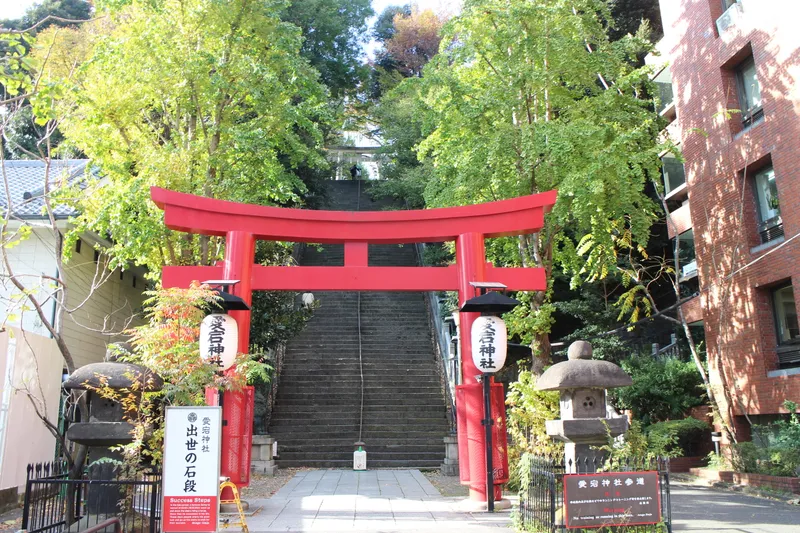 Shrine
Atago Shrine
- Career & Work
- Love & Romance
- Money & Prosperity
A shrine on a steep hill in Minato, founded in 1603 on Tokugawa Ieyasu's order as a deity against fire, and known for the stone staircase named after a rider who is said to have galloped up it.
 Temple
Zojo-ji
- Career & Work
- Family & Home
- Money & Prosperity
A Pure Land temple in Shiba, founded in 1393 and chosen by the Tokugawa as their family temple, whose hidden principal image is known as the Black Honzon of victory.
No places match your filters