Okunitama Shrine
大國魂神社 · Ōkunitama Jinja · Musashi Sōja Rokusho-gū
Researched and translated with AI assistance. Every claim is linked to its source, but errors get through, so check the official site for opening times, fees and closures.About
In short
The provincial shrine of old Musashi, in Fuchu, which dates its founding to 111 and enshrines a deity it identifies with Ōkuninushi of Izumo.
Quick facts
- Address
- 3-1 Miyamachi, Fuchu-shi, Tokyo 183-0023
- Access
- Five minutes on foot from Fuchu station on the Keio line, and five minutes from Fuchuhommachi on the JR Musashino and Nambu lines.
- Hours
- Prayers are performed daily from 9:00 to 16:00 and need no reservation; the shrine notes that rites and events can mean a wait. Telephone enquiries are taken until 17:00.
- Best time
- The Kurayami Festival at the start of May is the big one. The shrine also keeps a plum festival and the rake market in November, and it counts 2026 as the 1,900th year since its founding.
- Spiritual entities
- Ōkuninushi (大国主命)
- Official site
- www.ookunitamajinja.or.jp
About this place
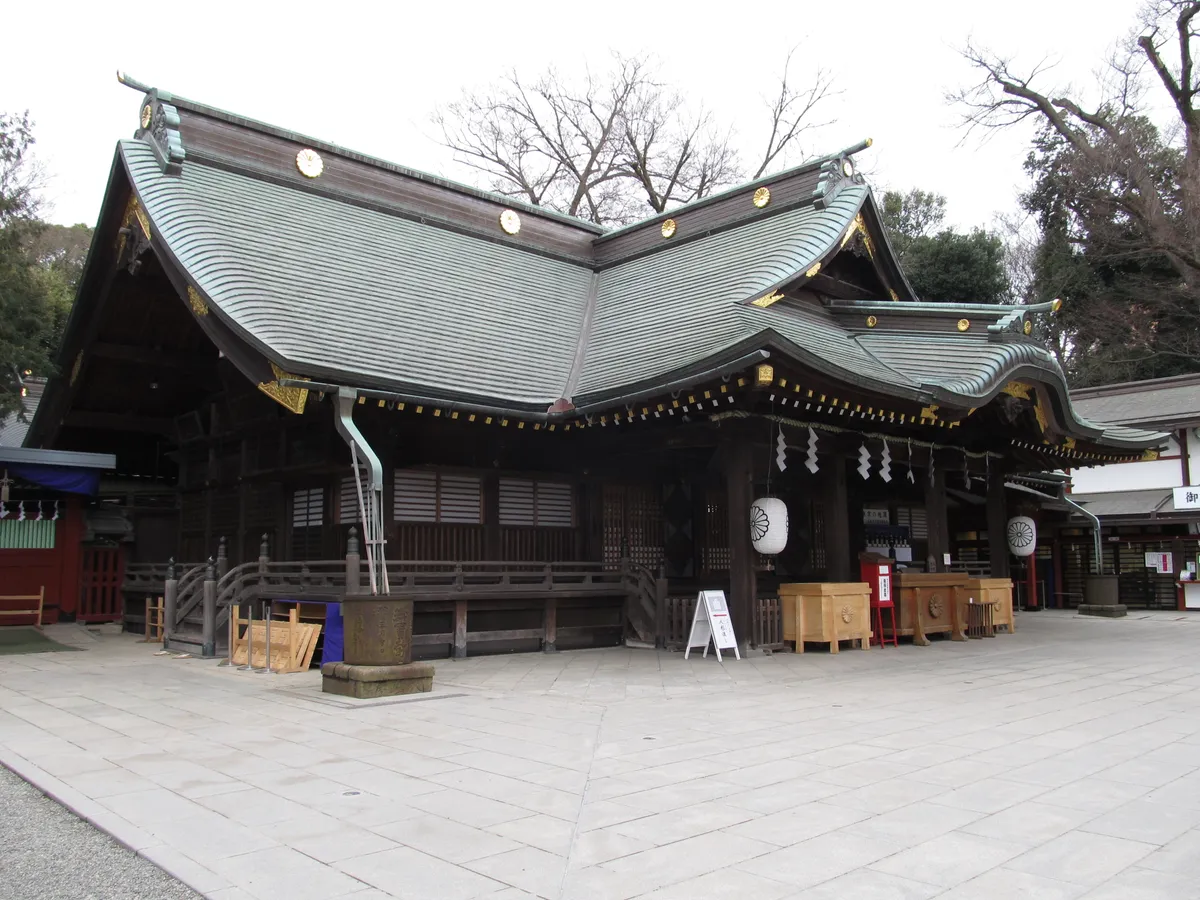
Okunitama Shrine stands five minutes from Fuchu station, at what was once the provincial capital of Musashi. It dates its founding to the year 111 and counts 2026 as its 1,900th year. Its deity is Ōkunitama no Ōkami, whom the shrine identifies with Ōkuninushi of Izumo, and it is known for warding off misfortune, for the tying of bonds, and as a deity of fortune. The present halls were built in 1667 by order of the shogun.
Origin and history
The shrine dates its founding to 5 May in the year 111, on an oracle of the deity, and says that descendants of Izumo no Omi Ame no Hohi served it once they had been appointed provincial governors of Musashi.
Its position comes from the province rather than from a legend. After the Taika reform of 645 the provincial capital of Musashi was placed here, and the shrine became the ritual ground of the provincial office, where the governor oversaw the rites of the whole province. Because the governor needed to make the round of the province's shrines, the provincial deities were enshrined here together, and that is the origin of the Musashi provincial shrine. Six well-known deities of the province were later enshrined on either side of the main hall, which is why it was also called the Shrine of the Six Places.
In 1182 Minamoto no Yoritomo sent Kasai Saburō Kiyoshige here as his envoy to pray for the safe delivery of his wife Masako, and in 1186 he had the hall built. It was repaired again in 1232. When Tokugawa Ieyasu entered Edo in 1590 he gave the shrine 500 koku, as the provincial shrine of Musashi.
Fire destroyed the halls in 1646. The buildings standing now were put up in 1667 by Kuze Hiroyuki on the order of the shogun Ietsuna: three halls joined side by side, painted vermilion, under a flowing roof whose cypress bark was replaced with copper in the 1860s. The main hall is a Tokyo cultural property. The shrine was called Musashi Sōja Rokusho-gū for centuries and took back its older name in 1871.
What it is locally associated with
The same deity as Izumo
The shrine states that Ōkunitama no Ōkami is the same deity as Ōkuninushi of Izumo, and describes him as having opened Musashi and taught its people food, clothing, shelter and medicine.
documented historyWarding in every direction
Alongside ordinary warding the shrine performs happō-yoke, against misfortune arising from the layout of a house, the land, a direction or a date. It calls itself a deity of directional warding.
documented historyThe provincial shrine of Musashi
When the provincial capital was placed here after 645, the province's deities were gathered so the governor could make his round in one place. Six of them still flank the main hall.
documented historyYoritomo prayed here for his wife, 1182
He sent Kasai Saburō Kiyoshige as envoy to pray for Hōjō Masako's safe delivery, and built the hall four years later.
documented history
The shrine puts what it is known for into a single clause, and the tags on this page come from it: its deity is popularly famous as a deity of fortune, of the tying of bonds, and of warding off and driving away misfortune. It is worth reading that alongside what the shrine says the deity did. Ōkunitama no Ōkami opened the land of Musashi in the distant past, taught the people the way of food, clothing and shelter, and gave them methods of medicine and of charms. The associations follow from a deity understood as having set up the conditions of ordinary life, which is a different footing from a shrine known for one blessing.
The identification matters too, and the shrine makes it rather than leaving it to be inferred: Ōkunitama no Ōkami is the same deity as Ōkuninushi of Izumo, and a child of Susanoo. That is why this page sits in the same entity collection as Akasaka Hikawa, which enshrines Ōnamuchi under the other name.
Warding is the practical half. Beyond the ordinary unlucky-year rite the shrine performs happō-yoke, warding in all eight directions, which it describes as removing every misfortune arising from the physiognomy of a house, the character of the land, a direction or the day, and it says its virtue as a deity of directional warding is looked to from across the country. It publishes the unlucky-year and eight-direction age tables each year.
One piece of history sits oddly well with a modern prayer list. In 1182 Minamoto no Yoritomo sent an envoy here to pray for the safe delivery of his wife, Hōjō Masako. Safe childbirth is still among the rites the shrine performs, though it is not among the things it names itself for.
Claims and evidence levels 7
- The shrine dates its founding to 5 May in the year 111, on an oracle of the deity, and relates that descendants of Izumo no Omi Ame no Hohi served it after being appointed provincial governors of Musashi. folk tradition
- After the Taika reform of 645 the provincial capital of Musashi was placed here and the shrine became the ritual ground of the provincial office; the deities of the province were enshrined together so the governor could make his round in one place, which is the origin of the Musashi provincial shrine. documented history
- The shrine states that Ōkunitama no Ōkami is the same deity as Ōkuninushi of Izumo and a child of Susanoo, that he opened the land of Musashi and taught its people food, clothing and shelter along with methods of medicine and charms, and that he is popularly known as a deity of fortune, of the tying of bonds, and of warding off misfortune. documented history
- In 1182 Minamoto no Yoritomo sent Kasai Saburō Kiyoshige here as envoy to pray for the safe delivery of his wife Hōjō Masako, and in 1186 had the shrine hall built. documented history
- Tokugawa Ieyasu granted the shrine 500 koku after entering Edo in 1590, as the provincial shrine of Musashi. documented history
- The halls burned in 1646 and the present buildings were erected in 1667 by Kuze Hiroyuki on the order of the shogun Ietsuna: three halls joined side by side in vermilion under a flowing roof, whose cypress bark was replaced with copper in the 1860s. The main hall is a designated cultural property of Tokyo. documented history
- The shrine performs happō-yoke, warding in all eight directions, which it describes as removing misfortune arising from the physiognomy of a house, the land, a direction or the date. documented history
Visiting tips
The general form is in the visiting guide below, and this shrine publishes its own version of it, which is worth following here. Two details in it are more specific than most: it asks that you bow before passing through the torii, and that you walk to the side of the approach rather than down the middle, because the centre is the deity's path.
Prayers need no reservation and are performed through the day from 9:00 to 16:00, but the shrine warns plainly that a rite or a festival can mean a long wait, which is worth knowing at a shrine whose festival calendar is this full.
The Kurayami Festival at the beginning of May is a major event rather than a quiet one, and the grounds are not a place for a contemplative visit while it runs.
Related guides
- How to visit a shrine or temple in JapanThe country-wide basics: purifying at the water basin, the two-bows-two-claps-one-bow form at shrines, and what temples do instead.
- What a "power spot" actually isA modern Japanese coinage, not a traditional religious category. Where the word came from, what it does and does not claim, and why this site uses it anyway.
- Shrine or temple?A shrine is Shinto and a temple is Buddhist, and you can usually tell at the gate. Why the line is cleaner on paper than on the ground, and what a government order in 1868 has to do with it.
- Omamori, ema, omikuji and goshuinThe four things you are most likely to receive, write, draw or be given at a shrine or temple, what each is actually for, and the one of them people most often get wrong.
Sources
- History and origins (歴史・由緒) — Okunitama Shrine (accessed 2026-08-02)
- Warding and prayers (厄除け・ご祈祷) — Okunitama Shrine (accessed 2026-08-02)
- Visiting (参拝について) — Okunitama Shrine (accessed 2026-08-02)
- Ōkunitama Shrine (Q611678) coordinate location — Wikidata (accessed 2026-08-02)
Last updated:
Similar places
8 places
 Shrine
Akasaka Hikawa Shrine
- Family & Home
- Love & Romance
- Money & Prosperity
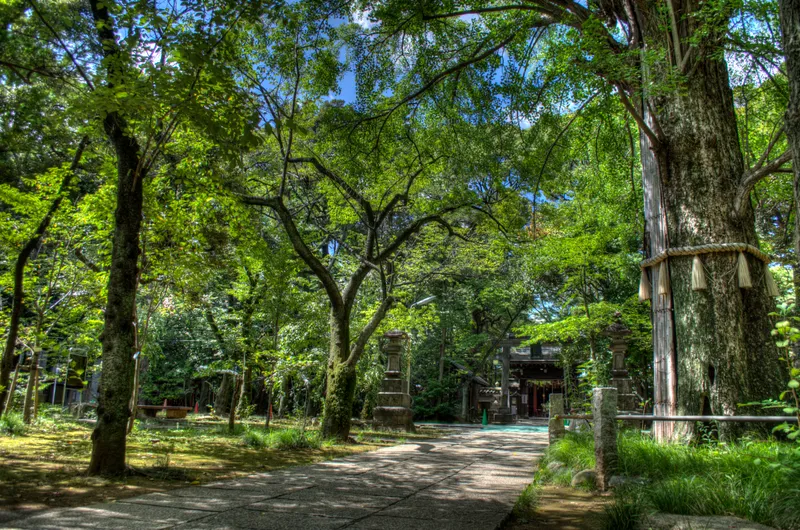
A Minato shrine founded in 951 whose Edo-period buildings survived both the earthquake and the war, known for warding off misfortune and for the tying of bonds, and the shrine explains why it is known for each.
 Shrine
Hie Shrine
- Career & Work
- Fertility & Children
- Money & Prosperity
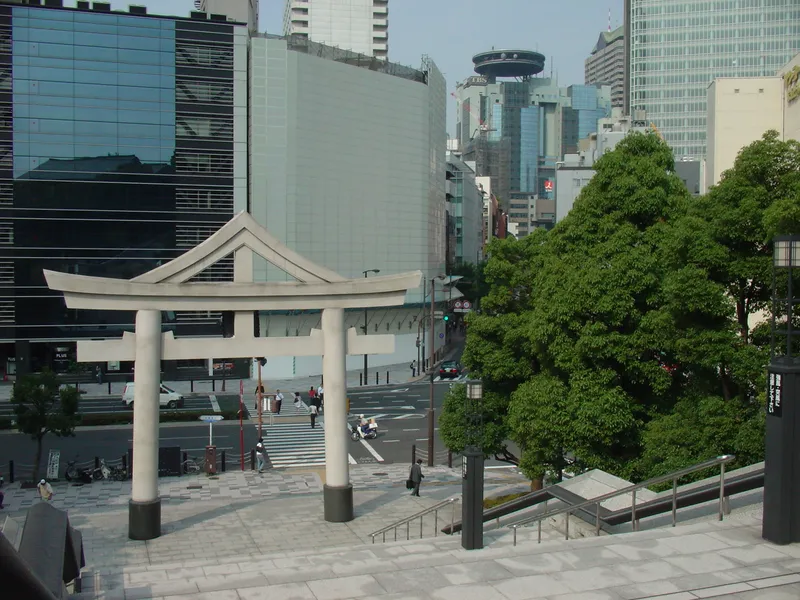
A shrine on a wooded rise in Nagatacho, once the guardian of Edo Castle, whose messenger is the monkey, a pun the shrine explains itself, connecting it to warding off evil, to winning, and to the tying of bonds.
 Shrine
Atago Shrine
- Career & Work
- Love & Romance
- Money & Prosperity
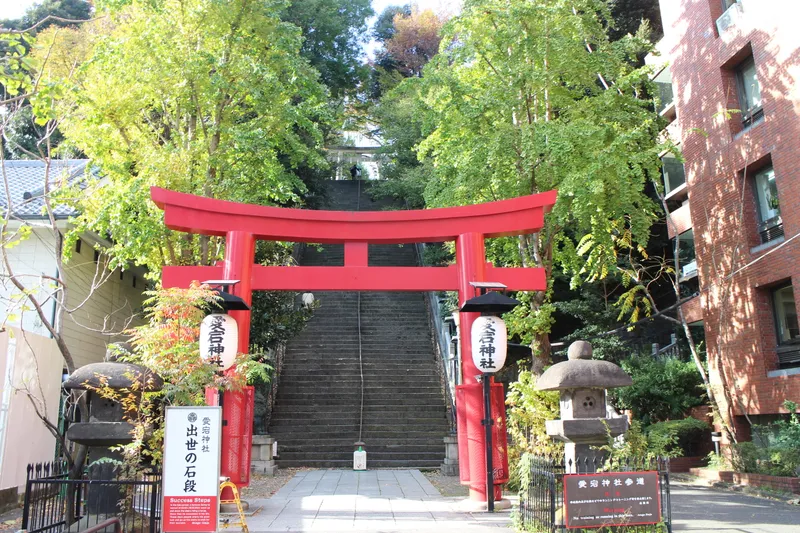
A shrine on a steep hill in Minato, founded in 1603 on Tokugawa Ieyasu's order as a deity against fire, and known for the stone staircase named after a rider who is said to have galloped up it.
 Shrine
Shiba Daijingu
- Love & Romance
- Money & Prosperity
- Protection & Safety
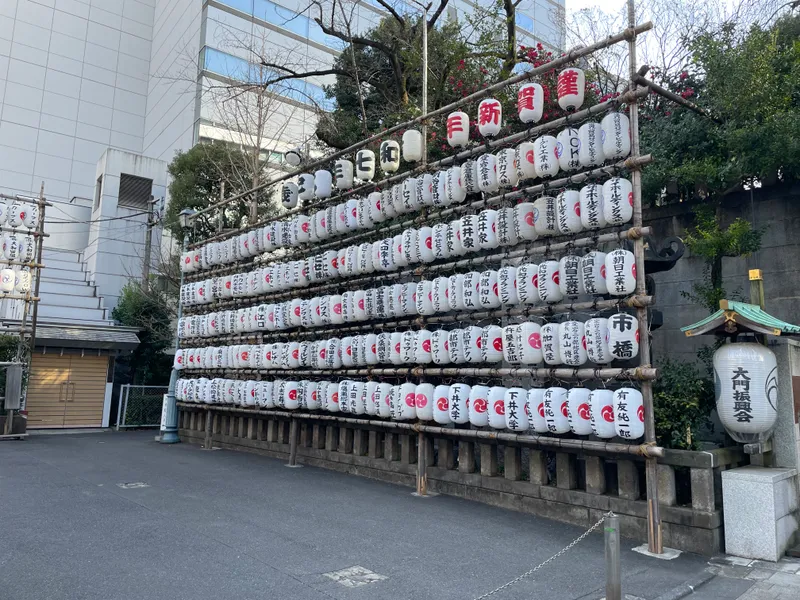
A Minato shrine founded in 1005 that enshrines the two deities of Ise, known in the Edo period as the Ise of the Kanto and today for a box charm sold nowhere else.
 Shrine
Nezu Shrine
- Career & Work
- Exams & Study
- Family & Home
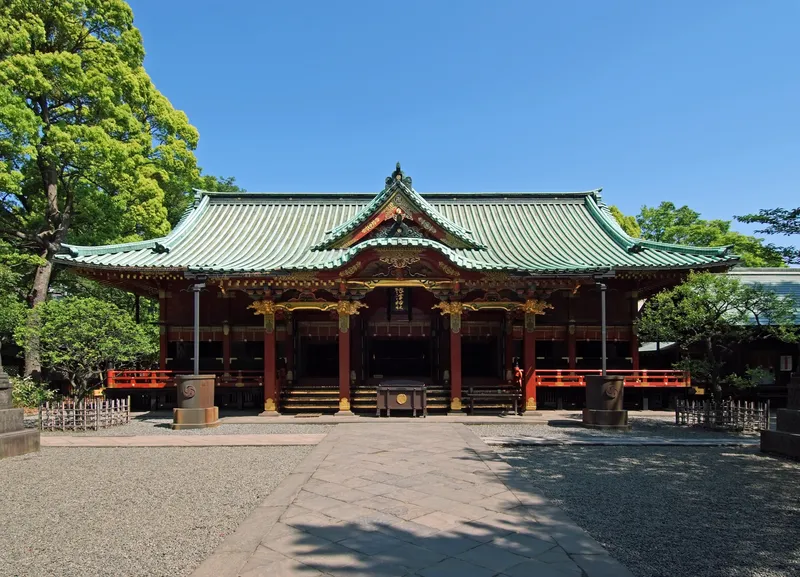
A Bunkyo shrine whose entire 1706 complex survives intact as an Important Cultural Property, rare in Tokyo, with an azalea hill and a tunnel of small red torii (鳥居).
 Shrine
Kanda Myojin
- Career & Work
- Family & Home
- Money & Prosperity
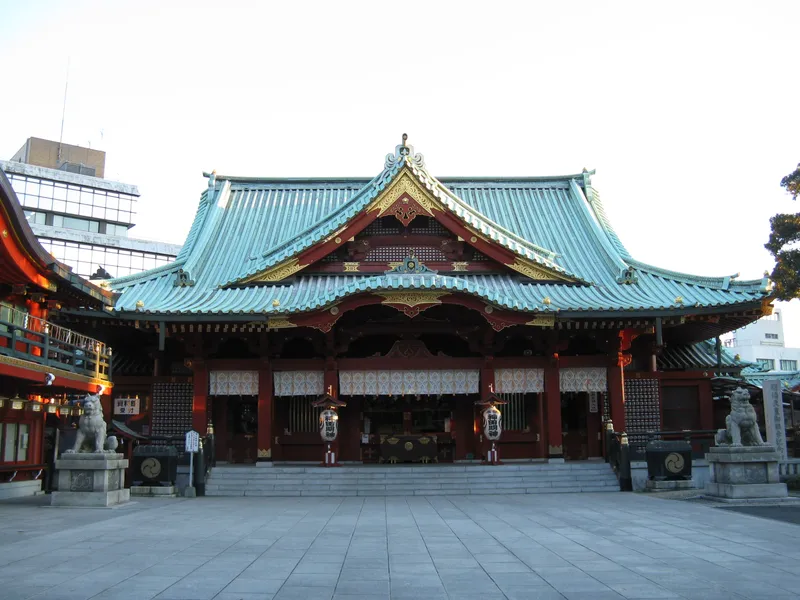
A Chiyoda shrine that served as the guardian shrine of all Edo, enshrining three deities between them associated with business prosperity, good matches and warding off misfortune, and these days selling a charm for information security.
 Shrine
Omiya Hachimangu
- Fertility & Children
- Protection & Safety
- Bonds & Matchmaking
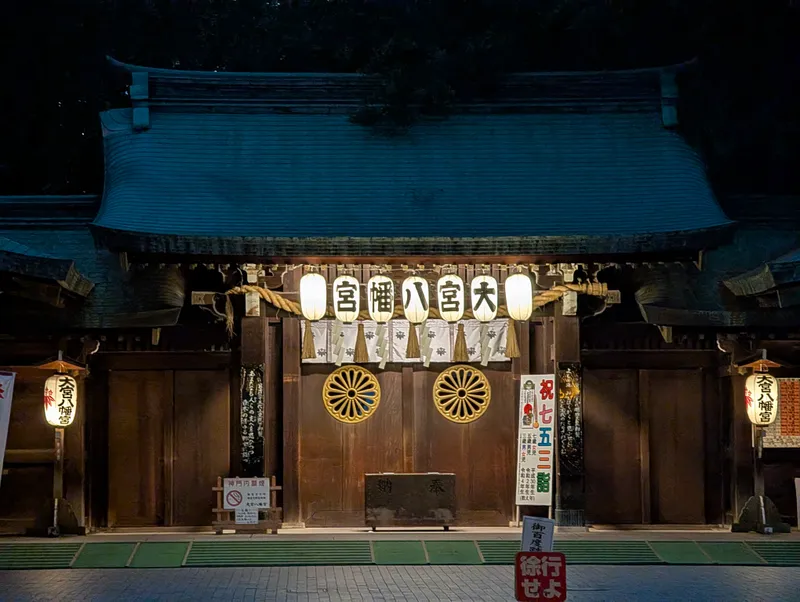
A large wooded shrine in Suginami, founded in 1063 by Minamoto no Yoriyoshi after he read a bank of white cloud as the banners of his own clan, and known for child-rearing and warding.
 Temple
Gotoku-ji
- Money & Prosperity
- Bonds & Matchmaking
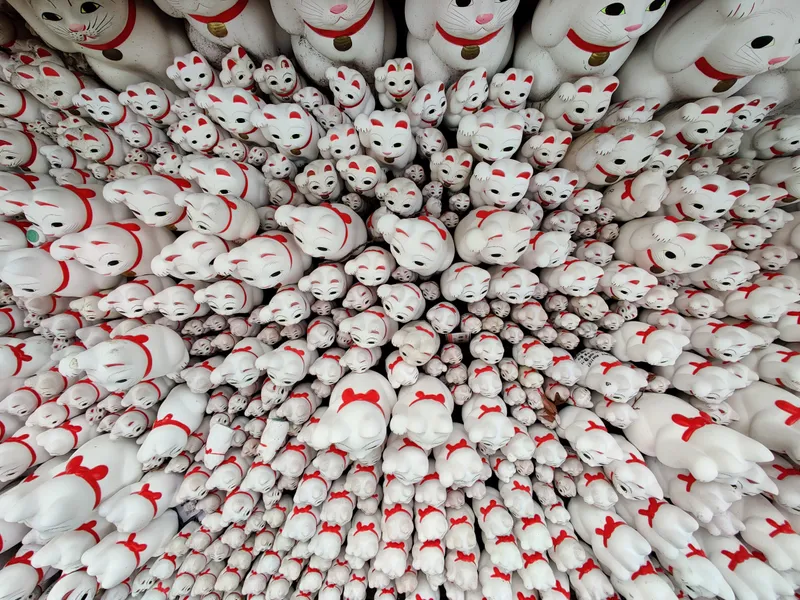
A Sōtō Zen temple in Setagaya where thousands of white beckoning-cat figurines are left by visitors, and where the temple is careful to say the cat brings connections, not fortune.
No places match your filters