Musashi Mitake Shrine
武蔵御嶽神社 · Musashi Mitake Jinja
Researched and translated with AI assistance. Every claim is linked to its source, but errors get through, so check the official site for opening times, fees and closures.About
In short
A mountain shrine above Ome whose guardian is a wolf, long turned to against theft and evil, and where dogs are now blessed year-round.
Quick facts
- Address
- 176 Mitakesan, Ome-shi, Tokyo 198-0175
- Access
- From Mitake station on the JR Ome line, by bus to the cable car, then the cable car up the mountain and a walk of about twenty-five minutes to the shrine.
- Hours
- The shrine sits at the top of Mount Mitake and is reached by cable car and then a walk uphill, so the practical limit on a visit is the cable car timetable rather than a gate time. Check it before travelling.
- Best time
- The shrine keeps a full ritual calendar including the futomani divination rite, the sunrise festival, horseback archery and kagura. Dog blessings are performed year-round.
- Spiritual entities
- Ebisu (恵比寿, Sukunahikona) · Ōkuchi-no-Magami (大口真神, Oinu-sama) · Ōkuninushi (大国主命)
- Official site
- musashimitakejinja.jp
About this place
Musashi Mitake Shrine stands near the summit of Mount Mitake, reached by cable car and then a climb. Its guardian is not a lion but a wolf: the shrine says the oinu-sama it is known for is the Japanese wolf, and the guardian figures at the main hall are wolves rather than the usual Chinese lions. It has been turned to against theft and against evil for centuries, and today people bring their dogs.
Origin and history
The shrine dates its founding to the reign of the tenth emperor, Sujin, when Takenunakawawake enshrined Ōnamuchi and Sukunahikona while pacifying the twelve eastern roads.
The oldest written record it cites is from 736, when the monk Gyōki is recorded as praying for the protection of the eastern provinces and installing an image of Kongō Zaō Gongen. From then the mountain was known as a place of Zaō devotion, of Shugendō and of mountain worship. The Heian-period register of deities lists the local land deity here under an older name.
In the medieval period mountain worship grew and the mountain became the centre of Shugendō in the Kanto region. In the Kamakura period it was revered by powerful warriors under the name Kinpusen Mitake Zaō Gongen, and the shrine relates that Hatakeyama Shigetada donated armour, a saddle and a sword. War fires left it derelict, and it was restored in 1234 by imperial command, repaired in 1359 by the deputy shogun Ashikaga Motouji, and rebuilt in 1511.
When Tokugawa Ieyasu was enfeoffed in the Kanto in 1590 the shrine received thirty koku, and in 1606 his order had the hall rebuilt. That rebuilding turned it around: the hall had faced south, and was reoriented to face east so that it stood as the western guard of Edo. The present offering and worship halls date from 1700, built by order of the fifth shogun, Tsunayoshi.
In the middle of the Edo period ordinary people began making pilgrimages, and the oshi, the shrine's own resident guides, organised them into confraternities that spread Mitake devotion across the Kanto plain. The shrine was renamed twice after the Meiji restoration, taking its present name in 1952.
What it is locally associated with
The wolf that showed the way
The shrine tells of a white wolf that guided Yamato Takeru when he lost his way here, and was told to remain on the mountain as Ōkuchi-no-Magami and destroy all demons.
folk traditionAgainst theft and against evil
From the 1830s Ōkuchi-no-Magami became widely known for warding off evil and preventing theft, and was affectionately called oinu-sama. The charms carry the wolf.
documented historyGuardian figures that are wolves
The bronze pair at the main hall, dated 1783, are modelled on the Japanese wolf rather than the usual Chinese lions. A second pair from 1985 stands before the hall.
documented historyBlessings for dogs
Because of the wolf, people began bringing dogs. The shrine responded to the requests and now performs blessings for pet dogs at the shrine front, all year.
local custom
This shrine summarises itself as a place turned to against theft, against evil, and for a good harvest, and the first two are why this page carries the warding tag. All three run back to the same figure, and it is an unusual one.
The shrine is plain about what the oinu-sama is: the Japanese wolf. Its own telling is that when Yamato Takeru came east and tried to go north-west from this mountain, a malign deity of the deep mountains took the form of a great white deer and blocked the way. He killed the deer, but the mountains and valleys shook, cloud and mist came down, and he lost the path. A white wolf appeared and led his army north-west, and he told it to remain on this mountain as Ōkuchi-no-Magami and destroy every demon. From about the 1830s that deity was widely known for warding off evil and preventing theft, and people came to call it oinu-sama.
The wolf is visible rather than notional. The guardian figures at the main hall are bronze, dated 1783, and are modelled on the Japanese wolf instead of the Chinese lions found almost everywhere else; the pair standing before the hall was made by the sculptor of the Nagasaki peace statue and dedicated in 1985. On the paper charms the wolf's eye carries a crescent moon, because the three Mitake of Japan were likened to snow, moon and flower, and this one was the moon.
The shrine adds something worth keeping. The Japanese wolf is now held to be extinct, but until relatively recently wolves and people lived alongside each other on this mountain: frightening, and at the same time welcome, because they ate the animals that spoiled the fields. That is the sort of detail that explains a devotion better than a list of blessings does.
In recent years visitors have brought their dogs, on the strength of the name, and the shrine says it began performing blessings for pet dogs in response to those requests. It does them at the shrine front throughout the year.
Claims and evidence levels 8
- The shrine dates its founding to the reign of the tenth emperor, Sujin, when Takenunakawawake enshrined Ōnamuchi and Sukunahikona while pacifying the twelve eastern roads. folk tradition
- The oldest written record the shrine cites is from 736, recording that the monk Gyōki prayed for the protection of the eastern provinces and installed an image of Kongō Zaō Gongen; from then the mountain was known for Zaō devotion, Shugendō and mountain worship. documented history
- The shrine received thirty koku when Tokugawa Ieyasu was enfeoffed in the Kanto in 1590, and the hall was rebuilt on his order in 1606, at which point it was turned from facing south to facing east so as to stand as the western guard of Edo; the present offering and worship halls were built in 1700 by order of the shogun Tsunayoshi. documented history
- The shrine relates that a white wolf guided Yamato Takeru when a malign deity in the form of a white deer caused him to lose his way, and that he told the wolf to remain on the mountain as Ōkuchi-no-Magami and destroy all demons. folk tradition
- The shrine states that its oinu-sama is the Japanese wolf, and that from around the 1830s Ōkuchi-no-Magami was widely known as a deity of warding off evil and preventing theft. documented history
- The bronze guardian figures at the main hall, dated 1783, are modelled on the Japanese wolf rather than on Chinese lions; a further pair before the hall was made by Kitamura Seibō and dedicated in 1985. documented history
- The shrine states that the crescent moon on the eye of the oinu-sama charm comes from the three Mitake of Japan being likened to snow, moon and flower, with Musashi Mitake as the moon. documented history
- The shrine performs blessings for pet dogs at the shrine front throughout the year, which it says it began in response to requests from visitors drawn by the oinu-sama devotion. local custom
Visiting tips
The general form is in the visiting guide below. Specific to Musashi Mitake:
This is a mountain, not a walk from a station. The shrine sits near the summit at around 900 metres, reached by cable car and then a climb on foot, so the cable car timetable sets the shape of a visit and should be checked before setting out.
The oshi, the shrine's resident guides, still keep lodgings on the mountain, and the place is a working site of pilgrimage and training rather than a viewpoint.
Dogs are welcome here, which is not true of shrines in general, and the shrine performs blessings for them. That is a local practice and not a licence to bring animals elsewhere.
Related guides
- How to visit a shrine or temple in JapanThe country-wide basics: purifying at the water basin, the two-bows-two-claps-one-bow form at shrines, and what temples do instead.
- What a "power spot" actually isA modern Japanese coinage, not a traditional religious category. Where the word came from, what it does and does not claim, and why this site uses it anyway.
- Shrine or temple?A shrine is Shinto and a temple is Buddhist, and you can usually tell at the gate. Why the line is cleaner on paper than on the ground, and what a government order in 1868 has to do with it.
- Omamori, ema, omikuji and goshuinThe four things you are most likely to receive, write, draw or be given at a shrine or temple, what each is actually for, and the one of them people most often get wrong.
Sources
- History of the shrine (神社由緒) — Musashi Mitake Shrine (accessed 2026-08-02)
- Oinu-sama, the wolf (おいぬ様) — Musashi Mitake Shrine (accessed 2026-08-02)
- Musashi Mitake Shrine (Q6587276) coordinate location — Wikidata (accessed 2026-08-02)
Last updated:
Similar places
8 places
 Shrine
Okunitama Shrine
- Money & Prosperity
- Protection & Safety
- Bonds & Matchmaking
The provincial shrine of old Musashi, in Fuchu, which dates its founding to 111 and enshrines a deity it identifies with Ōkuninushi of Izumo.
 Shrine
Akasaka Hikawa Shrine
- Family & Home
- Love & Romance
- Money & Prosperity
A Minato shrine founded in 951 whose Edo-period buildings survived both the earthquake and the war, known for warding off misfortune and for the tying of bonds, and the shrine explains why it is known for each.
 Shrine
Kanda Myojin
- Career & Work
- Family & Home
- Money & Prosperity
A Chiyoda shrine that served as the guardian shrine of all Edo, enshrining three deities between them associated with business prosperity, good matches and warding off misfortune, and these days selling a charm for information security.
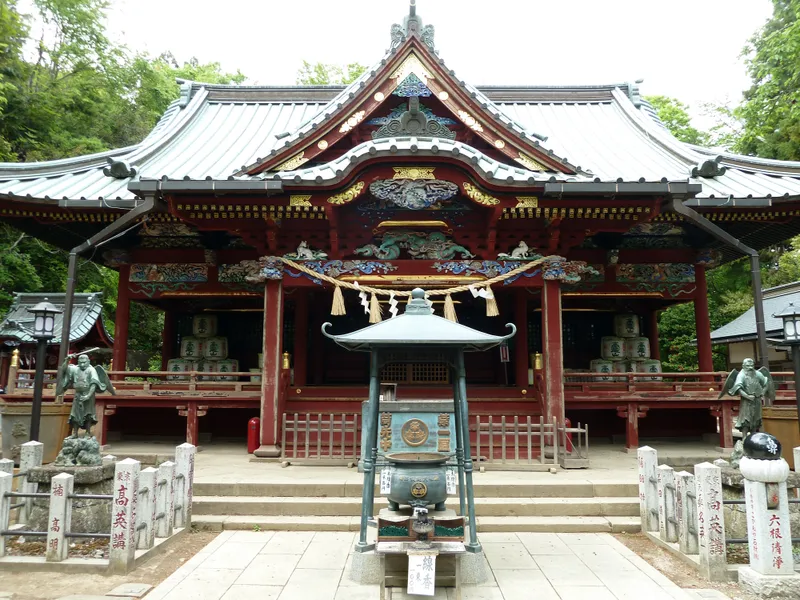 Temple
Takaosan Yakuo-in
- Protection & Safety
- Purification
A mountain temple founded in 744 on Mount Takao, west of Tokyo, whose principal image is Izuna Daigongen and whose tengu are held to ward off calamity, still an active centre of Shugendo mountain asceticism.
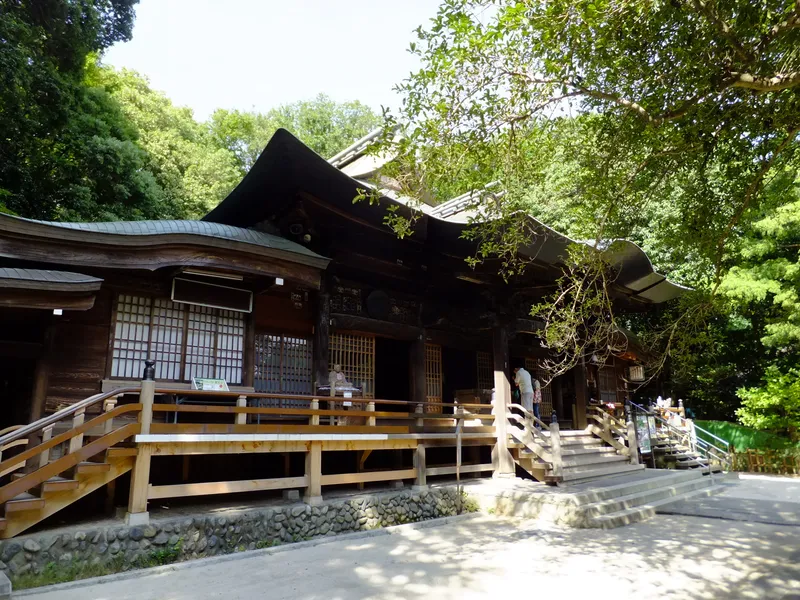 Temple
Jindai-ji
- Protection & Safety
A Tendai temple in Chofu founded in 733, named after a water deity said to remove epidemics, and known for a hidden image of the monk credited with inventing omikuji (おみくじ).
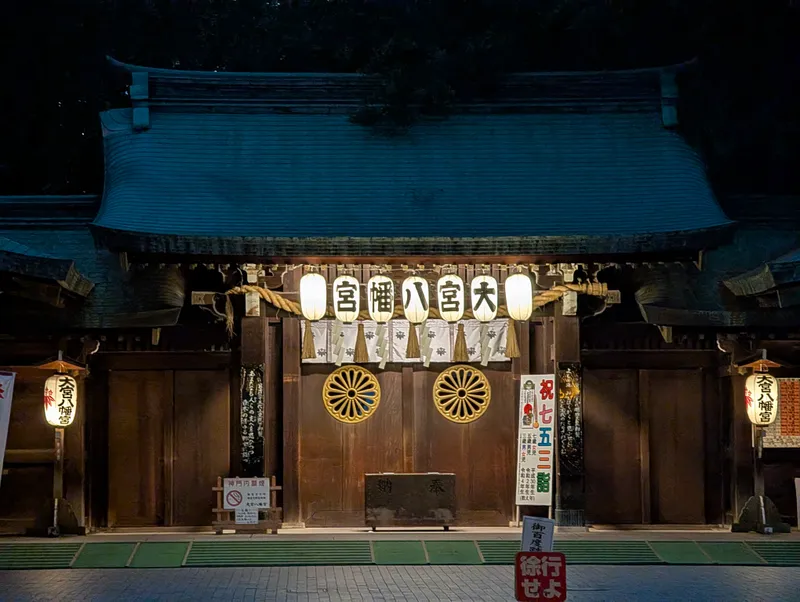 Shrine
Omiya Hachimangu
- Fertility & Children
- Protection & Safety
- Bonds & Matchmaking
A large wooded shrine in Suginami, founded in 1063 by Minamoto no Yoriyoshi after he read a bank of white cloud as the banners of his own clan, and known for child-rearing and warding.
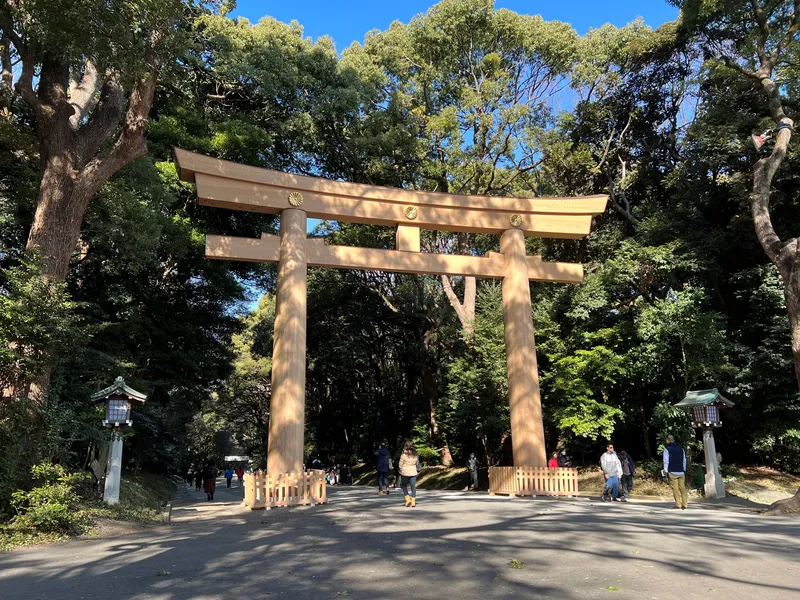 Shrine
Meiji Jingu
- Health & Healing
- Protection & Safety
- Bonds & Matchmaking
A 1920 Shinto shrine in central Tokyo enshrining Emperor Meiji and Empress Shōken, set in a 70-hectare forest that was planted from scratch and is visited today for prayers about bonds, protection and health.
 Temple
Meguro Fudoson (Ryusen-ji)
- Protection & Safety
- Purification
The oldest Fudo site in the Kanto, founded in 808 after a fifteen-year-old monk dreamed of a blue-black figure with a sword and a rope, and one of the Five-Colour Fudo that guarded Edo.
No places match your filters