Takaosan Yakuo-in
高尾山薬王院 · Takaosan Yakuōin · Yakuo-in
Researched and translated with AI assistance. Every claim is linked to its source, but errors get through, so check the official site for opening times, fees and closures.About
In short
A mountain temple founded in 744 on Mount Takao, west of Tokyo, whose principal image is Izuna Daigongen and whose tengu are held to ward off calamity, still an active centre of Shugendo mountain asceticism.
Quick facts
- Address
- 2177 Takaomachi, Hachioji-shi, Tokyo 193-8686
- Access
- From Takaosanguchi station on the Keio line it is three minutes on foot to Kiyotaki, where the cable car and the chairlift start. The cable car runs to Takaosan station in about six minutes, from which the temple is roughly twenty minutes' walk; the chairlift takes about twelve minutes to the upper station and thirty minutes' walk after. By car, the temple's prayer-hall car park is about a kilometre from the Takaosan interchange and holds 250 vehicles, with reception from 8:00 to 16:00.
- Hours
- The temple office takes calls 9:00–16:00. In practice your day is set by the cable car: first ascent 8:00, with last descents ranging from 17:15 in midwinter to 18:30 on summer weekends — check before planning a late visit.
- Best time
- The fire-walking festival in March is the temple's most striking public rite. Autumn colour is the busiest season on the mountain; early morning on a weekday is the quietest it gets.
- Spiritual entities
- Fudō Myōō (不動明王) · Izuna Daigongen (飯縄大権現)
- Official site
- www.takaosan.or.jp
About this place
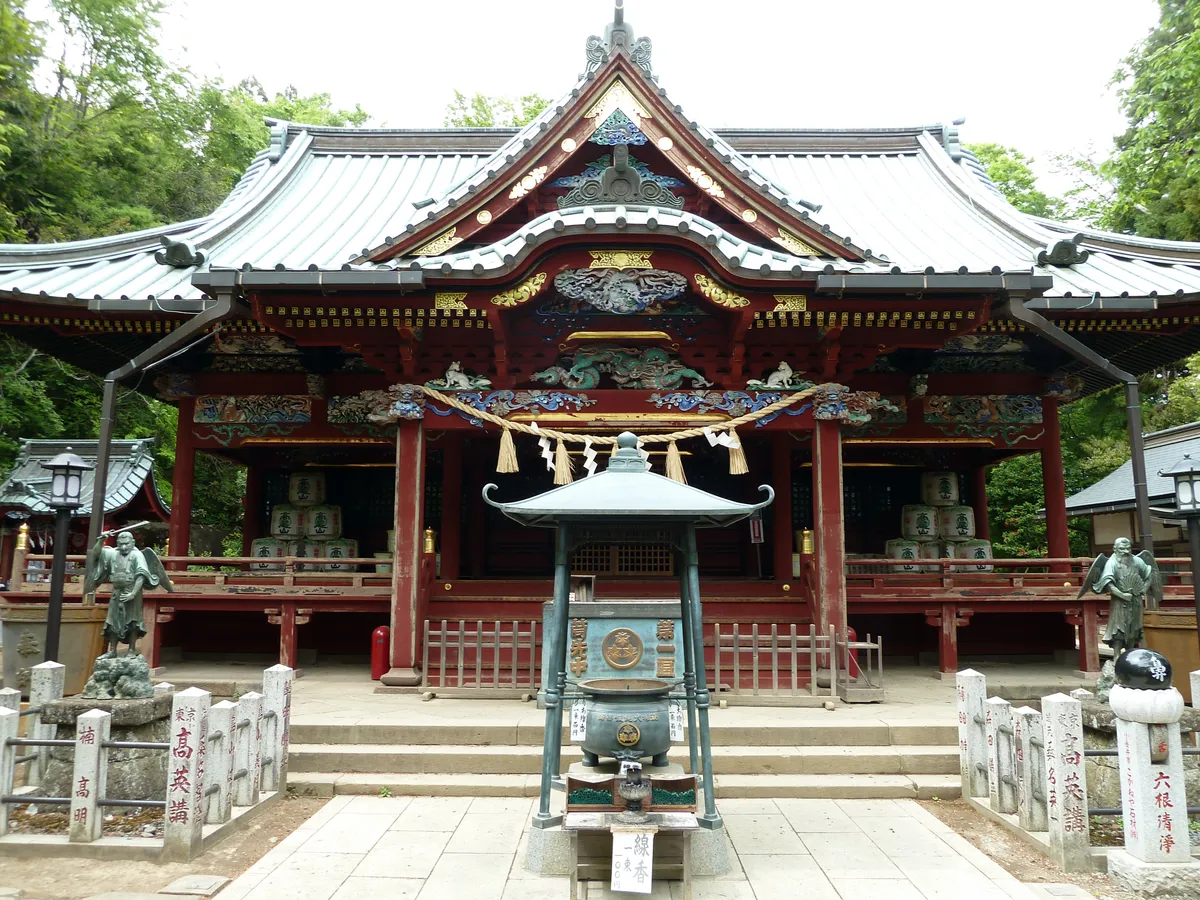
Yakuo-in sits partway up Mount Takao, about an hour from central Tokyo and then a climb or a cable car. It was founded in 744 by imperial command as a temple to guard the eastern provinces, and re-established in the fourteenth century around the image it still enshrines, Izuna Daigongen. It remains a working Shugendo temple: it runs waterfall austerities, a fire-walking rite, and training retreats, alongside the ordinary business of a temple that a great many day-trippers walk through.
Origin and history
The temple's account is that it was opened in 744, by command of Emperor Shōmu, as a temple of prayer to guard the eastern provinces, founded by the eminent monk Gyōki. In the Eiwa era, around 1375, the monk Shungen came from Mount Daigo in Kyoto, performed the esoteric rite of eight thousand goma offerings, and enshrined the image the temple has kept ever since (Izuna Daigongen), restoring the temple in the process.
That second founding is what shaped it. Yakuo-in belongs to Shugendo, the tradition of mountain asceticism, and the mountain and the temple are not really separable: the practice happens on the slope.
What it is locally associated with
Founded in 744 to guard the east
Opened by imperial command as a temple of prayer for the eastern provinces, and restored around 1375 around the Izuna Daigongen image it still enshrines.
documented historyThe tengu of Mount Takao
The temple describes the tengu as attendants of Izuna Daigongen, holding power to remove calamity, dispel misfortune and bring good fortune.
documented historyA working Shugendo temple
Waterfall austerities, a fire-walking festival and training retreats all still run here. This is a place of practice, not only of visits.
local custom
What the temple is petitioned for comes through its tengu. In its own words, the tengu serve as attendants of Izuna Daigongen and hold the power to grant benefits that save people: removing calamity and opening fortune, dispelling misfortune and disaster, and bringing good fortune in. That is the basis for the protective association here, and the tengu are everywhere on the mountain in consequence, in statues and on charms.
The second thread is practice rather than petition. Yakuo-in is a Shugendo temple and still operates as one: it runs a waterfall austerity hall, a fire-walking festival, and training experiences that ordinary visitors can join. That is why purification sits among this page's tags where it would not for most Tokyo temples. Here it describes something the temple actually does, not a general association.
Goma prayers are performed through the day, and the temple runs a vehicle prayer hall down at the foot of the mountain as well. Shōjin cuisine (the vegetarian cooking of a temple kitchen) can be booked, which is one of the few ways to encounter that food in Tokyo without going out of your way.
Claims and evidence levels 5
- The temple states it was opened in 744 by command of Emperor Shōmu, as a temple of prayer to guard the eastern provinces, founded by the monk Gyōki. documented history
- Around 1375 the monk Shungen came from Mount Daigo, performed the rite of eight thousand goma offerings, and enshrined Izuna Daigongen, the image the temple still keeps. documented history
- The temple describes the tengu as attendants of Izuna Daigongen, holding power to remove calamity, dispel misfortune and bring good fortune. documented history
- Yakuo-in remains an active Shugendo temple, running waterfall austerities, a fire-walking festival and training retreats open to visitors. local custom
- The cable car from Kiyotaki to Takaosan station takes about six minutes and costs ¥490 one way or ¥980 return for adults; the temple is about twenty minutes on foot from the upper station. documented history
Visiting tips
The general form for a temple is in the visiting guide below. What is specific to Yakuo-in is that reaching it is part of it.
There are three ways up. Walking Trail 1 from the trailhead takes about seventy minutes. The cable car cuts that to about twenty minutes of walking from the upper station, and the chairlift to about thirty. From the temple to the summit is another twenty minutes on foot. The cable car costs ¥490 one way or ¥980 return for adults, half that for children.
The timing trap is the last descent. The first cable car up is at 8:00, but the last one down varies by month and by day of the week: as early as 17:15 on winter weekdays and as late as 18:30 on summer weekends. Miss it and you walk down. Check the current timetable rather than trusting a number you read once.
This is a mountain, so ordinary mountain sense applies: proper shoes, and more water than a city walk needs. And it is a working temple of ascetic practice. You may well encounter people mid-training, which is not a spectacle laid on for visitors.
Related guides
- How to visit a shrine or temple in JapanThe country-wide basics: purifying at the water basin, the two-bows-two-claps-one-bow form at shrines, and what temples do instead.
- What a "power spot" actually isA modern Japanese coinage, not a traditional religious category. Where the word came from, what it does and does not claim, and why this site uses it anyway.
- Shrine or temple?A shrine is Shinto and a temple is Buddhist, and you can usually tell at the gate. Why the line is cleaner on paper than on the ground, and what a government order in 1868 has to do with it.
- Omamori, ema, omikuji and goshuinThe four things you are most likely to receive, write, draw or be given at a shrine or temple, what each is actually for, and the one of them people most often get wrong.
Sources
- Mount Takao and the tengu (高尾山と天狗様) — Takaosan Yakuo-in (accessed 2026-08-02)
- Visiting guidance — routes and times (参拝のご案内) — Takaosan Yakuo-in (accessed 2026-08-02)
- Access, cable car fares and timetable (交通のご案内) — Takaosan Yakuo-in (accessed 2026-08-02)
- Takao-san Yakuō-in (Q8194732) — coordinate location — Wikidata (accessed 2026-08-02)
Last updated:
Similar places
8 places
 Temple
Meguro Fudoson (Ryusen-ji)
- Protection & Safety
- Purification
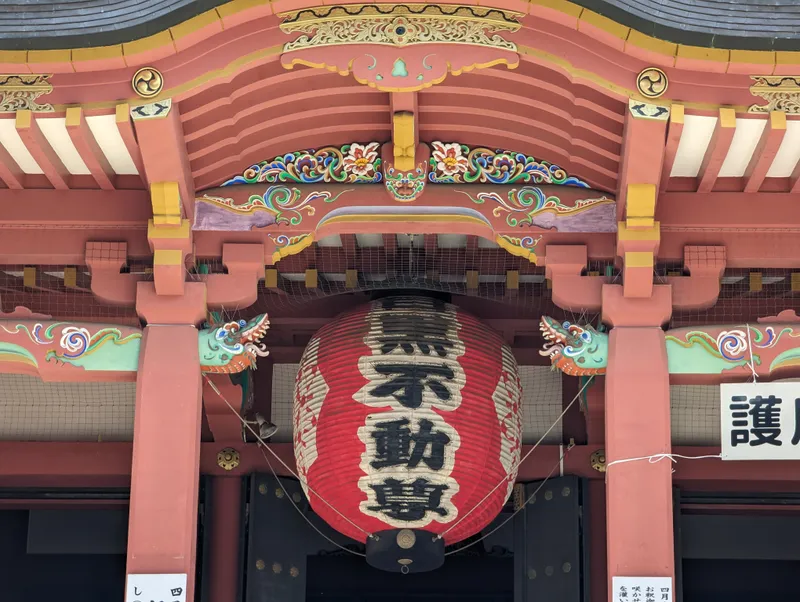
The oldest Fudo site in the Kanto, founded in 808 after a fifteen-year-old monk dreamed of a blue-black figure with a sword and a rope, and one of the Five-Colour Fudo that guarded Edo.
 Temple
Fukagawa Fudo-do
- Protection & Safety
- Purification
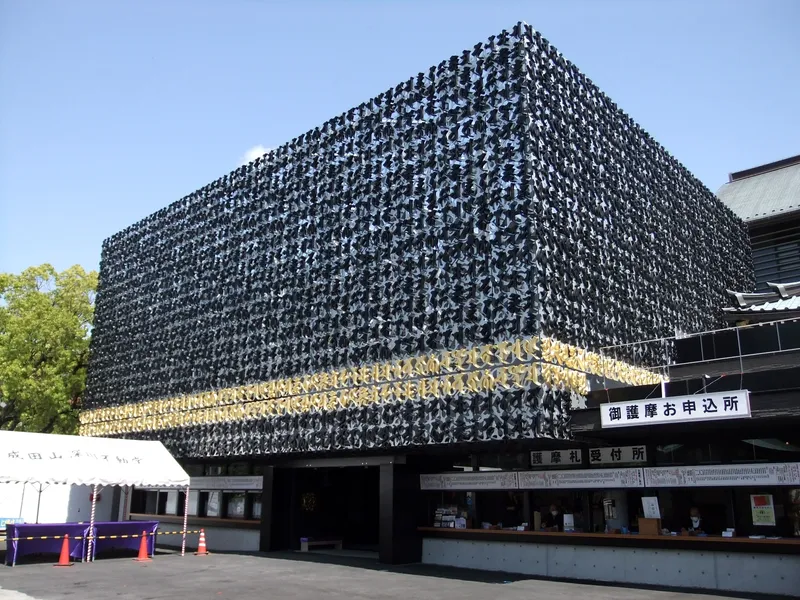
The Tokyo branch of Naritasan Shinshoji, in Monzen-nakacho, where a goma fire rite is performed before Fudo Myoo several times a day.
 Shrine
Musashi Mitake Shrine
- Protection & Safety
A mountain shrine above Ome whose guardian is a wolf, long turned to against theft and evil, and where dogs are now blessed year-round.
 Shrine
Okunitama Shrine
- Money & Prosperity
- Protection & Safety
- Bonds & Matchmaking
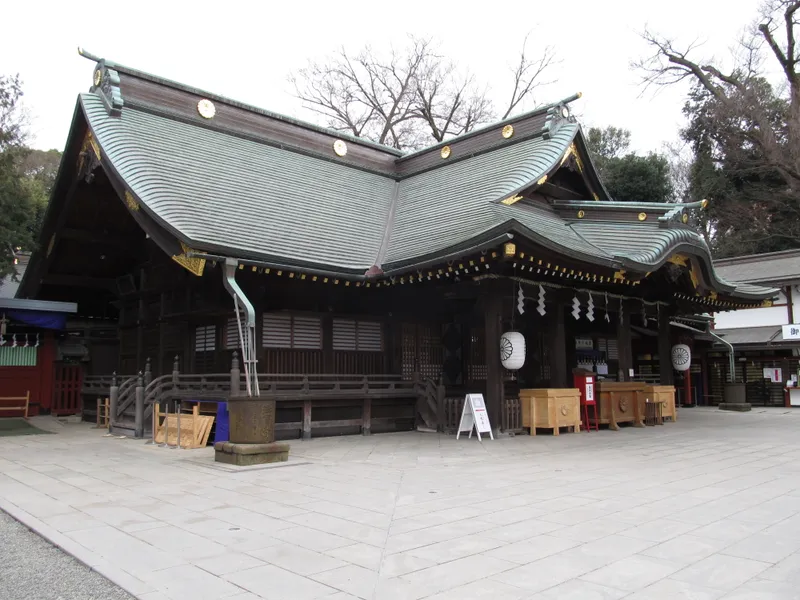
The provincial shrine of old Musashi, in Fuchu, which dates its founding to 111 and enshrines a deity it identifies with Ōkuninushi of Izumo.
 Temple
Jindai-ji
- Protection & Safety
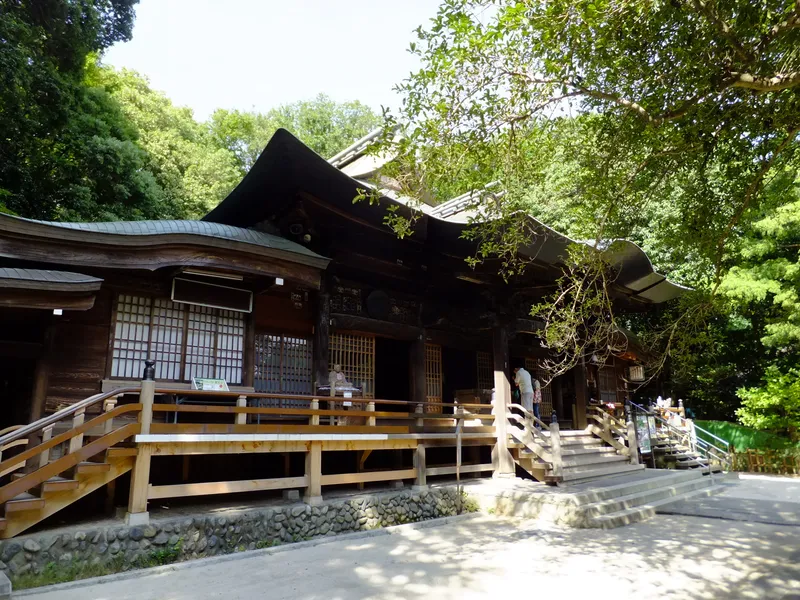
A Tendai temple in Chofu founded in 733, named after a water deity said to remove epidemics, and known for a hidden image of the monk credited with inventing omikuji (おみくじ).
 Shrine
Omiya Hachimangu
- Fertility & Children
- Protection & Safety
- Bonds & Matchmaking
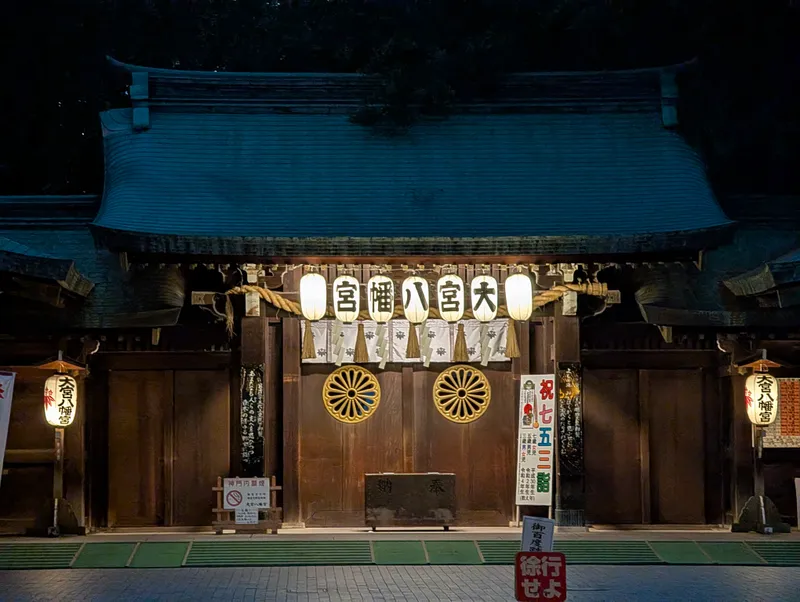
A large wooded shrine in Suginami, founded in 1063 by Minamoto no Yoriyoshi after he read a bank of white cloud as the banners of his own clan, and known for child-rearing and warding.
 Natural Site
Todoroki Valley
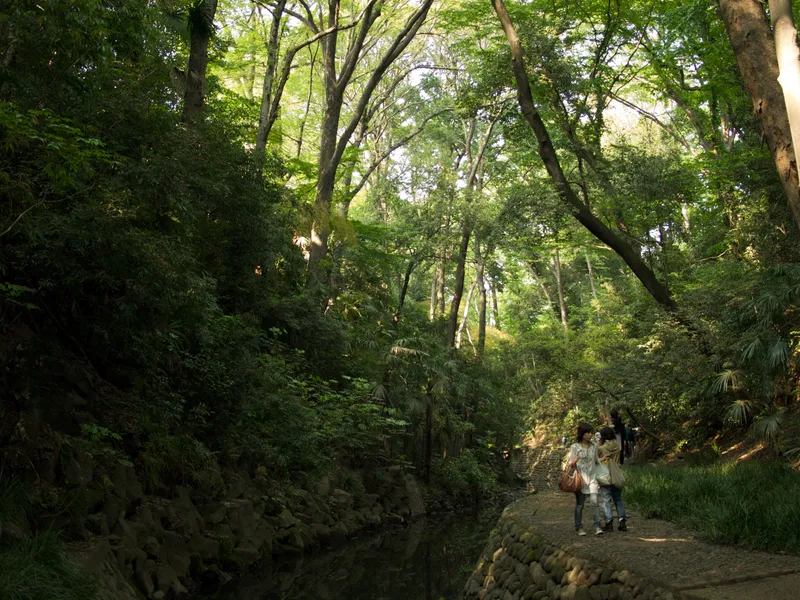
A wooded ravine cut by the Yazawa River in suburban Setagaya, designated a place of scenic beauty by Tokyo in 1999, with a spring-fed waterfall and a Shingon Fudo hall above it. The ward reopened the path on 24 March 2026 after a long closure for unsafe trees.
 Shrine
Meiji Jingu
- Health & Healing
- Protection & Safety
- Bonds & Matchmaking
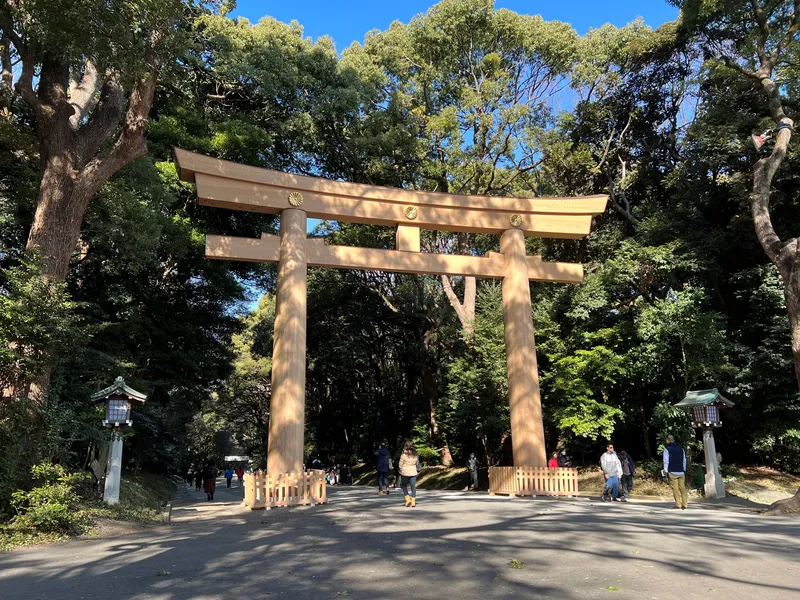
A 1920 Shinto shrine in central Tokyo enshrining Emperor Meiji and Empress Shōken, set in a 70-hectare forest that was planted from scratch and is visited today for prayers about bonds, protection and health.
No places match your filters