Zoshigaya Kishimojin-do
雑司ヶ谷鬼子母神堂 · Kishimojin Hall · Zoshigaya Kishibojin · Homyo-ji
Researched and translated with AI assistance. Every claim is linked to its source, but errors get through, so check the official site for opening times, fees and closures.About
In short
A hall in Zoshigaya, built in 1664 and now a National Important Cultural Property, enshrining a deity who was a child-stealing demon before the Buddha taught her what losing a child meant.
Quick facts
- Address
- 3-15-20 Zoshigaya, Toshima-ku, Tokyo 171-0032
- Access
- Zoshigaya on the Tokyo Metro Fukutoshin line is five minutes from exit 1, and the Toden Arakawa tram stops at Kishibojin-mae. Ikebukuro is about fifteen minutes on foot from the east exit, and Mejiro about the same.
- Hours
- Prayers are taken by telephone between 9:00 and 17:00, and those who book are seen first; anyone applying on the day may have to wait.
- Best time
- The Oeshiki festival in the middle of October, the summer market in early July, and the Bon dance at the end of July. The ginkgo is at its best in late autumn.
- Spiritual entities
- Kishimojin (鬼子母神)
- Official site
- www.homyoji.or.jp
About this place
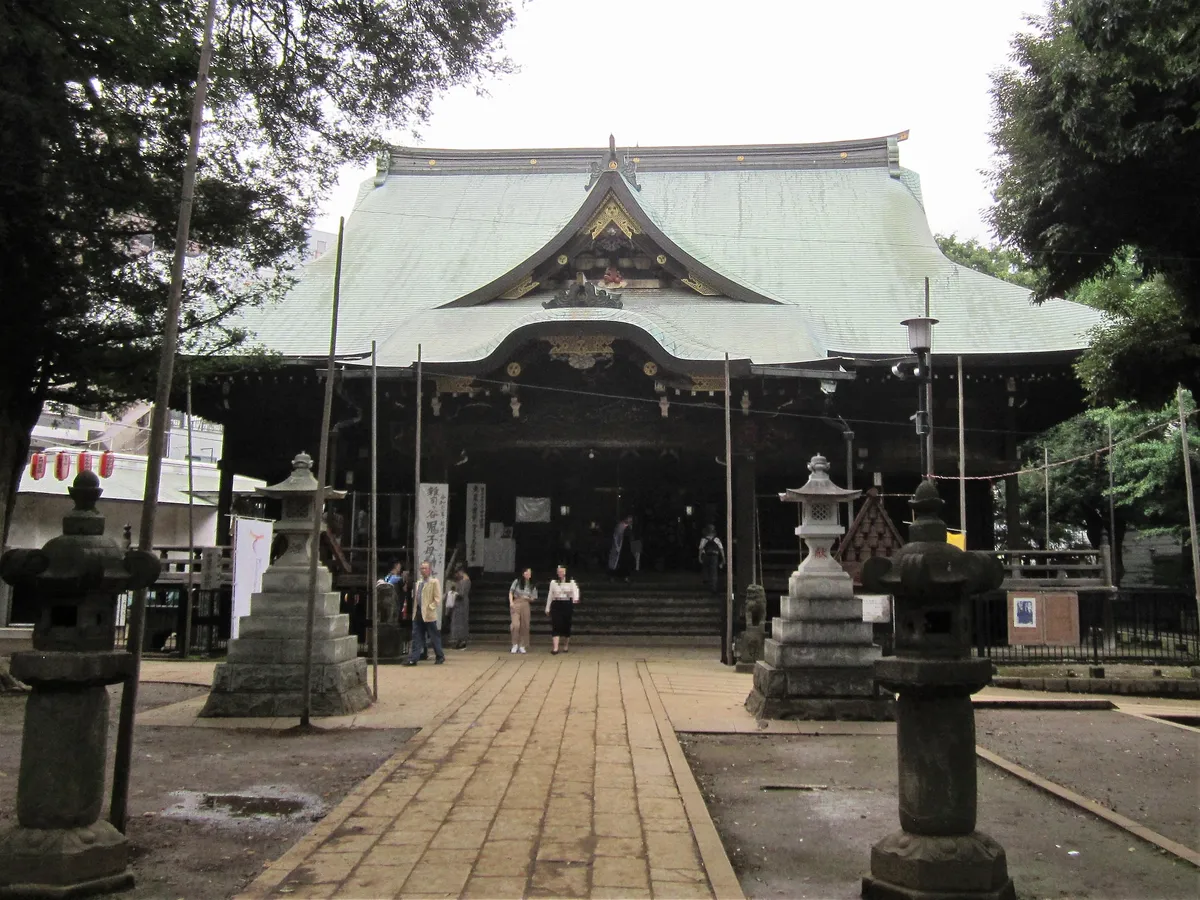
The Kishimojin-do stands at the end of a zelkova avenue in Zoshigaya, in its own precinct a few minutes from the parent temple, Homyo-ji. The hall dates from 1664, came through both the 1923 earthquake and the 1945 firebombing, and was made a National Important Cultural Property in 2016. Beside it stands a ginkgo the metropolis lists as a natural monument, about thirty-three metres tall and said to be seven hundred years old.
Origin and history
The image at the centre of all this was found in 1561. A retainer of the local lord named Yamamura Tan'emon dug it out of a field ridge at Seido, and it was housed at a hall called Toyobo. In 1578 a hall was built for it in the part of the Homyo-ji grounds known as the Inari wood, and that is the beginning of the Kishimojin-do.
The present building went up in 1664, paid for by a daughter of the lord of the Kaga domain. It is three bays square, built in the gongen style, lacquered inside and out, with gold leaf on the ceiling.
What happened to it afterwards is mostly what did not happen to it. It survived the Great Kanto earthquake of 1923 and the Second World War, in a district where very little else did. The metropolis designated it a tangible cultural property in 1960. Between 1976 and 1979 it was taken apart and put back together in what the temple calls the great Showa repair, and in 2016 it was designated an Important Cultural Property of Japan. Edo-period votive tablets hang inside, themselves designated by the metropolis.
What it is locally associated with
A demon who was taught by losing a child
Hariti stole and ate the children of Rajagriha until the Buddha hid her own youngest. Grief changed her, and she became a protector of the people she had preyed on.
documented historyThe rites are all about children
The hall names prayers for conceiving, for an easy birth, for a child to grow well, and the old rite of calming an infant who will not settle.
documented historyA ginkgo seven hundred years old
About thirty-three metres tall and eleven metres round the trunk, listed as a natural monument by the metropolis, and known as the child-granting and child-rearing ginkgo.
documented historyA hall that outlived the neighbourhood twice
Built in 1664, it came through the 1923 earthquake and the 1945 firebombing, and was designated a National Important Cultural Property in 2016.
documented history
Kishimojin is easier to explain through her story than through a list, because the story is the reason for the list.
She appears in the Lotus Sutra as a protector, and Nichiren wrote of the ten demon daughters as the mothers of all the demons of the four quarters, which is why Nichiren temples enshrine her as a guardian of the sutra. Behind that is an Indian tale. A woman named Hariti became a demon with a thousand children of her own, and went repeatedly to Rajagriha to carry off the villagers' children and devour them. The villagers appealed to the Buddha, who hid Pingala, her youngest and best-loved. In the grief of losing one child out of a thousand she understood what she had been doing, repented, and turned from a demon into a deity who protects the people who follow the Buddha's teaching.
So the devotion here is about children from both ends, and the temple's own list of rites shows it: conceiving a child, an easy birth, the first visit after birth, growing up well, and the old rite for an infant who will not stop crying. It is not a shrine you go to for money or a promotion, and the one tag on this page reflects that.
The great ginkgo says the same thing in a different form. The temple gives it about thirty-three metres of height, eleven metres of girth and an age of seven hundred years, records it as a natural monument of the metropolis, and notes that it is a male tree; people call it the child-granting ginkgo and the child-rearing ginkgo.
The rest of the precinct is worth a slow walk. The zelkova avenue leading in is over four hundred years old and was a subject for Edo writers and painters. The Buho Inari hall in the grounds enshrines Uka-no-Mitama and is known as the Inari of advancement, said to be good for trade and fortune, and there are halls to Fudo, to Myoken and to Daikoku. The hall has long been known for a sweet called osen dango, still sold in the grounds.
Claims and evidence levels 8
- The temple records that the Kishimojin image was found in 1561, dug from a field ridge at Seido by Yamamura Tan'emon, a retainer of the local lord, and housed at Toyobo. documented history
- In 1578 a hall was built to enshrine the image in the part of the Homyo-ji grounds called the Inari wood, which is the beginning of the Kishimojin-do. documented history
- The present main hall was built in 1664 by donation from a daughter of the lord of the Kaga domain: three bays square, gongen style, lacquered inside and out with a gold-leaf ceiling. documented history
- The hall survived the Great Kanto earthquake of 1923 and the Second World War, was designated a tangible cultural property by the Tokyo metropolis in 1960, was dismantled and repaired between 1976 and 1979, and was designated an Important Cultural Property of Japan in 2016. documented history
- The ginkgo in the grounds is a designated natural monument of the Tokyo metropolis, about 33 metres tall with a trunk about 11 metres around, said to be 700 years old, and is called the child-granting and child-rearing ginkgo. documented history
- The temple relates the Indian story that Hariti, a demon woman with a thousand children, repeatedly carried off and devoured the children of Rajagriha until the Buddha hid her youngest child Pingala, upon which she repented and became a deity who protects those who follow the Buddha's teaching. folk tradition
- The rites the hall performs include prayers for conceiving a child, for an easy birth, for a child to grow well, and the rite for an infant who will not settle, alongside the ordinary prayers for household safety, health and passing examinations. documented history
- The Buho Inari hall in the grounds enshrines Uka-no-Mitama, is known as the Inari of advancement, and is said to be good for prosperity in trade and for fortune; the zelkova avenue leading to the hall is over four hundred years old. local custom
Visiting tips
The general form is in the visiting guide below. Specific to the Kishimojin-do:
Prayers are booked by telephone. Those with a booking go first, and anyone who turns up on the day may be waiting a while. The temple asks you to state the request when booking and to arrive before your time to fill in the form.
This is a working hall in a residential precinct rather than a sightseeing site, and the votive tablets inside are designated cultural property.
The Oeshiki in the middle of October is the largest thing that happens here and fills the approach. The summer market in early July and the Bon dance at the end of the month are smaller but also crowded.
The ginkgo is a living designated monument. Keep off the roots.
Related guides
- How to visit a shrine or temple in JapanThe country-wide basics: purifying at the water basin, the two-bows-two-claps-one-bow form at shrines, and what temples do instead.
- What a "power spot" actually isA modern Japanese coinage, not a traditional religious category. Where the word came from, what it does and does not claim, and why this site uses it anyway.
- Shrine or temple?A shrine is Shinto and a temple is Buddhist, and you can usually tell at the gate. Why the line is cleaner on paper than on the ground, and what a government order in 1868 has to do with it.
- Omamori, ema, omikuji and goshuinThe four things you are most likely to receive, write, draw or be given at a shrine or temple, what each is actually for, and the one of them people most often get wrong.
Sources
- History of Zoshigaya Kishimojin (雑司ヶ谷鬼子母神の歴史) — Homyo-ji (accessed 2026-08-02)
- About Kishimojin (鬼子母神について) — Homyo-ji (accessed 2026-08-02)
- Guide to the grounds (境内ガイド) — Homyo-ji (accessed 2026-08-02)
- Prayers (ご祈願) — Homyo-ji (accessed 2026-08-02)
- Access (アクセス) — Homyo-ji (accessed 2026-08-02)
Last updated:
Similar places
8 places
 Shrine
Ana Hachimangu
- Fertility & Children
- Money & Prosperity
- Skill & Mastery
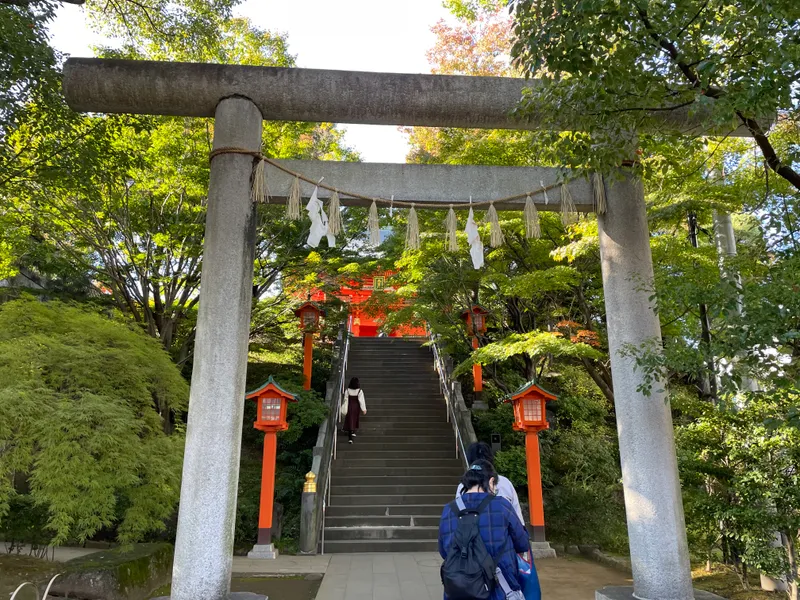
A Waseda shrine named for a cave found in its hillside in 1641, which gives out an amulet for the circulation of money for six weeks each winter and nothing the rest of the year.
 Shrine
Nezu Shrine
- Career & Work
- Exams & Study
- Family & Home
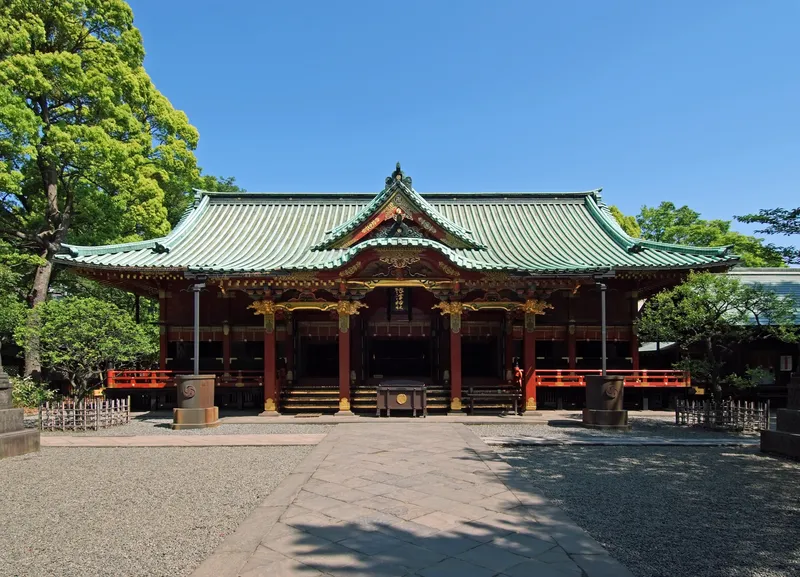
A Bunkyo shrine whose entire 1706 complex survives intact as an Important Cultural Property, rare in Tokyo, with an azalea hill and a tunnel of small red torii (鳥居).
 Shrine
Hie Shrine
- Career & Work
- Fertility & Children
- Money & Prosperity
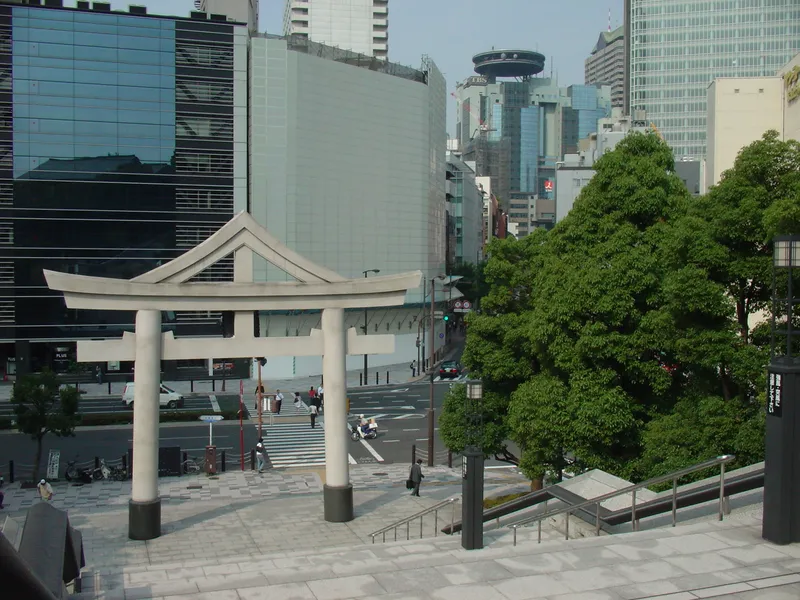
A shrine on a wooded rise in Nagatacho, once the guardian of Edo Castle, whose messenger is the monkey, a pun the shrine explains itself, connecting it to warding off evil, to winning, and to the tying of bonds.
 Shrine
Suitengu
- Family & Home
- Fertility & Children
- Protection & Safety
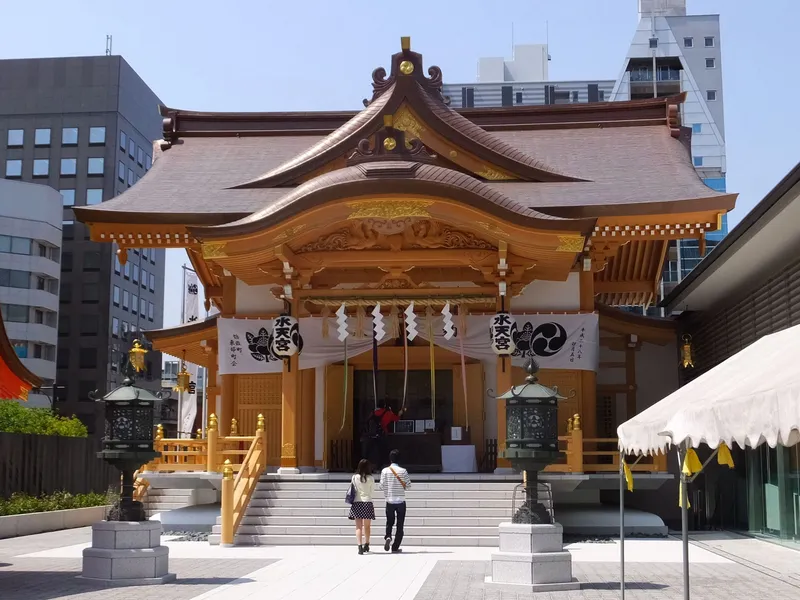
A Nihonbashi shrine long known for safe childbirth and for praying to conceive, whose safe-birth charm is a length of cotton worn as a belly band.
 Shrine
Omiya Hachimangu
- Fertility & Children
- Protection & Safety
- Bonds & Matchmaking
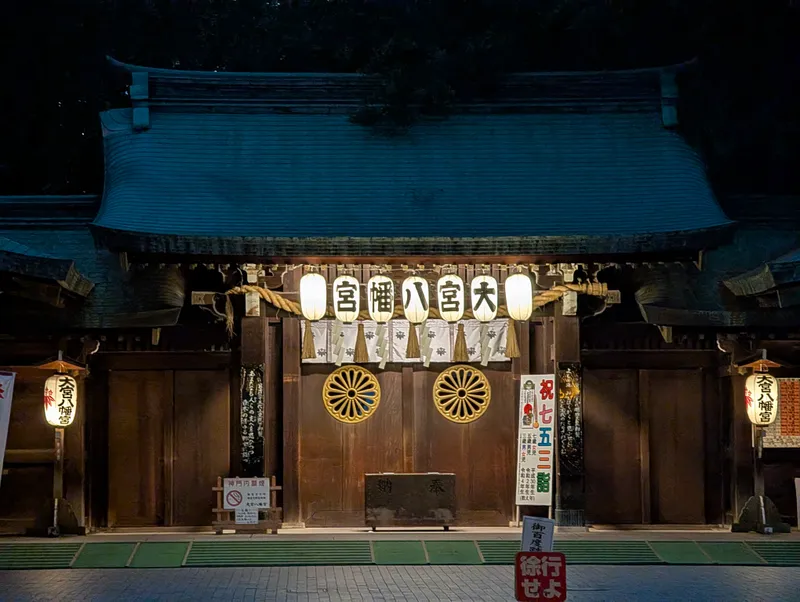
A large wooded shrine in Suginami, founded in 1063 by Minamoto no Yoriyoshi after he read a bank of white cloud as the banners of his own clan, and known for child-rearing and warding.
 Shrine
Tokyo Daijingu
- Family & Home
- Love & Romance
- Money & Prosperity
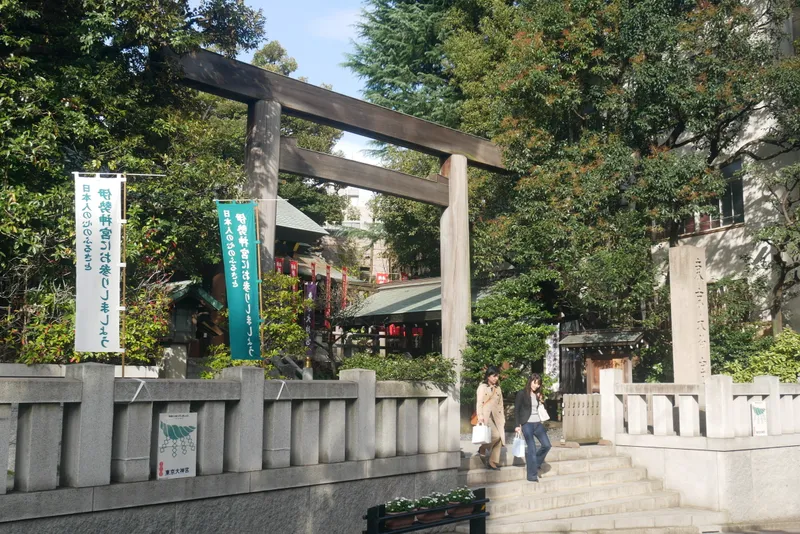
A Chiyoda shrine founded in 1880 as a Tokyo branch of Ise, known as "Tokyo's O-Ise-sama" and visited above all for prayers about relationships, an association the shrine itself explains through the three deities of creation enshrined here.
 Shrine
Hatonomori Hachiman Shrine
- Skill & Mastery
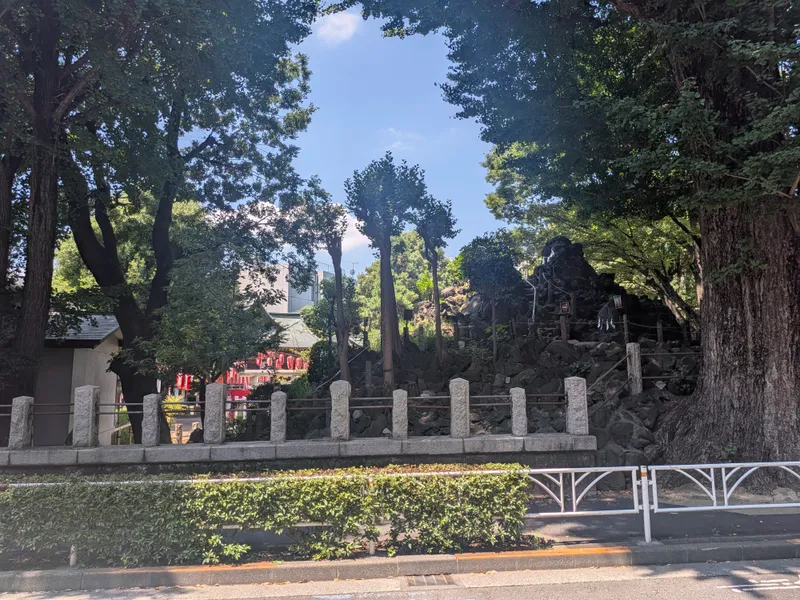
A Sendagaya shrine named after a flight of white doves, holding a Fuji mound raised in 1789 and a small hexagonal hall built with the Japan Shogi Association.
 Shrine
Yushima Tenmangu
- Exams & Study
A Bunkyo shrine enshrining Sugawara no Michizane, where Tokyo students come to pray before examinations, and whose plum garden opens each February.
No places match your filters