Tsuyu no Tenjinsha
Ohatsu Tenjin
Researched and translated with AI assistance. Every claim is linked to its source, but errors get through, so check the official site for opening times, fees and closures.About
In short
An old shrine of thirteen centuries whose grove was the scene of the double suicide behind Chikamatsu’s play, and where people now come to ask for love to come true.
Quick facts
- Address
- 2-5-4 Sonezaki, Kita-ku, Osaka
- Spiritual entities
- Amaterasu Ōmikami (天照大御神) · Ōkuninushi (大国主命) · Tenjin (天神, Sugawara no Michizane)
About this place
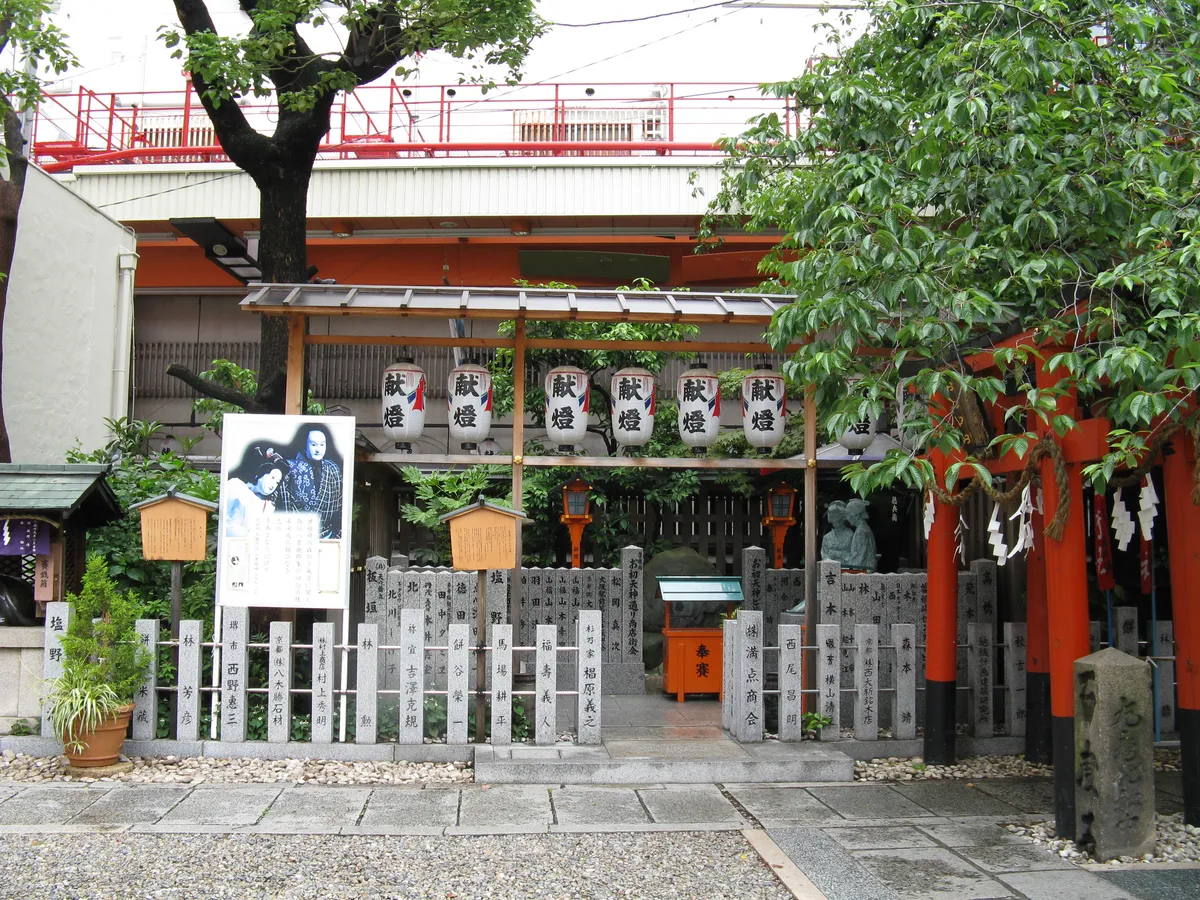
Tsuyu no Tenjinsha is in Kita, Osaka. It is an old shrine with thirteen hundred years of history since its founding, one of the sites of the old Naniwa Yasoshima rite. Five deities are enshrined — Sukunahikona, Onamuchi, Amaterasu, Toyoukehime and Sugawara no Michizane — and its blessings are named as recovery from illness, prosperity in business, long fortune in arms, the binding of ties and achievement in study. Chikamatsu Monzaemon’s Sonezaki Shinju was made from an incident of 7 April 1703, when Ohatsu, a courtesan of the Tenmaya in Dojima Shinchi, and Tokubee, a clerk of the Hiranoya in Uchihonmachi, died together in this shrine’s Tenjin grove. Many people who wish for love to be fulfilled come here now.
Origin and history
Tsuyu no Tenjinsha is an old shrine with thirteen hundred years of history since its founding, and one of the sites of the old Naniwa Yasoshima rite.
Five deities are enshrined. Sukunahikona is the guardian of medicine, pharmacy, recovery from illness, prosperity in business, brewing, hot springs and the governing of the land; Onamuchi of the governing of the land, long fortune in arms, recovery from illness and the binding of ties; Amaterasu is the great ancestral deity of the imperial house, of boundless virtue and shining light; Toyoukehime presides over the food of all people under heaven; and Sugawara no Michizane is the deity of study and learning.
One account derives the shrine’s name from a poem of Michizane’s: "the dew-scattered tears have worn my sleeves away, when I remember the capital".
What it is locally associated with
Wishes for love
The double suicide in the Tenjin grove became Sonezaki Shinju, and many who wish for love to be fulfilled now come; Onamuchi is named guardian of the binding of ties.
folk traditionFive deities, five portfolios
Its blessings are named as recovery from illness, prosperity in business, long fortune in arms, the binding of ties and achievement in study.
documented historyThirteen hundred years
An old shrine with thirteen hundred years of history since its founding, and one of the sites of the old Naniwa Yasoshima rite.
documented history
The reason love-wishes gather here is not a happy story. On 7 April 1703, Ohatsu, a courtesan of the Tenmaya in Dojima Shinchi, and Tokubee, a clerk of the Hiranoya in Uchihonmachi, died together in this shrine’s Tenjin grove. Chikamatsu Monzaemon wrote Sonezaki Shinju from that incident. That is as far as the shrine’s account goes — and now many people who wish for love to be fulfilled come here.
Five deities are enshrined, and the shrine gives each one a portfolio. The binding of ties belongs to Onamuchi; study and learning to Michizane; recovery from illness and prosperity in business to Sukunahikona. The breadth of what can be asked here is five deities’ worth, added together.
One account traces the shrine’s name to a poem of Michizane’s about dew-scattered tears. The dew was in this shrine’s name from the beginning.
Claims and evidence levels 3
- Tsuyu no Tenjinsha has thirteen hundred years of history and is one of the sites of the old Naniwa Yasoshima rite. documented history
- On 7 April 1703 Ohatsu and Tokubee died together in the shrine’s Tenjin grove, and Chikamatsu Monzaemon made Sonezaki Shinju from the incident. documented history
- Its named blessings include recovery from illness, prosperity in business, long fortune in arms, the binding of ties and achievement in study. documented history
Related guides
- How to visit a shrine or temple in JapanThe country-wide basics: purifying at the water basin, the two-bows-two-claps-one-bow form at shrines, and what temples do instead.
- What a "power spot" actually isA modern Japanese coinage, not a traditional religious category. Where the word came from, what it does and does not claim, and why this site uses it anyway.
- Shrine or temple?A shrine is Shinto and a temple is Buddhist, and you can usually tell at the gate. Why the line is cleaner on paper than on the ground, and what a government order in 1868 has to do with it.
- Omamori, ema, omikuji and goshuinThe four things you are most likely to receive, write, draw or be given at a shrine or temple, what each is actually for, and the one of them people most often get wrong.
Sources
- 神社について — Tsuyu no Tenjinsha (accessed 2026-08-14)
- 露天神社(お初天神) — Tsuyu no Tenjinsha (accessed 2026-08-14)
Last updated:
Similar places
8 places
 Shrine
Osaka Tenmangu
- Exams & Study
- Money & Prosperity
- Protection & Safety
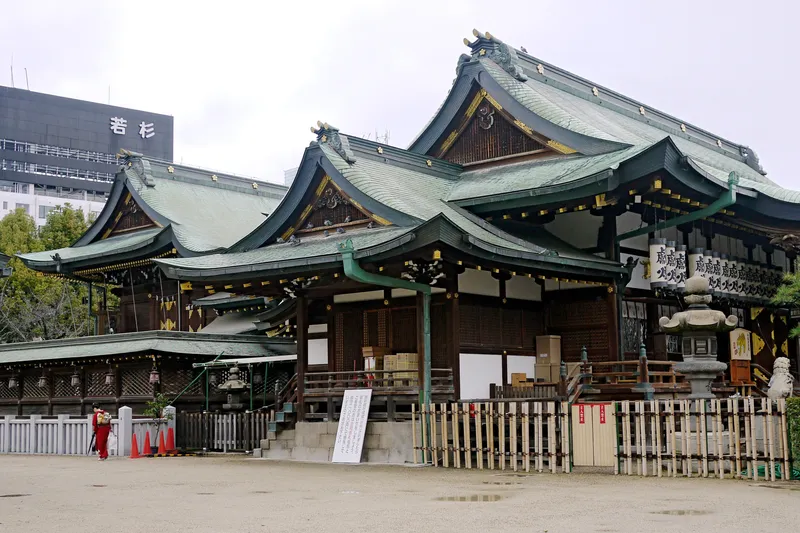
Built by imperial order on the spot where Sugawara no Michizane prayed for a safe journey to Dazaifu, after seven pines grew there overnight and shone each night.
 Shrine
Sanko Jinja
- Health & Healing
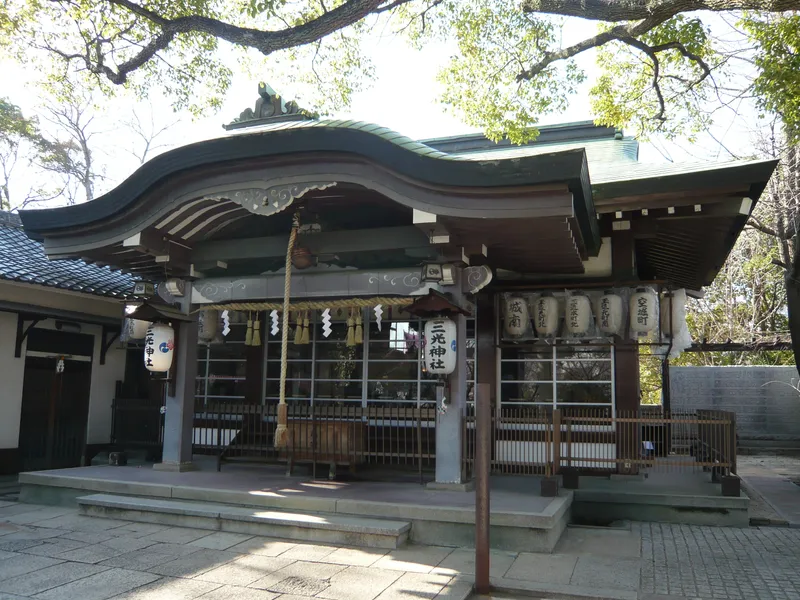
Known since antiquity as the only deity in all Japan for warding off palsy, with its rite held for seven days from 1 June each year.
 Temple
Shoman-in Aizendo
- Love & Romance
- Money & Prosperity
- Bonds & Matchmaking
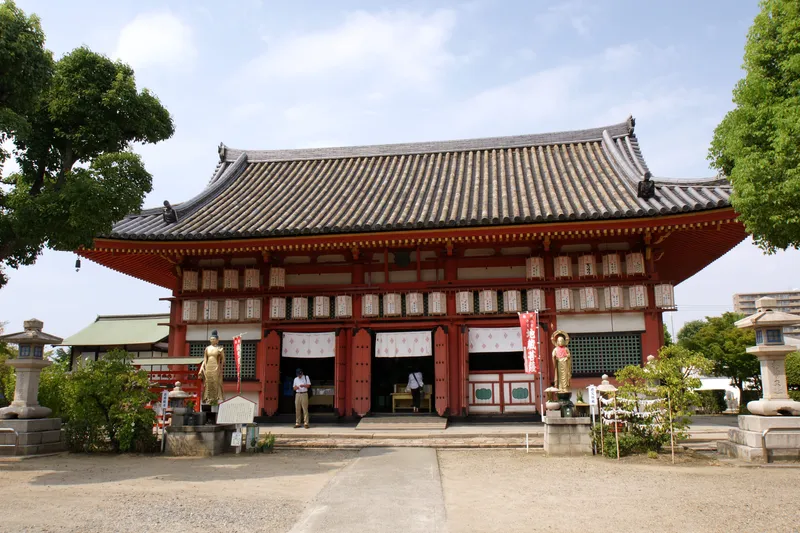
Founded by Prince Shotoku in 593 on the site of his dispensary — called the birthplace of welfare work — and known for the binding of ties and harmony between husband and wife.
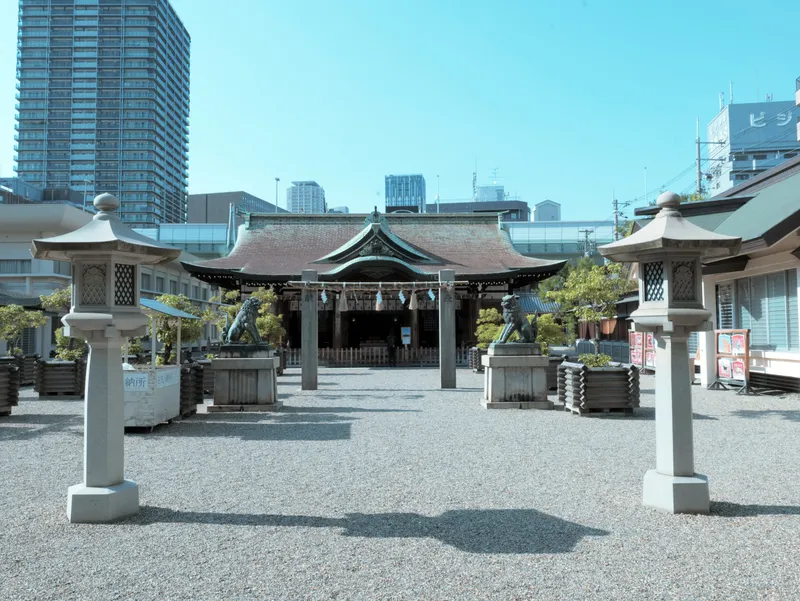 Shrine
Imamiya Ebisu Jinja
- Money & Prosperity
Founded in 600 as the guardian deity of a marketplace, and revered since as a protector of prosperous trade and full good fortune.
 Temple
Shitenno-ji
- Health & Healing
- Money & Prosperity
Founded in 593 when Prince Shotoku made good on a battlefield vow — Japan’s first official state temple, still praying daily for recovery from illness and prosperity in business.
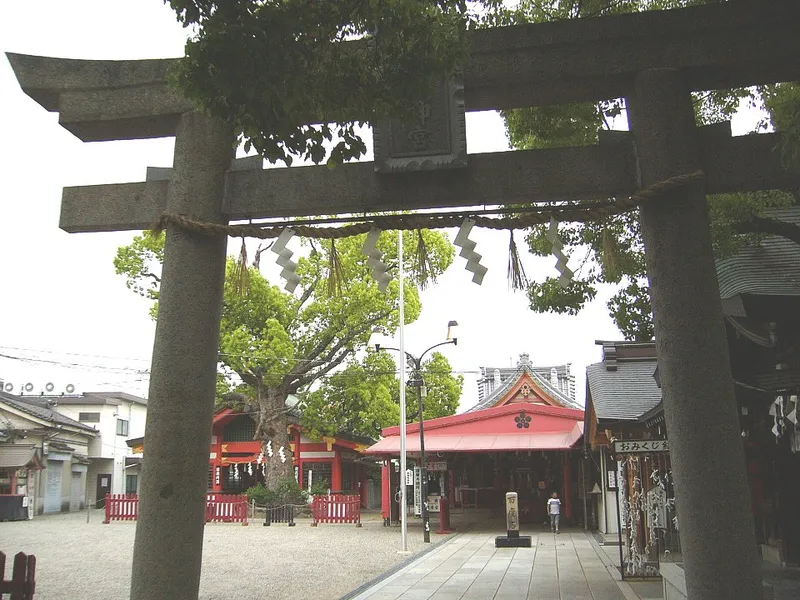 Shrine
Hattori Tenjingu
- Health & Healing
Where Sugawara no Michizane, unable to take a step for illness in his legs on the road to Dazaifu, prayed to be healed — and which is revered since as the deity of feet.
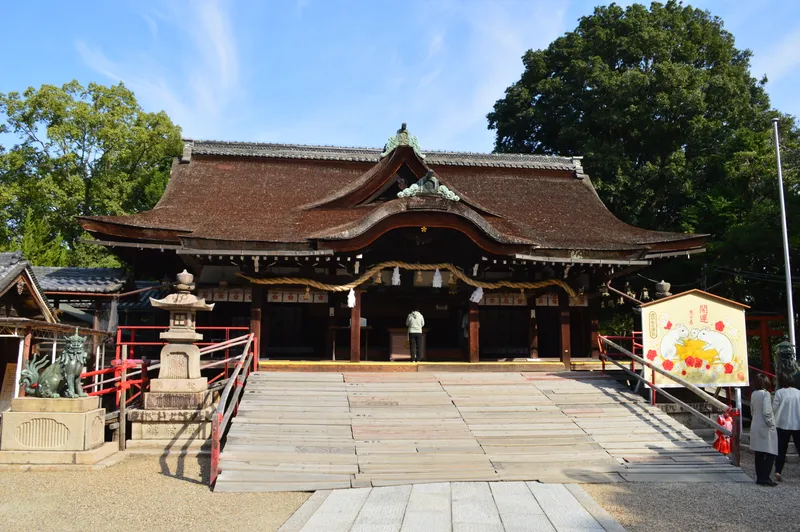 Shrine
Domyoji Tenmangu
- Exams & Study
It began when Nomi no Sukune, rewarded for inventing haniwa to replace the burial of the living, enshrined his distant ancestor here — and it now enshrines Sugawara no Michizane and his aunt.
 Temple
Katsuo-ji
- Exams & Study
- Health & Healing
- Protection & Safety
Begun in 727 when twin brothers built a hermitage on the mountain, and a temple of winning that defines winning as overcoming your own weak heart.
No places match your filters