Tongdosa
Yeongchuksan Tongdosa
Researched and translated with AI assistance. Every claim is linked to its source, but errors get through, so check the official site for opening times, fees and closures.About
In short
The first of the five relic sanctuaries, whose main hall enshrines no buddha because it faces the relics behind it.
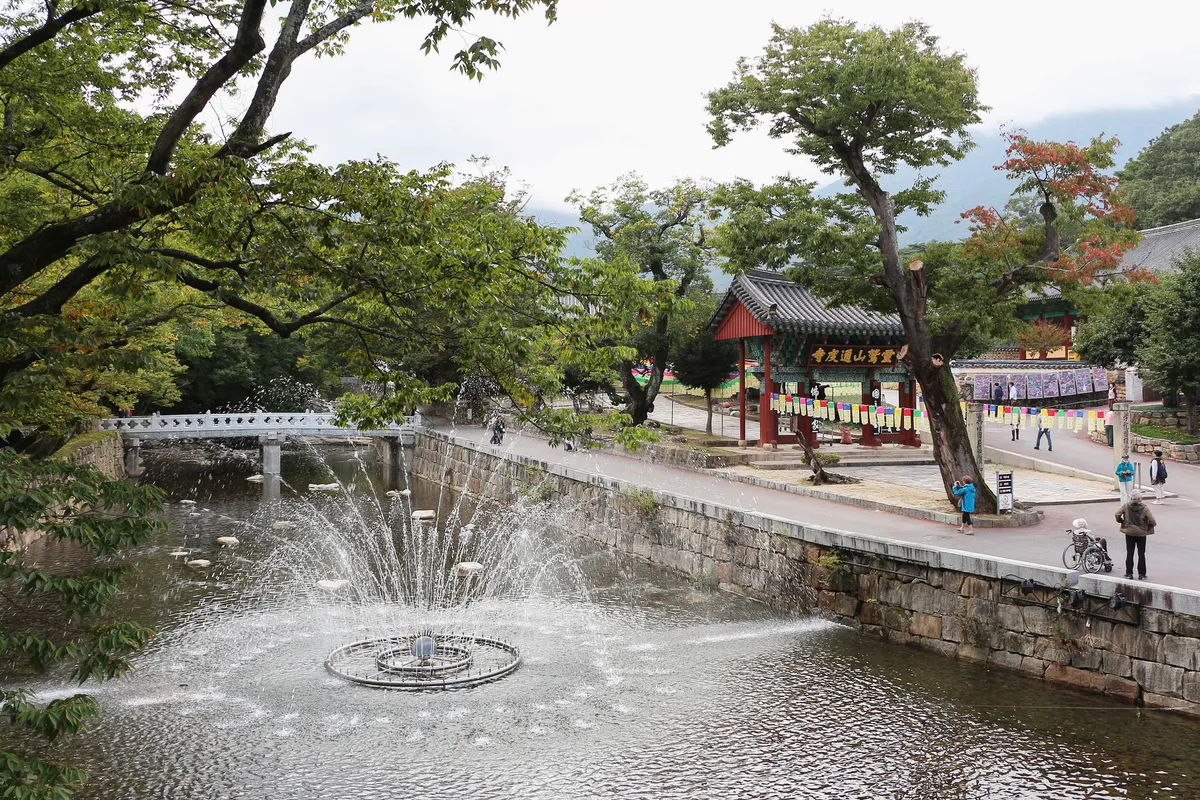
Quick facts
- Address
- 108 Tongdosa-ro, Habuk-myeon, Yangsan-si, Gyeongsangnam-do
- Spiritual entities
- Jajang (慈藏, 590–658)
About this place
Tongdosa stands on Yeongchuksan in Yangsan, South Gyeongsang, and is counted the first of Korea’s five relic sanctuaries. It holds relics of the Buddha that Jajang brought back from Tang China. Its main hall enshrines no buddha image; instead its front faces the ordination platform behind the building, where the relics are. As a result the same building carries three different name boards on three sides.
Origin and history
The Encyclopedia of Korean Culture records that all the relic sanctuaries except the one at Jeongamsa hold relics and skull bone that Jajang (590–658) brought back from Tang China and enshrined himself. Tongdosa is counted the first of them.
The main hall and ordination platform were designated a National Treasure in 1997.
What it is locally associated with
First of the five relic sanctuaries
It holds relics Jajang brought from Tang China, and is counted the first of the five.
documented historyThree name boards
The same building carries different boards on three sides — main hall, ordination platform, relic sanctuary.
documented historyA main hall with no buddha
No image is enshrined inside; the front faces the relics on the ordination platform behind.
documented history
What is venerated here is not an image but relics, and this is the one place where that fact is visible in the shape of the building.
Because no buddha is enshrined inside the main hall, the hall’s front faces the ordination platform behind it, where the Buddha’s relics are kept. So the same building carries three different boards on three sides — main hall, ordination platform, relic sanctuary — depending on which way you approach. The building’s name changes with your direction of travel.
Four of the five relic sanctuaries are now on this site: Odaesan’s, Bongjeongam, Jeongamsa, and this one.
Claims and evidence levels 4
- Tongdosa is counted the first of Korea’s five relic sanctuaries and holds relics of the Buddha brought back from Tang China by Jajang. documented history
- Its main hall enshrines no buddha image; the hall faces the ordination platform behind the building, where the relics are kept. documented history
- The same building carries three different name boards on three sides — main hall, ordination platform and relic sanctuary — according to the direction of approach. documented history
- The main hall and ordination platform were designated a National Treasure in 1997. documented history
Related guides
- How to visit a Korean templeHands together and hands folded, how the bows work, and what to do at the threshold of a hall. Starting with what is different from visiting a Japanese shrine.
- The small hall behind the main one — sansingak and samseonggakUphill from the main hall of a Korean temple stands a smaller one, and inside it an old man with a tiger. This is where the indigenous religion sits, inside the Buddhist institution.
- Templestay — a night at a templeA programme that puts you inside a temple’s own timetable for a day or two. What you do, which type to book, and what to be ready for.
- Prayer sites and the one wishThe three great Gwaneum sites, the five relic halls, and the crowds before the entrance exam. Where the saying about one wish comes from, and where the record stops.
Sources
- 적멸보궁(寂滅寶宮) — 한국민족문화대백과사전 — Academy of Korean Studies (accessed 2026-08-12)
- 양산 통도사 대웅전 및 금강계단 — 한국민족문화대백과사전 — Academy of Korean Studies (accessed 2026-08-12)
Last updated:
Similar places
8 places
 Temple
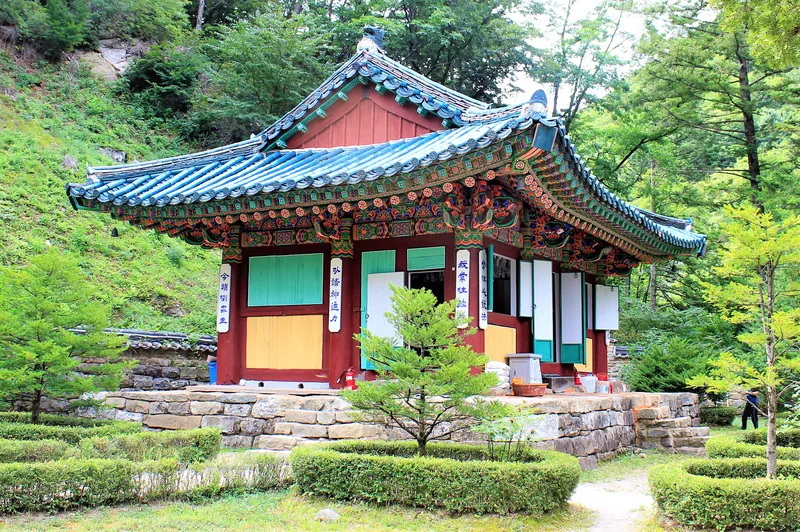
Jeongamsa
- Protection & Safety
A relic sanctuary where Jajang is said to have enshrined the Buddha’s skull bone, a tooth and a hundred relics, with a National Treasure stupa on the slope behind.
 Historic Site
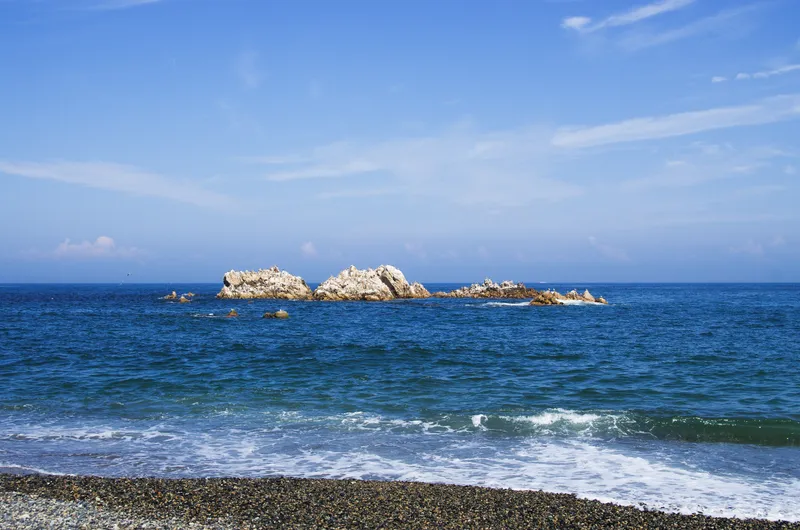
Tomb of King Munmu
- Protection & Safety
The tomb of King Munmu of Silla, set on a rock in the sea because he willed to become a dragon and guard the East Sea.
 Temple
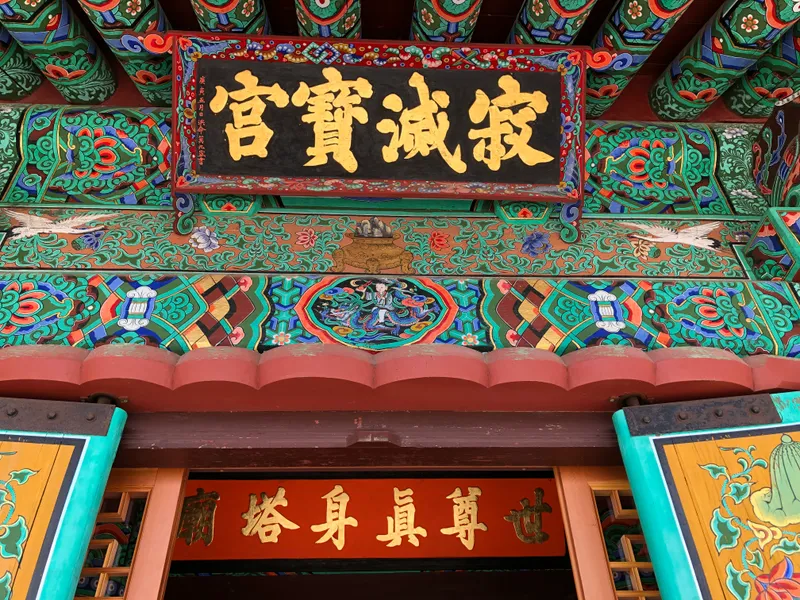
Jeongmyeol-bogung, Odaesan
- Protection & Safety
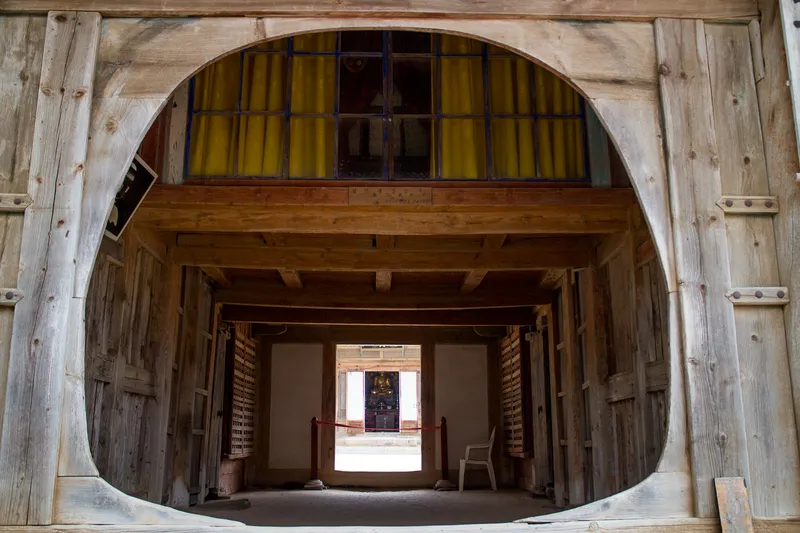
A relic hall on the middle terrace of Odaesan with no buddha image inside, because the Buddha’s own relics are enshrined there.
 Temple
Haeinsa
- Protection & Safety
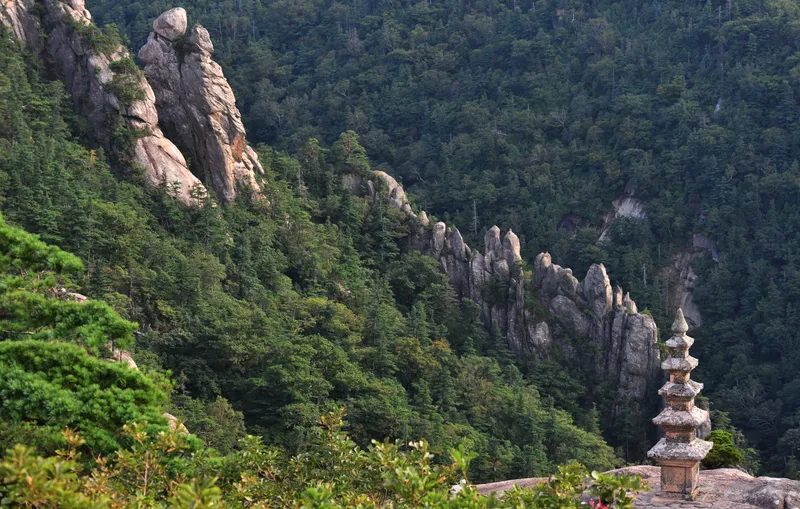
The temple holding the Tripitaka Koreana, cut out of a national wish to repel the Mongols, and the hall that has kept it.
 Temple
Bongjeongam
- Protection & Safety
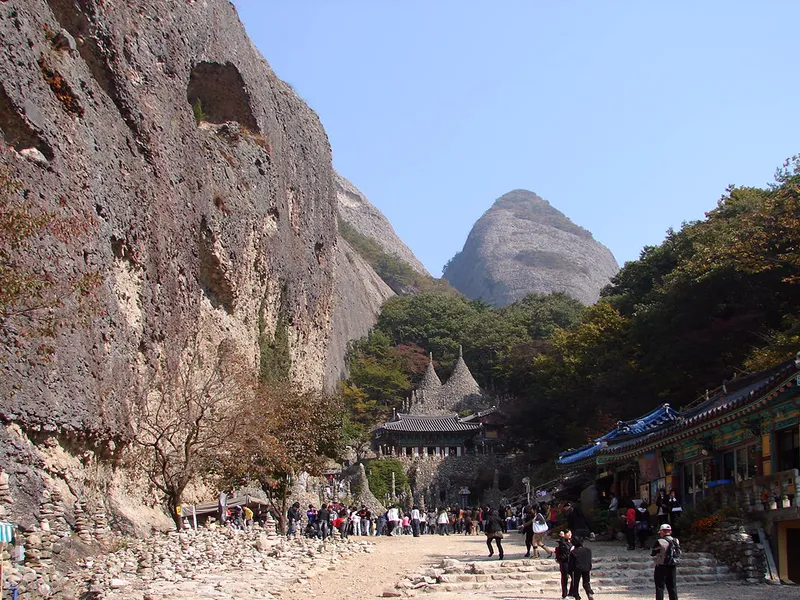
A hermitage on Sosecheongbong in Seoraksan, one of the five relic sanctuaries, holding relics Jajang is said to have brought back.
 Temple
Tapsa, Maisan
- Protection & Safety
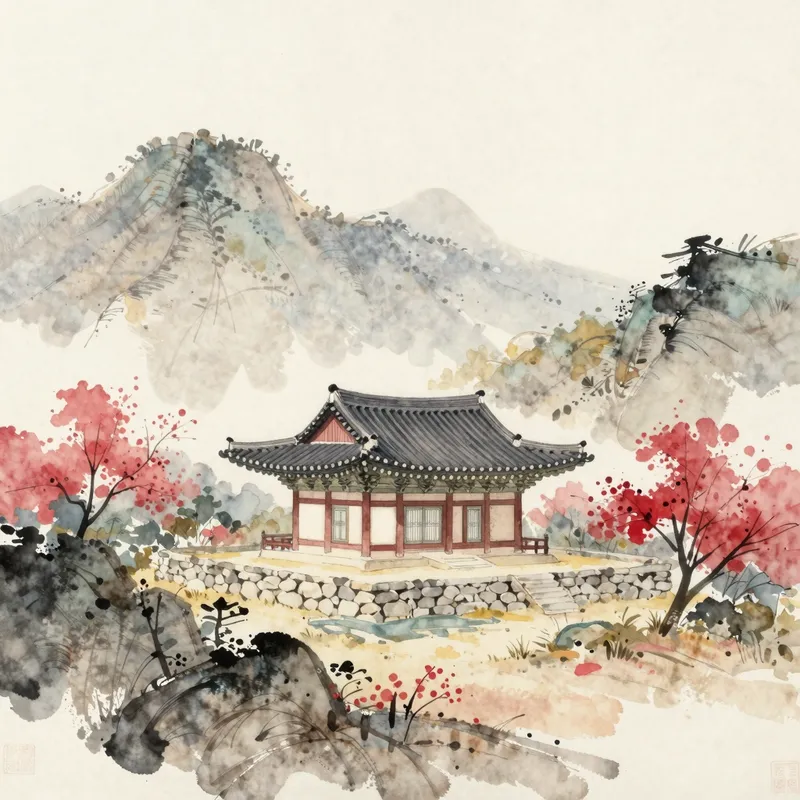
A temple among stone towers raised by one man over a lifetime, of which about eighty of the original hundred and eight still stand.
 Temple
Manggyeongsa, Taebaeksan
Built to house a stone image of Manjushri that its founder came here because he had heard it had appeared.
 Shrine
Haesindang
- Protection & Safety
A village shrine raised to settle the grievance of a young woman drowned at sea, where carved wooden phalluses have been offered.
No places match your filters