Haedong Yonggungsa
Researched and translated with AI assistance. Every claim is linked to its source, but errors get through, so check the official site for opening times, fees and closures.About
In short
One of Korea’s three great Avalokitesvara sites, standing right on the sea.
Quick facts
- Address
- 86 Yonggung-gil, Gijang-eup, Gijang-gun, Busan
About this place
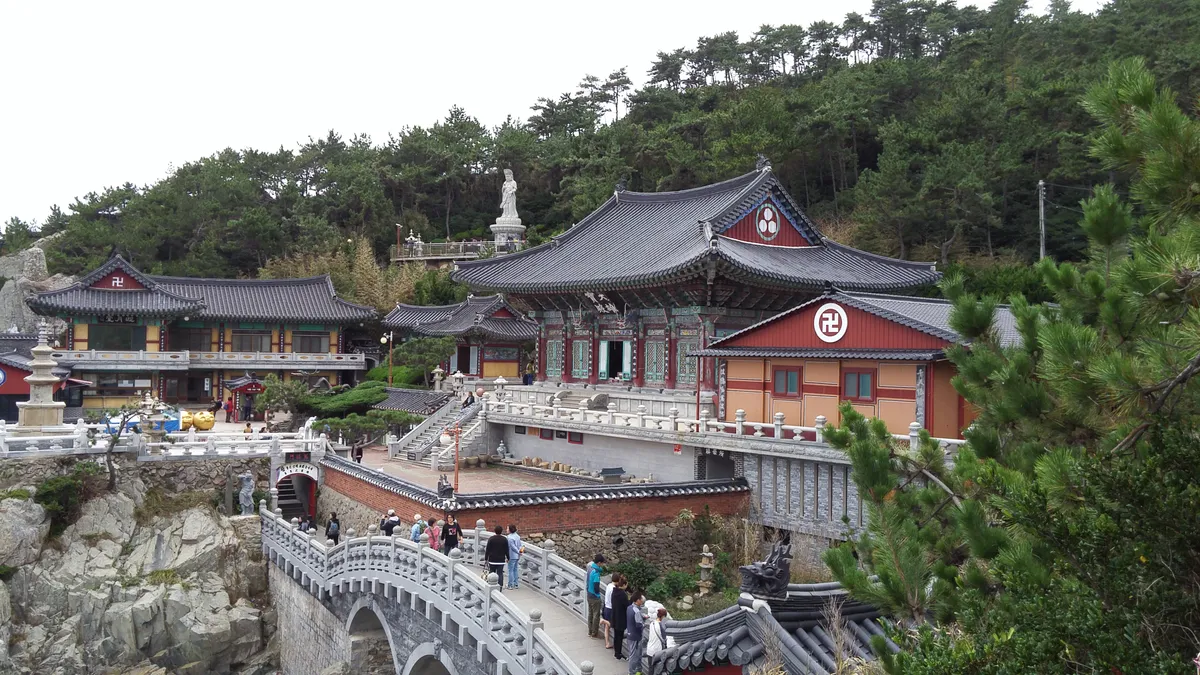
Haedong Yonggungsa stands on the shore at Gijang-eup, Gijang-gun, Busan. The introduction published by the city of Busan sets it down as one of Korea’s three great Avalokitesvara sites, and describes it as a temple carrying a deep religious meaning in the way the sea, the dragon and the great Avalokitesvara image are brought into harmony. It also hands down that this is a place of efficacy where anyone who prays sincerely receives a dream-revelation and has one wish granted. Of the founding, it is said that the great master Naong, preceptor to King Gongmin, founded it in 1376.
Origin and history
Of the founding, it is said that the great master Naong, preceptor to King Gongmin, founded it in 1376. This page records only that this is what is said.
The introduction published by the city of Busan sets the temple down as one of Korea’s three great Avalokitesvara sites.
It describes the temple as carrying a deep religious meaning in the way the sea, the dragon and the great Avalokitesvara image are brought into harmony.
It hands down that this is a place of efficacy where anyone who prays sincerely receives a dream-revelation and has one wish granted.
What it is locally associated with
One of Korea’s three great Avalokitesvara sites
The introduction published by the city of Busan sets this temple down as one of Korea’s three great Avalokitesvara sites.
documented historyA single wish
It is handed down that anyone who prays sincerely receives a dream-revelation and has one wish granted.
folk traditionWhat is said of the founding
It is said that the great master Naong, preceptor to King Gongmin, founded the temple in 1376.
folk tradition
What can be said firmly about this temple is where it stands and what it is now. The city of Busan’s introduction records it as one of Korea’s three great Avalokitesvara sites and describes the sea, the dragon and the great Avalokitesvara image brought into harmony. That it sits directly on the water is what sets it apart from the others.
Of the founding, 1376 and the master Naong are what is said. This page does not set that year down as fact; it records only that this is what is said of it.
Founding dates sit in that position often on this site. Gwallyongsa in Changnyeong records that its temple history’s 349 has no certain basis, Naesosa in Buan records that its founding is simply unknown, and Bulgapsa in Yeonggwang has its 384 founding by Malananta refused by the record.
What is asked for here is fixed at one thing, which is unusual. Anyone who prays sincerely, it is handed down, receives a dream-revelation and has a single wish granted — one, not many.
A temple of a similar name stands elsewhere on this site. Yonggungsa on Yeongjongdo in Incheon is the temple the Heungseon Daewongun renamed in 1864 after praying there for ten years. That one is on the Yellow Sea; this one on the East Sea.
Claims and evidence levels 2
- The city of Busan records Haedong Yonggungsa as one of Korea’s three great Avalokitesvara sites. documented history
- It is said that the great master Naong founded the temple in 1376, and that a sincere prayer here grants one wish. folk tradition
Related guides
- How to visit a Korean templeHands together and hands folded, how the bows work, and what to do at the threshold of a hall. Starting with what is different from visiting a Japanese shrine.
- The small hall behind the main one — sansingak and samseonggakUphill from the main hall of a Korean temple stands a smaller one, and inside it an old man with a tiger. This is where the indigenous religion sits, inside the Buddhist institution.
- Templestay — a night at a templeA programme that puts you inside a temple’s own timetable for a day or two. What you do, which type to book, and what to be ready for.
- Prayer sites and the one wishThe three great Gwaneum sites, the five relic halls, and the crowds before the entrance exam. Where the saying about one wish comes from, and where the record stops.
Sources
- 한가지소원 이루는 곳, 해동용궁사를 찾아서 — 부산광역시 (accessed 2026-08-17)
Last updated:
Similar places
8 places
 Temple
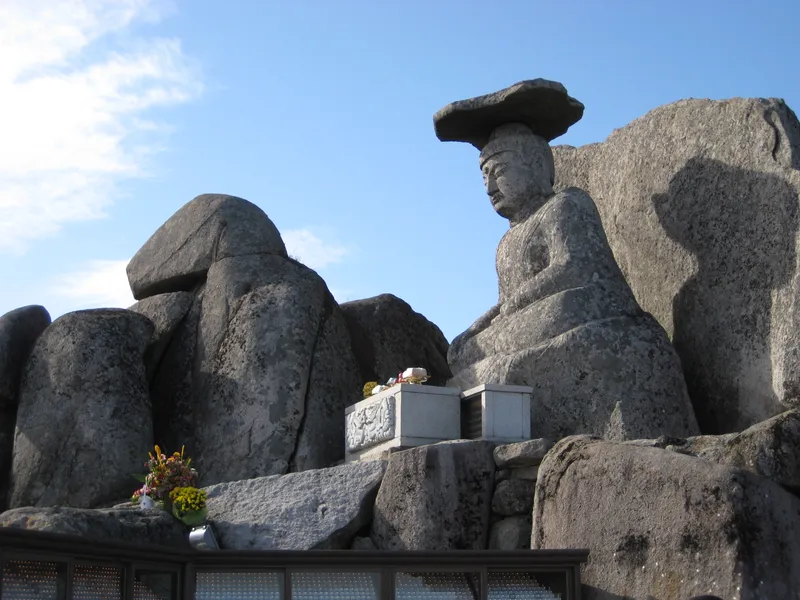
Gatbawi
- Exams & Study
- Wish Fulfillment
A Unified Silla stone Buddha seated on the summit of Gwanbong on Palgongsan, and the busiest prayer site in the country in the weeks before the university entrance exam.
 Temple
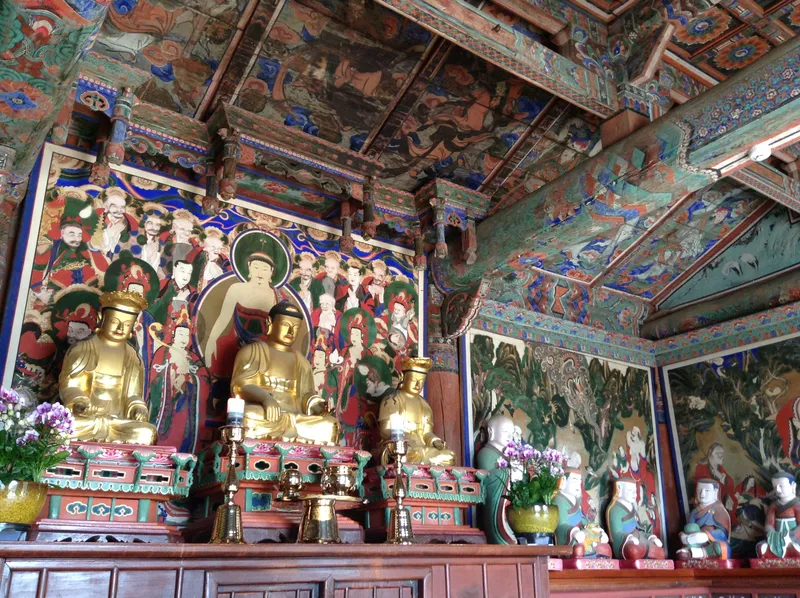
Beomeosa, Geumjeongsan
A golden fish came down out of the sky, and both the mountain and the temple were named after it.
 Temple
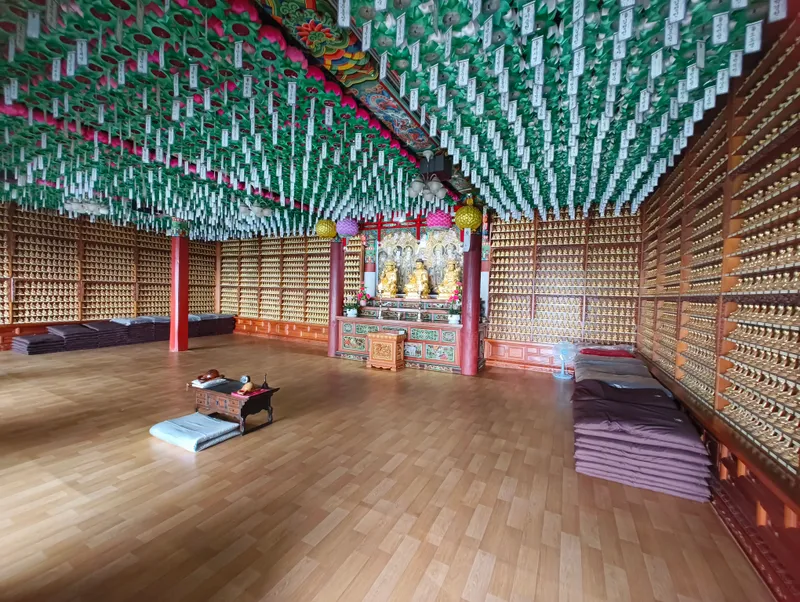
Boriam
- Wish Fulfillment
An Avalokiteśvara prayer site on the slope of Geumsan, counted with Hongryeonam and Bomunsa among Korea’s three great sites.
 Temple
Hyangiram
- Wish Fulfillment
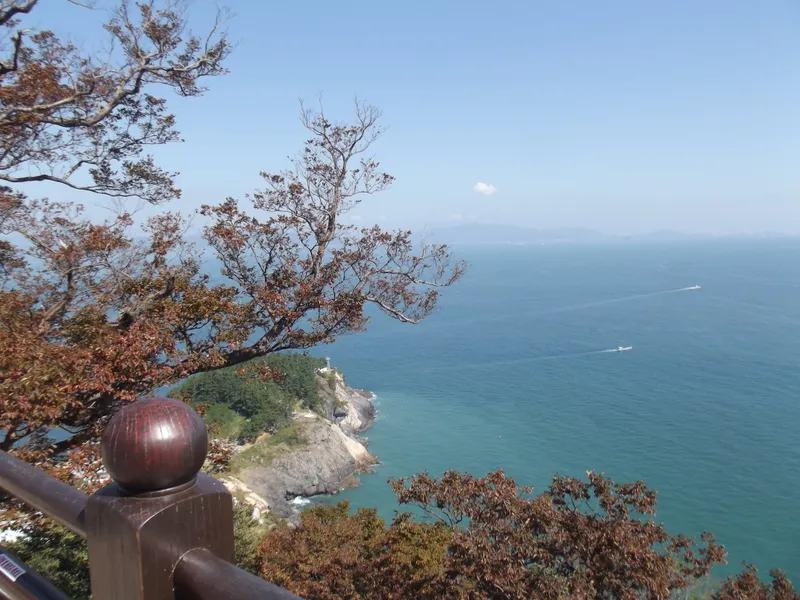
One of the country’s four sea-facing Avalokiteshvara prayer halls, named "facing the sun" for the sunrise seen from it.
 Shrine
Miyajidake Shrine
- Wish Fulfillment
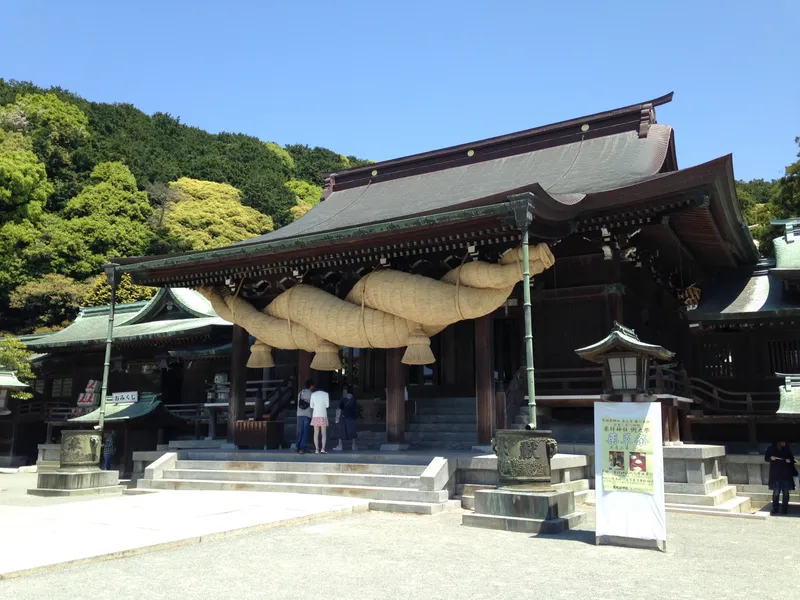
Empress Jingu is said to have prayed from this mountaintop before sailing — “grant me, I pray, an opening of fortune” — and the deity here is revered as one who grants any wish at all.
 Temple
Jungakdan, Sinwonsa
- Wish Fulfillment
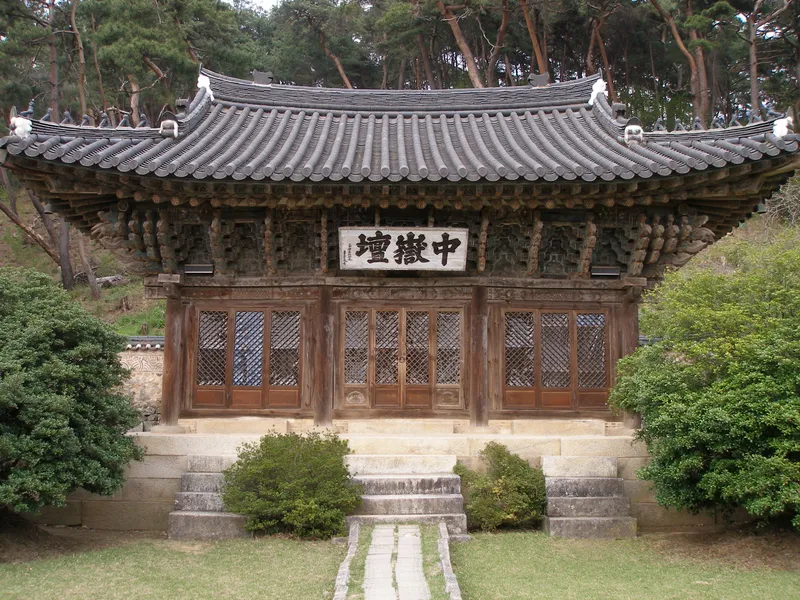
The only survivor of the three royal mountain-god altars of Joseon stands in the grounds of Sinwonsa on Gyeryongsan.
 Temple
Tongdosa
- Protection & Safety
The first of the five relic sanctuaries, whose main hall enshrines no buddha because it faces the relics behind it.
 Temple
Pyochungsa, Jaeyaksan
Named when the character for shrine in its name gave way to the character for temple.
No places match your filters