Prayer sites and the one wish
The three great Gwaneum sites, the five relic halls, and the crowds before the entrance exam. Where the saying about one wish comes from, and where the record stops.
Researched and translated with AI assistance. Every claim is linked to its source, but errors get through, so check the official site for opening times, fees and closures.About
What a "prayer site" means here
Some Korean temples are called places of prayer — gidocheo — even though prayer happens at all of them.
A temple gets that name for one of two reasons. Either it holds an image long held to be efficacious, or it holds relics of the Buddha himself. Both are reasons to travel, and people do travel.
That so many of them are hard to reach is not a coincidence either. A cliff above the sea, a ledge halfway up a mountain, a summit at 850 metres — few of them are easy.
The three great Gwaneum sites
Among temples where people pray to Avalokiteśvara, three are pre-eminent: Boriam on Geumsan in Namhae, Hongryeonam at Naksansa, and Bomunsa on Ganghwa. The Encyclopedia of Korean Culture names all three together in its article on Boriam.
All three face the sea, which follows an old understanding that Avalokiteśvara dwells where the water is.
Two of them, Boriam and Hongryeonam, are on this site.
The five relic halls
A jeongmyeol-bogung is a hall holding relics of the Buddha's body. Because the relics themselves are the object of veneration, no buddha image is enshrined inside. Open the doors and the place where a buddha should be is empty, with the relic stupa visible through the window beyond.
The Encyclopedia of Korean Culture records five such halls: Tongdosa in Yangsan, Bongjeongam in Inje, Beopheungsa in Yeongwol, Jeongamsa in Jeongseon, and Woljeongsa on Odaesan.
The empty hall is not damage or an absence. Leaving that place empty is the form.
The saying about one wish
A sentence follows these places: pray wholeheartedly and one wish will be granted. It attaches to Boriam, to Hongryeonam, to Gatbawi alike.
This site carries the saying but does not state it as fact. It has been transmitted a long time and is still in wide use, but no temple has ever put it forward as a promise, and no state record contains such a sentence.
What is passed along and what an institution says are different things. That is why the Korean pages here take the trouble to separate "it is told that" from "the record states". What to believe is the reader's business; how far the record goes is the writer's.
Gatbawi is where the distinction is sharpest. That people come from across the country before the entrance exam is verified annually. That one wish is granted there is something people have passed along. Both sentences are true, and they are true in different ways.
Related places
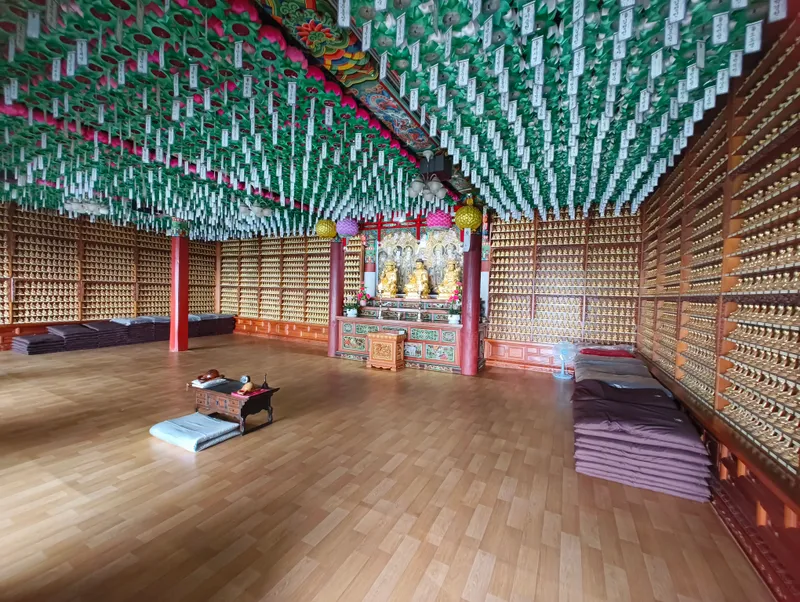 Temple
Boriam
- Wish Fulfillment
An Avalokiteśvara prayer site on the slope of Geumsan, counted with Hongryeonam and Bomunsa among Korea’s three great sites.
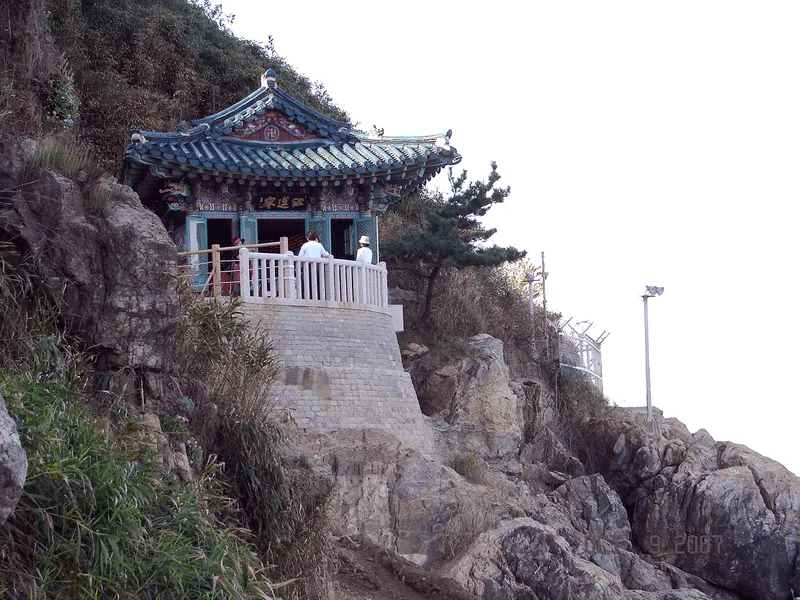 Temple
Hongryeonam
- Wish Fulfillment
A hermitage built where Uisang is said to have met Avalokiteśvara, its hall raised so the sea can be seen moving beneath the floor.
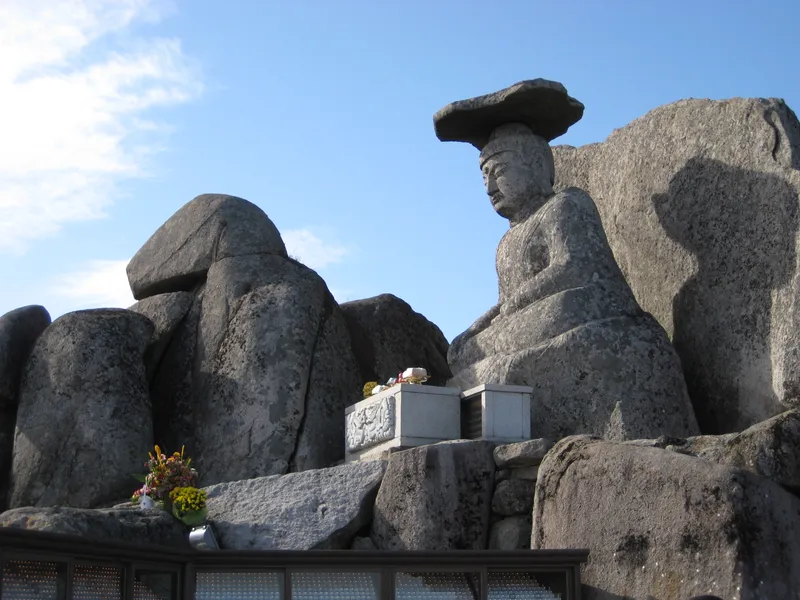 Temple
Gatbawi
- Exams & Study
- Wish Fulfillment
A Unified Silla stone Buddha seated on the summit of Gwanbong on Palgongsan, and the busiest prayer site in the country in the weeks before the university entrance exam.
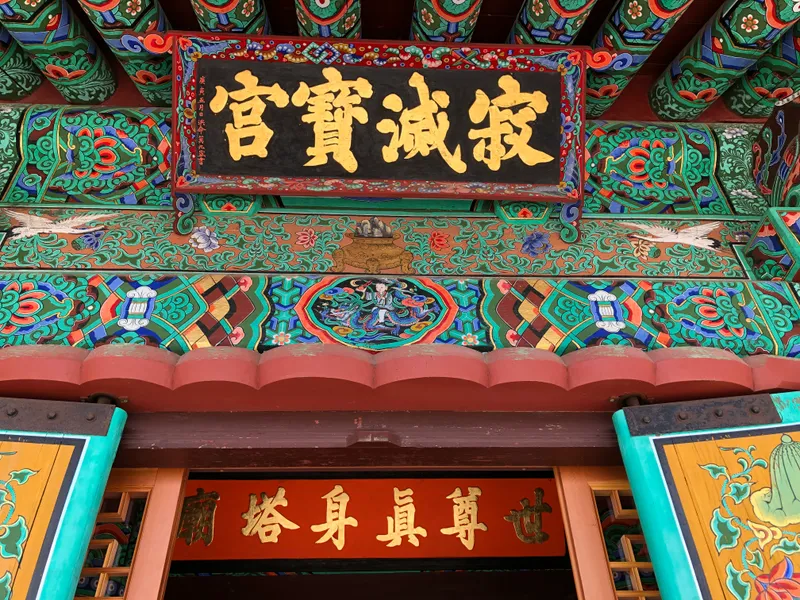 Temple
Jeongmyeol-bogung, Odaesan
- Protection & Safety
A relic hall on the middle terrace of Odaesan with no buddha image inside, because the Buddha’s own relics are enshrined there.
Sources
- 평창 오대산 중대 적멸보궁 — 한국민족문화대백과사전 — Academy of Korean Studies (accessed 2026-08-11)
- 금산 보리암(錦山 菩提庵) — 3대 관음 기도처 — Academy of Korean Studies (accessed 2026-08-10)
- 경산 팔공산 관봉 석조여래좌상 — 한국민족문화대백과사전 — Academy of Korean Studies (accessed 2026-08-10)