How to visit a Korean temple
Hands together and hands folded, how the bows work, and what to do at the threshold of a hall. Starting with what is different from visiting a Japanese shrine.
Researched and translated with AI assistance. Every claim is linked to its source, but errors get through, so check the official site for opening times, fees and closures.About
First, how this differs from Japan
You do not clap at a Korean temple. Two bows, two claps and a final bow is the form for a Japanese shrine, and Korean temple practice has no such sequence.
Nor is there usually a water basin at the entrance. The Japanese temizuya has no standard equivalent in a Korean temple.
What Korean temples do have is a particular way of holding your hands, which is where to start.
Hapjang and chasu
Hapjang is the palms placed together in front of the chest. You greet a monk with it, and you use it entering and leaving a hall, bowing from the waist with the hands still together. That combination is called hapjang banbae.
Chasu is what your hands do the rest of the time. The Templestay office describes it as lightly holding the back of the left hand with the right. It means simply that the hands are not left to hang, and it is not a difficult posture.
Those two will carry you through almost any moment inside a temple.
The bows
Inside a hall, three bows is the standard. The Templestay office's guidance is that indoors one makes three bows, or one, to a monk — so a single bow is not a mistake.
The bow is a full one: kneeling, forehead to the floor. It is a different gesture from the standing bow from the waist. Think of the standing bow as a greeting and the full bows as reverence, and you will not go far wrong.
Taking your time matters more than the count. Nobody will hurry you, even with people waiting.
What not to do
The Templestay office states it plainly: loud noise, drinking and smoking — anything that disturbs the atmosphere of a temple — are not permitted.
A temple is not an attraction; it is somewhere people live. Monks' living and practice quarters sit within the same grounds, so a closed door is a closed door, and photography is best set aside inside a hall or during a service.
Several of the Korean places on this site are working places of prayer. It is enough to remember that the person beside you may not be a visitor.
Related places
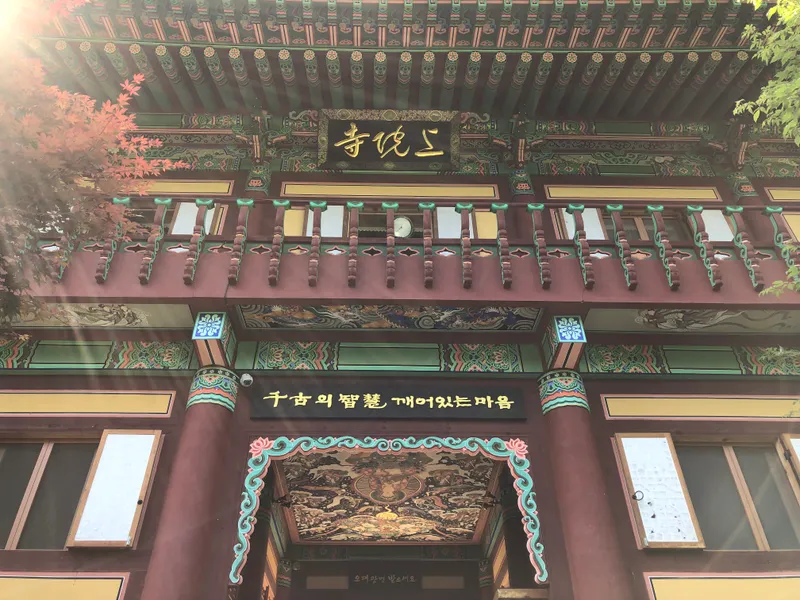 Temple
Sangwonsa
- Health & Healing
A temple on Odaesan founded in 705, at the centre of the mountain’s Manjushri devotion, and known for the story that King Sejo met the bodhisattva here as a boy and was healed.
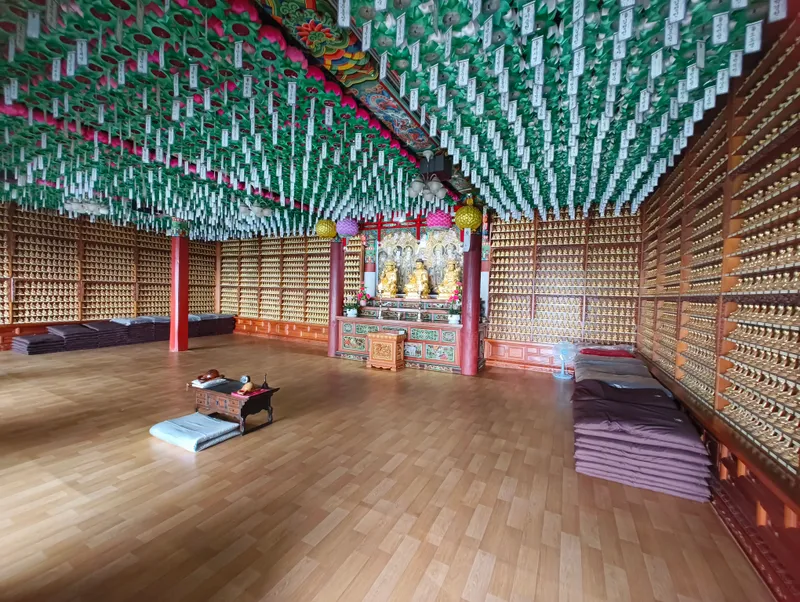 Temple
Boriam
- Wish Fulfillment
An Avalokiteśvara prayer site on the slope of Geumsan, counted with Hongryeonam and Bomunsa among Korea’s three great sites.
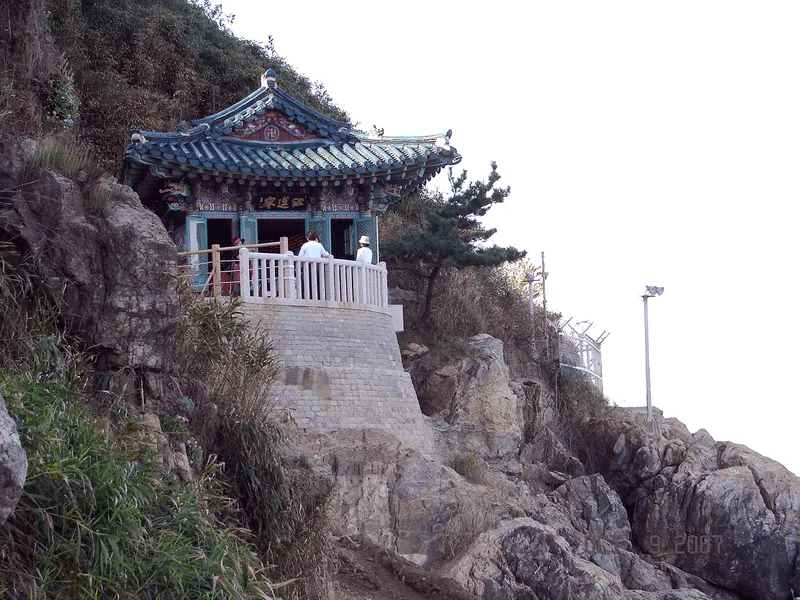 Temple
Hongryeonam
- Wish Fulfillment
A hermitage built where Uisang is said to have met Avalokiteśvara, its hall raised so the sea can be seen moving beneath the floor.
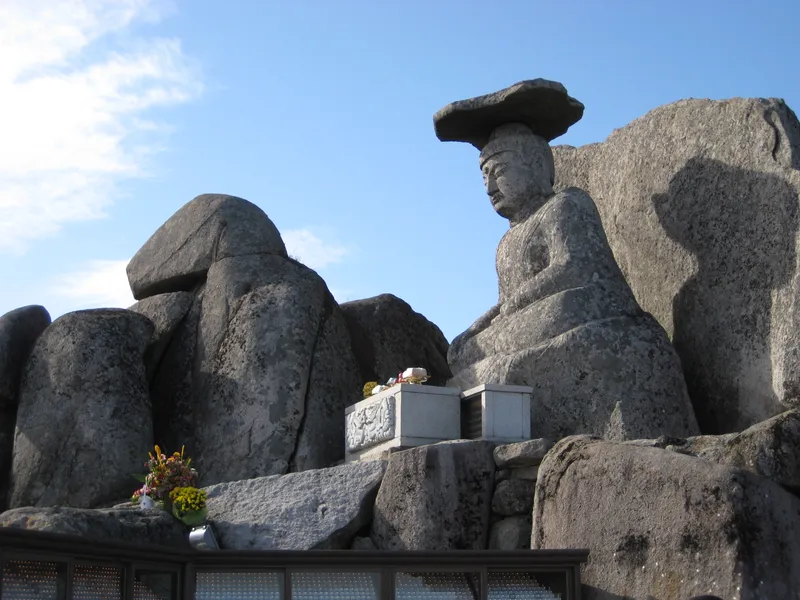 Temple
Gatbawi
- Exams & Study
- Wish Fulfillment
A Unified Silla stone Buddha seated on the summit of Gwanbong on Palgongsan, and the busiest prayer site in the country in the weeks before the university entrance exam.
Sources
- 템플스테이란 — 사찰 예절과 프로그램 안내 — 한국불교문화사업단 (Cultural Corps of Korean Buddhism) (accessed 2026-08-11)
- 대한불교조계종 — Jogye Order of Korean Buddhism (accessed 2026-08-11)