Beomeosa, Geumjeongsan
Researched and translated with AI assistance. Every claim is linked to its source, but errors get through, so check the official site for opening times, fees and closures.About
In short
A golden fish came down out of the sky, and both the mountain and the temple were named after it.
Quick facts
- Address
- 250 Beomeosa-ro, Geumjeong-gu, Busan
About this place
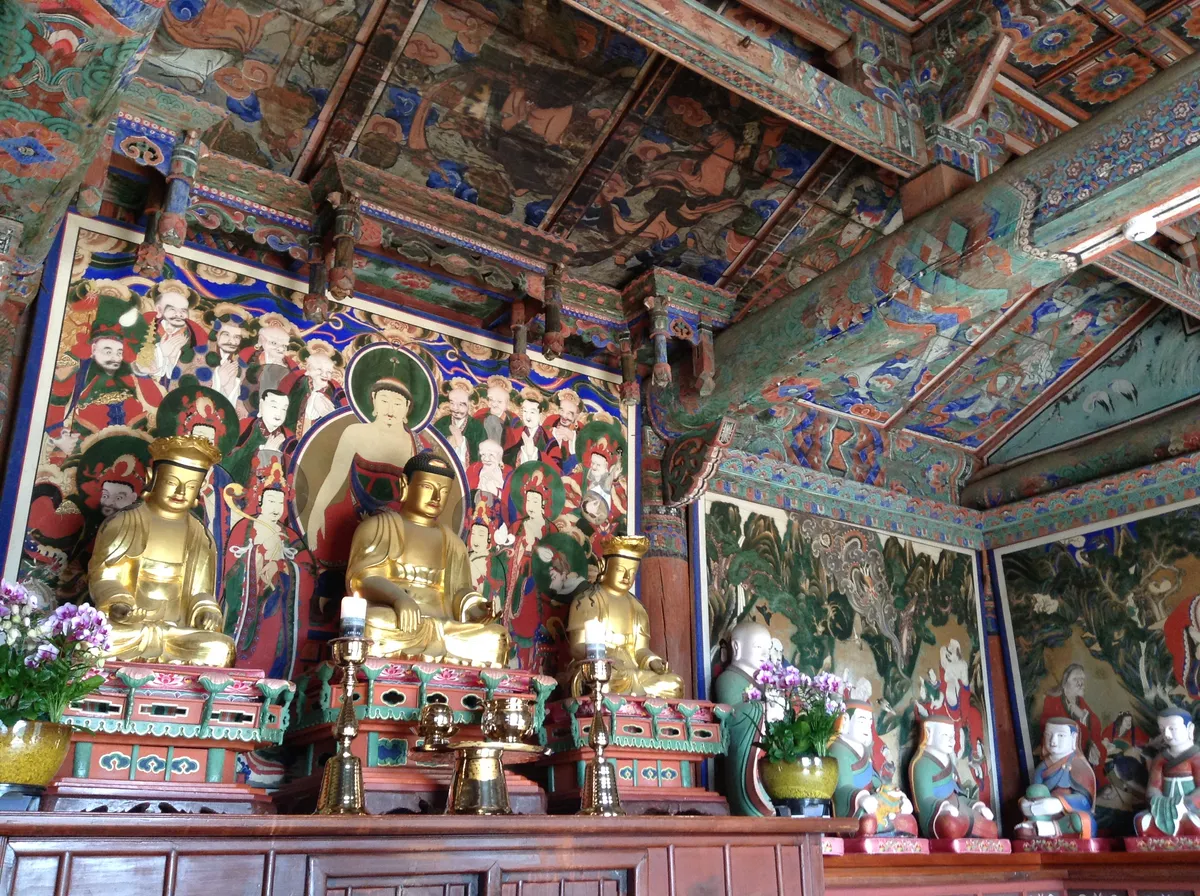
Beomeosa stands on Geumjeongsan in Geumjeong-gu, Busan, and is the head temple of the fourteenth district of the Jogye Order. The temple is said to have been founded in the reign of King Heungdeok of Silla. It is handed down that a single golden fish came down from the sky riding five-coloured clouds and played there, and for this the mountain was named Geumjeongsan and the temple, once built, was called Beomeosa. In the Life of the Reverend Beopjang written by Choe Chi-won it is listed as one of the ten Hwaeom temples of this country. In the Joseon period it burned down in the Japanese invasions of the 1590s. Afterwards Beomeosa produced many eminent monks and widened its grounds, and in the 1900s, under the name of the great head temple of Seon, it carried on a movement to raise the spirit of Seon practice and became a footing for modern Buddhism.
Origin and history
The temple is said to have been founded in the reign of King Heungdeok of Silla.
It is handed down that a single golden fish came down from the sky riding five-coloured clouds and played there, and for this the mountain was named Geumjeongsan and the temple, once built, was called Beomeosa.
In the Life of the Reverend Beopjang written by Choe Chi-won it is listed as one of the ten Hwaeom temples of this country.
In the Joseon period it burned down in the Japanese invasions of the 1590s. Afterwards Beomeosa produced many eminent monks and widened its grounds, and in the 1900s, under the name of the great head temple of Seon, it carried on a movement to raise the spirit of Seon practice and became a footing for modern Buddhism.
What it is locally associated with
A fish on five-coloured clouds
A single golden fish came down from the sky riding five-coloured clouds and played there, and for this the mountain was named Geumjeongsan and the temple Beomeosa.
folk traditionOne of the ten Hwaeom temples
In the Life of the Reverend Beopjang written by Choe Chi-won it is listed as one of the ten Hwaeom temples of this country.
documented historyThe great head temple of Seon
In the 1900s, under that name, it carried on a movement to raise the spirit of Seon practice and became a footing for modern Buddhism.
documented history
One story produced two names. A golden fish came down out of the sky on five-coloured clouds and played there, and so the mountain became Geumjeongsan and the temple Beomeosa. The fish character at the end of the temple’s name is that fish.
The line this temple belongs to runs back to Buseoksa in Yeongju. Choe Chi-won’s Life of the Reverend Beopjang counts it among the ten Hwaeom temples of this country, and that list of ten also holds Buseoksa on Taebaeksan and Haeinsa on Gayasan. Buseoksa is where the Hwaeom school formally opened in this land.
The temple was once wholly gone. It burned down in the Japanese invasions of the 1590s, and what stands now was raised after that.
There is a recent stretch of the record as well. In the 1900s, under the name of the great head temple of Seon, it carried on a movement to raise the spirit of Seon practice and became a footing for modern Buddhism.
Claims and evidence levels 2
- Choe Chi-won’s Life of the Reverend Beopjang lists Beomeosa among the ten Hwaeom temples of Korea. documented history
- Both the mountain and the temple are said to be named for a golden fish that came down from the sky on five-coloured clouds. folk tradition
Related guides
- How to visit a Korean templeHands together and hands folded, how the bows work, and what to do at the threshold of a hall. Starting with what is different from visiting a Japanese shrine.
- The small hall behind the main one — sansingak and samseonggakUphill from the main hall of a Korean temple stands a smaller one, and inside it an old man with a tiger. This is where the indigenous religion sits, inside the Buddhist institution.
- Templestay — a night at a templeA programme that puts you inside a temple’s own timetable for a day or two. What you do, which type to book, and what to be ready for.
- Prayer sites and the one wishThe three great Gwaneum sites, the five relic halls, and the crowds before the entrance exam. Where the saying about one wish comes from, and where the record stops.
Sources
- 금정산 범어사(金井山 梵魚寺) — 한국민족문화대백과사전 (accessed 2026-08-16)
Last updated:
Similar places
8 places
 Temple
Haedong Yonggungsa
- Wish Fulfillment
One of Korea’s three great Avalokitesvara sites, standing right on the sea.
 Temple
Tongdosa
- Protection & Safety
The first of the five relic sanctuaries, whose main hall enshrines no buddha because it faces the relics behind it.
 Temple
Pyochungsa, Jaeyaksan
Named when the character for shrine in its name gave way to the character for temple.
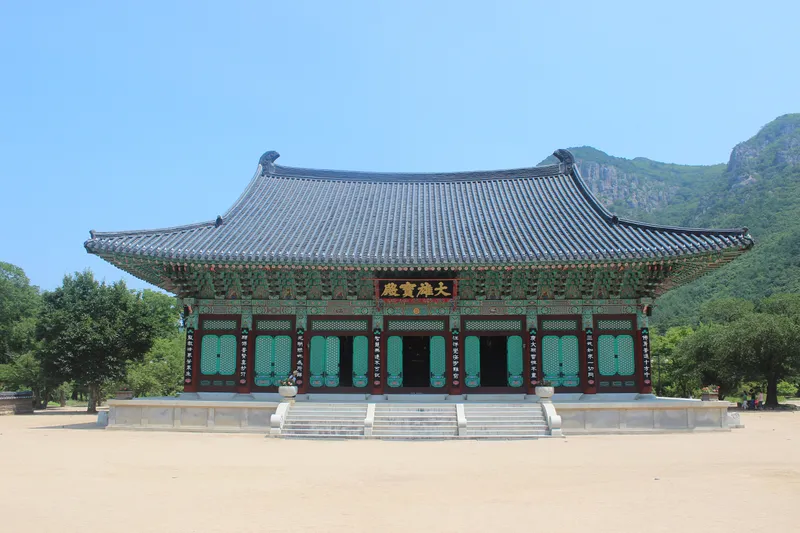 Temple
Unmunsa, Hogeosan
The temple where the line begins that ends with Wongwang writing the five worldly precepts.
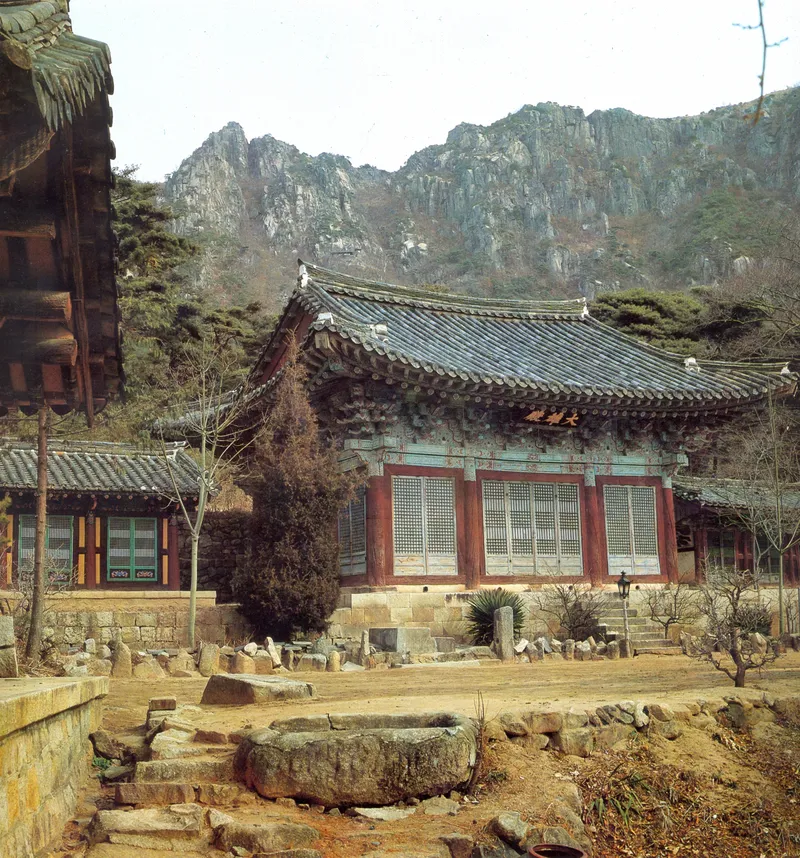 Temple
Gwallyongsa, Gwallyongsan
Nine dragons went up, and one sighting named both the temple and the mountain.
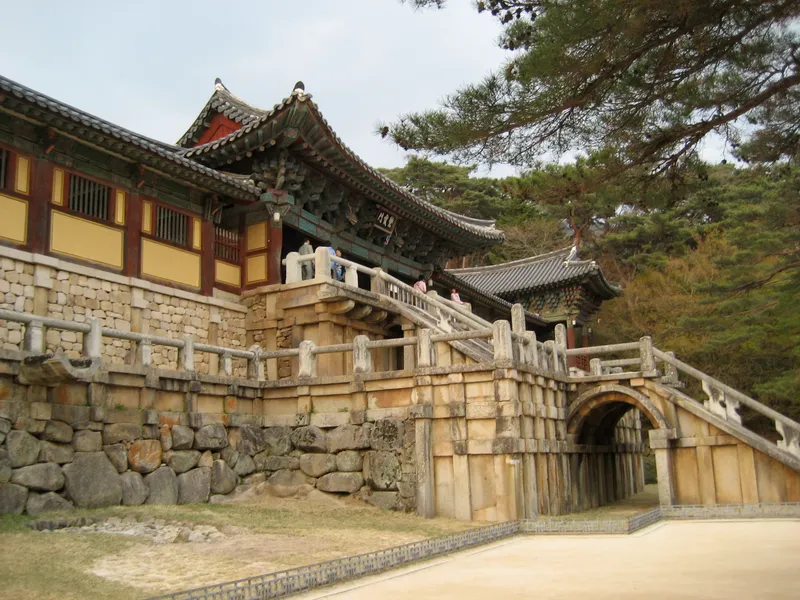 Temple
Bulguksa, Tohamsan
One man built this for the parents of this life, and Seokguram for the parents of a former one.
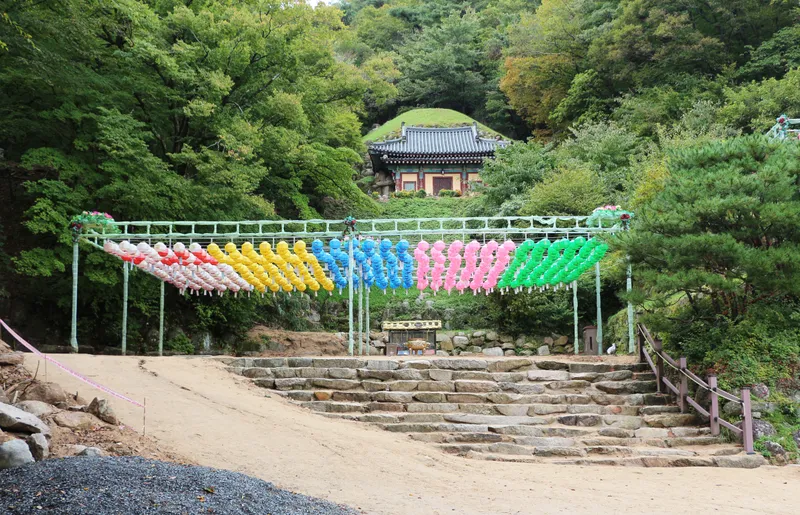 Temple
Seokguram
- Family & Home
A stone grotto begun in 751 by Kim Dae-seong for his parents in a former life, paired with Bulguksa, which he built for his parents in this one.
 Historic Site
Tomb of King Munmu
- Protection & Safety
The tomb of King Munmu of Silla, set on a rock in the sea because he willed to become a dragon and guard the East Sea.
No places match your filters