Templestay — a night at a temple
A programme that puts you inside a temple’s own timetable for a day or two. What you do, which type to book, and what to be ready for.
Researched and translated with AI assistance. Every claim is linked to its source, but errors get through, so check the official site for opening times, fees and closures.About
What it is
Templestay is a programme in which you stay at a temple for a set period and live its culture and daily life. It is run by the Cultural Corps of Korean Buddhism, under the Jogye Order.
It began around the 2002 World Cup, half from the practical problem of housing the crowds and half from the aim of showing Korean traditional culture to visitors. As the Corps has it, 191 temples now take part.
It is not a tour product. You are a guest inside a working day, and the temple sets the timetable, not you.
Four types
The day type finishes within a day, with no overnight stay.
The experience type follows a set schedule — services, meditation, tea, the formal meal. If this is your first, book this one.
The rest type has almost no schedule. You are given a room and you rest, joining only what you feel like joining.
The group type is for schools, companies and other parties arriving together.
How the day runs
There is a service in the morning and one in the evening. The morning one is usually before sunrise. Getting up in the dark is the strangest part of the programme for most people, and it is what most accounts start with.
Baru gongyang is the formal meal, eaten in a fixed way: the bowls are set out, you take only what you will eat, you leave nothing, and at the end you rinse the bowls with water and drink that too. Wasting nothing is built into the form itself.
What happens between is up to the temple. Mountain temples involve a lot of walking; in winter the programme thins out.
What to be ready for
The Corps states that loud noise, drinking and smoking — anything disturbing the atmosphere of a temple — are not permitted. There is no alcohol.
Rooms are usually heated floors rather than beds. At many temples the toilets are outside the room. Mountain temples are cold at night.
And it is quiet. The programme is enjoyable if you can stand a day on which nothing happens.
Related places
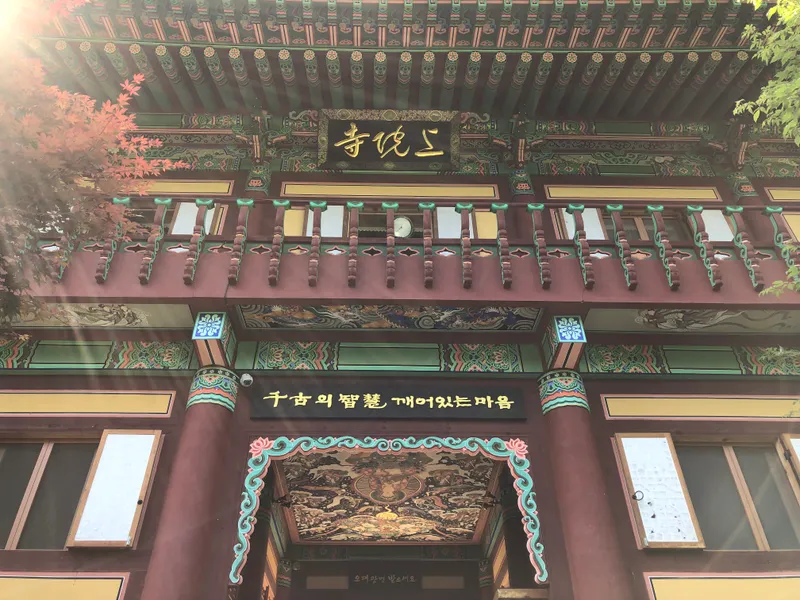 Temple
Sangwonsa
- Health & Healing
A temple on Odaesan founded in 705, at the centre of the mountain’s Manjushri devotion, and known for the story that King Sejo met the bodhisattva here as a boy and was healed.
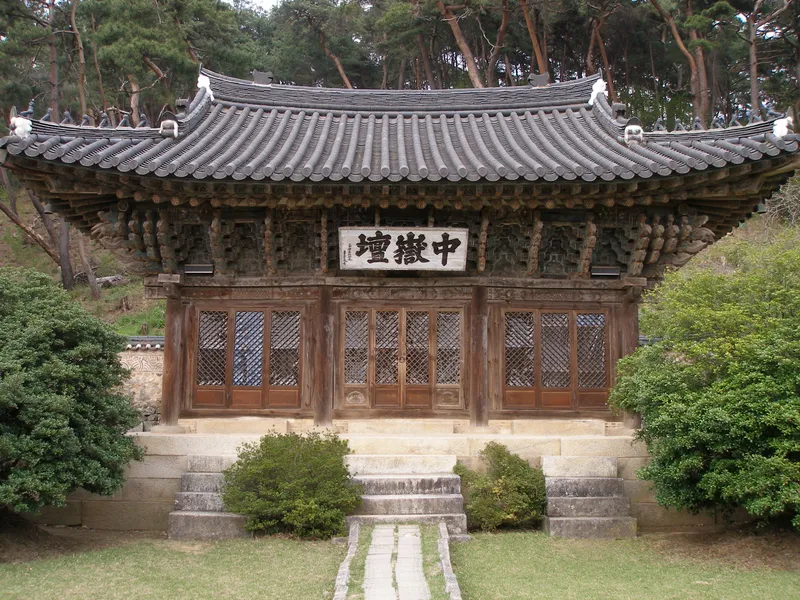 Temple
Jungakdan, Sinwonsa
- Wish Fulfillment
The only survivor of the three royal mountain-god altars of Joseon stands in the grounds of Sinwonsa on Gyeryongsan.
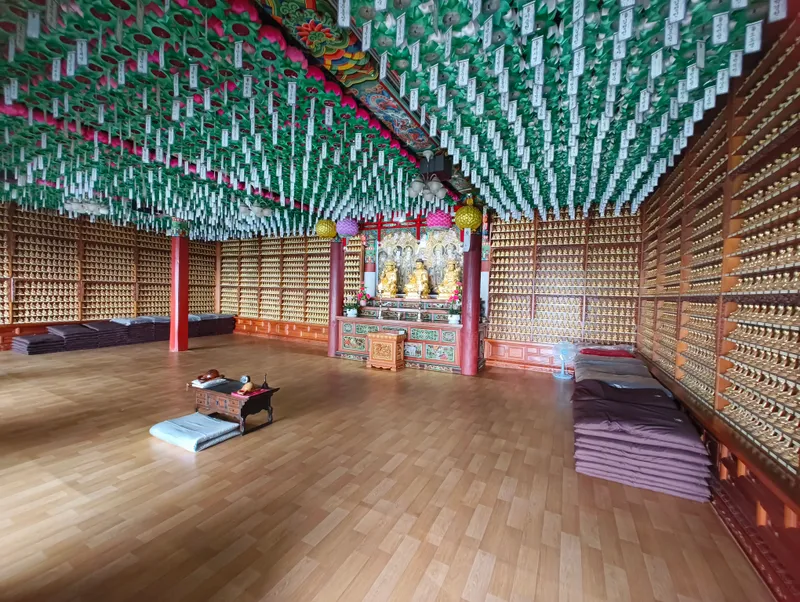 Temple
Boriam
- Wish Fulfillment
An Avalokiteśvara prayer site on the slope of Geumsan, counted with Hongryeonam and Bomunsa among Korea’s three great sites.
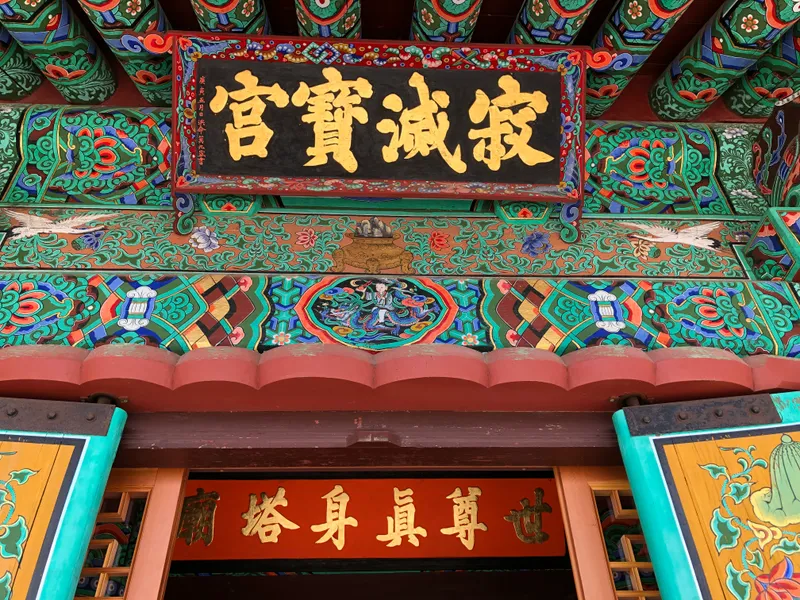 Temple
Jeongmyeol-bogung, Odaesan
- Protection & Safety
A relic hall on the middle terrace of Odaesan with no buddha image inside, because the Buddha’s own relics are enshrined there.
Sources
- 템플스테이란 — 사찰 예절과 프로그램 안내 — 한국불교문화사업단 (Cultural Corps of Korean Buddhism) (accessed 2026-08-11)
- 대한불교조계종 — Jogye Order of Korean Buddhism (accessed 2026-08-11)