Unmunsa, Hogeosan
Daejakgapsa
Researched and translated with AI assistance. Every claim is linked to its source, but errors get through, so check the official site for opening times, fees and closures.About
In short
The temple where the line begins that ends with Wongwang writing the five worldly precepts.
Quick facts
- Address
- 264 Unmunsa-gil, Unmun-myeon, Cheongdo-gun, Gyeongsangbuk-do
About this place
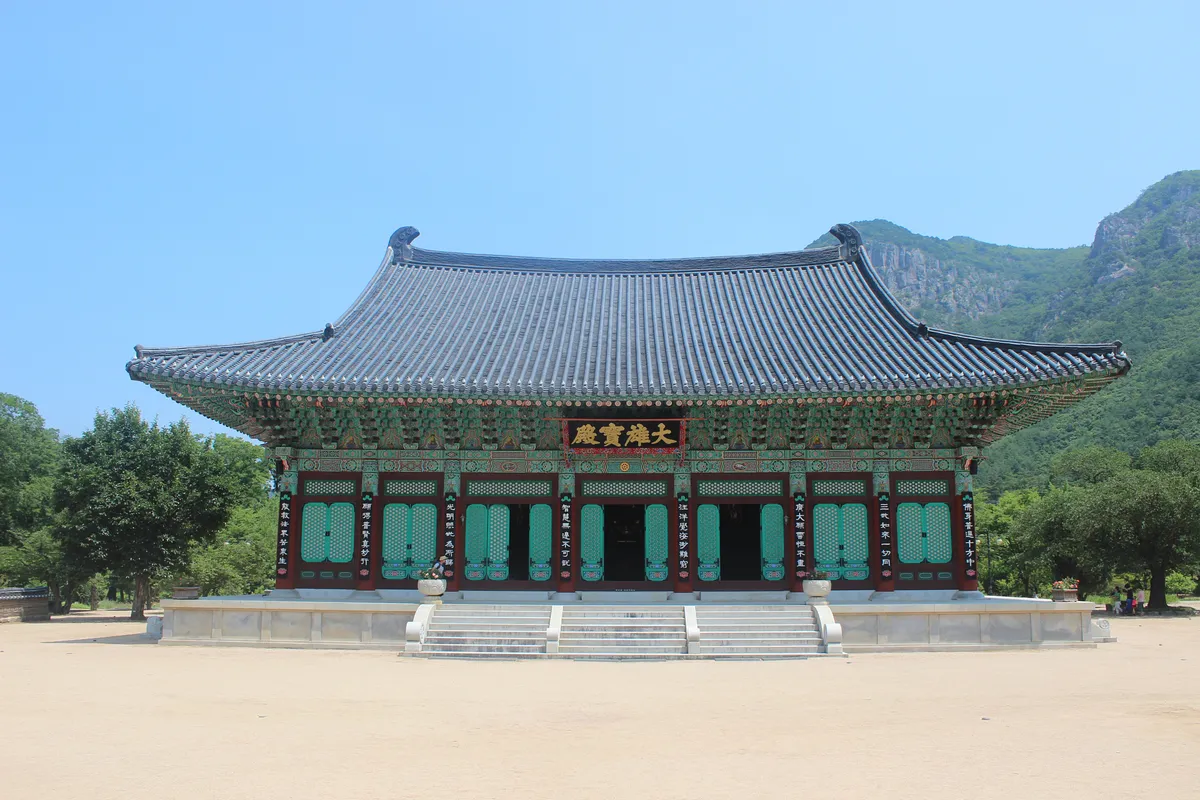
Unmunsa stands on Hogeosan in Unmun-myeon, Cheongdo-gun, Gyeongsangbuk-do. In 557 a holy monk whose name is not known was practising here, and from 560 buildings were put up and the temple founded under the name Daejakgapsa. In 600 Wongwang returned from study in Sui China and stayed three years at Daejakgapsa, rebuilding it. Later, when he had moved to Gaseulgapsa and was practising there, the hwarang Gwisan and Chuhang came and asked him for words that would serve as a lesson for a lifetime to men living in the world, and he composed the five worldly precepts for them. After King Taejo Wang Geon of Goryeo, repaying the merit of Boyang, granted five hundred gyeol of land to the Ogapsa and bestowed on Jakgapsa the name-board Unmun Seon Temple, it has been called Unmunsa. Since being selected in 1958 as a specialist seminary for nuns, Unmunsa has been known as an institution for the education of nuns and the study of the scriptures. Among natural monuments there is the drooping pine at the entrance to Unmunsa.
Origin and history
In 557 a holy monk whose name is not known was practising here, and from 560 buildings were put up and the temple founded under the name Daejakgapsa.
In 600 Wongwang returned from study in Sui China and stayed three years at Daejakgapsa, rebuilding it. Later, when he had moved to Gaseulgapsa and was practising there, the hwarang Gwisan and Chuhang came and asked him for words that would serve as a lesson for a lifetime to men living in the world, and he composed the five worldly precepts for them.
After King Taejo Wang Geon of Goryeo, repaying the merit of Boyang, granted five hundred gyeol of land to the Ogapsa and bestowed on Jakgapsa the name-board Unmun Seon Temple, it has been called Unmunsa.
Since being selected in 1958 as a specialist seminary for nuns, Unmunsa has been known as an institution for the education of nuns and the study of the scriptures. Among natural monuments there is the drooping pine at the entrance to Unmunsa.
What it is locally associated with
Five precepts, because two people asked
The hwarang Gwisan and Chuhang came to Wongwang at Gaseulgapsa and asked for words that would serve as a lesson for a lifetime to men living in the world, and he composed the five worldly precepts for them.
documented historyA name given by a king
After King Taejo Wang Geon of Goryeo, repaying the merit of Boyang, bestowed on Jakgapsa the name-board Unmun Seon Temple, it has been called Unmunsa.
documented historyA specialist seminary for nuns
Selected in 1958 as a specialist seminary for nuns, Unmunsa is known as an institution for the education of nuns and the study of the scriptures.
documented history
A rule that lasted came out of a question asked here. Wongwang stayed three years at this temple and then moved to Gaseulgapsa to practise, and the hwarang Gwisan and Chuhang came and asked him for words that would serve as a lesson for a lifetime to men living in the world; the five worldly precepts were his answer. The order is not a rule laid down and then followed, but two people asking and an answer coming into existence.
The temple’s name came from a board a king gave it. Its first name was Daejakgapsa; after King Taejo Wang Geon of Goryeo repaid the merit of Boyang and bestowed on Jakgapsa the name Unmun Seon Temple, it became Unmunsa.
What the temple does now is teach. Selected in 1958 as a specialist seminary for nuns, it is known as an institution for the education of nuns and the study of the scriptures. Among this site’s Korean places, it is the first whose living function is a school run by and for women in the monastic life.
At the entrance stands a drooping pine, designated a natural monument.
Claims and evidence levels 2
- Wongwang composed the five worldly precepts as an answer to the hwarang Gwisan and Chuhang, after three years at this temple. documented history
- Unmunsa has been a specialist seminary for nuns since 1958, known for the education of nuns and the study of the scriptures. documented history
Related guides
- How to visit a Korean templeHands together and hands folded, how the bows work, and what to do at the threshold of a hall. Starting with what is different from visiting a Japanese shrine.
- The small hall behind the main one — sansingak and samseonggakUphill from the main hall of a Korean temple stands a smaller one, and inside it an old man with a tiger. This is where the indigenous religion sits, inside the Buddhist institution.
- Templestay — a night at a templeA programme that puts you inside a temple’s own timetable for a day or two. What you do, which type to book, and what to be ready for.
- Prayer sites and the one wishThe three great Gwaneum sites, the five relic halls, and the crowds before the entrance exam. Where the saying about one wish comes from, and where the record stops.
Sources
- 호거산 운문사(虎踞山 雲門寺) — 한국민족문화대백과사전 (accessed 2026-08-16)
Last updated:
Similar places
8 places
 Temple
Pyochungsa, Jaeyaksan
Named when the character for shrine in its name gave way to the character for temple.
 Temple
Tongdosa
- Protection & Safety
The first of the five relic sanctuaries, whose main hall enshrines no buddha because it faces the relics behind it.
 Temple
Namjijangsa, Choejeongsan
Called south because it stands opposite Bukjijangsa on Palgongsan.
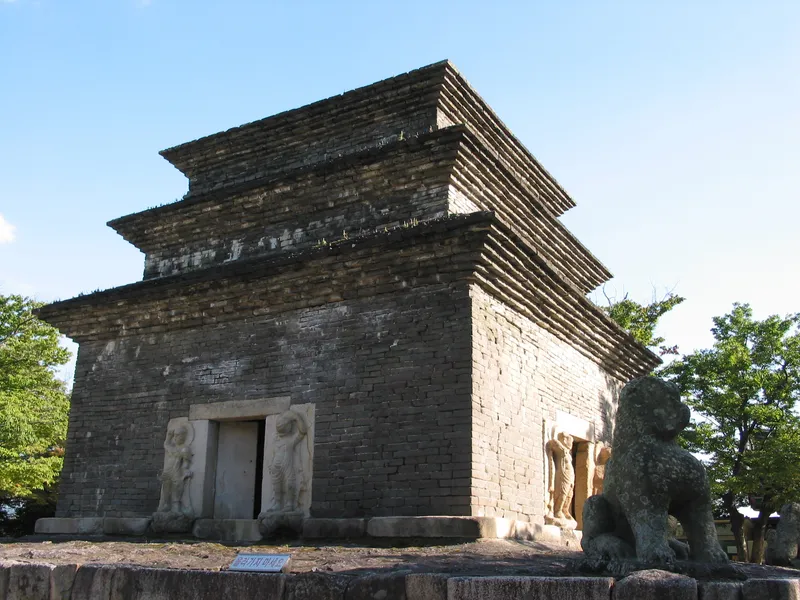 Temple
Bunhwangsa
- Health & Healing
The temple that held the image a blind child’s mother prayed to, after which he saw.
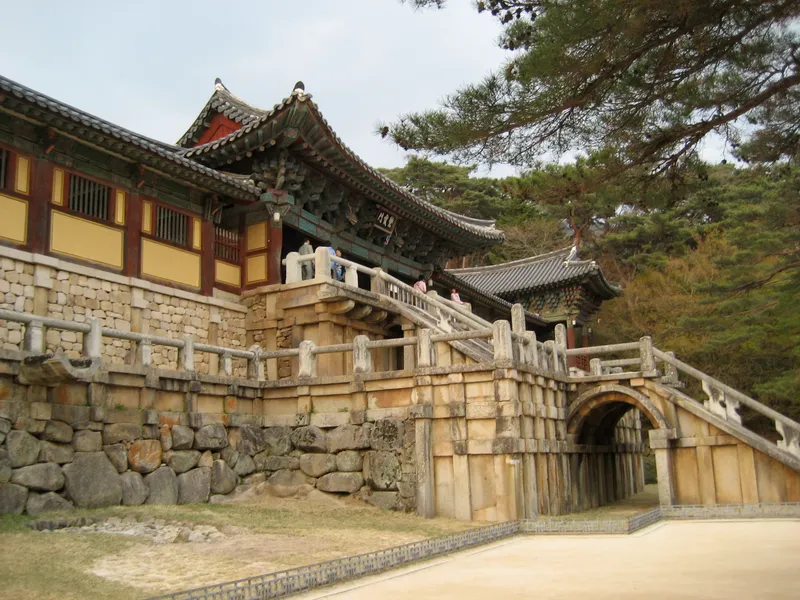 Temple
Bulguksa, Tohamsan
One man built this for the parents of this life, and Seokguram for the parents of a former one.
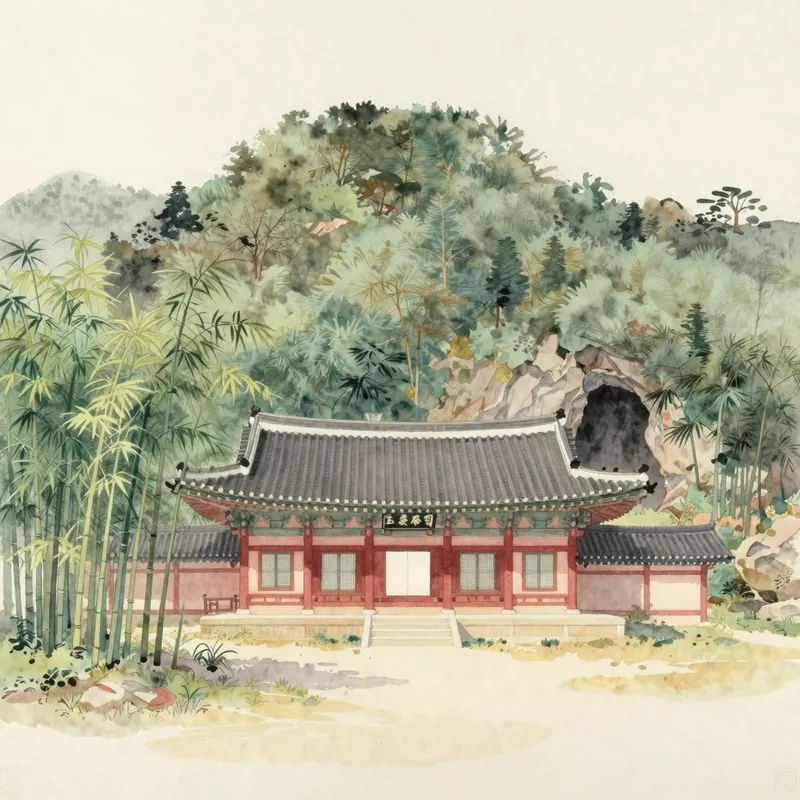 Temple
Eunjeoksa, Apsan
Built at the cave where Wang Geon hid for three days, and named with the characters for hiding and for traces.
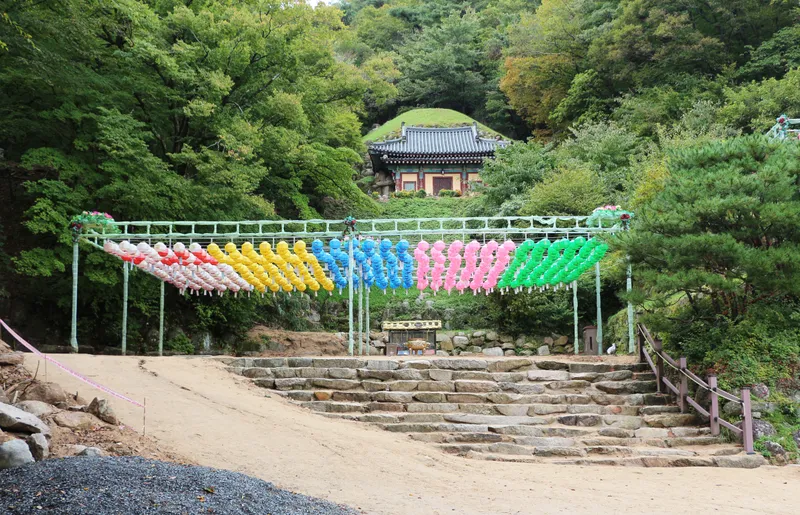 Temple
Seokguram
- Family & Home
A stone grotto begun in 751 by Kim Dae-seong for his parents in a former life, paired with Bulguksa, which he built for his parents in this one.
 Temple
Daegyeonsa, Biseulsan
A site that went to ruin in 1917 and became a temple again in 2014.
No places match your filters