Tomb of King Munmu
Daewangam · Underwater Tomb of King Munmu
Researched and translated with AI assistance. Every claim is linked to its source, but errors get through, so check the official site for opening times, fees and closures.About
In short
The tomb of King Munmu of Silla, set on a rock in the sea because he willed to become a dragon and guard the East Sea.
Quick facts
- Address
- 26 Bonggil-ri, Munmudaewang-myeon, Gyeongju-si, Gyeongsangbuk-do
About this place
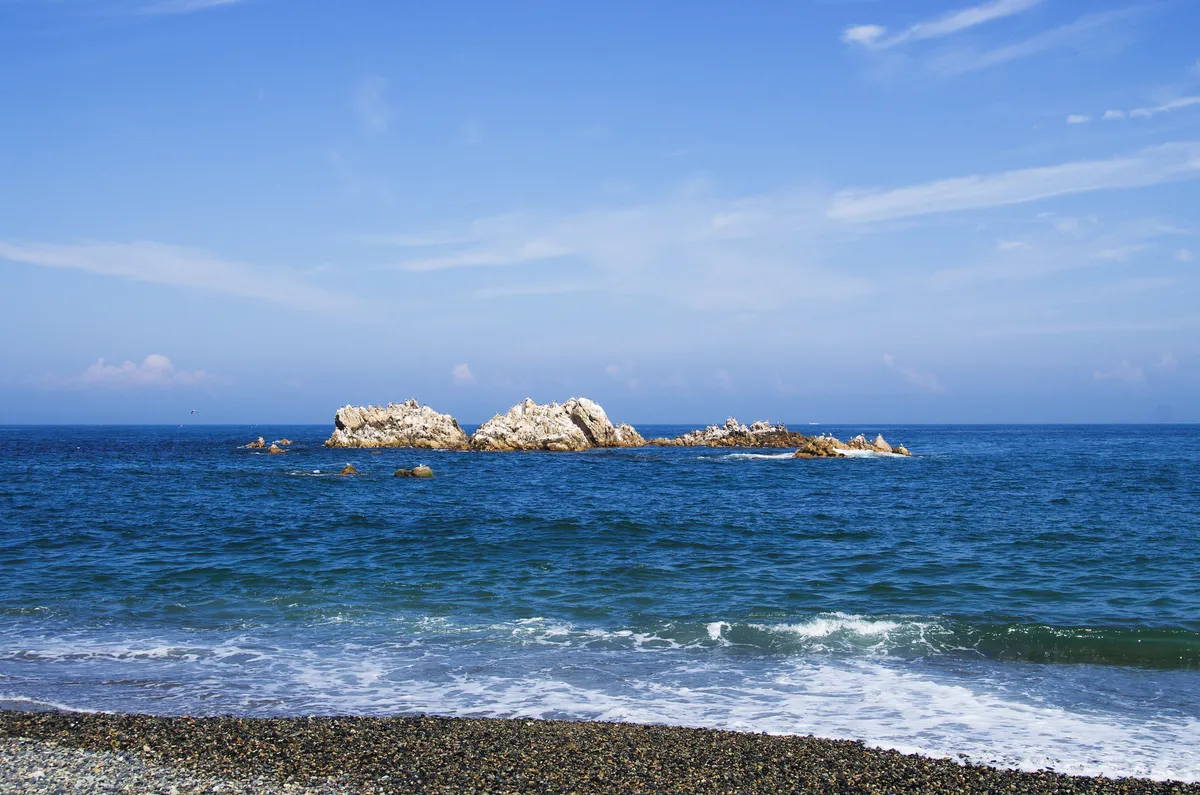
The Tomb of King Munmu lies offshore of Munmudaewang-myeon in Gyeongju, North Gyeongsang, and holds the thirtieth king of Unified Silla. The Encyclopedia of Korean Culture records that he was buried in the East Sea according to his will, and that the will was this: cremate him in the Buddhist manner and bury him in the East Sea, and he would become a dragon and block the Japanese raiders who came in from that sea. It is a natural rock in the water close to shore, designated a Historic Site on 24 July 1967.
Origin and history
The Encyclopedia of Korean Culture describes the Tomb of King Munmu as the tomb of the thirtieth king of Unified Silla, off Munmudaewang-myeon in Gyeongju.
He was buried in the East Sea according to his will. That will was that if he were cremated in the Buddhist manner and buried in the East Sea, he would become a dragon and block the Japanese raiders coming in from that sea.
It was designated a Historic Site on 24 July 1967.
What it is locally associated with
A will to guard as a dragon
The will was that if he were cremated in the Buddhist manner and buried in the East Sea, he would become a dragon and block the raiders coming in from it.
documented historyChannels on four sides
From the rock it looks as though channels were cut on all four sides for the sea to run in and out.
documented historyThe stone at the centre
A wide, flat stone lies lengthwise north to south at the centre of the still water inside.
documented history
Here the grave is itself the petition. Elsewhere a person comes to ask for something; here the person buried said in advance what he would do. He would become a dragon and stop the raiders entering the East Sea.
Climb onto the rock and it looks as though channels have been cut on all four sides for the sea to run in and out, with a fairly broad stretch of still water inside. At the centre of that water lies a wide, flat stone set lengthwise north to south.
That is as far as the encyclopedia goes. Whether the will was kept, and how much of it is fact, the record does not say — and neither does this page.
Claims and evidence levels 4
- The Tomb of King Munmu is the tomb of the thirtieth king of Unified Silla, offshore of Munmudaewang-myeon in Gyeongju. documented history
- He was buried in the East Sea according to a will stating that, cremated in the Buddhist manner and buried there, he would become a dragon and block the Japanese raiders entering that sea. documented history
- From the rock it appears that channels run in and out on all four sides, with a broad stretch of still water inside holding a wide flat stone laid north to south. documented history
- It was designated a Historic Site on 24 July 1967. documented history
Sources
- 경주 문무대왕릉(慶州 文武大王陵) — 한국민족문화대백과사전 — Academy of Korean Studies (accessed 2026-08-12)
- 문무왕(文武王) — 한국민족문화대백과사전 — Academy of Korean Studies (accessed 2026-08-12)
Last updated:
Similar places
8 places
 Temple
Tongdosa
- Protection & Safety
The first of the five relic sanctuaries, whose main hall enshrines no buddha because it faces the relics behind it.
 Temple
Golgulsa
A temple of twelve stone caves worked out of natural hollows.
 Temple
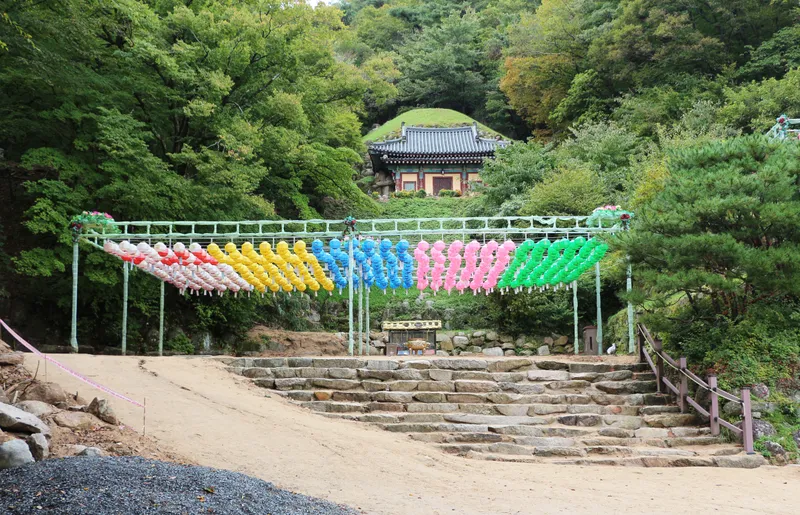
Girimsa, Hamwolsan
Founded by a monk from India, and renamed later by Wonhyo.
 Temple
Seokguram
- Family & Home
A stone grotto begun in 751 by Kim Dae-seong for his parents in a former life, paired with Bulguksa, which he built for his parents in this one.
 Temple
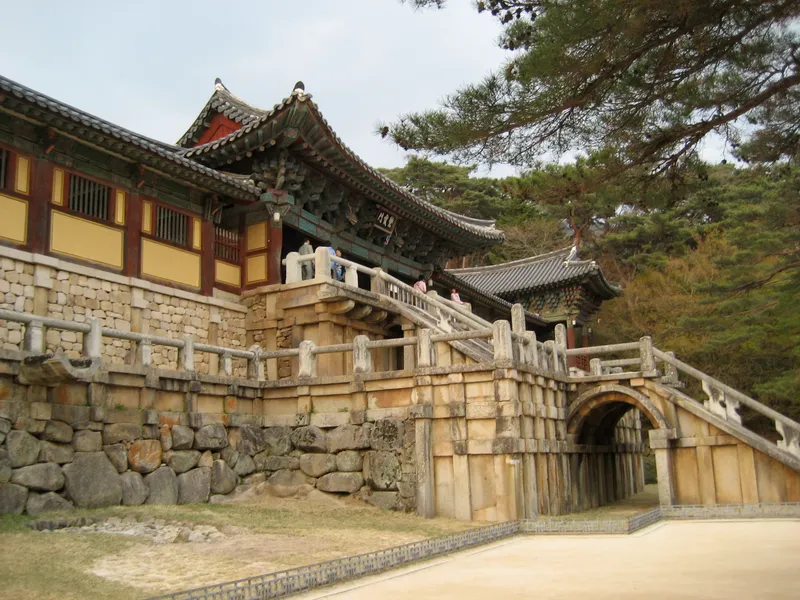
Bulguksa, Tohamsan
One man built this for the parents of this life, and Seokguram for the parents of a former one.
 Temple
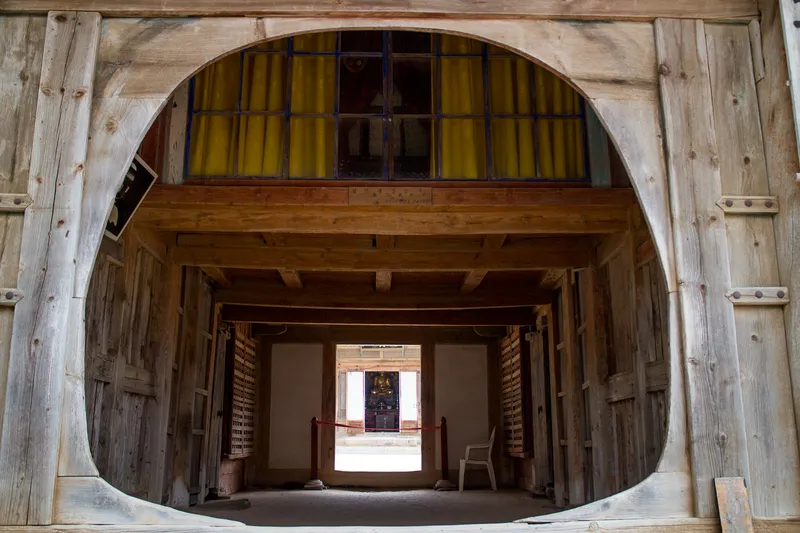
Haeinsa
- Protection & Safety
The temple holding the Tripitaka Koreana, cut out of a national wish to repel the Mongols, and the hall that has kept it.
 Temple
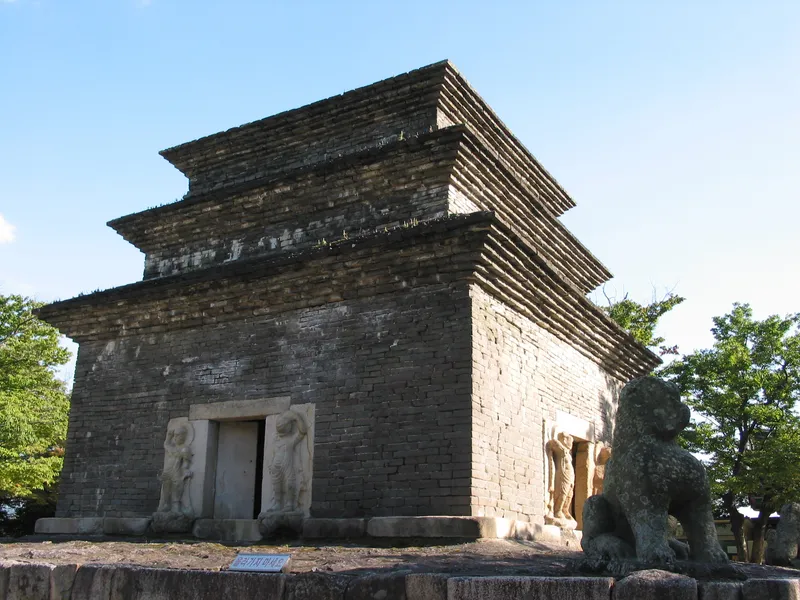
Bunhwangsa
- Health & Healing
The temple that held the image a blind child’s mother prayed to, after which he saw.
 Temple
Jeongamsa
- Protection & Safety
A relic sanctuary where Jajang is said to have enshrined the Buddha’s skull bone, a tooth and a hundred relics, with a National Treasure stupa on the slope behind.
No places match your filters