The small hall behind the main one — sansingak and samseonggak
Uphill from the main hall of a Korean temple stands a smaller one, and inside it an old man with a tiger. This is where the indigenous religion sits, inside the Buddhist institution.
Researched and translated with AI assistance. Every claim is linked to its source, but errors get through, so check the official site for opening times, fees and closures.About
That building behind the main hall
Walk through a Korean temple and you will find, behind the main hall and usually a little above it, a smaller building. The board over the door reads sansingak, or samseonggak, or chilseonggak.
Open it and there is no buddha inside — there is a painting of a white-bearded old man with a tiger. That is the mountain spirit. The sense that something here is not Buddhist is not a misreading. It came from outside Buddhism.
Who is enshrined
A samseonggak holds three in one hall: the mountain spirit, the seven stars, and the lone saint. Housed separately they become a sansingak, a chilseonggak and a dokseonggak.
The seven stars are the Big Dipper worshipped as a deity. The Encyclopedia of Korean Culture defines a chilseonggak as a Buddhist building enshrining Chilseong, the deity of long life. It is where people pray to live long.
The lone saint is Naban Jonja, who is said to have awakened alone. The mountain spirit presides over the mountain, and in the paintings a tiger keeps him company.
Why it is inside a temple
These halls exist because when Buddhism arrived it did not push out what was already here. It brought it indoors.
Of the chilseonggak the Encyclopedia of Korean Culture says plainly that it is one of the distinctive halls found only in Korean temples, and that it serves as evidence of the localisation of Korean Buddhism. Temples elsewhere do not have one.
In Japan, shrines and temples are separate institutions with separate buildings and separate forms of worship. In Korea the boundary runs not along a wall but up a slope inside one set of grounds. That is why this site can file both countries' indigenous religion under one category without claiming the two are the same thing.
Can you go in
Yes. If the door is open you may enter, and the same hands-together bow you use in the main hall works here.
These halls are small, though. One person praying inside fills the room. Waiting a moment at the door is often the better move.
Photography is best left alone. The painting is usually one the temple has kept for a long time, and it is hard to frame without also framing whoever is praying in front of it.
Related places
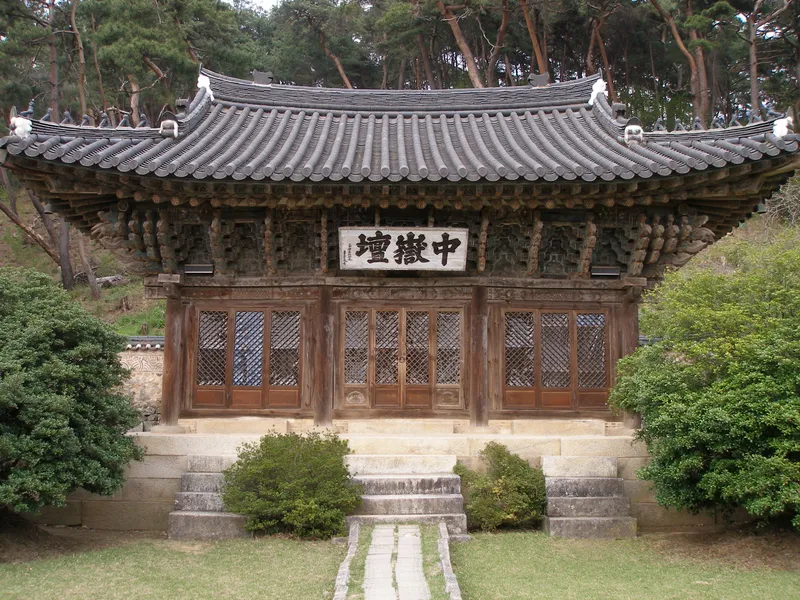 Temple
Jungakdan, Sinwonsa
- Wish Fulfillment
The only survivor of the three royal mountain-god altars of Joseon stands in the grounds of Sinwonsa on Gyeryongsan.
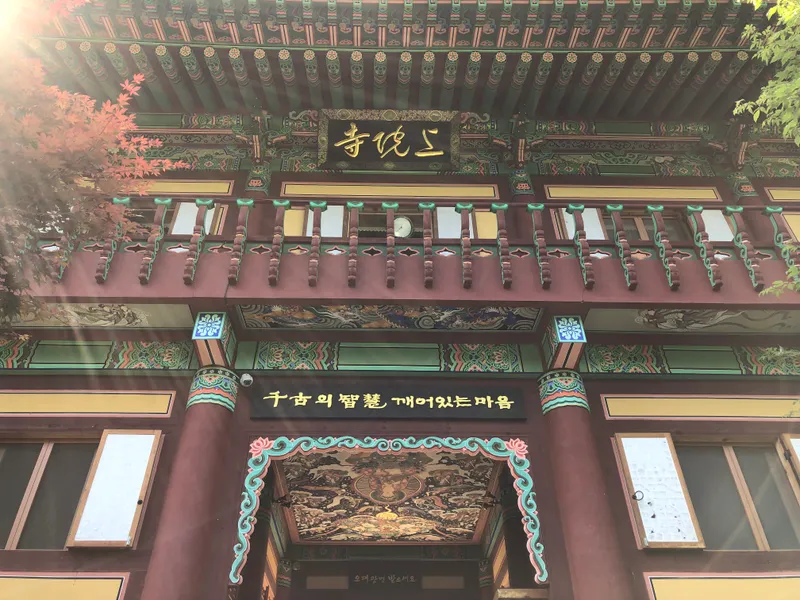 Temple
Sangwonsa
- Health & Healing
A temple on Odaesan founded in 705, at the centre of the mountain’s Manjushri devotion, and known for the story that King Sejo met the bodhisattva here as a boy and was healed.
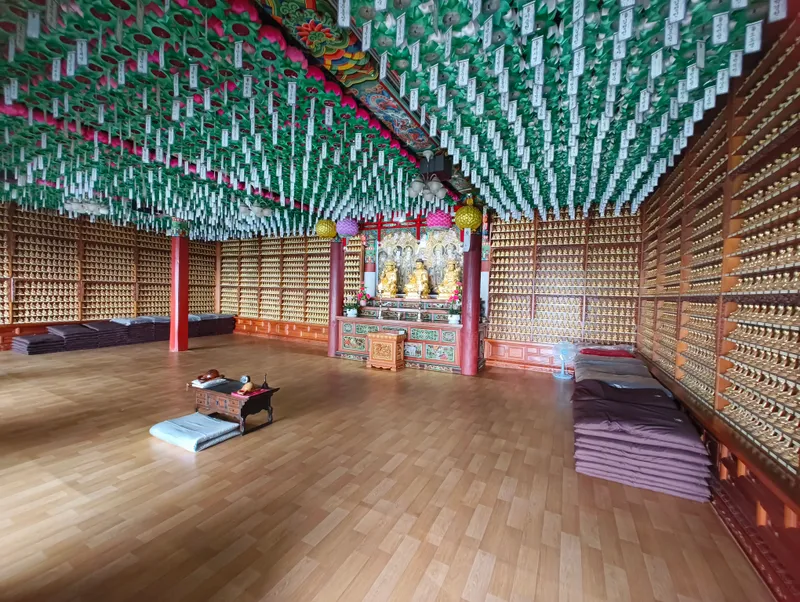 Temple
Boriam
- Wish Fulfillment
An Avalokiteśvara prayer site on the slope of Geumsan, counted with Hongryeonam and Bomunsa among Korea’s three great sites.
Sources
- 칠성각(七星閣) — 한국민족문화대백과사전 — Academy of Korean Studies (accessed 2026-08-11)
- 삼성각(三聖閣) — 한국민족문화대백과사전 — Academy of Korean Studies (accessed 2026-08-11)
- 산신도(山神圖) — 한국민족문화대백과사전 — Academy of Korean Studies (accessed 2026-08-11)
- 독성각(獨聖閣) — 한국민족문화대백과사전 — Academy of Korean Studies (accessed 2026-08-11)