Guksadang, Inwangsan
Seonbawi
Researched and translated with AI assistance. Every claim is linked to its source, but errors get through, so check the official site for opening times, fees and closures.About
In short
A shaman shrine moved from Namsan to the slope of Inwangsan in 1925 under Japanese pressure, where roughly a hundred gut rites are still held each year.
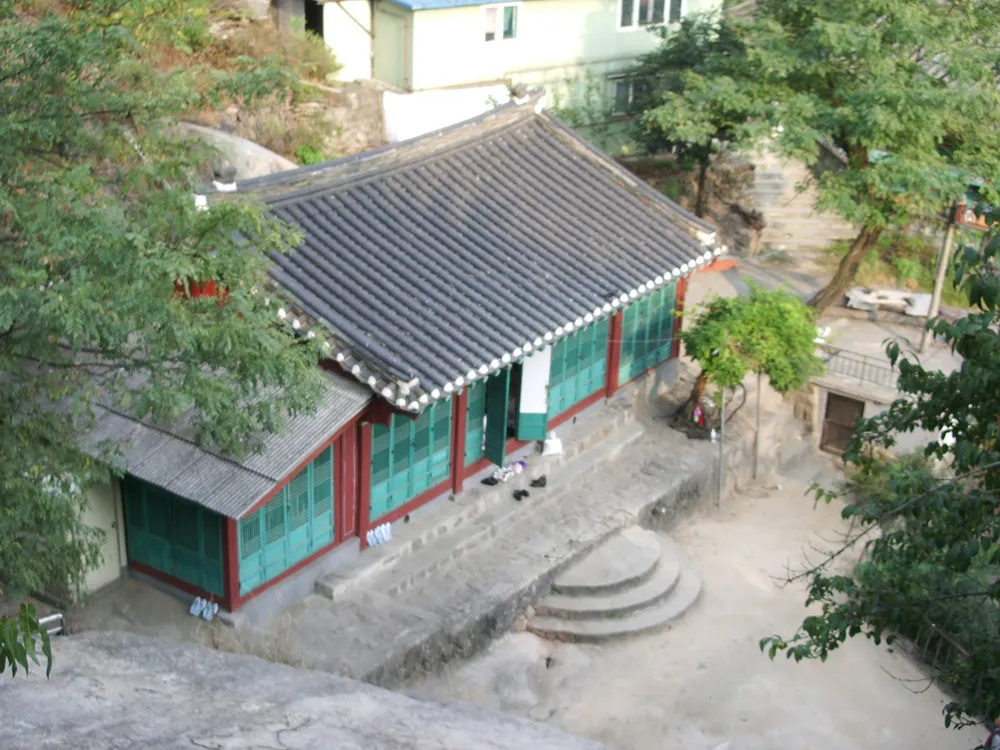
Quick facts
- Address
- 20 Tongil-ro 18ga-gil, Jongno-gu, Seoul
- Spiritual entities
- Muhak Daesa (無學大師, 1327–1405)
About this place
Guksadang enshrines the deities of Korean shamanism. It stood on the summit of Namsan until the Japanese colonial authorities built the Chōsen Jingū on the slope below and objected to Guksadang standing higher than it; in 1925 it was forced to move. The site chosen on Inwangsan is said to be where Taejo and the monk Muhak prayed, and the name Guksadang is said to come from enshrining Muhak. It has long been venerated together with Seonbawi, the rock beside it.
Origin and history
Guksadang is a shaman shrine enshrining Muhak and other deities, designated National Folklore Cultural Heritage on 16 July 1973. Its original site was the summit of Namsan.
When the colonial authorities built the Shinto shrine Chōsen Jingū on the slope of Namsan, they objected to Guksadang standing above it and forced its removal; in 1925 it was moved to its present site on Inwangsan. The reason given for choosing this spot is that Taejo and the monk Muhak are said to have prayed here.
Twenty-one shamanic paintings and seven bronze mirrors, twenty-eight items in all, carry a separate heritage designation; twelve of the paintings were made in colour on silk by a single hand in the late Joseon period.
What it is locally associated with
Moved off Namsan in 1925
The colonial authorities built the Chōsen Jingū on the slope below and objected to Guksadang standing higher, forcing its removal.
documented historyAbout a hundred rites a year
They divide into three kinds: celebration, illness and household trouble, and rites for the dead.
local customSeonbawi
A rock visited by people hoping for a child, its surface marked where small stones have been rubbed against it.
folk tradition
What happens here is gut. The Encyclopedia of Korean Culture divides the rites performed at Guksadang into three kinds — celebration rites, rites for illness and household trouble, and rites for the dead — and records that around a hundred are held in an average year. The rites for illness and trouble are why health and protection are associated with this place: not a story handed down, but something happening now. The rite for the dead is context for what kind of place this is rather than a category of request.
Seonbawi, the rock beside it, has long been visited by people hoping for a child, and its surface carries the marks of small stones rubbed against it. After Guksadang moved next to it, the devotion at the rock is said to have grown closer to shamanic practice.
Claims and evidence levels 5
- Guksadang stood on the summit of Namsan until 1925, when the colonial authorities, having built the Chōsen Jingū on the slope below, objected to it standing higher and forced it to move to Inwangsan. documented history
- It was designated National Folklore Cultural Heritage on 16 July 1973; its twenty-one shamanic paintings and seven bronze mirrors carry a separate designation. documented history
- The Encyclopedia of Korean Culture records three kinds of gut performed here — celebration, illness and household trouble, and rites for the dead — averaging about a hundred a year. local custom
- The Inwangsan site is said to be where Taejo and the monk Muhak prayed, and the name Guksadang is said to derive from enshrining Muhak. folk tradition
- Seonbawi, the rock beside the shrine, has long been visited by people hoping for a child, and carries marks left by rubbing small stones against it. folk tradition
Visiting tips
A gut is not a spectacle; it is a rite a client has paid for. When one is under way it is better not to enter or take photographs.
Related guides
- Musok and gut — Korea’s living folk religionWho the mudang are and what a gut is. And what to do if you walk in on one.
Sources
- 인왕산 국사당(仁王山國師堂) — 한국민족문화대백과사전 — Academy of Korean Studies (accessed 2026-08-10)
- 선바위(禪岩) — 한국민족문화대백과사전 — Academy of Korean Studies (accessed 2026-08-10)
Last updated:
Similar places
8 places
 Shrine
Nami Janggun Shrine
- Health & Healing
- Protection & Safety
A shrine raised to console the wronged spirit of a general beheaded at twenty-seven.
 Shrine
Donggwanwangmyo
- Protection & Safety
A shrine to Guan Yu raised after the Imjin War, the only one of Seoul’s four such shrines still standing.
 Shrine
Daegwallyeong Seonghwangsa and Sansingak
- Health & Healing
- Protection & Safety
A mountain-god shrine at the top of the Daegwallyeong pass, whose deity is recorded as presiding over farming, illness, drought and the road.
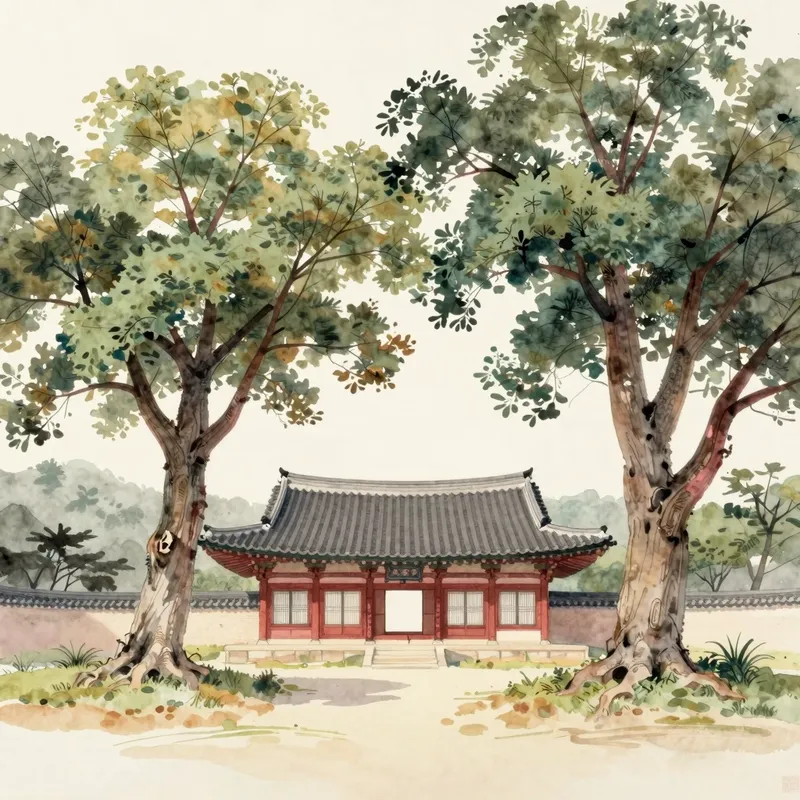 Temple
Yonggungsa, Baegunsan
- Fertility & Children
A temple renamed by the Heungseon Daewongun, with two zelkovas reckoned at about 1,300 years.
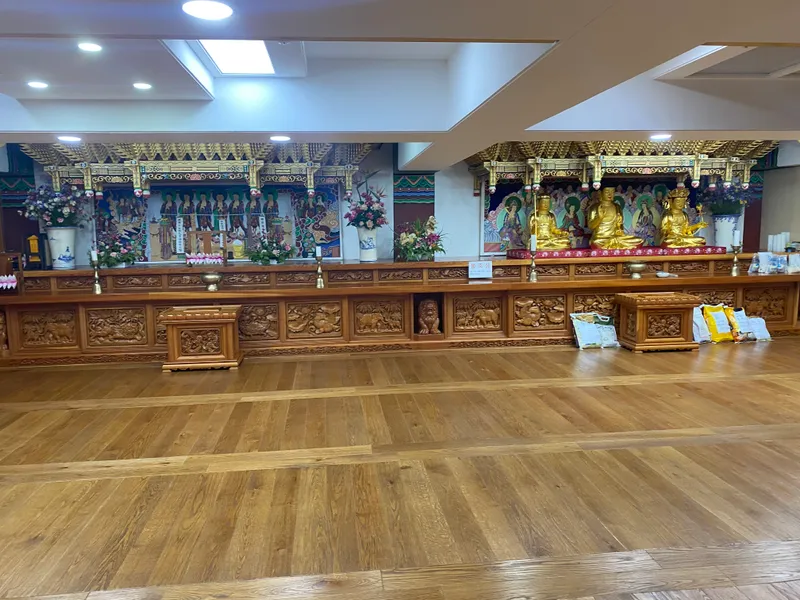 Temple
Bongwonsa, Ansan
The temple where the leaders of the 1884 coup learned the reformist thought behind it.
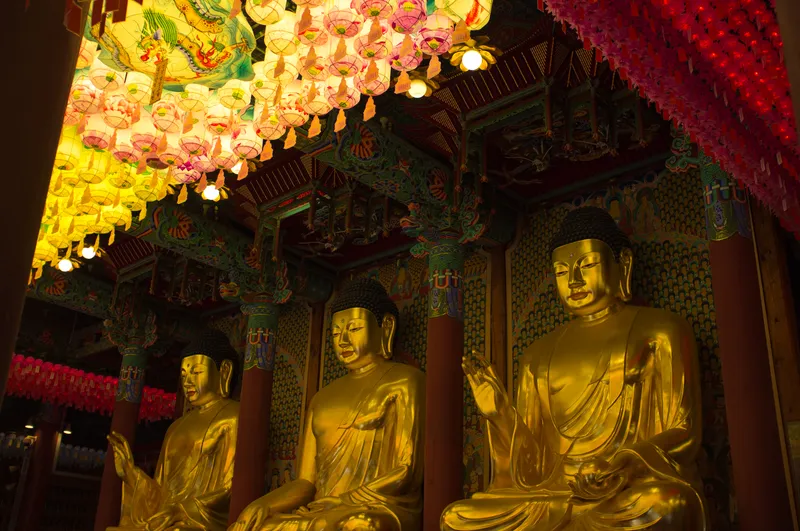 Temple
Jogyesa
- Exams & Study
The head temple of the Jogye Order, in the middle of downtown Seoul, where a prayer for children ends the day before the national entrance exam each year.
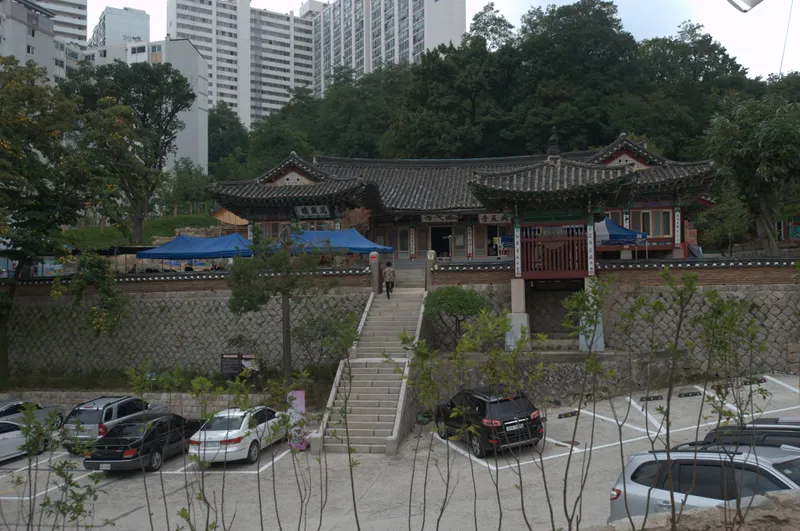 Temple
Heungcheonsa, Samgaksan
A temple of more than a hundred and seventy kan, raised beside a queen’s tomb by the king who had lost her.
 Temple
Seunggasa, Bukhansan
A temple holding a stone portrait of an Indian monk who went to Tang China.
No places match your filters