Bongwonsa, Ansan
Researched and translated with AI assistance. Every claim is linked to its source, but errors get through, so check the official site for opening times, fees and closures.About
In short
The temple where the leaders of the 1884 coup learned the reformist thought behind it.
Quick facts
- Address
- 120 Bongwonsa-gil, Seodaemun-gu, Seoul
About this place
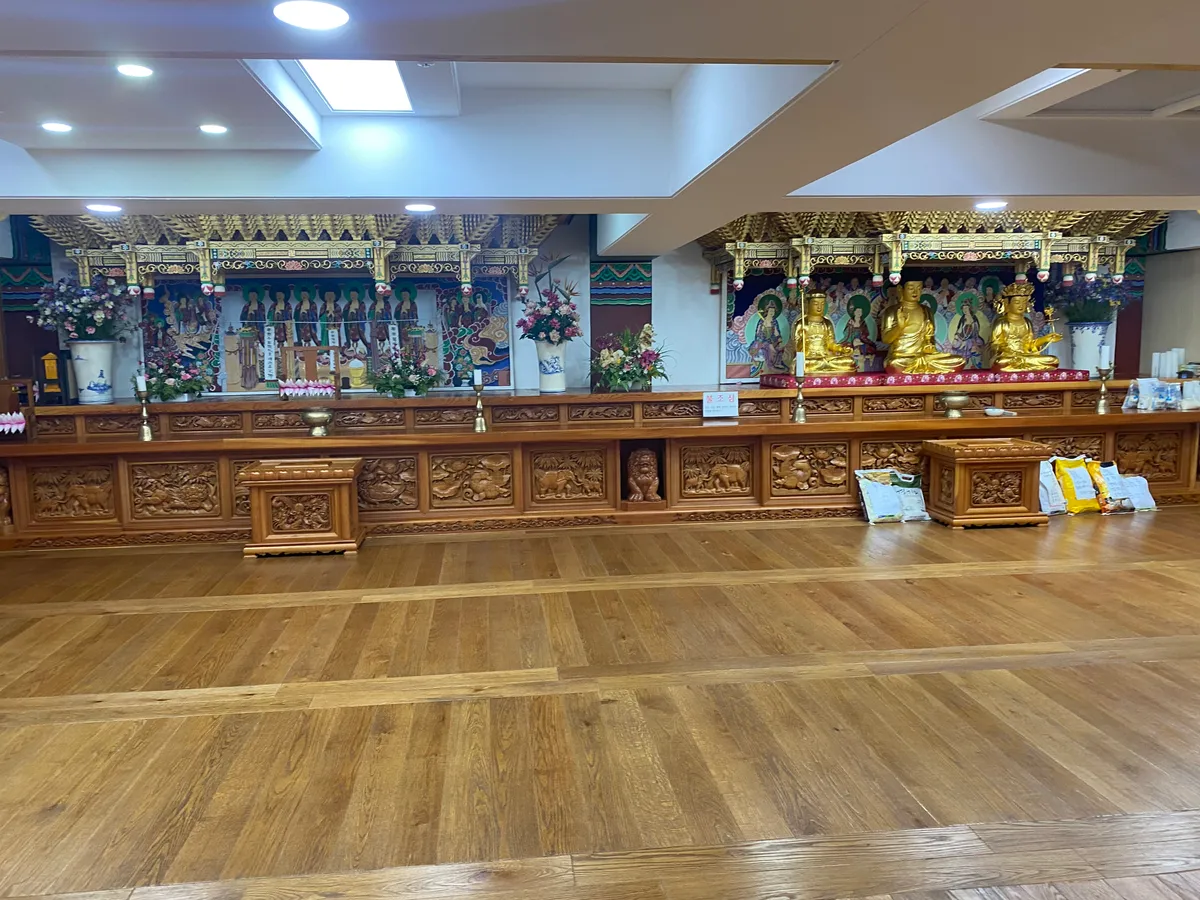
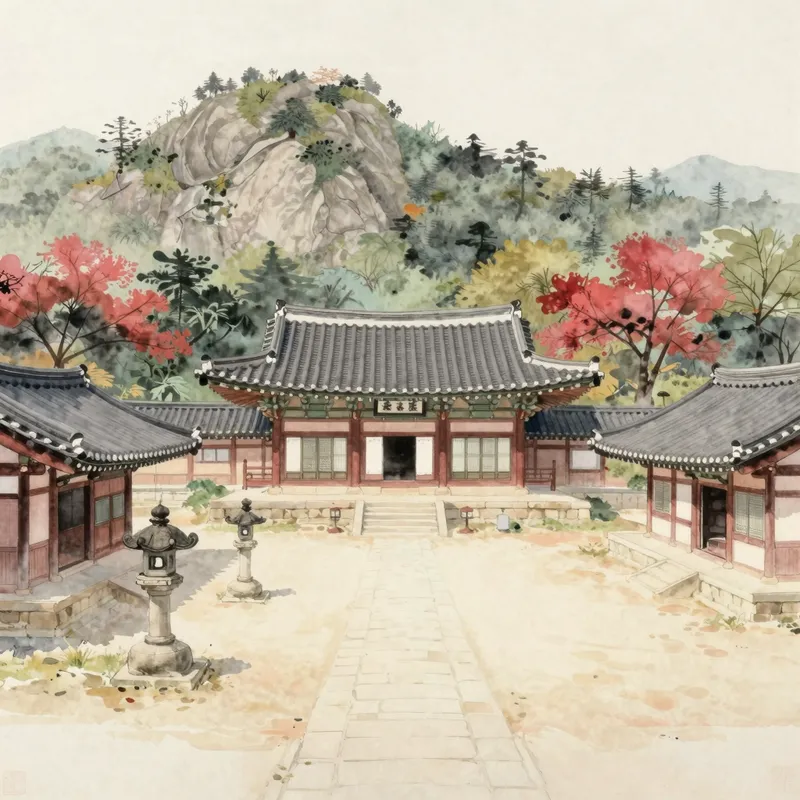
Bongwonsa stands in Seodaemun-gu, Seoul, and is the head temple of the Taego Order of Korean Buddhism. The national master Doseon founded it in 889, in the Silla period, and it has eleven buildings including the main hall, the Myeongbujeon and the Chilseonggak. In 1884 Kim Ok-gyun, Seo Gwang-beom and Bak Yeong-hyo, the leading figures of the Gapsin coup, under the guidance of Yi Dong-in, awakened the young men of the reform party here and brought them to raise the coup. Yi Dong-in and Tak Jeong-sik, who took part as leading figures of the reform party, had both been monks. The Yeongsanjae is performed at this temple: a Buddhist rite that re-enacts the Buddha expounding the Lotus Sutra on Vulture Peak in India.
Origin and history
Bongwonsa was founded in 889, in the Silla period, by the national master Doseon. It has eleven buildings including the main hall, the Myeongbujeon and the Chilseonggak.
In 1884 Kim Ok-gyun, Seo Gwang-beom and Bak Yeong-hyo, the leading figures of the Gapsin coup, under the guidance of Yi Dong-in, awakened the young men of the reform party here and brought them to raise the coup. Yi Dong-in and Tak Jeong-sik, who took part as leading figures of the reform party, had both been monks.
The Yeongsanjae is performed at this temple. It is a Buddhist rite that re-enacts the Buddha expounding the Lotus Sutra on Vulture Peak in India.
Bongwonsa is the head temple of the Taego Order of Korean Buddhism.
What it is locally associated with
1884, under Yi Dong-in’s guidance
The record states that the leading figures of the Gapsin coup awakened the young men of the reform party here under Yi Dong-in’s guidance and brought them to raise the coup.
documented historyReform-party figures from the saṅgha
Yi Dong-in and Tak Jeong-sik, leading figures of the reform party, had both been monks.
documented historyWhere the Yeongsanjae is performed
The Yeongsanjae, which re-enacts the Buddha expounding the Lotus Sutra on Vulture Peak, is performed at this temple.
documented history
This temple’s record contains a paragraph of politics. In 1884, it says, Kim Ok-gyun, Seo Gwang-beom and Bak Yeong-hyo, under the guidance of Yi Dong-in, awakened the young men of the reform party and brought them to raise a coup. The temple was not merely near where this happened: the man who taught them was a monk of this order. Yi Dong-in and Tak Jeong-sik, both leading figures of the reform party, had come from the saṅgha.
The state keeps arriving at Seoul’s temples. Heungcheonsa in Seongbuk-gu was raised by King Taejo for his dead queen; Jingwansa in Eunpyeong-gu was built by Hyeonjong, endowed by Taejo, and is where a national flag came out of a wall; the Nami Janggun shrine in Yongsan enshrines a general the state executed. At this temple, people who meant to change the state did their learning.
What the temple carries on now is a rite. The Yeongsanjae re-enacts the Buddha expounding the Lotus Sutra on Vulture Peak, and is performed here.
The founding is 889, by the national master Doseon.
Claims and evidence levels 2
- In 1884 the leading figures of the Gapsin coup were brought to reformist thought here under the guidance of Yi Dong-in. documented history
- Yi Dong-in and Tak Jeong-sik, leading figures of the reform party, had both been monks. documented history
Related guides
- How to visit a Korean templeHands together and hands folded, how the bows work, and what to do at the threshold of a hall. Starting with what is different from visiting a Japanese shrine.
- The small hall behind the main one — sansingak and samseonggakUphill from the main hall of a Korean temple stands a smaller one, and inside it an old man with a tiger. This is where the indigenous religion sits, inside the Buddhist institution.
- Templestay — a night at a templeA programme that puts you inside a temple’s own timetable for a day or two. What you do, which type to book, and what to be ready for.
- Prayer sites and the one wishThe three great Gwaneum sites, the five relic halls, and the crowds before the entrance exam. Where the saying about one wish comes from, and where the record stops.
Sources
- 안산 봉원사(鞍山 奉元寺) — 한국민족문화대백과사전 (accessed 2026-08-16)
Last updated:
Similar places
8 places
 Shrine
Guksadang, Inwangsan
- Fertility & Children
- Health & Healing
- Protection & Safety
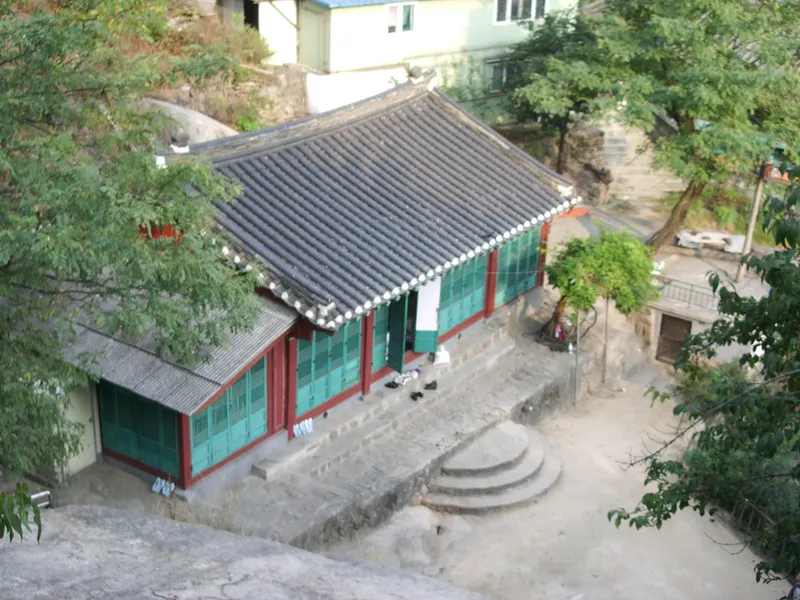
A shaman shrine moved from Namsan to the slope of Inwangsan in 1925 under Japanese pressure, where roughly a hundred gut rites are still held each year.
 Temple
Jogyesa
- Exams & Study
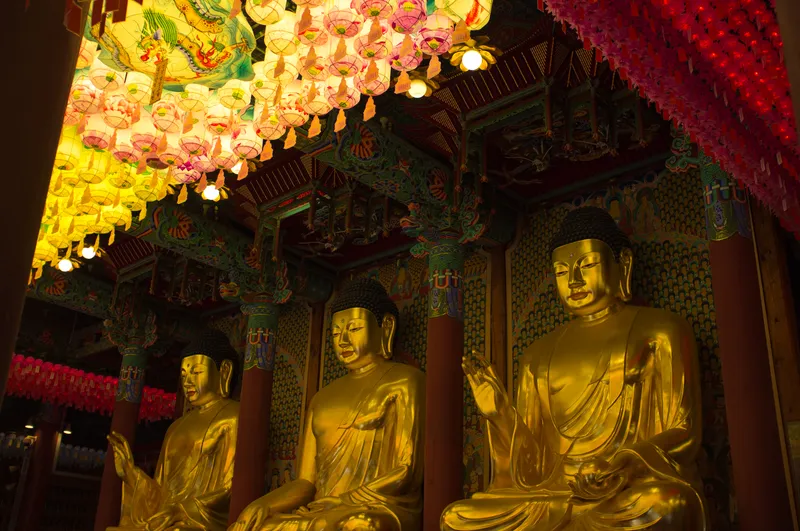
The head temple of the Jogye Order, in the middle of downtown Seoul, where a prayer for children ends the day before the national entrance exam each year.
 Shrine
Nami Janggun Shrine
- Health & Healing
- Protection & Safety
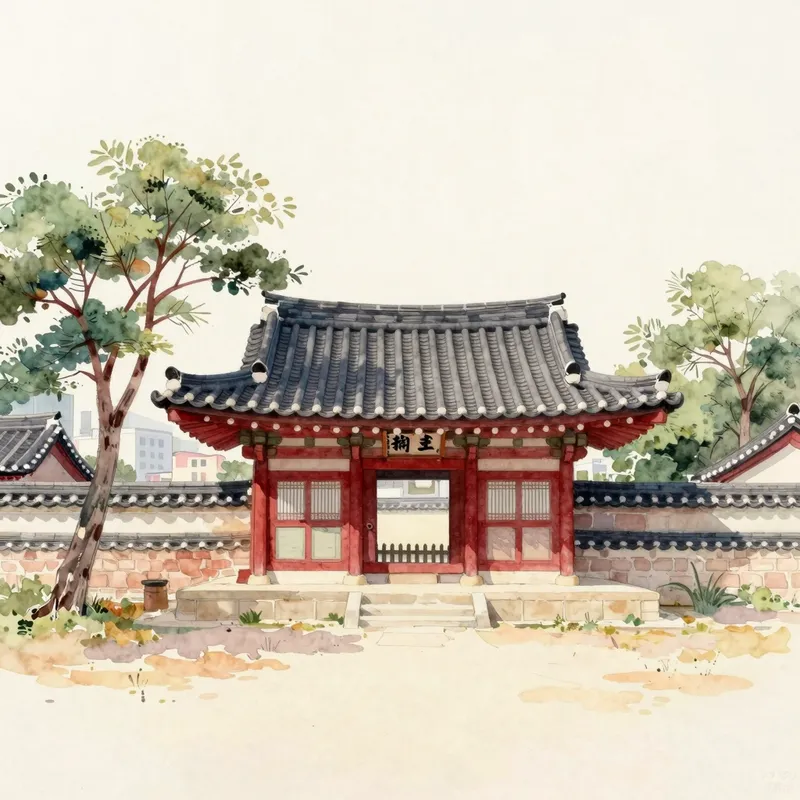
A shrine raised to console the wronged spirit of a general beheaded at twenty-seven.
 Temple
Seunggasa, Bukhansan
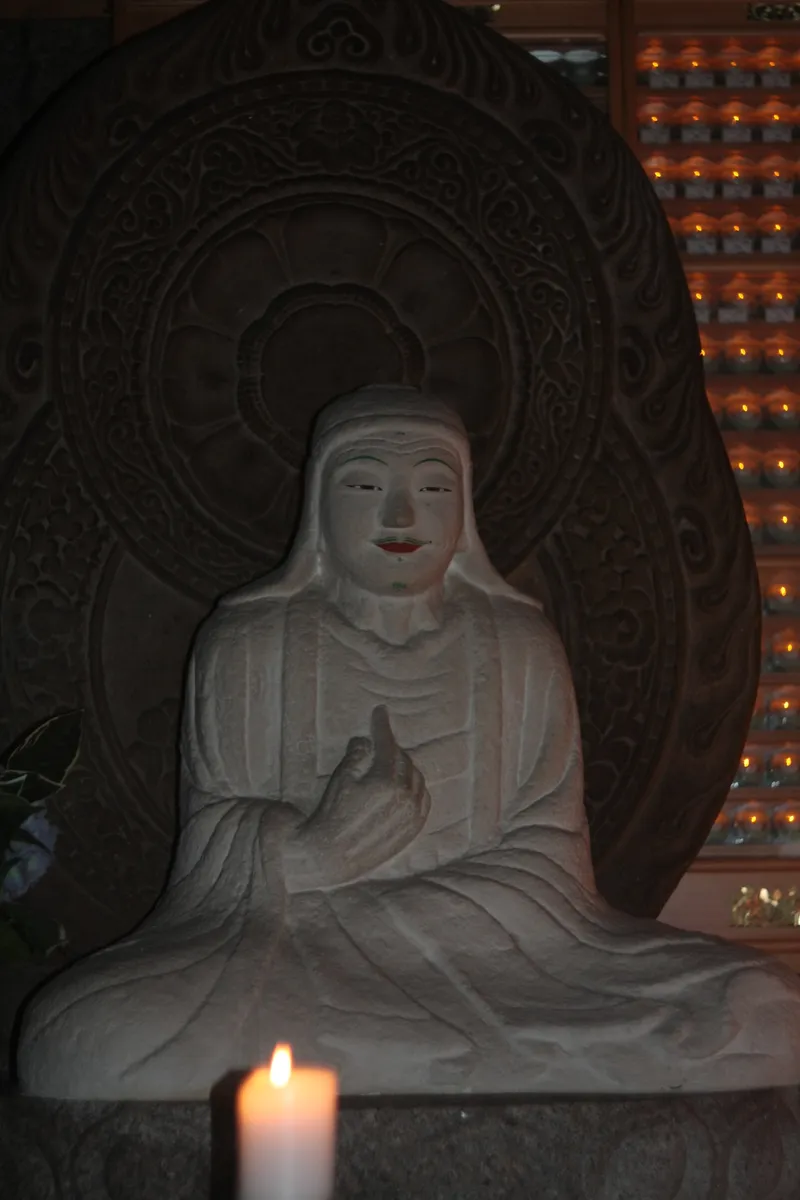
A temple holding a stone portrait of an Indian monk who went to Tang China.
 Temple
Heungcheonsa, Samgaksan
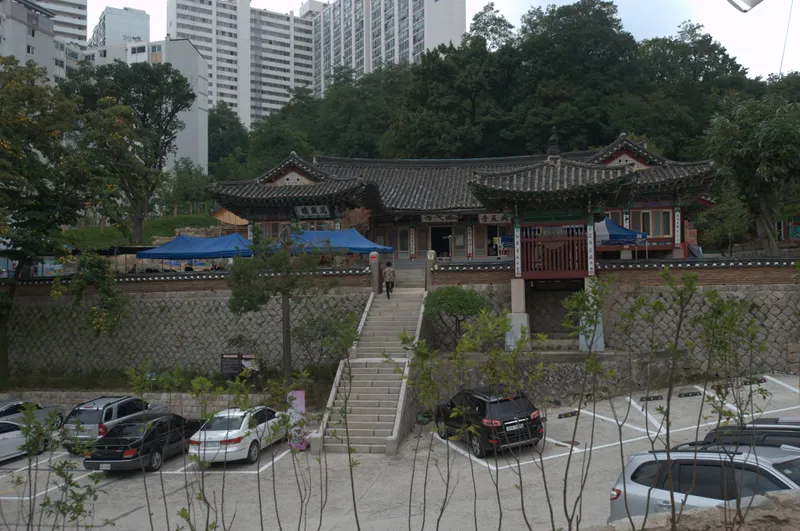
A temple of more than a hundred and seventy kan, raised beside a queen’s tomb by the king who had lost her.
 Shrine
Donggwanwangmyo
- Protection & Safety
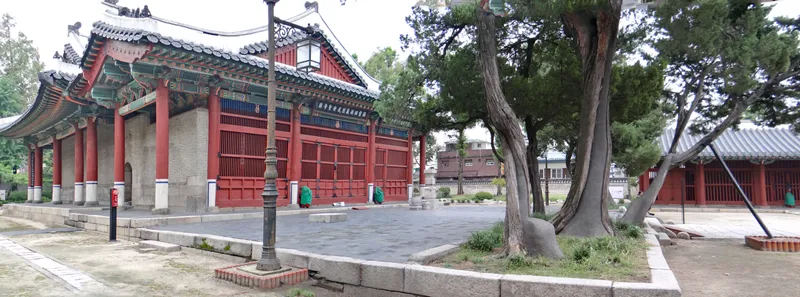
A shrine to Guan Yu raised after the Imjin War, the only one of Seoul’s four such shrines still standing.
 Temple
Jingwansa, Bukhansan
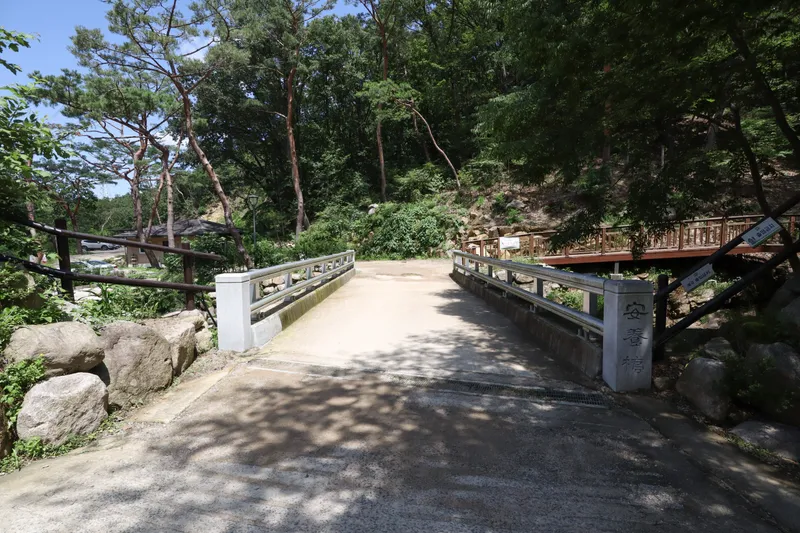
The temple where a Korean flag was found inside a wall.
 Temple
Hwagyesa, Samgaksan
A temple paid for by two men holding the same title, two hundred and fifty years apart.
No places match your filters