Musok and gut — Korea’s living folk religion
Who the mudang are and what a gut is. And what to do if you walk in on one.
Researched and translated with AI assistance. Every claim is linked to its source, but errors get through, so check the official site for opening times, fees and closures.About
What musok is
The Encyclopedia of Korean Culture defines musok as a religious phenomenon transmitted with the mudang at its centre. There is no founder, no scripture and no church. It has passed from person to person.
The same article records that musok has continued to the present as a foundational religious phenomenon of the Korean people. It is not something to write about in the past tense.
The mudang and the gut
Becoming a mudang has conditions. One passes through sinbyeong, the spirit sickness, and the empowerment that follows; one holds the spiritual capacity to conduct a gut; one is recognised and supported by ordinary people; and one's objects of worship are nature deities — the mountain spirit, the heaven spirit, the dragon spirit.
A gut is the rite such a person conducts. The encyclopedia describes it as a rite centred on song, dance and enactment, performed by several mudang together with the musicians who specialise in the accompaniment. There are instruments, there is dancing, there is speech. It is the opposite form from silent prayer.
There are kinds, too, each with its own occasion: rites to receive a deity, rites to ask for a child, rites to cure illness, rites to send off the dead, and rites a whole village holds together.
Musok and Buddhism
The two did not push each other out. The mountain-spirit hall behind a temple's main building is one trace of that, and the influence ran the other way as well: the encyclopedia treats musok's conception of the afterlife as a later form, altered under Buddhist influence after Buddhism arrived.
So among the Korean places on this site there are some that cannot cleanly be filed as either a temple or a folk-religion site. They have been left uncut.
If you walk in on someone praying
At several places on this map, prayer and rites still happen. They are not scheduled around visiting hours. They happen on the day the person needs them.
If you come upon one, step back and go around. Do not photograph it. Do not ask what is being asked for. Do not touch the food, the cloth or the vessels set out.
Not treating it as a spectacle is the whole of it. Keep the distance you would keep walking past a stranger's funeral.
Related places
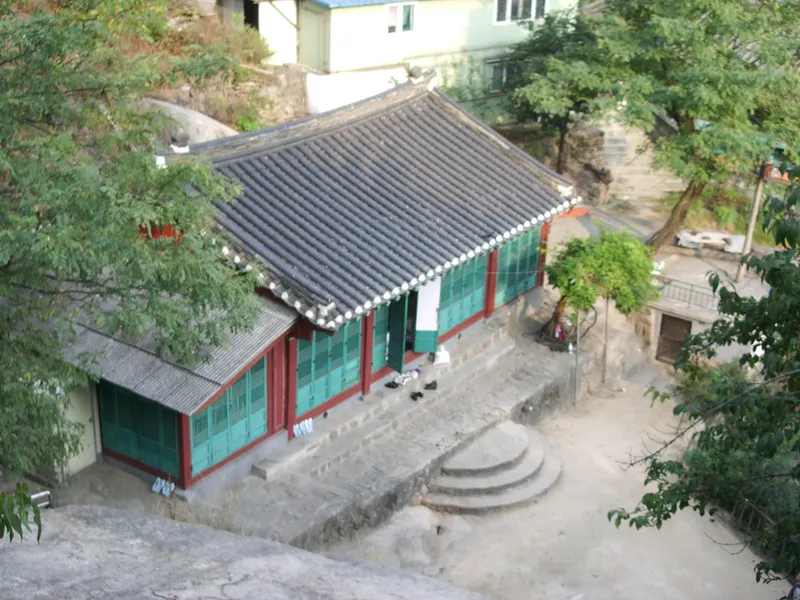 Shrine
Guksadang, Inwangsan
- Fertility & Children
- Health & Healing
- Protection & Safety
A shaman shrine moved from Namsan to the slope of Inwangsan in 1925 under Japanese pressure, where roughly a hundred gut rites are still held each year.
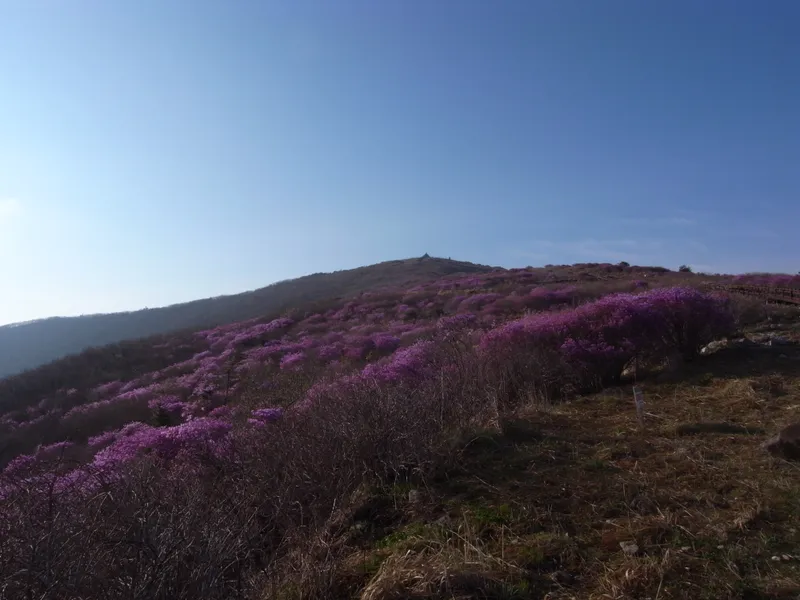 Sacred Mountain
Nogodan
The peak where rites to the Holy Mother of Jirisan began, before the rite moved to Namaksa and later to a hall beside Hwaeomsa.
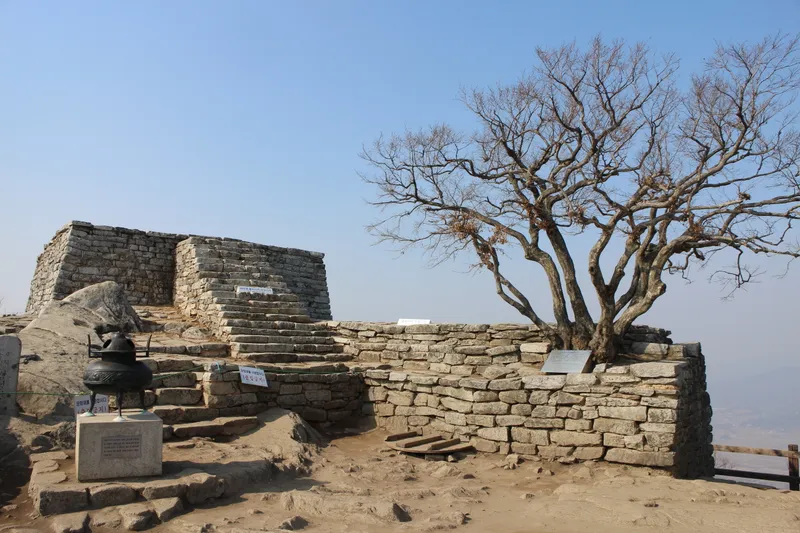 Historic Site
Chamseongdan, Manisan
- Miscellaneous
A stone altar said to have been raised by Dangun for rites to heaven, used for state sacrifices under Goryeo and Joseon, and the site of a rite held every National Foundation Day.
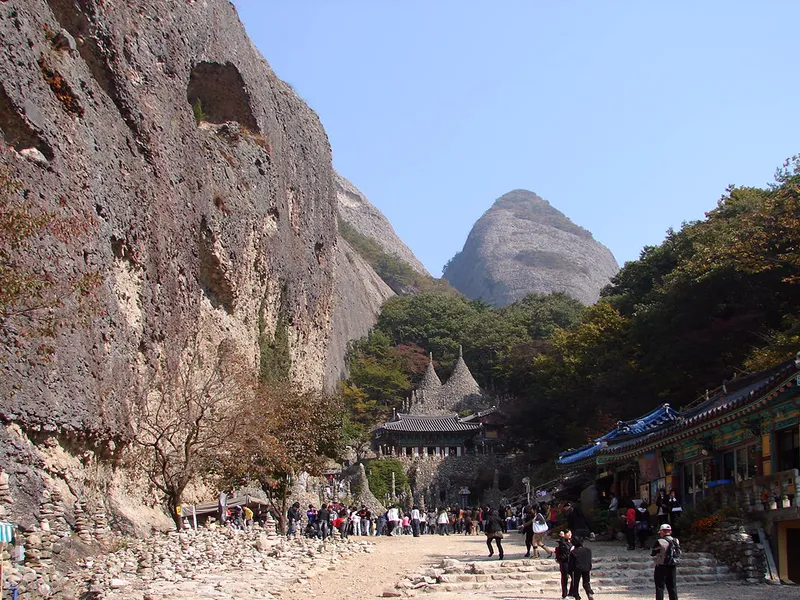 Temple
Tapsa, Maisan
- Protection & Safety
A temple among stone towers raised by one man over a lifetime, of which about eighty of the original hundred and eight still stand.
Sources
- 무속(巫俗) — 한국민족문화대백과사전 — Academy of Korean Studies (accessed 2026-08-11)
- 산신당(山神堂) — 한국민족문화대백과사전 — Academy of Korean Studies (accessed 2026-08-11)