Jogyesa
Gakhwangsa · Taegosa
Researched and translated with AI assistance. Every claim is linked to its source, but errors get through, so check the official site for opening times, fees and closures.About
In short
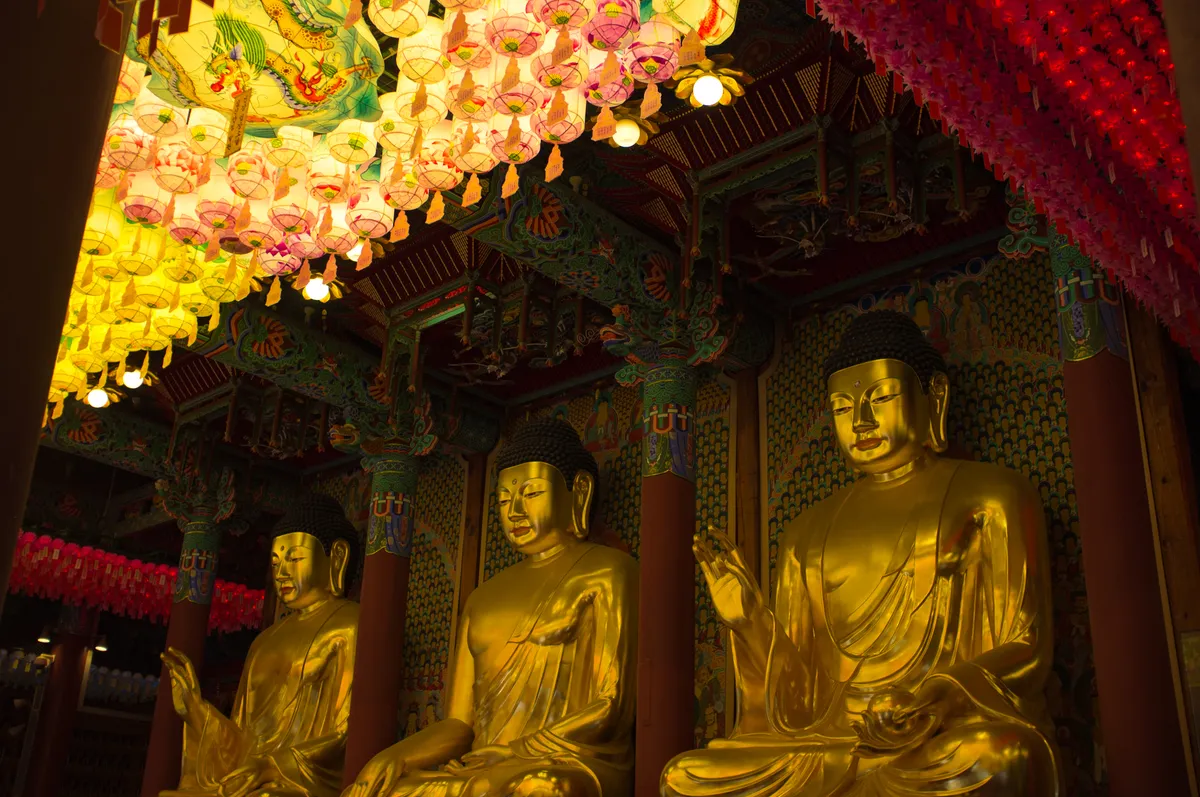
The head temple of the Jogye Order, in the middle of downtown Seoul, where a prayer for children ends the day before the national entrance exam each year.
Quick facts
- Address
- 55 Ujeongguk-ro, Jongno-gu, Seoul
- Official site
- www.jogyesa.kr
About this place
Jogyesa stands in central Jongno and is the head temple of the Jogye Order of Korean Buddhism. It was founded in 1910 under the name Gakhwangsa, became Taegosa in 1940, and took its present name in 1962 when the unified order was formed. It is not a mountain temple and it is not an old one: it was built to be the centre of modern Korean Buddhism, and that is what gives the place its character.
Origin and history
The Encyclopedia of Korean Culture records Jogyesa as a temple founded in 1910 in Gyeonji-dong, Jongno-gu, Seoul. It began that same year as Gakhwangsa, in Susong-dong.
The buildings went up in 1938, and in May 1940 the head-temple name Taegosa was authorised. On 11 April 1962, with the launch of the unified order joining celibate and married clergy, Taegosa was renamed Jogyesa. It now serves as the head temple of Korean Buddhism and of the Jogye Order’s directly administered diocese.
What it is locally associated with
Founded in 1910, as Gakhwangsa
Not an ancient temple but one built to be the centre of modern Korean Buddhism. The name Jogyesa dates from 1962.
documented historyA prayer that closes the day before the exam
The 111-day Hwaeom Seongjung prayer for children ends the day before the entrance exam — a schedule the temple publishes itself.
local customA head temple downtown
Head temple of the Jogye Order’s directly administered diocese, and of Korean Buddhism.
documented history
What links this temple to examinations is not a transmitted story but something the temple is doing now. Jogyesa announces a 111-day Hwaeom Seongjung prayer for children whose closing day falls the day before the national university entrance exam. The temple has said, in its own words, what the prayer is for.
Few Korean temples publish their prayer calendars on an https site of their own. That is why this page can write that Jogyesa announces its examination prayer rather than that the practice is told of it.
Claims and evidence levels 4
- Jogyesa was founded in 1910 in Jongno-gu, Seoul, beginning as Gakhwangsa in Susong-dong. documented history
- The head-temple name Taegosa was authorised in May 1940, and on 11 April 1962 the temple was renamed Jogyesa with the launch of the unified Jogye Order. documented history
- It serves as the head temple of Korean Buddhism and of the Jogye Order’s directly administered diocese. documented history
- The temple announces a 111-day Hwaeom Seongjung prayer for children whose closing day falls the day before the national university entrance examination. local custom
Related guides
- How to visit a Korean templeHands together and hands folded, how the bows work, and what to do at the threshold of a hall. Starting with what is different from visiting a Japanese shrine.
- The small hall behind the main one — sansingak and samseonggakUphill from the main hall of a Korean temple stands a smaller one, and inside it an old man with a tiger. This is where the indigenous religion sits, inside the Buddhist institution.
- Templestay — a night at a templeA programme that puts you inside a temple’s own timetable for a day or two. What you do, which type to book, and what to be ready for.
- Prayer sites and the one wishThe three great Gwaneum sites, the five relic halls, and the crowds before the entrance exam. Where the saying about one wish comes from, and where the record stops.
Sources
- 조계사 — 한국민족문화대백과사전 — Academy of Korean Studies (accessed 2026-08-12)
- 조계사 (공식 홈페이지) — 기도 안내 — 대한불교조계종 조계사 (accessed 2026-08-12)
- Jogyesa (Q488824) — coordinate location — Wikidata (accessed 2026-08-12)
Last updated:
Similar places
8 places
 Temple
Chiljangsa, Chilhyeonsan
- Exams & Study
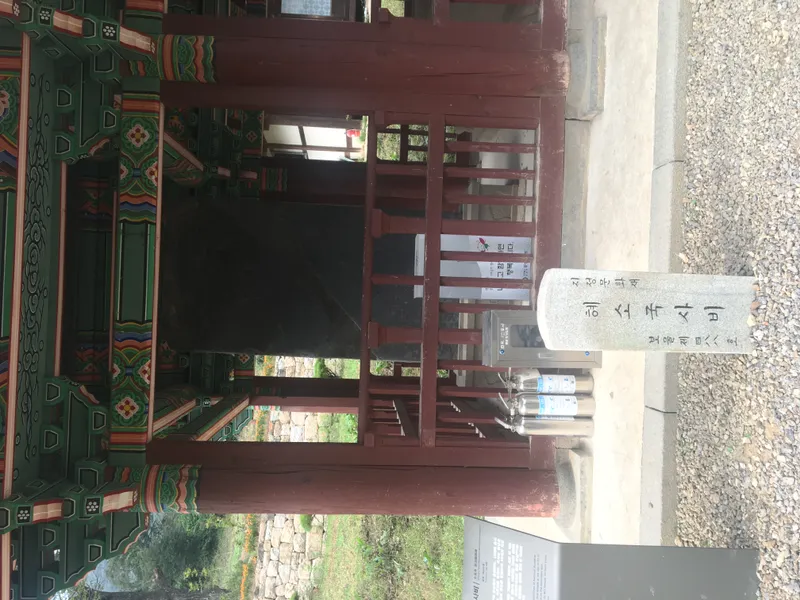
The mountain and the temple are both named for seven robbers who became seven sages.
 Shrine
Guksadang, Inwangsan
- Fertility & Children
- Health & Healing
- Protection & Safety
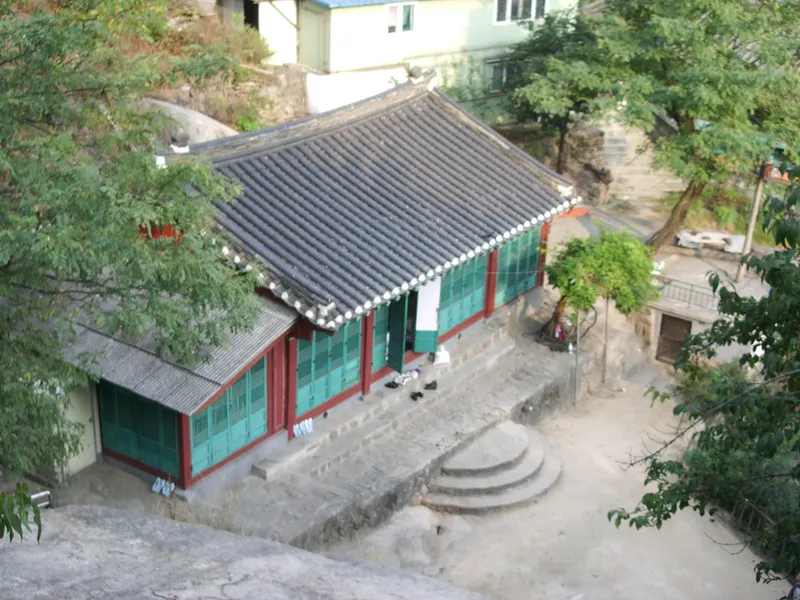
A shaman shrine moved from Namsan to the slope of Inwangsan in 1925 under Japanese pressure, where roughly a hundred gut rites are still held each year.
 Temple
Bongwonsa, Ansan
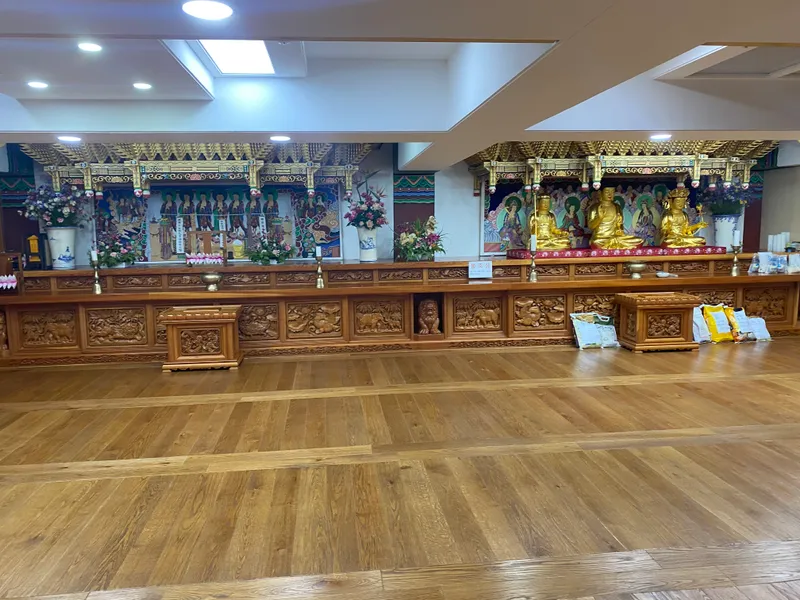
The temple where the leaders of the 1884 coup learned the reformist thought behind it.
 Shrine
Donggwanwangmyo
- Protection & Safety
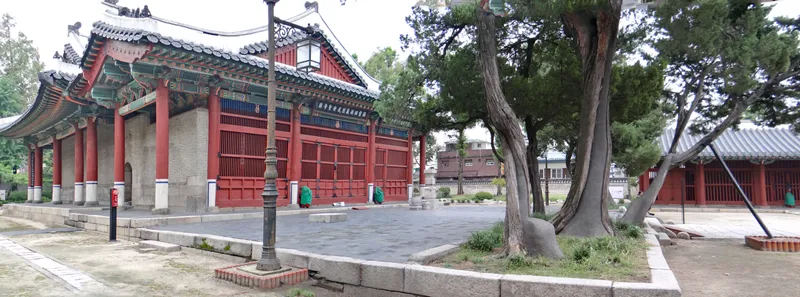
A shrine to Guan Yu raised after the Imjin War, the only one of Seoul’s four such shrines still standing.
 Temple
Heungcheonsa, Samgaksan
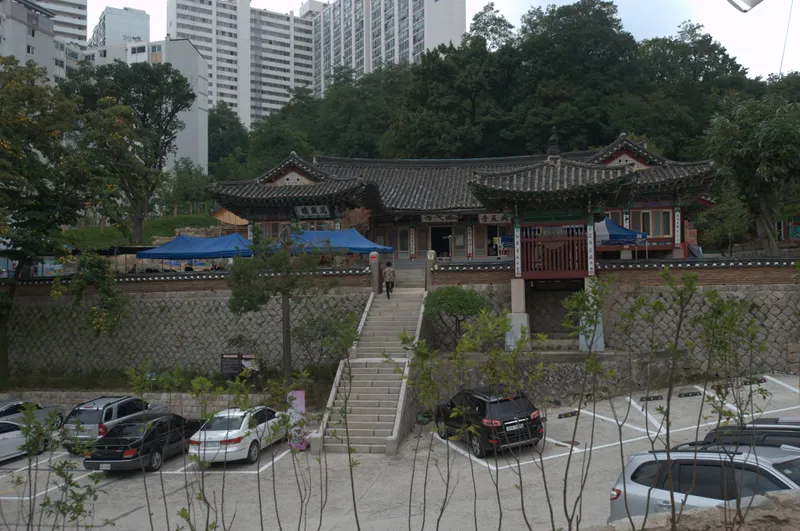
A temple of more than a hundred and seventy kan, raised beside a queen’s tomb by the king who had lost her.
 Shrine
Nami Janggun Shrine
- Health & Healing
- Protection & Safety
A shrine raised to console the wronged spirit of a general beheaded at twenty-seven.
 Temple
Seunggasa, Bukhansan
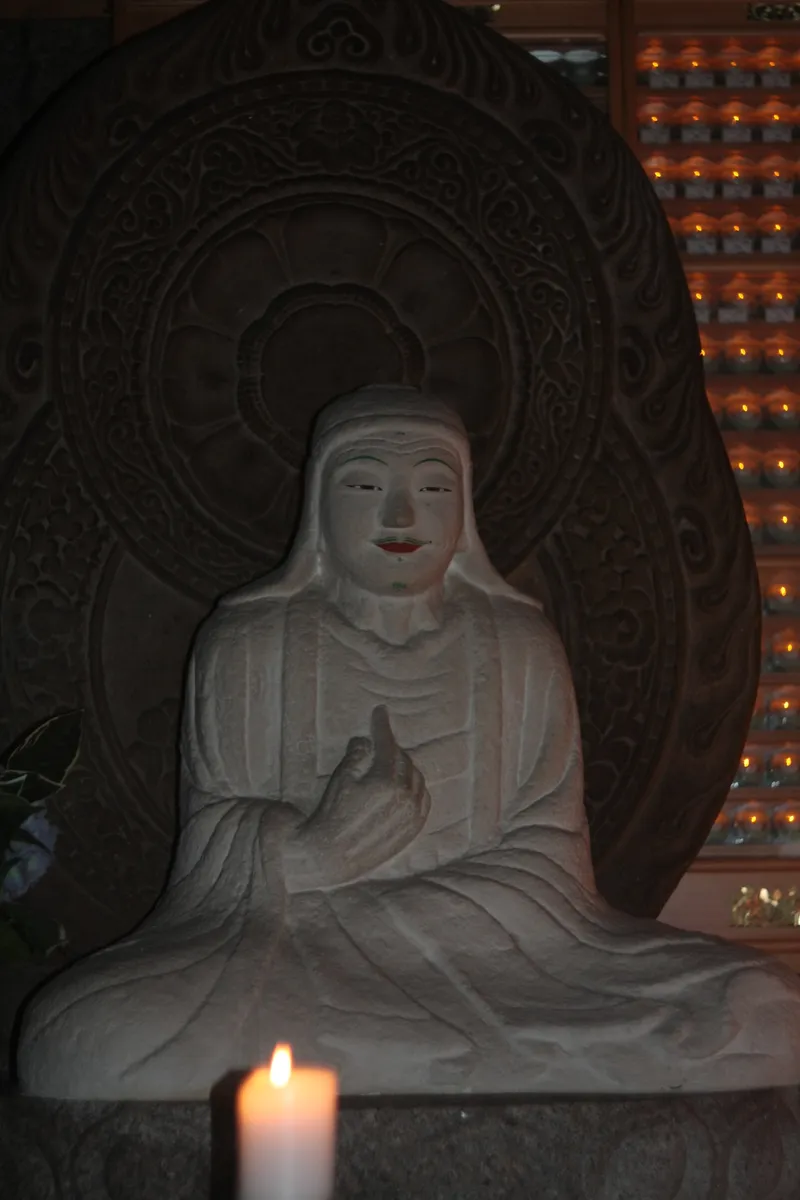
A temple holding a stone portrait of an Indian monk who went to Tang China.
 Temple
Hwagyesa, Samgaksan
A temple paid for by two men holding the same title, two hundred and fifty years apart.
No places match your filters