Donggwanwangmyo
Dongmyo · Seoul Shrine to Guan Yu
Researched and translated with AI assistance. Every claim is linked to its source, but errors get through, so check the official site for opening times, fees and closures.About
In short
A shrine to Guan Yu raised after the Imjin War, the only one of Seoul’s four such shrines still standing.
Quick facts
- Address
- 84 Nangye-ro 27-gil, Jongno-gu, Seoul
About this place
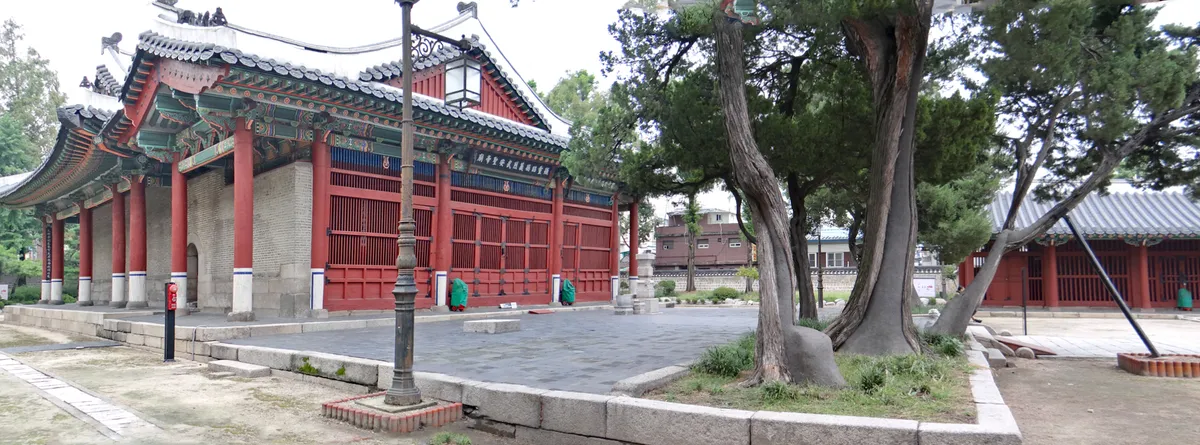
Donggwanwangmyo, in Jongno, Seoul, is a later-Joseon shrine enshrining a clay image of Guan Yu, the Shu general. It was built in 1601, the thirty-fourth year of King Seonjo, by people of the Ming. The Guandi cult was brought over by Ming troops sent during the Imjin War, and shrines were raised in the belief that Guandi’s unseen help had driven the invaders back. A south, a north and a west shrine followed in turn, but only the east one survives. It was designated a Treasure on 21 January 1963.
Origin and history
The Encyclopedia of Korean Culture describes Seoul’s Donggwanwangmyo as a later-Joseon shrine in Jongno enshrining a clay image of Guan Yu, general of Shu. It was built in 1601, the thirty-fourth year of King Seonjo, by people of the Ming.
A south shrine was built in Seoul in 1598, a north shrine in 1883 and a west shrine in 1902, but today only the east shrine remains.
The main hall is five bays across and six deep in the wing-bracket style, with a roof forming a T shape, and the floor is laid with brick. It was designated a Treasure on 21 January 1963.
What it is locally associated with
Belief in help that drove the invaders back
The cult came with Ming troops sent during the Imjin War, and shrines were raised in the belief that Guandi’s unseen help had repelled the invasion.
folk traditionOne of four still standing
South, north and west shrines followed in turn, but today only the east shrine remains.
documented historyHeadquarters of Gwanseonggyo
The surviving east shrine became the headquarters of Gwanseonggyo, founded in 1920 by Park Gi-hong, Kim Yong-sik and others.
documented history
The encyclopedia records that the Guandi cult was carried over by Ming troops sent during the Imjin War, and that shrines were raised in the belief that Guandi’s unseen help had driven the invaders back. That is why this shrine exists: thanks for a war won, and a request to be guarded again.
What happened afterwards is what makes the place unusual. Of Seoul’s four Guan Yu shrines only the east one survived, and that surviving shrine became the headquarters of Gwanseonggyo, a religion founded in 1920 by Park Gi-hong, Kim Yong-sik and others. Its scriptures are the Gakse Jingyeong and the Myeongseonggyeong, and adherents recite the Proclamation of the Treasure Book of Lord Guan.
A shrine built by Ming men to a Chinese general became, four centuries later, the head office of a Korean religion.
Claims and evidence levels 4
- Donggwanwangmyo in Jongno, Seoul, is a later-Joseon shrine enshrining a clay image of Guan Yu, built in 1601 by people of the Ming. documented history
- The Guandi cult was brought over by Ming troops sent during the Imjin War, and shrines were raised in the belief that Guandi’s unseen help had driven the invaders back. folk tradition
- A south shrine was built in 1598, a north shrine in 1883 and a west shrine in 1902, but only the east shrine survives. documented history
- The surviving shrine became the headquarters of Gwanseonggyo, a religion founded in 1920 by Park Gi-hong and Kim Yong-sik; it was designated a Treasure on 21 January 1963. documented history
Related guides
- Musok and gut — Korea’s living folk religionWho the mudang are and what a gut is. And what to do if you walk in on one.
Sources
- 서울 동관왕묘(서울 東關王廟) — 한국민족문화대백과사전 — Academy of Korean Studies (accessed 2026-08-12)
- 관제신앙(關帝信仰) — 한국민족문화대백과사전 — Academy of Korean Studies (accessed 2026-08-12)
- 관성교(關聖敎) — 한국민족문화대백과사전 — Academy of Korean Studies (accessed 2026-08-12)
Last updated:
Similar places
8 places
 Shrine
Guksadang, Inwangsan
- Fertility & Children
- Health & Healing
- Protection & Safety
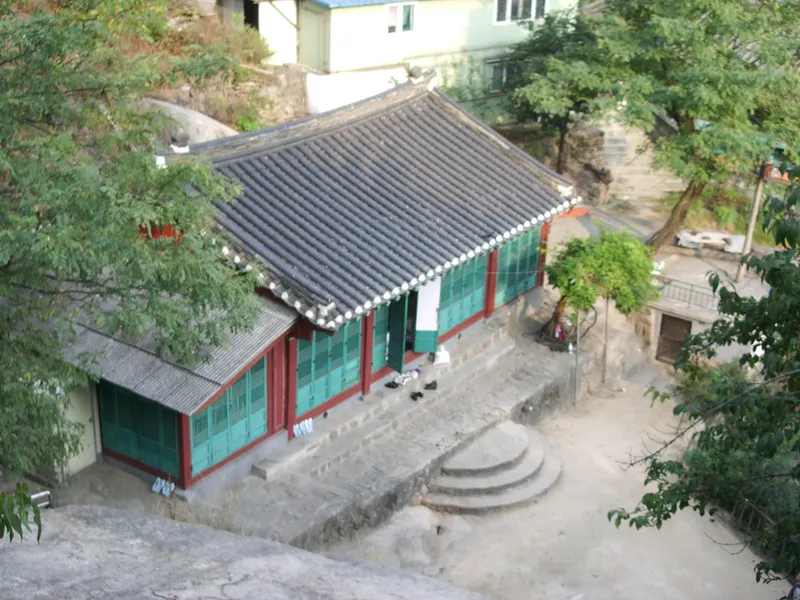
A shaman shrine moved from Namsan to the slope of Inwangsan in 1925 under Japanese pressure, where roughly a hundred gut rites are still held each year.
 Shrine
Nami Janggun Shrine
- Health & Healing
- Protection & Safety
A shrine raised to console the wronged spirit of a general beheaded at twenty-seven.
 Temple
Heungcheonsa, Samgaksan
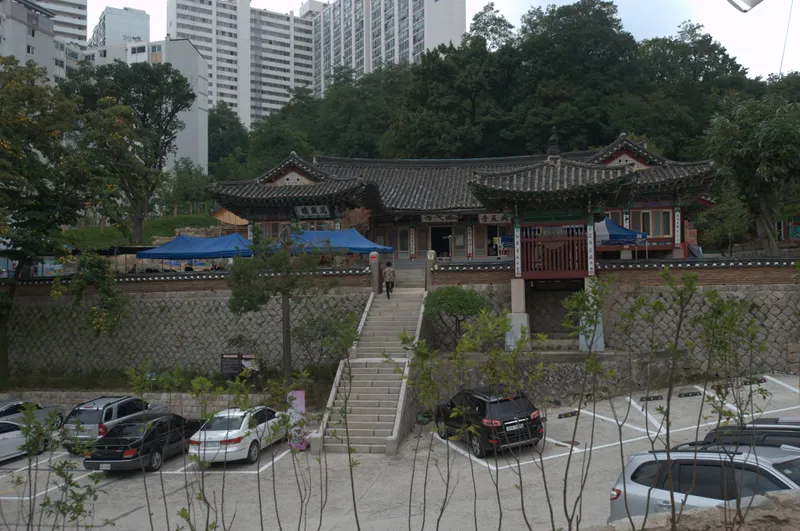
A temple of more than a hundred and seventy kan, raised beside a queen’s tomb by the king who had lost her.
 Temple
Jogyesa
- Exams & Study
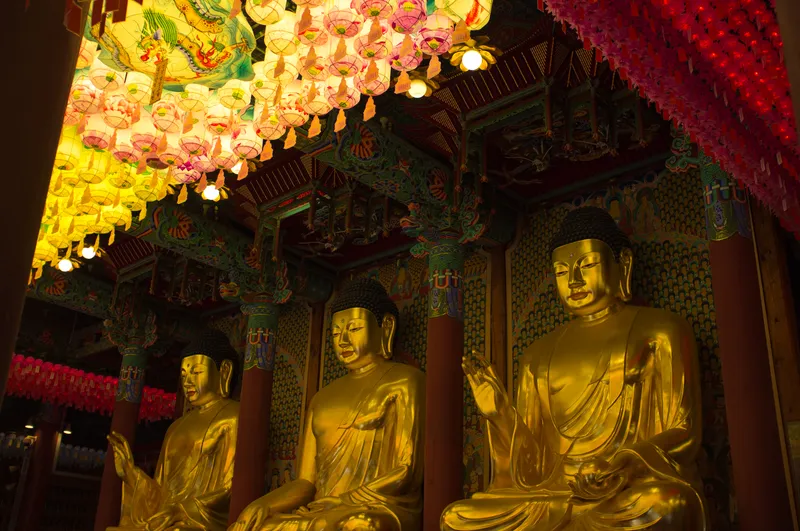
The head temple of the Jogye Order, in the middle of downtown Seoul, where a prayer for children ends the day before the national entrance exam each year.
 Temple
Bongwonsa, Ansan
The temple where the leaders of the 1884 coup learned the reformist thought behind it.
 Temple
Hwagyesa, Samgaksan
A temple paid for by two men holding the same title, two hundred and fifty years apart.
 Temple
Bongeunsa
- Family & Home
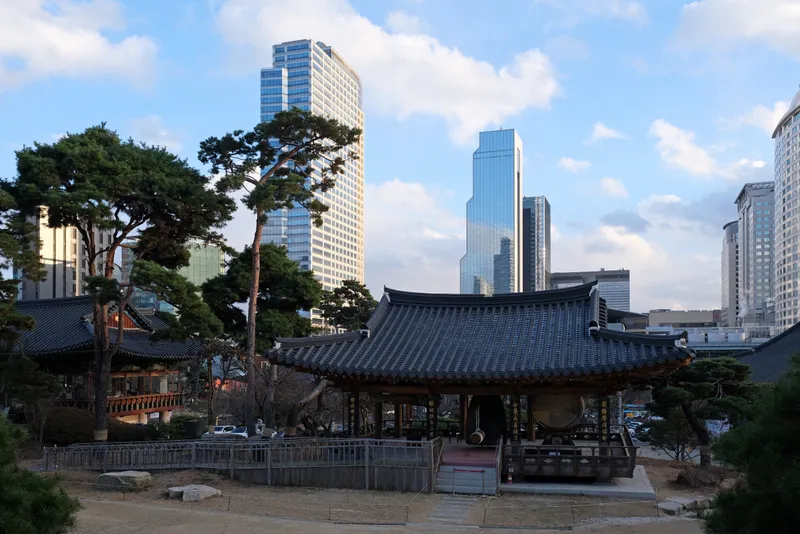
Founded by a widow to pray for her dead husband’s repose, and later made head temple of the Seon school.
 Temple
Seunggasa, Bukhansan
A temple holding a stone portrait of an Indian monk who went to Tang China.
No places match your filters