Tenkawa Daibenzaiten
Tenkawa Shrine
Researched and translated with AI assistance. Every claim is linked to its source, but errors get through, so check the official site for opening times, fees and closures.About
In short
A shrine that began as the guardian of Mount Misen when En no Gyoja opened Omine, venerated as the great deity of music, art and performance, with a deep and surviving connection to Noh.
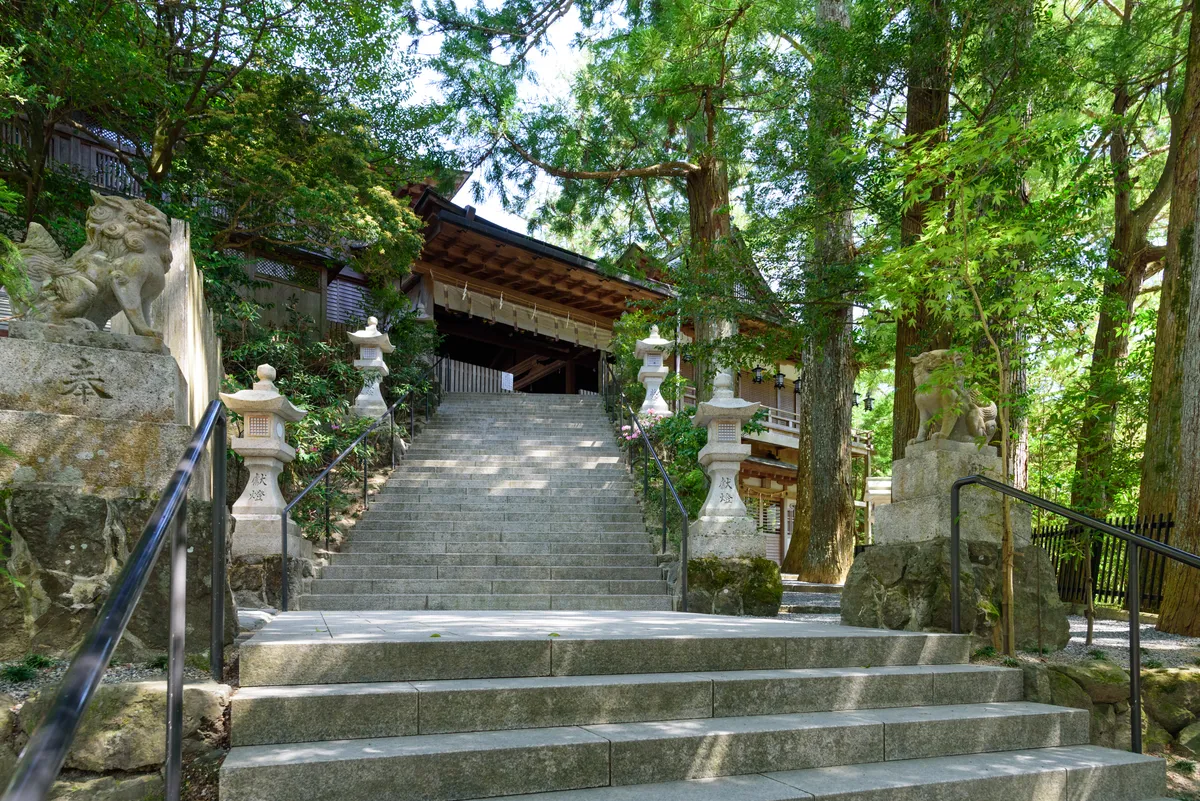
Quick facts
- Address
- 107 Tsubonouchi, Tenkawa, Yoshino, Nara
- Spiritual entities
- Benzaiten (弁才天)
About this place
Tenkawa Daibenzaiten is in Tenkawa, Nara. Its chief deity is Ichikishimahime, venerated as Benzaiten; also enshrined are the great deity of Kumano, the great deity of Yoshino, the spirits of four sovereigns of the Southern Court, and a hundred deities from Ame-no-Minakanushi of the age of the gods. The Muromachi-period Tamon-in diary records that the opening of Tenkawa was by En no Gyoja, and the beginning is held to be its enshrinement as guardian of Misen, the highest peak, when En no Gyoja opened Omine. By the resolve of Emperor Tenmu, a shrine building was raised on the present site at Tsubonouchi. A retreat by Kobo Daishi in the Konin era is also transmitted. Its stated virtues are the great deity of water, of eloquence and wit, of music, art and performance, and of treasure. The shrine holds thirty Noh masks designated Important Cultural Properties and thirty Noh costumes designated by the prefecture.
Origin and history
The Muromachi-period Tamon-in diary records that the opening of Tenkawa was by En no Gyoja. The beginning is held to be its enshrinement as guardian of Misen, the highest peak, when En no Gyoja opened Omine.
By the resolve of Emperor Tenmu, a shrine building was raised on the present site at Tsubonouchi. A retreat by Kobo Daishi in the Konin era is also transmitted.
Its stated virtues are the great deity of water, of eloquence and wit, of music, art and performance, and of treasure.
What it is locally associated with
The great deity of music, art and performance
Its stated virtues are the great deity of water, of eloquence and wit, of music, art and performance, and of treasure.
documented historyNoh masks six hundred years old
The shrine holds thirty Noh masks as Important Cultural Properties and thirty Noh costumes; in 1430 Kanze Juro Motomasa dedicated the play Toshin here.
documented historyGuardian of Mount Misen
The Tamon-in diary records the opening of Tenkawa as by En no Gyoja, enshrined as guardian of Misen when Omine was opened.
folk tradition
The connection to performance here is not only a saying. The shrine holds thirty Noh masks designated Important Cultural Properties and thirty Noh costumes designated by the prefecture. In 1430 Kanze Juro Motomasa dedicated the play Toshin and presented a jo mask inscribed as an offering before the Benzaiten. Behind the virtue named as music, art and performance stands a mask given six hundred years ago that is still here.
The beginning was a mountain guardian. The Tamon-in diary records that the opening of Tenkawa was by En no Gyoja, and the shrine holds that it was enshrined as guardian of Misen, the highest peak, when Omine was opened. On this list, Kinpusen-ji in Yoshino and Muro-ji both put the same man at their beginnings.
A retreat by Kobo Daishi in the Konin era is also transmitted. As at To-ji in Kyoto and Amanosan Kongo-ji in Osaka, his name turns up in the founding accounts of widely separated places.
Four virtues are named: water, eloquence and wit, music and art and performance, and treasure. The shrine explains that Benzaiten originates in the ancient Indian Sarasvati, was originally a deity of water, eloquence and music, and came later to be a deity of prosperity in business.
Claims and evidence levels 3
- The shrine holds thirty Noh masks designated Important Cultural Properties and thirty prefecturally designated Noh costumes, and Kanze Juro Motomasa dedicated the play Toshin here in 1430. documented history
- Its stated virtues are water, eloquence and wit, music and art and performance, and treasure. documented history
- The Tamon-in diary records that the opening of Tenkawa was by En no Gyoja, and the shrine holds it began as the guardian of Mount Misen. folk tradition
Related guides
- How to visit a shrine or temple in JapanThe country-wide basics: purifying at the water basin, the two-bows-two-claps-one-bow form at shrines, and what temples do instead.
- What a "power spot" actually isA modern Japanese coinage, not a traditional religious category. Where the word came from, what it does and does not claim, and why this site uses it anyway.
- Shrine or temple?A shrine is Shinto and a temple is Buddhist, and you can usually tell at the gate. Why the line is cleaner on paper than on the ground, and what a government order in 1868 has to do with it.
- Omamori, ema, omikuji and goshuinThe four things you are most likely to receive, write, draw or be given at a shrine or temple, what each is actually for, and the one of them people most often get wrong.
Sources
- 天河大辨財天社について — Tenkawa Daibenzaiten (accessed 2026-08-15)
Last updated:
Similar places
8 places
 Shrine
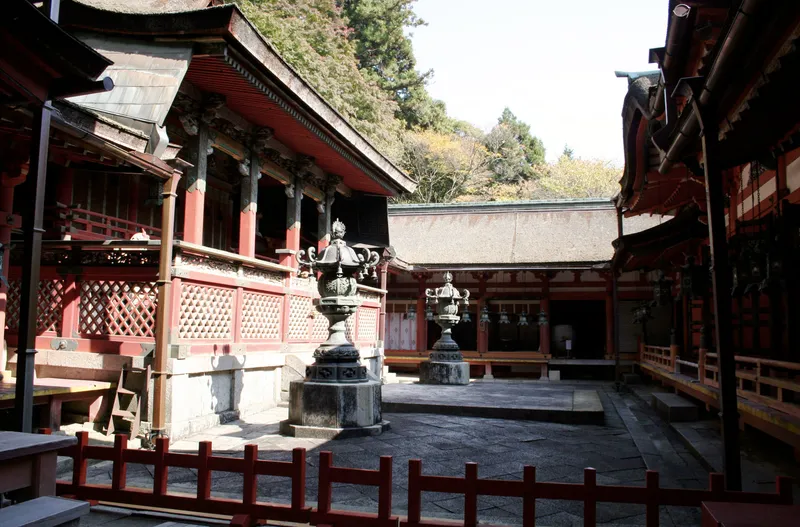
Tanzan Shrine
- Family & Home
- Health & Healing
- Money & Prosperity
A shrine to Fujiwara no Kamatari on the hill where he and Prince Naka no Oe held the secret conference that led to the Taika Reform.
 Shrine
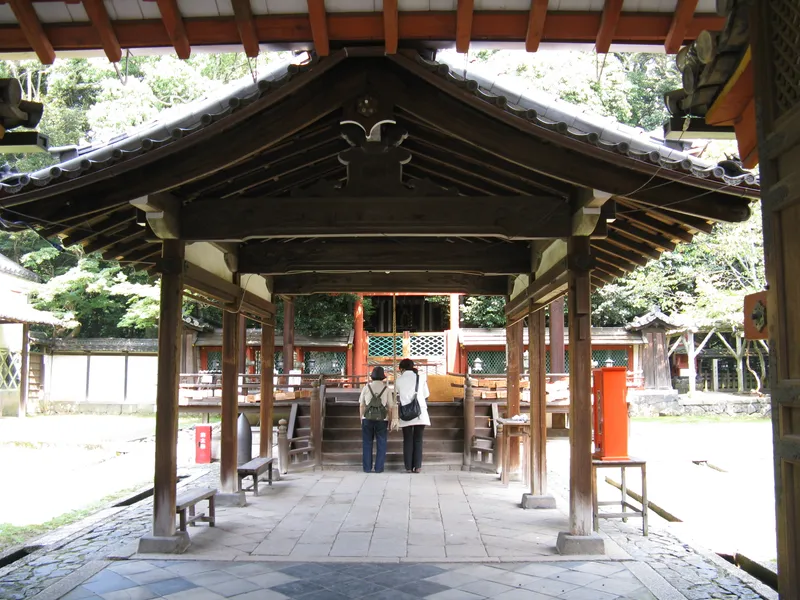
Himuro Shrine
- Money & Prosperity
A shrine that began as the ice house supplying the Nara capital, where ice makers and sellers from across the country still gather to pray for the year’s trade.
 Shrine
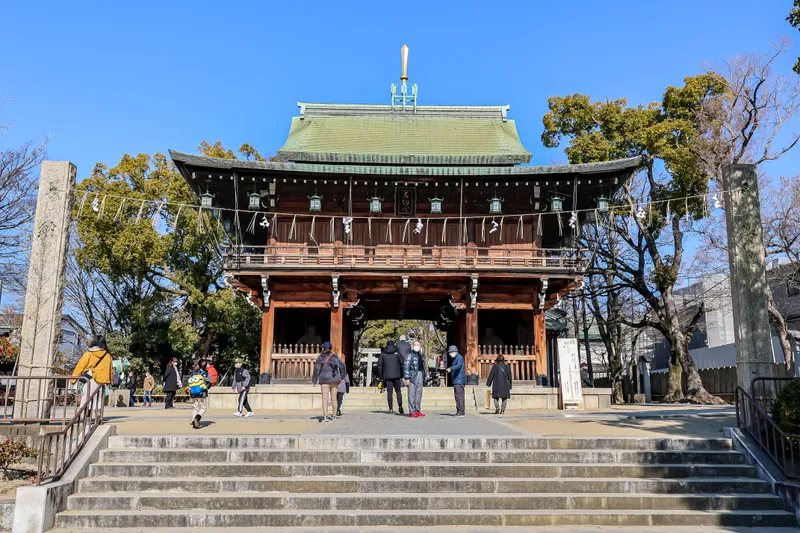
Ishikiri Tsurugiya Jinja
- Health & Healing
- Skill & Mastery
Its name describes a divine power that cuts through solid rock, and it is known as the deity who heals growths and swellings.
 Temple
Shitenno-ji
- Health & Healing
- Money & Prosperity
Founded in 593 when Prince Shotoku made good on a battlefield vow — Japan’s first official state temple, still praying daily for recovery from illness and prosperity in business.
 Temple
Shoman-in Aizendo
- Love & Romance
- Money & Prosperity
- Bonds & Matchmaking
Founded by Prince Shotoku in 593 on the site of his dispensary — called the birthplace of welfare work — and known for the binding of ties and harmony between husband and wife.
 Shrine
Imamiya Ebisu Jinja
- Money & Prosperity
Founded in 600 as the guardian deity of a marketplace, and revered since as a protector of prosperous trade and full good fortune.
 Shrine
Kozu-gu
- Fertility & Children
- Money & Prosperity
Founded in 866, when an imperial order sent a search for the ruins of the old capital and the shrine was built where they were found.
 Shrine
Ikasuri Jinja
- Family & Home
- Fertility & Children
- Money & Prosperity
Because it is the deity of this ground, the shrine records, it governs safe childbirth, children’s safe growth and safety in trade.
No places match your filters