Tsubosaka-dera
Minami Hokke-ji
Researched and translated with AI assistance. Every claim is linked to its source, but errors get through, so check the official site for opening times, fees and closures.About
In short
The sixth station of the Saikoku pilgrimage, whose principal image is a Kannon of proven efficacy against eye disease; the temple is called the temple that seals off eye disease.
Quick facts
- Address
- 3 Tsubosaka, Takatori, Takaichi, Nara
- Spiritual entities
- Avalokiteśvara (Kannon · Gwaneum, 観音菩薩)
About this place
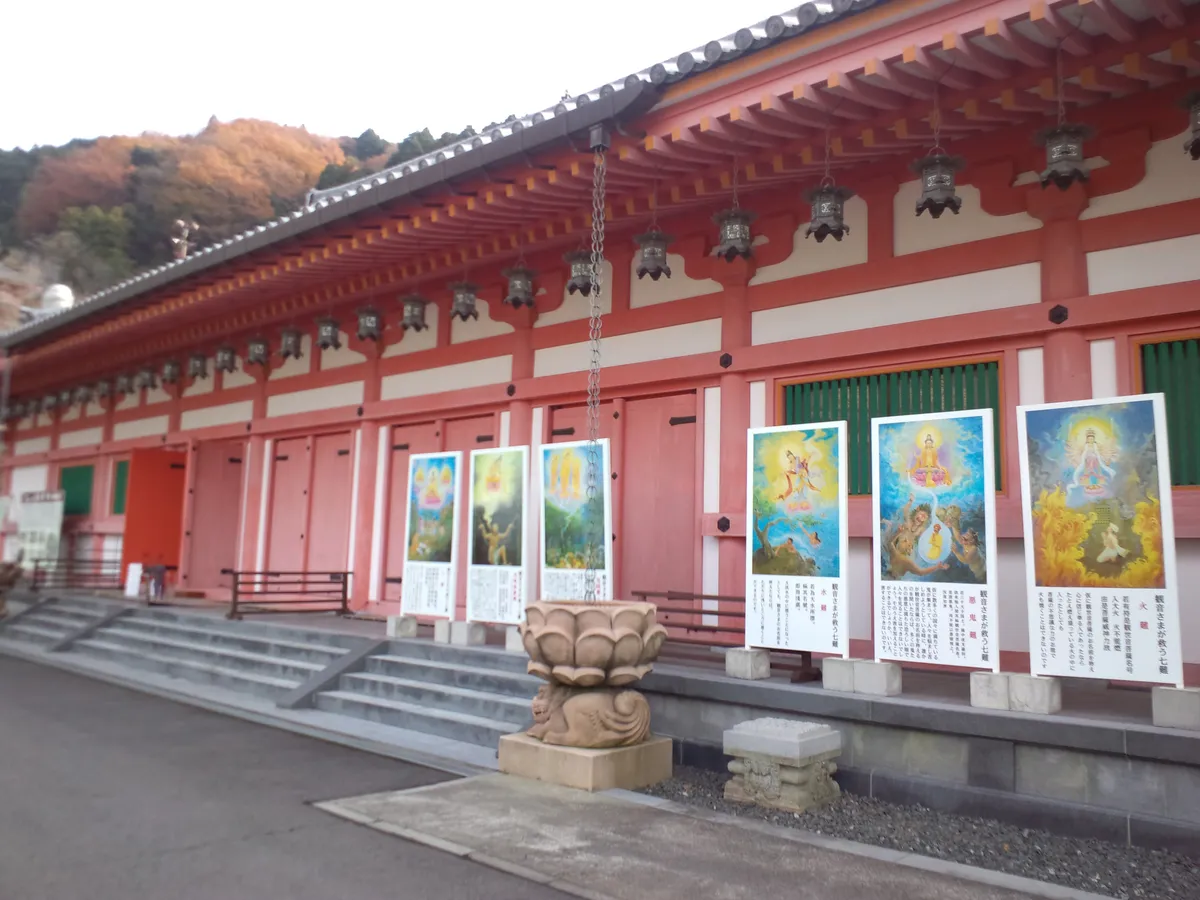
Tsubosaka-dera is in Takatori, Nara, and is the sixth station of the Saikoku pilgrimage. It is said to have begun in 703, when the Gango-ji priest Benki, practising on this mountain, placed the crystal jar he always carried in a hermitage at the top of the slope and enshrined there a carved likeness of the Kannon he had perceived. The principal image is an eleven-headed thousand-armed Kannon. It is held to be a Kannon of proven efficacy against eye disease, and the temple is called the temple that seals off eye disease. The name of Tsubosaka-dera spread through the puppet play Tsubosaka Reigenki, the story of the blind husband Sawaichi and his wife Osato.
Origin and history
It is said to have begun in 703, when the Gango-ji priest Benki, practising on this mountain, placed the crystal jar he always carried in a hermitage at the top of the slope and enshrined there a carved likeness of the Kannon he had perceived.
The principal image is an eleven-headed thousand-armed Kannon. It is held to be of proven efficacy against eye disease, and the temple is called the temple that seals off eye disease.
The name of Tsubosaka-dera spread through the puppet play Tsubosaka Reigenki, the story of the blind husband Sawaichi and his wife Osato.
What it is locally associated with
The temple that seals off eye disease
The principal image is held to be a Kannon of proven efficacy against eye disease, and the temple is called the temple that seals off eye disease.
documented historyA crystal jar at the top of the slope
In 703 the Gango-ji priest Benki placed the crystal jar he always carried in a hermitage at the top of the slope and enshrined a likeness of the Kannon he had perceived.
folk traditionA puppet play spread the name
The name spread through Tsubosaka Reigenki, the story of the blind husband Sawaichi and his wife Osato.
documented history
The devotion here is narrowed to one part of the body. The principal image is a Kannon of proven efficacy against eye disease, and the temple calls itself the temple that seals off eye disease — a temple for the eyes, by its own description. Hattori Tenjingu in Osaka is a shrine for the legs. Two places on this list answer to a particular part of the body.
The temple’s name is made of an object and a place. Benki put the crystal jar he always carried in a hermitage at the top of the slope — a jar, tsubo, and a slope, saka. What was placed, and where, became the name.
What carried the name outward was a play. The temple records that it spread through the puppet play Tsubosaka Reigenki, the story of the blind husband Sawaichi and his wife Osato. A story about a man who could not see carried the name of a temple for the eyes.
Benki, who founded it, was a priest of Gango-ji. Gango-ji is on this list, and so is Oka-dera, the seventh station of the Saikoku pilgrimage. This temple is the sixth. Two adjacent stations of the same circuit, both in Nara.
Claims and evidence levels 3
- The temple is said to have begun in 703 when the Gango-ji priest Benki placed his crystal jar in a hermitage at the top of the slope and enshrined a carved likeness of the Kannon he perceived. folk tradition
- Its principal image is held to be effective against eye disease, and the temple is called the temple that seals off eye disease. documented history
- It is the sixth station of the Saikoku pilgrimage, and its name spread through the puppet play Tsubosaka Reigenki. documented history
Related guides
- How to visit a shrine or temple in JapanThe country-wide basics: purifying at the water basin, the two-bows-two-claps-one-bow form at shrines, and what temples do instead.
- What a "power spot" actually isA modern Japanese coinage, not a traditional religious category. Where the word came from, what it does and does not claim, and why this site uses it anyway.
- Shrine or temple?A shrine is Shinto and a temple is Buddhist, and you can usually tell at the gate. Why the line is cleaner on paper than on the ground, and what a government order in 1868 has to do with it.
- Omamori, ema, omikuji and goshuinThe four things you are most likely to receive, write, draw or be given at a shrine or temple, what each is actually for, and the one of them people most often get wrong.
Sources
Last updated:
Similar places
8 places
 Temple
Kiyomizu-dera
- Career & Work
- Health & Healing
- Love & Romance
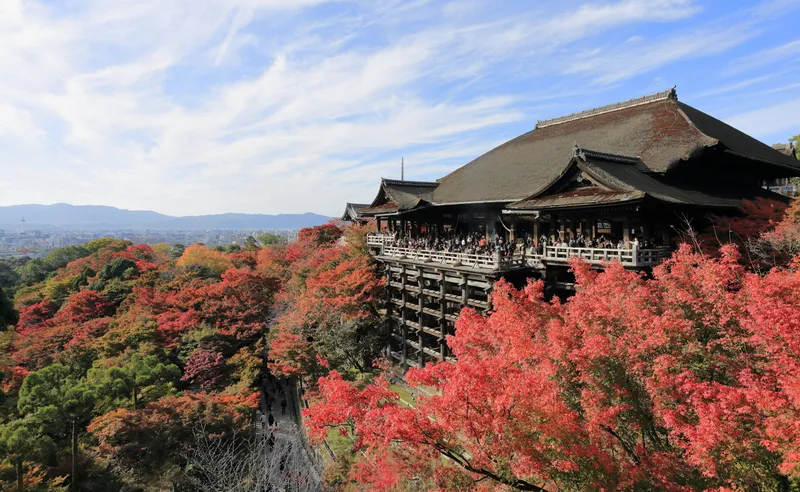
A Kannon temple begun in 778 beside the Otowa waterfall, venerated by those seeking health, advancement and a good match.
 Temple
Rokuharamitsu-ji
- Health & Healing
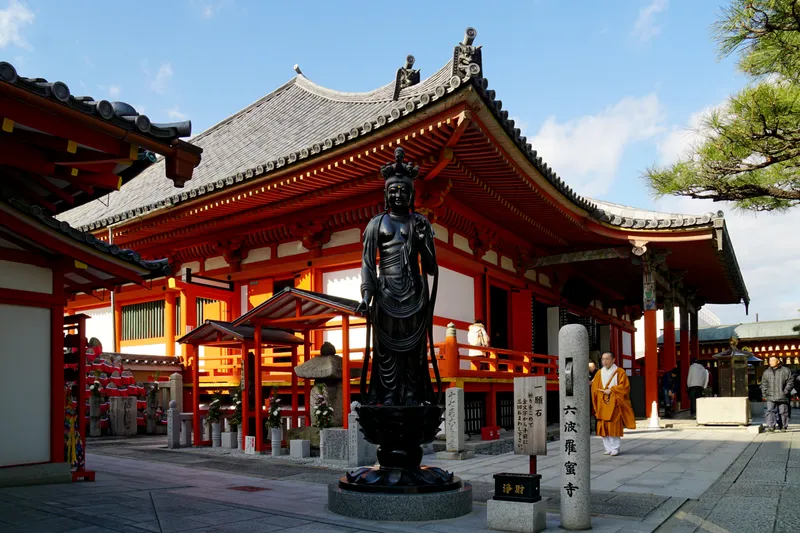
Founded in 951, where Kuya hauled a Kannon he had carved through the streets against an epidemic — and the tea he gave the sick is still served.
 Temple
Oka-dera
- Exams & Study
- Fertility & Children
- Health & Healing
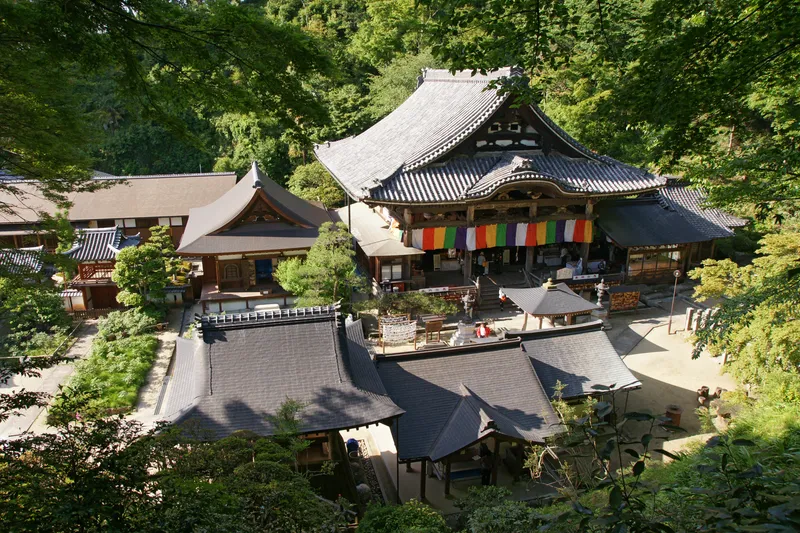
Founded by the priest Gien on the vow of Emperor Tenji, it calls itself the first site in Japan for warding off misfortune and is the seventh station of the Saikoku pilgrimage.
 Shrine
Tanzan Shrine
- Family & Home
- Health & Healing
- Money & Prosperity
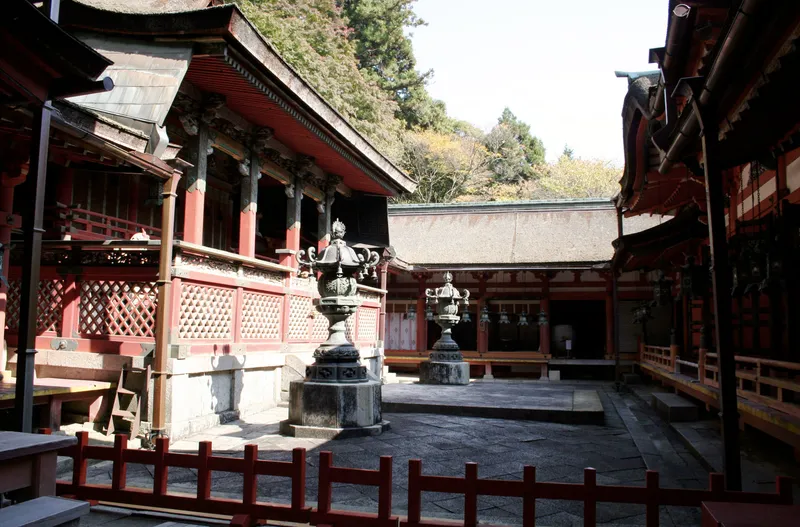
A shrine to Fujiwara no Kamatari on the hill where he and Prince Naka no Oe held the secret conference that led to the Taika Reform.
 Shrine
Kashihara Jingu
- Health & Healing
- Wish Fulfillment
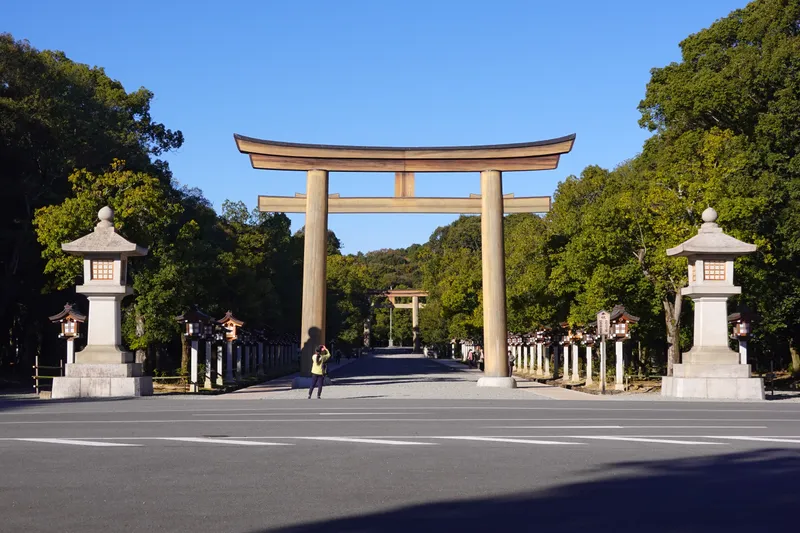
A shrine to Emperor Jimmu, enshrined and founded on 2 April 1890, whose stated virtues are good fortune, long life and health, among others.
 Shrine
Takakamo Shrine
- Family & Home
- Health & Healing
- Purification
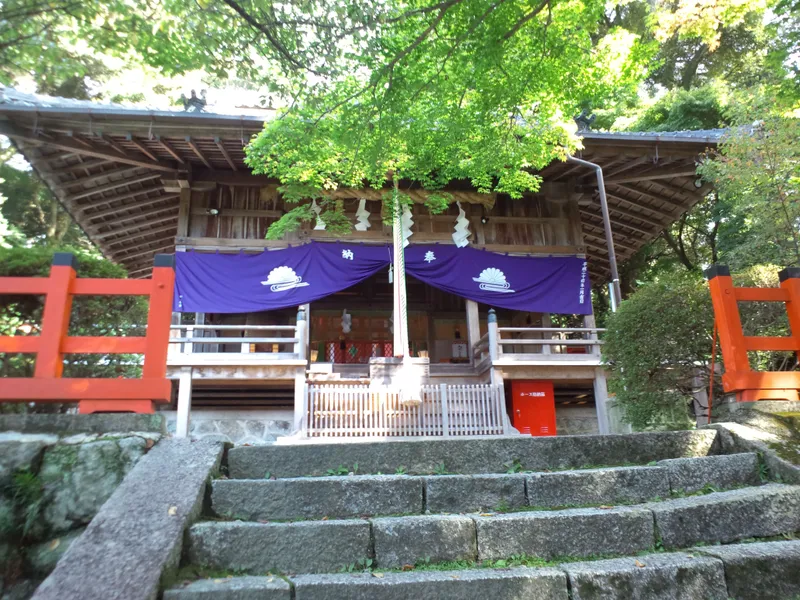
Held to be the parent shrine of all the Kamo shrines and one of the oldest shrines in Japan, with a deep devotion around recovery and renewal.
 Temple
Hase-dera
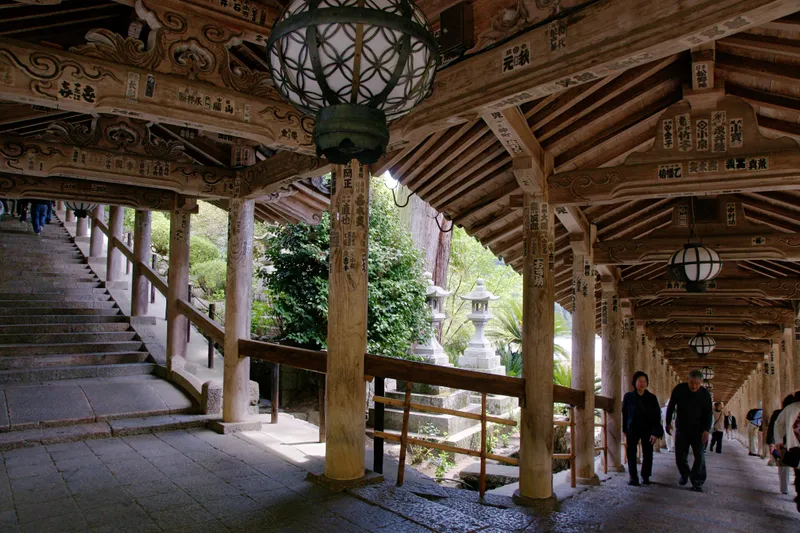
Begun in 686 when Domyo installed a work on the west hill and in 727 when Tokudo carved an eleven-headed Kannon on the east hill, it is the founding site of the Saikoku circuit of thirty-three Kannon.
 Temple
Kanshin-ji
Founded in 701 by En no Gyoja, with Nyoirin Kannon as its principal image and a pagoda in its grounds named for having been left unfinished.
No places match your filters