Sangwonsa
Jinyeowon
Researched and translated with AI assistance. Every claim is linked to its source, but errors get through, so check the official site for opening times, fees and closures.About
In short
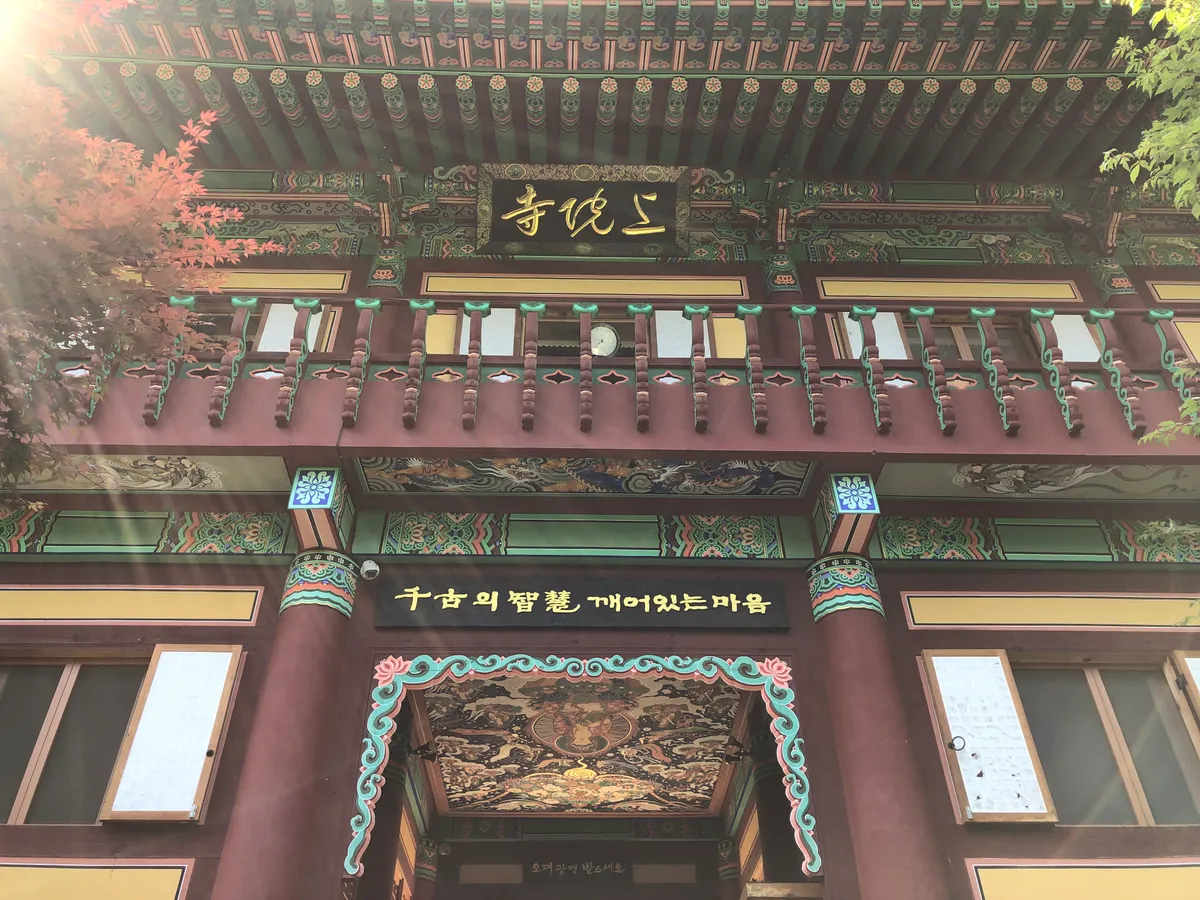
A temple on Odaesan founded in 705, at the centre of the mountain’s Manjushri devotion, and known for the story that King Sejo met the bodhisattva here as a boy and was healed.
Quick facts
- Address
- Odaesan, Jinbu-myeon, Pyeongchang-gun, Gangwon State
- Spiritual entities
- Mañjuśrī (文殊菩薩, Munsu) · Vairocana (毘盧遮那佛, Birojana)
About this place
Sangwonsa is regarded as the centre of Manjushri devotion on Odaesan. It began in 705 as Jinyeowon, founded by the Unified Silla monks Bocheon and Hyomyeong, and has been called Sangwonsa since the late Goryeo period. Several stories connect it to King Sejo of Joseon, the best known being that he met Manjushri in the form of a boy and recovered from illness. A bell cast in 725 is among the several objects here designated National Treasures.
Origin and history
The Encyclopedia of Korean Culture records that Sangwonsa was founded in 705 (the fourth year of King Seongdeok) by the Unified Silla monks Bocheon and Hyomyeong, and that its first name was Jinyeowon. It came to be called Sangwonsa in the late Goryeo period.
In the Joseon period the records turn to King Sejo. As his illness worsened, Queen Jeonghui consulted the monks Sinmi and Hagyeol and had Sangwonsa rebuilt. The document recording that rebuilding, the Jungchang gwonseonmun, is a National Treasure and is still kept here.
What it is locally associated with
Founded in 705, as Jinyeowon
The Unified Silla monks Bocheon and Hyomyeong founded it; the name Sangwonsa came into use in the late Goryeo period.
documented historySejo and the Manjushri boy
A boy is said to have scrubbed the king’s back as he bathed in the valley, and to have been Manjushri. The record also notes that Queen Jeonghui had the temple rebuilt as his illness worsened.
folk traditionThe bell of 725
A National Treasure, cast twenty years after the temple opened.
documented historyThe wooden Manjushri boy
A National Treasure, told alongside the Sejo story. Objects found inside it were separately designated a Treasure.
documented history
The association with health comes from Sejo. The story told is that while he was bathing in the valley a boy scrubbed his back, that the boy was Manjushri, and that his illness lifted afterwards. It is a story long told rather than a statement by the temple about what people come here to ask for.
Three things in the grounds are worth knowing. The bell cast in 725, the seated wooden Manjushri boy, and the rebuilding document mentioned above are all National Treasures. Objects found inside the Manjushri figure were designated a Treasure in their own right.
Claims and evidence levels 5
- Sangwonsa was founded in 705 (the fourth year of King Seongdeok) by the Unified Silla monks Bocheon and Hyomyeong, under the name Jinyeowon; it has been called Sangwonsa since the late Goryeo period. documented history
- The Encyclopedia of Korean Culture describes it as a prayer site of Vairocana and Manjushri and the centre of Manjushri devotion on Odaesan. documented history
- As King Sejo’s illness worsened, Queen Jeonghui consulted the monks Sinmi and Hagyeol and had the temple rebuilt; the document recording it, the Jungchang gwonseonmun, is a National Treasure. documented history
- It is told that a boy scrubbed King Sejo’s back while he bathed in the valley, that the boy was Manjushri, and that the king’s illness lifted afterwards. folk tradition
- Designated objects here include the bell cast in 725, the seated wooden Manjushri boy, and the Jungchang gwonseonmun, all National Treasures; objects found inside the Manjushri figure were designated a Treasure separately. documented history
Related guides
- How to visit a Korean templeHands together and hands folded, how the bows work, and what to do at the threshold of a hall. Starting with what is different from visiting a Japanese shrine.
- The small hall behind the main one — sansingak and samseonggakUphill from the main hall of a Korean temple stands a smaller one, and inside it an old man with a tiger. This is where the indigenous religion sits, inside the Buddhist institution.
- Templestay — a night at a templeA programme that puts you inside a temple’s own timetable for a day or two. What you do, which type to book, and what to be ready for.
- Prayer sites and the one wishThe three great Gwaneum sites, the five relic halls, and the crowds before the entrance exam. Where the saying about one wish comes from, and where the record stops.
Sources
- 상원사(上院寺) — 한국민족문화대백과사전 — Academy of Korean Studies (accessed 2026-08-10)
- Sangwonsa (Q7418194) — coordinate location — Wikidata (accessed 2026-08-10)
Last updated:
Similar places
8 places
 Temple
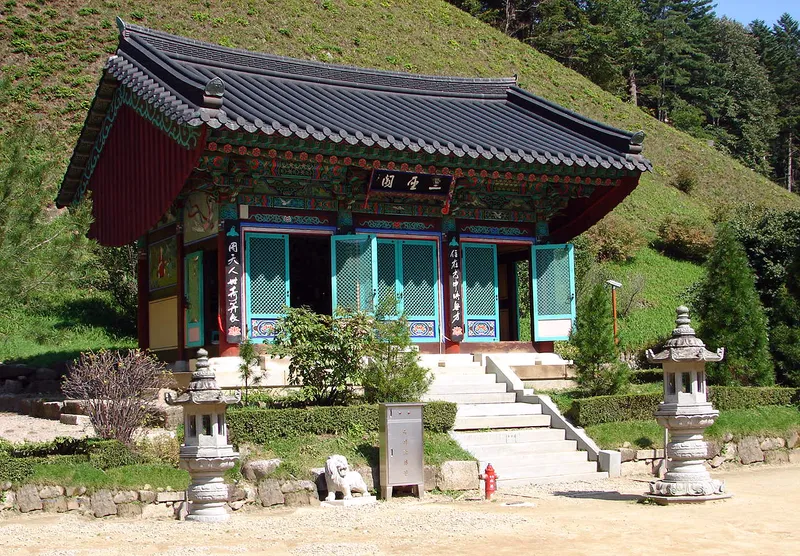
Woljeongsa, Odaesan
Head temple of the fourth Jogye district, begun where its founder tried to see Manjushri in the flesh and did not.
 Shrine
Daegwallyeong Seonghwangsa and Sansingak
- Health & Healing
- Protection & Safety
A mountain-god shrine at the top of the Daegwallyeong pass, whose deity is recorded as presiding over farming, illness, drought and the road.
 Temple
Manggyeongsa, Taebaeksan
Built to house a stone image of Manjushri that its founder came here because he had heard it had appeared.
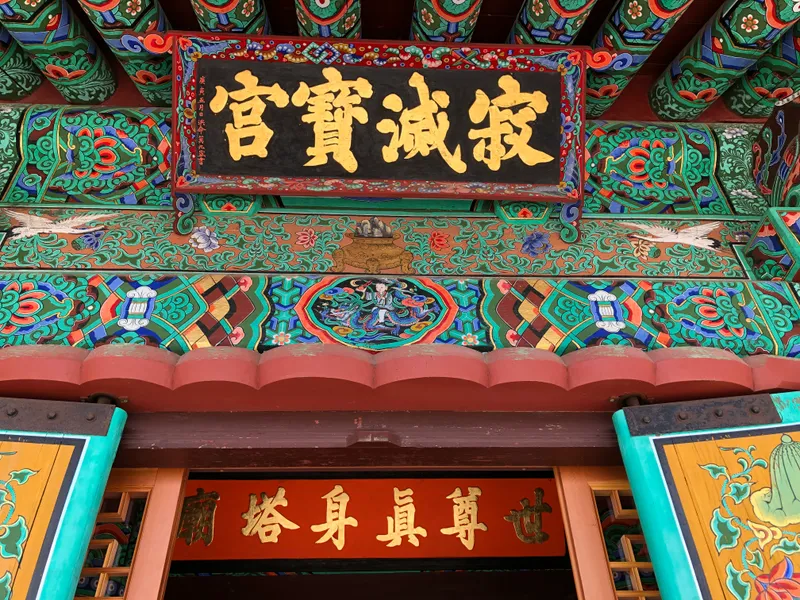 Temple
Jeongmyeol-bogung, Odaesan
- Protection & Safety
A relic hall on the middle terrace of Odaesan with no buddha image inside, because the Buddha’s own relics are enshrined there.
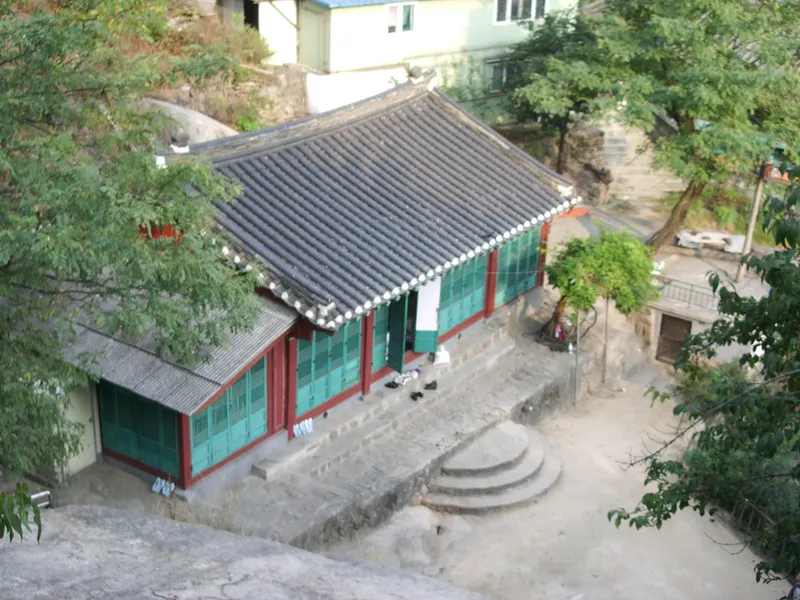 Shrine
Guksadang, Inwangsan
- Fertility & Children
- Health & Healing
- Protection & Safety
A shaman shrine moved from Namsan to the slope of Inwangsan in 1925 under Japanese pressure, where roughly a hundred gut rites are still held each year.
 Shrine
Nami Janggun Shrine
- Health & Healing
- Protection & Safety
A shrine raised to console the wronged spirit of a general beheaded at twenty-seven.
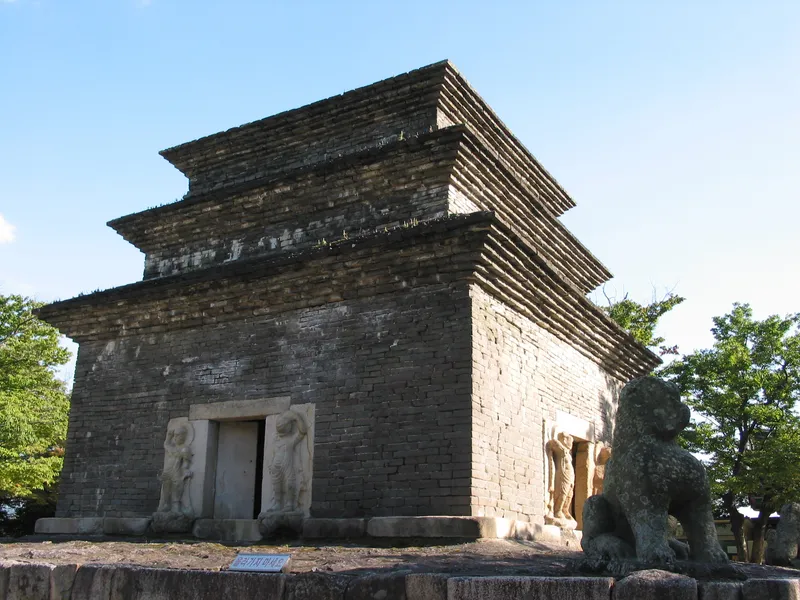 Temple
Bunhwangsa
- Health & Healing
The temple that held the image a blind child’s mother prayed to, after which he saw.
 Temple
Naksansa
Burned four times and rebuilt each time; the 2005 wildfire took even its bronze bell, a Treasure whose designation was then revoked.
No places match your filters