Mañjuśrī (文殊菩薩, Munsu)
The bodhisattva of wisdom, whose Korean cult centres on Odaesan.
Mañjuśrī is the bodhisattva of wisdom, called Munsu in Korean and Monju in Japanese. In Korea the devotion has a single centre: Odaesan, where the Encyclopedia of Korean Culture describes Sangwonsa as a prayer site of Vairocana and Mañjuśrī and the heart of Munsu belief on that mountain. The best-known story attached to him there is of King Sejo, who is said to have met the bodhisattva in the form of a boy while bathing in a valley, and to have recovered from illness afterwards. The seated wooden figure of that boy at Sangwonsa is a National Treasure.
AI-assisted research. Check official sources before you travel.About
4 placesOpen in the full map
Places in this collection
 Temple
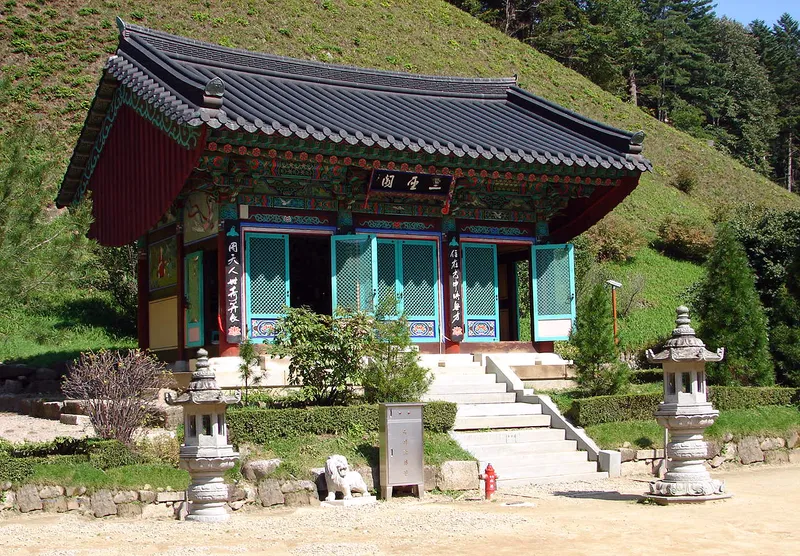
Woljeongsa, Odaesan
Head temple of the fourth Jogye district, begun where its founder tried to see Manjushri in the flesh and did not.
 Temple
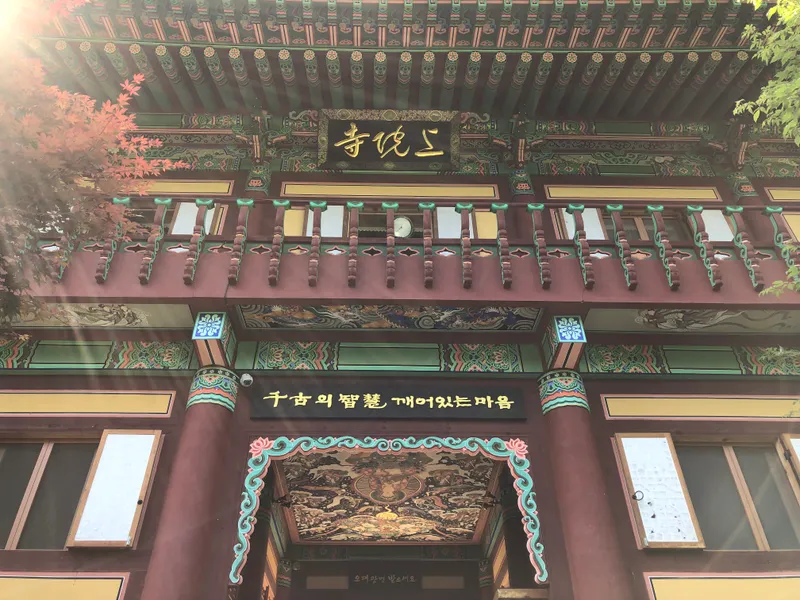
Sangwonsa
- Health & Healing
A temple on Odaesan founded in 705, at the centre of the mountain’s Manjushri devotion, and known for the story that King Sejo met the bodhisattva here as a boy and was healed.
 Temple
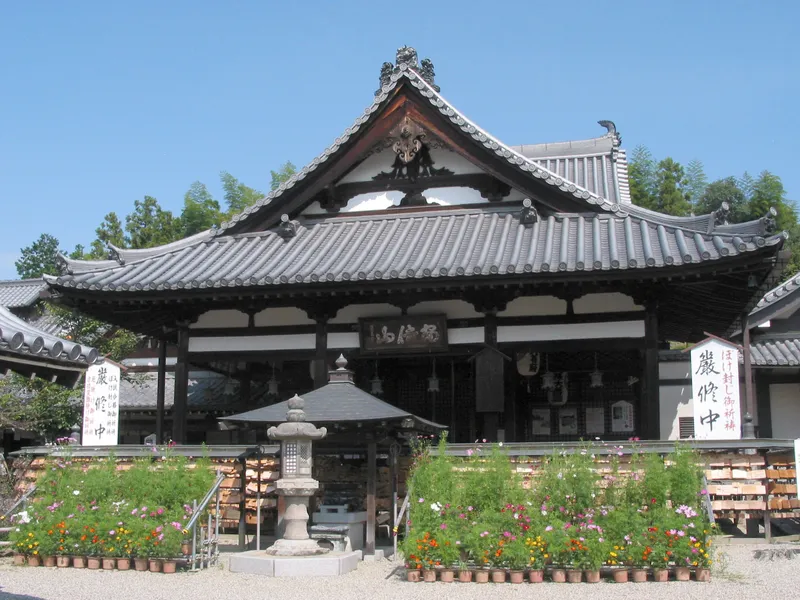
Abe Monju-in
- Exams & Study
- Fertility & Children
- Protection & Safety
Founded in 645 and one of the oldest temples in Japan, its principal image is the Monju of the proverb "three heads together make Monju’s wisdom", and prayers here begin with success in examinations.
 Temple
Manggyeongsa, Taebaeksan
Built to house a stone image of Manjushri that its founder came here because he had heard it had appeared.