Woljeongsa, Odaesan
Researched and translated with AI assistance. Every claim is linked to its source, but errors get through, so check the official site for opening times, fees and closures.About
In short
Head temple of the fourth Jogye district, begun where its founder tried to see Manjushri in the flesh and did not.
Quick facts
- Address
- 374-8 Odaesan-ro, Jinbu-myeon, Pyeongchang-gun, Gangwon
- Spiritual entities
- Jajang (慈藏, 590–658) · Mañjuśrī (文殊菩薩, Munsu)
About this place
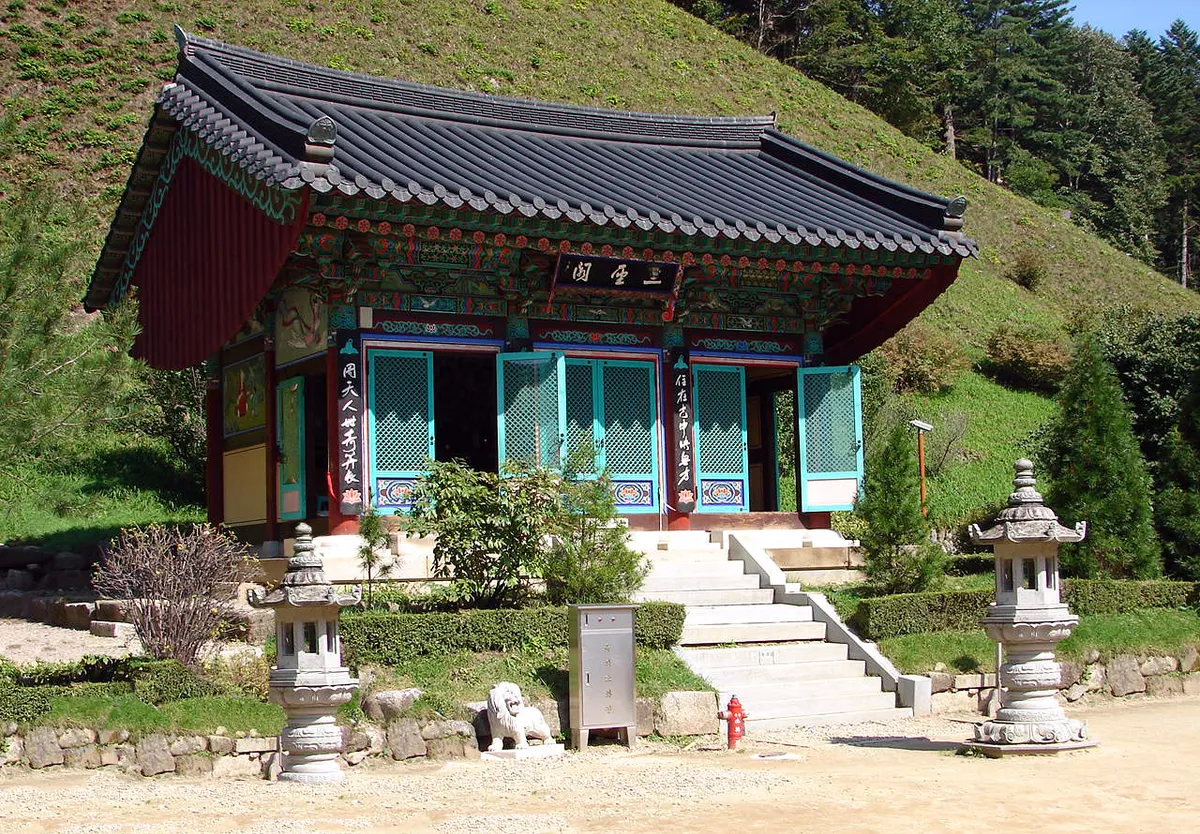
Woljeongsa stands in Jinbu-myeon, Pyeongchang, and is the head temple of the fourth district of the Jogye Order. The Vinaya master Jajang founded it in 643. At the founding he put together a temporary grass hut and stayed there hoping to see the true body of the bodhisattva Manjushri, but through the three days he remained the weather stayed gloomy and he did not achieve it. Fire destroyed the temple entirely in 1307 and Yiil rebuilt it; fire destroyed it again in 1833 and Yeongdam and Jeongam rebuilt it in 1844. During the January retreat, for operational reasons, more than ten buildings including the Chilbulbojeon hall were burned down entirely by friendly forces. After Tanheo rebuilt the Jeokgwangjeon hall in 1964, Manhwa continued the reconstruction to the present day. The octagonal nine-storey stone pagoda, 15.2 metres high, is designated a National Treasure.
Origin and history
Woljeongsa was founded in 643 by the Vinaya master Jajang. At the founding he put together a temporary grass hut and stayed there hoping to see the true body of the bodhisattva Manjushri, but through the three days he remained the weather stayed gloomy and he did not achieve it.
Fire destroyed the temple entirely in 1307 and Yiil rebuilt it; fire destroyed it again in 1833 and Yeongdam and Jeongam rebuilt it in 1844.
During the January retreat, for operational reasons, more than ten buildings including the Chilbulbojeon hall were burned down entirely by friendly forces.
After Tanheo rebuilt the Jeokgwangjeon hall in 1964, Manhwa carried the reconstruction steadily forward to the present.
What it is locally associated with
He did not achieve it
Jajang stayed in a grass hut hoping to see the true body of Manjushri, but through three days of gloomy weather he did not achieve it.
folk traditionBurned by friendly forces
During the January retreat, for operational reasons, more than ten buildings including the Chilbulbojeon hall were burned down by friendly forces.
documented historyA National Treasure pagoda
The octagonal nine-storey stone pagoda, 15.2 metres high, is designated a National Treasure.
documented history
This temple’s founding record sets down not what was achieved but what was not. Jajang built a grass hut, stayed, and hoped to see the true body of Manjushri; through three days of foul weather, the account says, he did not achieve it. Founding stories on this site are usually about something seen or something received. Here the temple remained without the seeing.
The record of burning runs to three. 1307, 1833, and the January retreat. Temples across Gangwon share this passage — Sinheungsa, Naksansa and Baekdamsa in the same province all have large parts of their histories made of loss and rebuilding.
The third is not like the first two. Burned down entirely by friendly forces, for operational reasons, the encyclopedia writes. That the side which set the fire was not the enemy stays on the record.
What stands now came after. Tanheo rebuilt the Jeokgwangjeon in 1964 and Manhwa carried the work on. Only the octagonal nine-storey pagoda came through all of it.
Claims and evidence levels 2
- Founded by Jajang in 643, the temple was destroyed by fire in 1307 and 1833 and rebuilt each time. documented history
- More than ten buildings including the Chilbulbojeon were burned by friendly forces for operational reasons during the January retreat. documented history
Related guides
- How to visit a Korean templeHands together and hands folded, how the bows work, and what to do at the threshold of a hall. Starting with what is different from visiting a Japanese shrine.
- The small hall behind the main one — sansingak and samseonggakUphill from the main hall of a Korean temple stands a smaller one, and inside it an old man with a tiger. This is where the indigenous religion sits, inside the Buddhist institution.
- Templestay — a night at a templeA programme that puts you inside a temple’s own timetable for a day or two. What you do, which type to book, and what to be ready for.
- Prayer sites and the one wishThe three great Gwaneum sites, the five relic halls, and the crowds before the entrance exam. Where the saying about one wish comes from, and where the record stops.
Sources
- 오대산 월정사(五臺山 月精寺) — 한국민족문화대백과사전 (accessed 2026-08-16)
Last updated:
Similar places
8 places
 Temple
Manggyeongsa, Taebaeksan
Built to house a stone image of Manjushri that its founder came here because he had heard it had appeared.
 Temple
Sangwonsa
- Health & Healing
A temple on Odaesan founded in 705, at the centre of the mountain’s Manjushri devotion, and known for the story that King Sejo met the bodhisattva here as a boy and was healed.
 Temple
Jeongmyeol-bogung, Odaesan
- Protection & Safety
A relic hall on the middle terrace of Odaesan with no buddha image inside, because the Buddha’s own relics are enshrined there.
 Temple
Bongjeongam
- Protection & Safety
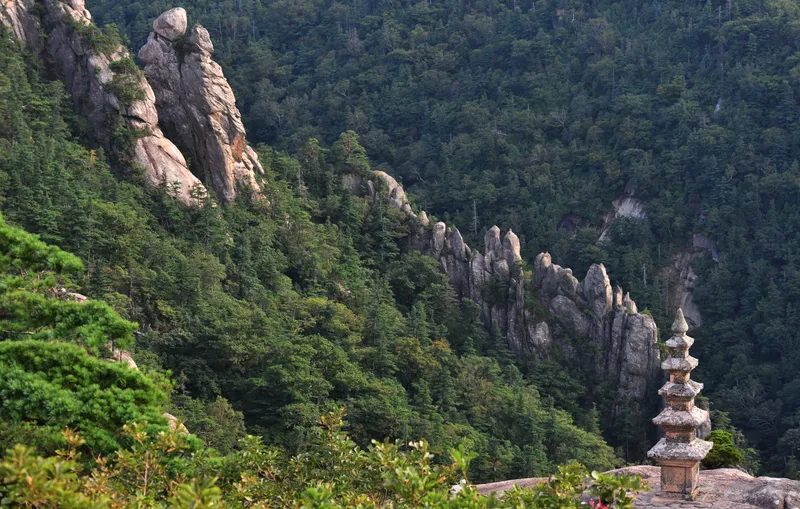
A hermitage on Sosecheongbong in Seoraksan, one of the five relic sanctuaries, holding relics Jajang is said to have brought back.
 Temple
Sinheungsa, Seoraksan
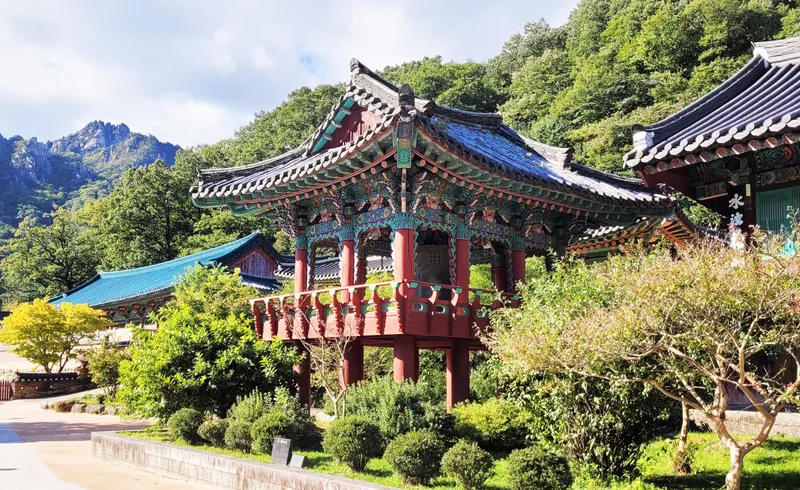
A temple that changed its name three times, and moved its ground each time it did.
 Temple
Baekdamsa, Seoraksan
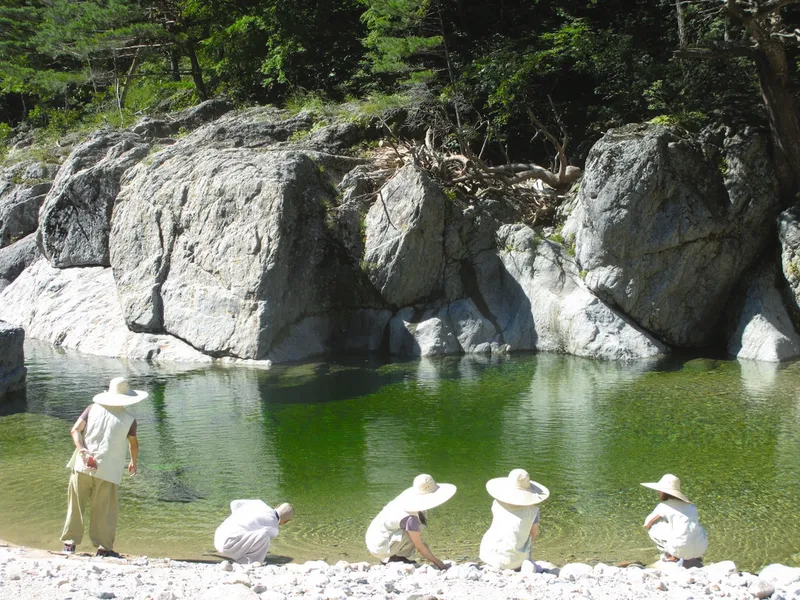
Built where a count of the pools from Cheongbong down to the temple came to a hundred, and named for that number.
 Temple
Jeongamsa
- Protection & Safety
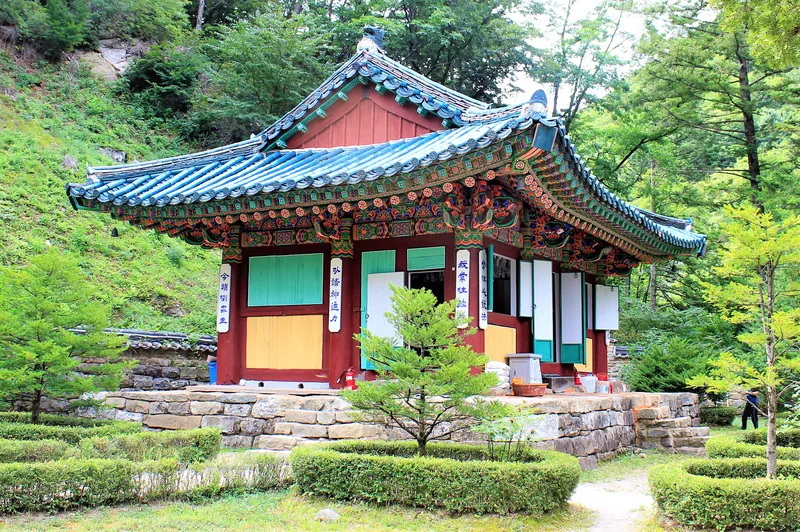
A relic sanctuary where Jajang is said to have enshrined the Buddha’s skull bone, a tooth and a hundred relics, with a National Treasure stupa on the slope behind.
 Shrine
Daegwallyeong Seonghwangsa and Sansingak
- Health & Healing
- Protection & Safety
A mountain-god shrine at the top of the Daegwallyeong pass, whose deity is recorded as presiding over farming, illness, drought and the road.
No places match your filters