Bongeunsa
Sudosan Bongeunsa · Gyeonseongam
Researched and translated with AI assistance. Every claim is linked to its source, but errors get through, so check the official site for opening times, fees and closures.About
In short
Founded by a widow to pray for her dead husband’s repose, and later made head temple of the Seon school.
Quick facts
- Address
- 531 Bongeunsa-ro, Gangnam-gu, Seoul
About this place
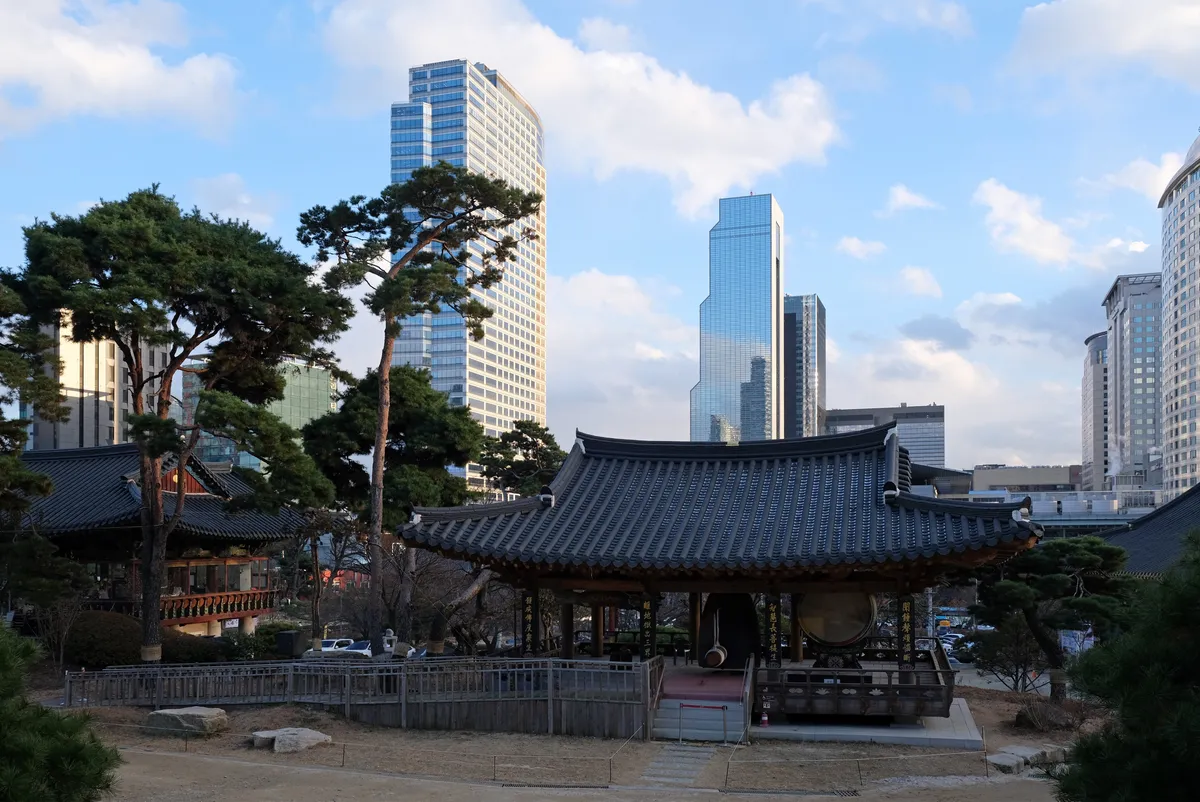
Bongeunsa is a Joseon-period temple on Sudosan in Gangnam, Seoul. In the mid-fifteenth century, when Prince Gwangpyeong died, his wife Lady Sin founded it near his grave under the name Gyeonseongam, to pray for his repose. In 1551 it was made the head temple of the Seon school with Bou as abbot. In 1562, when King Jungjong’s tomb was moved, the temple was relocated to Sudosan and extensively rebuilt with Queen Munjeong’s support.
Origin and history
The Encyclopedia of Korean Culture describes Bongeunsa as a Joseon-period temple on Sudosan in Gangnam, Seoul.
In the mid-fifteenth century, when Prince Gwangpyeong (1425–1444) died, his wife Lady Sin founded it near his grave under the name Gyeonseongam, in order to pray for her husband’s repose.
In 1551, the sixth year of King Myeongjong, this temple was made head temple of the Seon school and Bongseonsa at Gwangneung head temple of the Gyo school; Heoeung Bou was made abbot, so that it should become the centre from which Buddhism was revived.
In 1562 King Jungjong’s tomb was moved east of Seolleung, and the temple standing on that site was moved again to Sudosan, where it was extensively rebuilt with Queen Munjeong’s support.
What it is locally associated with
To pray for a husband’s repose
When Prince Gwangpyeong died, his wife Lady Sin founded it near his grave as Gyeonseongam, to pray for his repose.
documented historyHead temple of the Seon school, 1551
It was made head temple of the Seon school with Bou as abbot, to be the centre from which Buddhism was revived.
documented historyMoved and rebuilt, 1562
When King Jungjong’s tomb was moved, the temple was relocated to Sudosan and extensively rebuilt with Queen Munjeong’s support.
documented history
Why this temple exists is in its first sentence. Prince Gwangpyeong died at nineteen, and his wife built a hermitage beside his grave to pray for his repose. One person’s prayer became a temple.
What followed was not private. In 1551 it was made the head temple of the Seon school, with Bou as abbot, and became the centre from which Buddhism was to be revived. In 1562 the king’s tomb was moved and the temple with it, and Queen Munjeong’s support rebuilt it on a large scale.
Today it is ringed by towers. The city came to the temple, not the other way round.
Claims and evidence levels 3
- When Prince Gwangpyeong (1425–1444) died, his wife Lady Sin founded the temple near his grave under the name Gyeonseongam, in order to pray for his repose. documented history
- In 1551 it was made head temple of the Seon school, with Bongseonsa at Gwangneung as head temple of the Gyo school, and Heoeung Bou was made abbot. documented history
- In 1562, when King Jungjong’s tomb was moved east of Seolleung, the temple was relocated to Sudosan and extensively rebuilt with Queen Munjeong’s support. documented history
Related guides
- How to visit a Korean templeHands together and hands folded, how the bows work, and what to do at the threshold of a hall. Starting with what is different from visiting a Japanese shrine.
- The small hall behind the main one — sansingak and samseonggakUphill from the main hall of a Korean temple stands a smaller one, and inside it an old man with a tiger. This is where the indigenous religion sits, inside the Buddhist institution.
- Templestay — a night at a templeA programme that puts you inside a temple’s own timetable for a day or two. What you do, which type to book, and what to be ready for.
- Prayer sites and the one wishThe three great Gwaneum sites, the five relic halls, and the crowds before the entrance exam. Where the saying about one wish comes from, and where the record stops.
Sources
- 수도산 봉은사(修道山 奉恩寺) — 한국민족문화대백과사전 — Academy of Korean Studies (accessed 2026-08-12)
Last updated:
Similar places
8 places
 Temple
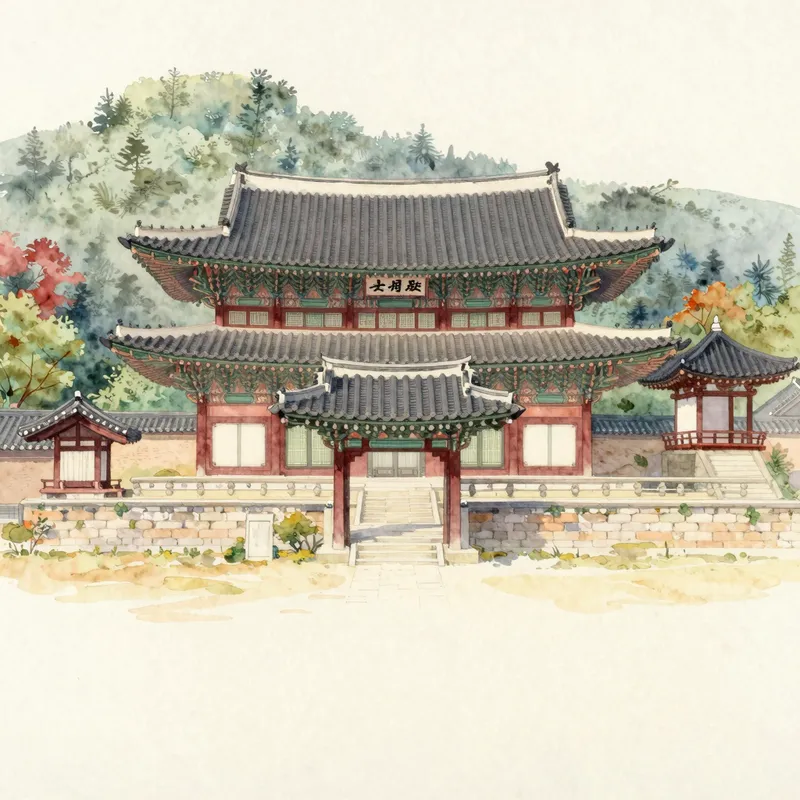
Bogwangsa, Goryeongsan
- Family & Home
The temple King Yeongjo attached to the tomb of the woman who bore him.
 Temple
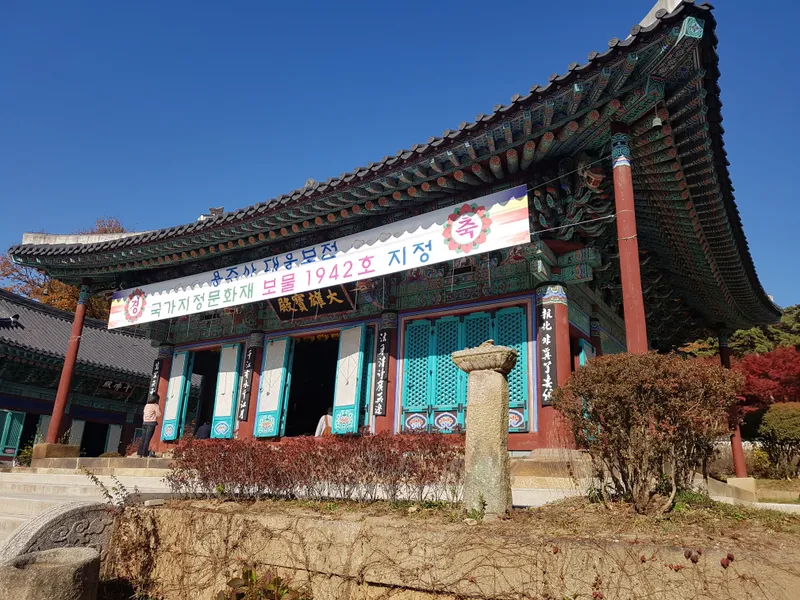
Yongjusa
- Family & Home
The temple King Jeongjo refounded beside his father’s grave, holding the woodblocks of the sutra on what children owe their parents.
 Shrine
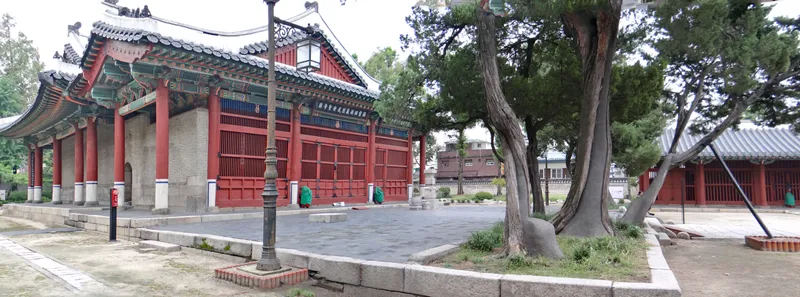
Donggwanwangmyo
- Protection & Safety
A shrine to Guan Yu raised after the Imjin War, the only one of Seoul’s four such shrines still standing.
 Shrine
Nami Janggun Shrine
- Health & Healing
- Protection & Safety
A shrine raised to console the wronged spirit of a general beheaded at twenty-seven.
 Temple
Jogyesa
- Exams & Study
The head temple of the Jogye Order, in the middle of downtown Seoul, where a prayer for children ends the day before the national entrance exam each year.
 Temple
Heungcheonsa, Samgaksan
A temple of more than a hundred and seventy kan, raised beside a queen’s tomb by the king who had lost her.
 Shrine
Guksadang, Inwangsan
- Fertility & Children
- Health & Healing
- Protection & Safety
A shaman shrine moved from Namsan to the slope of Inwangsan in 1925 under Japanese pressure, where roughly a hundred gut rites are still held each year.
 Temple
Bongwonsa, Ansan
The temple where the leaders of the 1884 coup learned the reformist thought behind it.
No places match your filters